
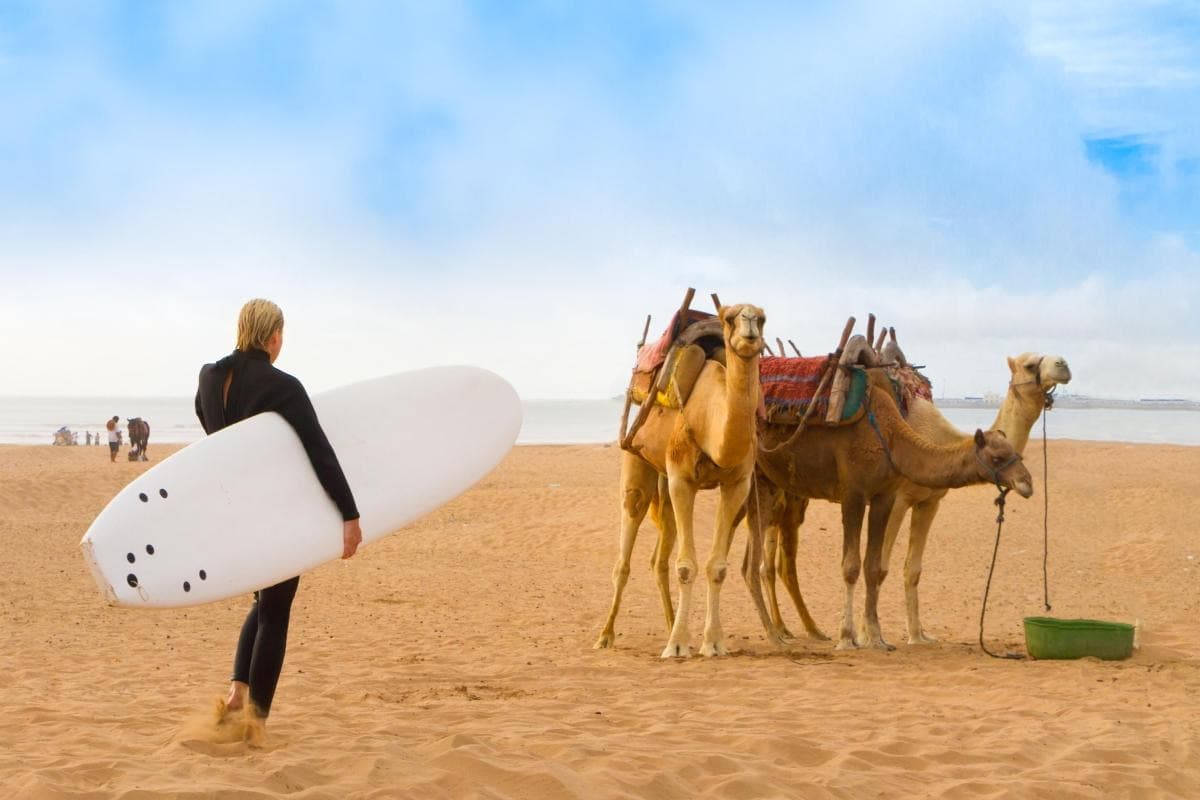
What the day feels like
The first thing you notice arriving at Essaouira Beach (Plage d'Essaouira) is the wind — not the harsh, city-stung gust that scatters trash and tempers, but a steady, tuneful current that sculpts the sand and fills the sails of every kite and windsurfer in sight. It pushes and cajoles rather than punishes; the Atlantic tugs at your shoes and dares you to step in. Walk a few minutes from the low whitewashed houses and you’re on an expansive crescent of pale sand, a shore that opens like a stage for the town’s slow, musical life.
Essaouira is a place of engineered calm. Once called Mogador, its medina and ramparts were shaped by Portuguese, French and Moroccan hands; stone bastions still stare out at the sea with a weathered, watchful expression. But the beach feels modern in the best way — a broad, accessible arena where surfers learn, families picnic, fishermen mend nets, and musicians test rhythms against the wind. The city’s historical heartbeat — the Skala de la Ville, the old trading port, the hand-carved cedar doors of the medina — sits a short stroll inland. The ocean, though, is the daily metronome.
Geology and geography conspire here. Essaouira’s long sandy bay was formed by sediment carried along the Atlantic Coast, and the constant northeasterly trade winds (locally known as the alizés) make the place a global magnet for wind sports. Those winds are dependable, which is why the town hosts windsurfing and kitesurfing schools that draw learners from Europe and beyond. But the shore is generous: where conditions are too raw for beginners, sheltered pockets and gentle, beach-friendly waves allow surf schools to teach novices without exposing them to dangerous rip currents or hidden rocks.
Culture in Essaouira means slow movement. The town’s Gnaoua music festival — a seasonal thrum of drums and trance — draws players and listeners who value repetition and ritual as a way to move through the day. On the port, local fishermen sell their catch at wooden stalls while gulls inspect the scene like critics. The argan trees behind the coast host a peculiar side-show: goats that clamber into the branches to browse, a practice that has become an icon for travelers. Women-run cooperatives press the argan nuts into oil — an economic and cultural lifeline — and their modest workshops are open to visitors who want to understand how the product goes from tree to bottle.
The practical draw of Essaouira Beach is its versatility. If you want to learn to surf, the shallow beach breaks and absence of submerged rocks make this an ideal classroom; daily surf-training experiences are offered as half-day or full-day packages. Windsurf and kite schools are clustered along the sands, where instructors provide new equipment each season and a safety-conscious curriculum. Or you can spend a day on a guided trip from Marrakech: a comfortable 2.5–3 hour drive west along scrub-streaked roads, with stops for argan coop visits and photos of the tree-climbing goats.
Plan like a traveler who respects the wind. Mornings are often calmer; by late morning the alizés pick up and can be relentless through the afternoon, which is perfect for wind sports but makes unprotected sunseekers cold. Layers are essential: a light windbreaker and a fleece will keep you comfortable after you get out of the water. If you’re learning to surf, book a lesson with a reputable school that supplies wetsuits and teaches basic ocean awareness: how to read the beach, where the channels run, and how to bail safely. For photographers, the low light of late afternoon, when waves pick up and the ramparts glow bronze, produces cinematic images — though watch your gear around spray and sand.
Esseouira’s food is as direct as its weather. The harbor restaurants pull fresh catches into tagines and simple grills; try a small fish with preserved lemon and local olives, and pair it with mint tea or a crisp bottle of Moroccan white. Take time to wander the medina afterwards: woodworkers carve lute-like instruments called guembri, leatherworkers stitch slippers in narrow workshops, and the pace here encourages conversation and curiosity more than a transaction.
If you’re coming from Marrakech, treat the drive as part of the day: leave early to eat breakfast in the city before the heat builds, and stop at an argan cooperative to see women’s work supporting local families. Many operators offer private and small-group day trips with hotel pickup, which simplifies logistics and lets you focus on the beach, the medina, and a late lunch by the port.
Sustainability matters. Essaouira is small and its economy relies on fisheries, tourism, and argan production. Respecting the beach means taking your trash with you, choosing responsible operators, and supporting cooperatives that pay fair wages. The best moments here are uncluttered: a surfer gliding along a shoulder of swell, a child chasing a kite, the old stones of the Skala catching the last sun.
At the edge of the Atlantic, Essaouira Beach is less a dramatic summit than a finely tuned instrument. The wind plays it; people, parts of town, and history provide the harmonics. Come for the surf, stay for the slow coastal rhythm, and leave remembering how the wind felt like an invitation rather than an obstacle.
Trail wisdom
Small choices, better day.
Respect the wind
The alizés pick up midday; bring a windbreaker and plan water sports for the morning or late afternoon depending on your comfort level.
Book lessons with certified schools
Choose reputable surf or windsurf schools that provide wetsuits and teach beach and ocean safety.
Protect gear from sand and spray
Use waterproof bags or zip-locks for cameras and phones and rinse salt from equipment after each session.
Support argan cooperatives
Visit women-run argan cooperatives to buy responsibly produced oil and help the local economy.
Local knowledge
Read the place, not just the route.
Watch for native species including Mediterranean gulls, Argan-tree browsing goats.
Keep an eye out for wildlife during the transition between areas and habitats. Respect distance guidelines.
Support certified argan cooperatives and local guides; avoid single-use plastics and be mindful of local fisheries to reduce impact on marine life.
Follow the guide's instructions on size limits, ethical handling, and leave-no-trace practices.
Walk the ramparts at golden hour for empty viewpoints and dramatic light. Small local seafood stalls near the fishing port for the freshest, budget-friendly lunches
Locally recommended viewpoints and quiet spots known best to local operators.
Essaouira (historically Mogador) became a strategic free port in the 18th century and its medina was declared a UNESCO World Heritage Site in 2001.
Maritime roots and regional tradition shape the waterways and working coasts.
Seasonal guide
Four versions of the same landscape.
Spring
Best formild weather · kitemaking and beginner surf lessons · photography of wildflowers and coastal light
Challengesvariable winds · cool mornings
Spring offers comfortable temperatures, moderate winds and fewer crowds — ideal for learning to surf and exploring the medina.
Summer
Best forwindsurfing and kitesurfing · long beach days · outdoor dining
Challengesstrong afternoon alizés · higher tourist traffic
Summer brings steady winds that are perfect for wind sports but can make the water feel chilly; pack layers for evenings.
Fall
Best forsurf lessons on gentler days · seafood dining · off-peak exploration of the medina
Challengesoccasional storms · shorter daylight hours
Fall is balanced: warm enough for beach time, with reliable conditions for water sports and fewer crowds than summer.
Winter
Best forquiet streets and low-season prices · storm-watching · argan cooperative visits
Challengescooler temps · rough seas and occasional closures
Winters are mild compared to inland Morocco but gusty and occasionally wet — good for contemplative visits rather than swimming.
Pack with intention
What to bring.
Good to know
Common questions.
About 180 km — roughly a 2.5–3 hour drive depending on traffic and stops along the way.
Plan the edges
The details that make the day easier.
Essaouira’s medina was inscribed as a UNESCO World Heritage Site in 2001 for its well-preserved 18th-century seafront ramparts and planning.
Freshly grilled sardines at the port, guembri-driven Gnaoua rhythms, and women’s argan oil cooperatives form Essaouira’s cultural backbone.
- Distance from Marrakech
- ~180 km; travel time: 2.5–3 hrs; currency: MAD; language: Arabic and French (English common in tourism); best for: wind and water sports, medina strolls.
Support women-led argan cooperatives, choose operators with low-impact water-sport practices, and avoid single-use plastics to protect local marine life.
Explore by topic
Follow the threads.
Keep exploring
Make the story part of the trip.
Set out from Bass Harbor for a private, customizable day on Blue Hill Bay — lighthouses, puffins, seals, and the chance to feel Acadia from the water. Small groups, local captains, unforgettable views.
In four hours you can move from shaded canyon ferns to wind-scoured coastal ridgelines, guided by someone who knows where the light—and the hidden views—live. This private half-day hike on the Monterey Peninsula or Big Sur is compact, curated, and perfect for travelers who want depth without a multiday commitment.
 Related story
Beneath a sky of shifting light, Skaftafell’s ice reads like a map of time. This three-hour guided glacier hike mixes technical instruction with geology and culture: compact, safe, and unforgettable.