
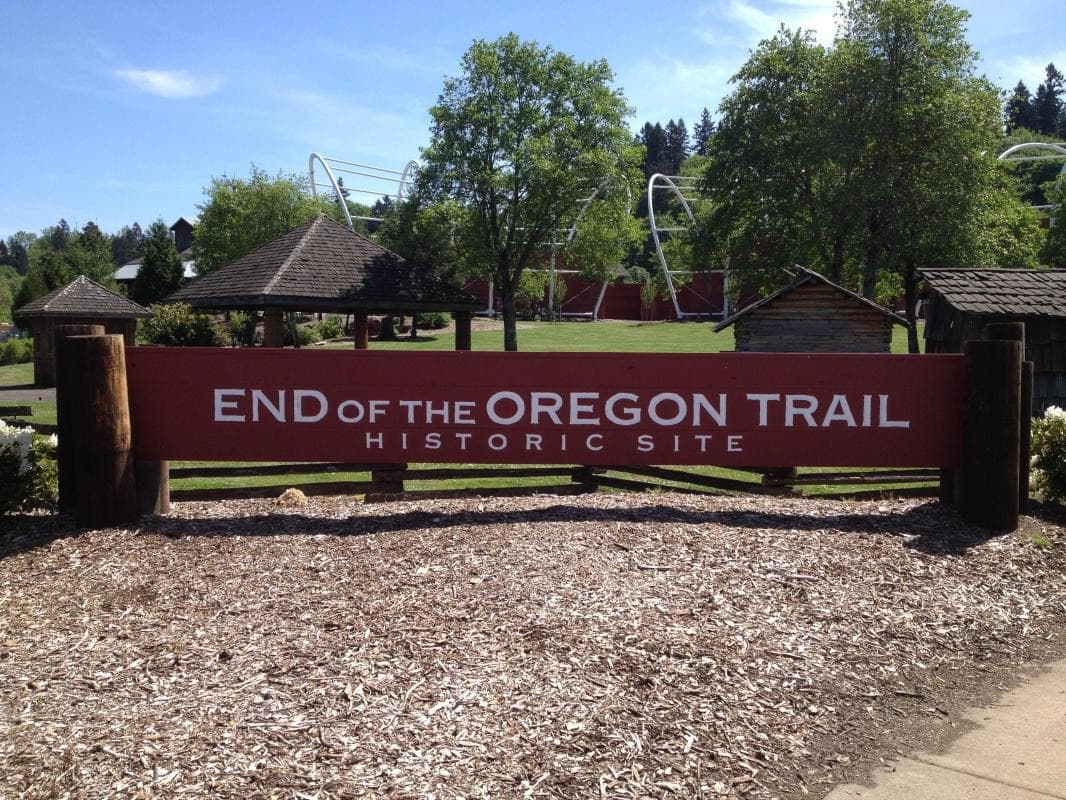
What the day feels like
The wind lifts a thin ribbon of dust from the high-desert plain as you step out of the Interpretive Center and look east toward the ragged silhouette of the Elkhorn Mountains. It’s a quiet, expansive kind of quiet — the sort that lets you hear the past the museum works so hard to reconstruct: a creak of axle, a child’s laugh in a campsite long gone, the determined murmur of a thousand people crossing a continent. At the End of the Oregon Trail Interpretive Center in Baker City, those fragments of history are given texture, shape, and a route you can follow with your feet.
You don’t need to be a history buff to feel the pull here. The center does what good outdoor museums do: it places you inside a story without dressing it up in nostalgia. Exhibits are practical and tactile — covered wagons, hand tools, maps that show how the trail braided through mountain passes and desert flats — and they sit alongside local geology and landscape interpretation so you understand not just where pioneers went, but why. Beyond the glass and panels, short interpretive trails wind across the site, layering vantage points where you can watch the river bend and imagine oxen picking their way through brush.
This stretch of northeastern Oregon sits at the transition between the Blue Mountains and the rolling high desert. The landscape shapes the tale: stony ridges, stands of aspen and sage, and a river that, depending on the season, could be a trickle or a line of force that made or broke a wagon train’s schedule. Geology here is blunt and honest — basalt flows and uplifted ranges that forced settlers to choose between risk and reroute. The interpretive panels don’t romanticize that choice; they map the storms, the river crossings, the rationed flour and the decisions to turn back or press on.
Culturally, Baker City is a small town with a lot of history. It was a hub for gold rush prospectors and later a service center for ranches and timber operations. The interpretive center situates the Oregon Trail within that longer arc — human movement, extraction, settlement — and it connects those stories to the present-day community of Baker City. The town’s Main Street, with its brick facades and independent shops, feels like part of the same narrative: frontier grit slowly remodeling itself into preservation and hospitality.
A visit here is modular. You can spend an hour in the galleries, tracing a family’s route with a touch-screen map, or several hours lingering over the hands-on displays and the outdoor exhibits that reconstruct a fort or campsite. For active travelers, the site is also a practical jumping-off point: day hikes in the surrounding foothills, scenic drives into the Elkhorn range, and river runs on the Powder River are all within easy reach of town. And if you’re planning a longer road trip along the Oregon Trail corridor, Baker City is a logical overnight stop with hotels, cafés, and local guides.
Practical side: the museum visit is low-impact physically but high on context. Expect 1–2 hours inside if you’re reading everything; add another 30–90 minutes for outdoor interpretive loops. The terrain is typical of east Oregon — dusty in summer, stiff and bracing in winter — so footwear that can handle short, uneven trails makes sense. Water is non-negotiable here; the high desert will dry you out faster than you think. Timing matters too: late spring and early fall bring the most agreeable weather, while mid-summer can be hot and winter brings snow and a quieter, colder experience of the landscape.
For planning: aim to combine your museum time with a walk on the nearby trails or a short drive to Baker City’s historic downtown. The center often schedules living-history demonstrations and talks during the warmer months — check the calendar before you go for blacksmithing demos, wagon displays, or ranger-led walks. If you want solitude, pick a weekday morning. If you want color and community, time your trip for one of Baker City’s festivals or the fall foliage run-up.
This place rewards a curious, practical mindset. Treat the exhibits as primers; then go outside and use them as lenses. Stand on the bluff that overlooks the valley and consider the choices of a family who had to decide whether to ford a river, cross a ridge, or wait for better conditions. Those are the same kinds of choices we make as travelers — about timing, gear, and judgment — and seeing them through the artifacts and landscape here sharpens your own.
Why go? Because the End of the Oregon Trail Interpretive Center does more than summarize a migration: it situates you in the ecology and human decisions that shaped that movement. It’s accessible, layered, and useful for planning the rest of your itinerary in northeastern Oregon — whether that’s a hike into the Elkhorns, a river paddle, or a deeper historical route tracing wagon ruts and ghost towns. The interpretive center turns abstraction into place, and place is the best teacher.
If you leave with one practical takeaway, let it be this: come curious, come prepared. Bring water, a good pair of shoes, and an appetite for both historical detail and landscape observation. The site is at its best when you let the exhibits guide you outside — to the bluffs, to the old trail alignments, to the stretches of land that still hold the echoes of hundreds of journeys. Out here, history is not a display behind glass; it’s the weather on your neck, the slope under your boots, the view that pushes your imagination forward.
Trail wisdom
Small choices, better day.
Hydrate for high desert conditions
Even on cool days the dry air will sap moisture quickly; carry at least 1–2 liters per person for a short visit and extra for any hikes off-site.
Layer for rapid temperature swings
Morning and evening can be chilly while midday heats up; bring a windproof layer and sun protection.
Combine museum time with an outdoor loop
Spend 30–90 minutes on the center’s interpretive trails after the galleries to contextualize exhibits with landscape views.
Check the event calendar before you go
Living-history demos and talks often run seasonally; timing your visit for a demonstration adds texture to the exhibits.
Local knowledge
Read the place, not just the route.
Watch for native species including mule deer, red-tailed hawk.
Keep an eye out for wildlife during the transition between areas and habitats. Respect distance guidelines.
The center emphasizes low-impact visitation and the protection of archeological sites; visitors are asked to stay on trails and respect artifacts and the fragile high-desert environment.
Follow the guide's instructions on size limits, ethical handling, and leave-no-trace practices.
Early-morning viewpoints on the center’s bluff for clear valley light. Historic Main Street galleries and the local bakery in Baker City for a post-visit coffee
Locally recommended viewpoints and quiet spots known best to local operators.
The center interprets the final stretch of the Oregon Trail, where many emigrant parties concluded their overland journey or prepared for local land claims and gold rush activity.
Maritime roots and regional tradition shape the waterways and working coasts.
Seasonal guide
Four versions of the same landscape.
Spring
Best forwildflower displays · cool hiking · living-history programs starting up
Challengesmuddy trails · cool nights · variable river levels
Spring brings fresh green to the high desert and manageable daytime temperatures, but expect chilly mornings and possible muddy sections on lower trails.
Summer
Best forextended daylight for exploring · outdoor programs and demos · scenic drives to the Elkhorns
Challengeshigh daytime temperatures · dry conditions and strong sun · limited shade on trails
Summer is the busiest season and offers the most programming and access, but bring sun protection and extra water for hotter days.
Fall
Best forpleasant hiking weather · golden aspen color · smaller crowds
Challengescooling nights · earlier sunsets · variable weather late season
Fall is an ideal time to visit: crisp days, fewer visitors, and color in the foothills make outdoor exploration especially rewarding.
Winter
Best forquiet museum visits · snow-dusted landscapes · photography of stark scenery
Challengessnow and icy roads · short days and limited outdoor access · some programs closed
Winter offers solitude and a different sense of place, but check road conditions and be prepared for cold, snowy weather and shorter hours.
Pack with intention
What to bring.
Good to know
Common questions.
Allocate 1–2 hours for galleries and exhibits, plus 30–90 minutes if you want to walk the outdoor interpretive loops and take photos.
Plan the edges
The details that make the day easier.
The End of the Oregon Trail Interpretive Center marks the terminus of the historic Oregon Trail near Baker City, where emigrants concluded their transcontinental journey in the 19th century.
Baker City’s brick-lined Main Street offers farm-to-table cafés, historic storefronts, and seasonal festivals that pair well with a cultural stop at the Interpretive Center.
- Location
- Baker City, OR • Duration: 1–3 hours • Accessibility: Main exhibits accessible; outdoor trails uneven • Best time: late spring–fall • Essentials: water, sun protection, sturdy shoes.
Support the center’s preservation work by staying on trails, avoiding artifact disturbance, and choosing local accommodations and eateries to benefit the community.
Explore by topic
Follow the threads.
Keep exploring
Make the story part of the trip.
Set out from Bass Harbor for a private, customizable day on Blue Hill Bay — lighthouses, puffins, seals, and the chance to feel Acadia from the water. Small groups, local captains, unforgettable views.
In four hours you can move from shaded canyon ferns to wind-scoured coastal ridgelines, guided by someone who knows where the light—and the hidden views—live. This private half-day hike on the Monterey Peninsula or Big Sur is compact, curated, and perfect for travelers who want depth without a multiday commitment.
 Related story
Beneath a sky of shifting light, Skaftafell’s ice reads like a map of time. This three-hour guided glacier hike mixes technical instruction with geology and culture: compact, safe, and unforgettable.