
What the day feels like
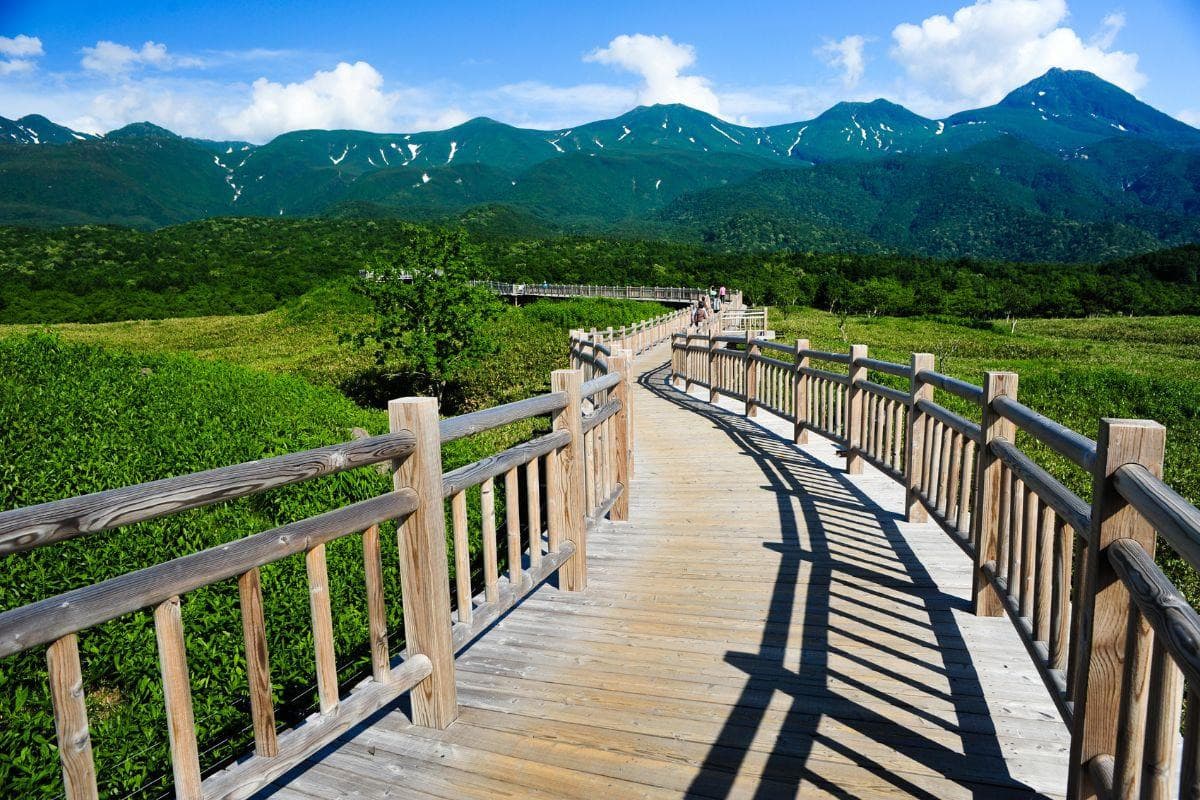
The morning opens cold and clean on the Shiretoko Peninsula. A low curtain of mist clings to the firs, and the ocean beyond is a flat, slate mirror that seems to be holding its breath. You step onto a boardwalk at the Shiretoko Five Lakes and the forest exhales: damp moss, resin, and the distant rasp of gulls. Somewhere up the ridge a brown bear shifts through dwarf bamboo, a shadow of movement more sensed than seen. Here, on the northeast edge of Hokkaido, the land and sea press against one another with a kind of courteous insistence. They push. You follow.
Shiretoko National Park is not just a place to pass through; it’s a frontier where tectonic uplift has sculpted steep capes and deep bays, and where the cold currents of the Sea of Okhotsk deposit nutrient-rich water that turns the coast into one of Japan’s most vibrant wildlife corridors. Designated a UNESCO World Heritage Site in 2005 for its outstanding ecosystems — from subarctic forests to marine kelp beds — Shiretoko reads like a field guide in three dimensions. Sea eagles quarter the skies, orcas and humpback whales cruise offshore, and if winter’s drift ice comes down from Siberia, the coastline becomes a floating skyscape of blue and white.
There’s a pleasing bluntness to the experiences here. A boat cruise out of Utoro gives you a seaworthy seat to watch orca spouts break the horizon and Steller’s sea eagles ride the thermals; the captain’s practiced eye looks for the telltale fluke that signals a seal or dolphin. On land, short hikes thread the park’s accessible highlights: the Shiretoko Five Lakes loop, a roughly 3.6-kilometer circuit of boardwalk and interspersed forest trails with minimal elevation gain (about 50–100 meters), and Kamuiwakka Falls, a steamy brook and series of warm waterfalls where you can walk upstream if conditions are safe — a pleasant, slippery scramble of under 2 kilometers round-trip that feels more like an exploratory play than a formal summit bid. For more committed hikers, trails up toward Mount Rausu lift you into alpine zones with bigger vertical climbs and panoramic views over the peninsula and the Sea of Okhotsk.
Local culture is tightly braided with the land. The Ainu people inhabited these coasts for generations, harvesting salmon and sea urchins and reading the rhythms of the ocean. Today, small towns such as Utoro and Rausu are gateways that balance hospitality with practicality: modest ryokan and seafood counters serve the fresh catch — uni, ikura, and fatty, briny salmon that tastes like the sea itself. The park’s legacy also carries modern responsibility. Conservation efforts focus on coexisting with large mammals (brown bears) and protecting fragile wetlands, while the UNESCO designation has drawn increased visitation and management demands.
Practicality sits beside romance here. If you’re planning a trip, time your visit carefully. Drift ice season (late January to March) is a unique draw: the sea becomes a moving gallery of floes that scrape and gleam, and boat charters designed to skim the edges of the pack ice offer a rare, cold-sanded kind of thrill. Summer brings whale-watching and lush hiking conditions, while autumn paints the larch and birch in high-contrast yellows and oranges.
Guided boat tours are the clearest way to know what’s moving offshore and to learn from experienced naturalists; they also minimize disruptions to sensitive coastal habitats. On land, stick to boardwalks in the Five Lakes area where wetlands are fragile; this is not a place for bushwhacking. Bear-awareness is practical and non-negotiable: make noise on the trail, travel in groups when possible, and carry a whistle or bell. Local visitor centers and tour operators offer the most up-to-date information on trail closures and wildlife advisories.
Getting here feels deliberately remote: fly into Memanbetsu or Kushiro, take a train or drive north toward Shari and then the Utoro access road, and you’ll find the modest cluster of services that support park visits. Bring layers (weather shifts fast), waterproof footwear for muddy trails and river crossings, and a sense of patience — Shiretoko moves on its own timetable. But travel with intent, and the payoff is elemental: empty trails beneath old-growth firs, a coastline that stages nature in raw acts, and the rare privilege of being witness to ecosystems that still behave like they run the place.
For travelers who want an active, wildlife-rich, and distinctly coastal wilderness journey that is both accessible and humbling, Shiretoko delivers. It’s not about ticking peaks off a list; it’s about learning how the sea nudges the land, how currents coax life from cold water, and how a landscape can simultaneously shelter the delicate and support the large. The park is honest and crisp in its offerings: take a boat, walk the lakes, mind the bears, and leave a lighter footprint than you found. The rewards are plain — big skies, sharp air, and the sound of the world continuing, uninterrupted, at the edge of Japan.
Trail wisdom
Small choices, better day.
Respect the wildlife
Always make noise on trails, keep 100 meters from bears and other large wildlife, and follow ranger guidance.
Book boat cruises early
Popular wildlife and drift-ice cruises fill weeks in advance—reserve seats and shore transfers ahead of peak season.
Stick to boardwalks
Many wetlands are fragile — stay on marked paths at the Five Lakes to protect bog habitats and avoid closures.
Layer for fast weather shifts
Temperatures can swing quickly between fog, sun, and wind; pack breathable insulating layers and a waterproof shell.
Local knowledge
Read the place, not just the route.
Watch for native species including Brown bear (Ursus arctos), Steller's sea eagle.
Keep an eye out for wildlife during the transition between areas and habitats. Respect distance guidelines.
UNESCO status emphasizes integrated conservation of terrestrial and marine ecosystems; visitors are urged to follow leave-no-trace practices and respect sensitive wetlands.
Follow the guide's instructions on size limits, ethical handling, and leave-no-trace practices.
Kamuiwakka Hotfalls (warm-water stream pools) — a short, slippery upstream scramble that rewards with warm cascades. Lesser-known headlands around Rausu for quiet sea-eagle watching away from main harbors
Locally recommended viewpoints and quiet spots known best to local operators.
The Shiretoko Peninsula has long been home to the Ainu people; its name is said to mean 'the end of the earth' in Ainu language, reflecting its remote, rugged character.
Maritime roots and regional tradition shape the waterways and working coasts.
Seasonal guide
Four versions of the same landscape.
Spring
Best forMigratory birds · Early wildflowers · Trail openings
ChallengesMud and lingering snow · Unpredictable weather
Late spring sees birds return and trails thawing—expect muddy sections and fluctuating conditions.
Summer
Best forWhale and sea-watching · Hiking · Kayaking
ChallengesCrowds in July–August · Stable but occasionally rainy weather
Warmest and most accessible season for hiking and marine excursions; book accommodations early.
Fall
Best forAutumn color · Clear skies · Bear foraging observations
ChallengesCooling temperatures · Shorter daylight hours
Fall brings crisp air and vivid foliage—days are often clear, but prepare for chilly mornings.
Winter
Best forDrift ice viewing · Aurora-like skies · Snowy coastal landscapes
ChallengesExtreme cold · Limited access and services
Drift ice transforms the coast into a frozen gallery—boat access is seasonal and weather-dependent.
Pack with intention
What to bring.
Good to know
Common questions.
You can explore many well-marked areas independently, but guided boat tours and wildlife walks add safety, local knowledge, and higher odds of sightings.
Plan the edges
The details that make the day easier.
Shiretoko was inscribed as a UNESCO World Heritage Site in 2005 for its intact marine and terrestrial ecosystems and is one of the few places in the world where land, sea and mountain ecosystems interact so closely.
Seafood is the center of local food culture—try the fresh uni and salmon from Utoro docks, and visit small ryokan for hot springs and Hokkaido’s coastal hospitality.
- Nearest hub
- Utoro on the Shiretoko Peninsula; airports: Memanbetsu (approx. 2 hours by road); best booked: guided boat tours for wildlife and drift-ice; accommodations: limited—reserve early.
Choose licensed local operators, avoid off-trail travel in wetlands, and reduce single-use plastics—tourism helps fund conservation when done responsibly.
Explore by topic
Follow the threads.
Keep exploring
Make the story part of the trip.
Set out from Bass Harbor for a private, customizable day on Blue Hill Bay — lighthouses, puffins, seals, and the chance to feel Acadia from the water. Small groups, local captains, unforgettable views.
In four hours you can move from shaded canyon ferns to wind-scoured coastal ridgelines, guided by someone who knows where the light—and the hidden views—live. This private half-day hike on the Monterey Peninsula or Big Sur is compact, curated, and perfect for travelers who want depth without a multiday commitment.
 Related story
Beneath a sky of shifting light, Skaftafell’s ice reads like a map of time. This three-hour guided glacier hike mixes technical instruction with geology and culture: compact, safe, and unforgettable.