
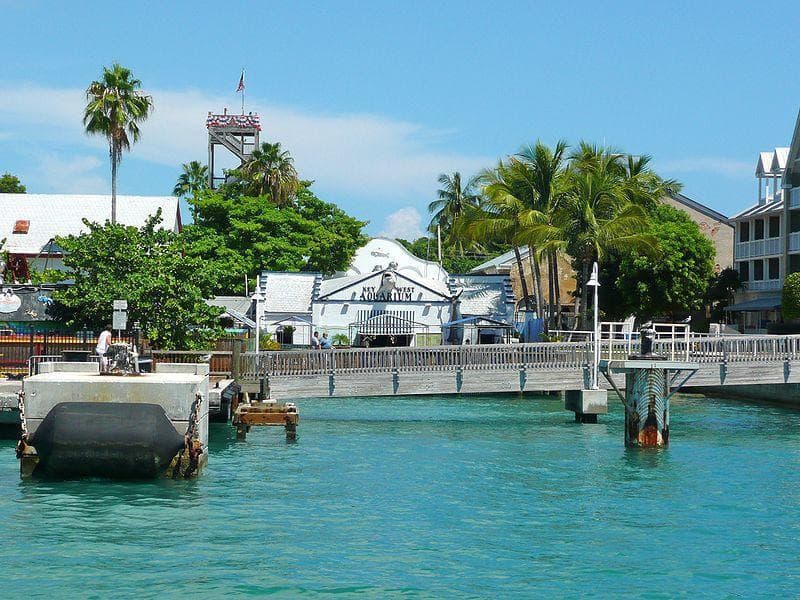
What the day feels like
The afternoon heat presses softly into the shaded boardwalk outside the Key West Aquarium. Salt on the breeze tastes of a far horizon; tour groups drift past, and gulls wheel like punctuation marks above Mallory Square. Inside, a dim coolness settles over the galleries—tank lights throwing slow, patient glows across faces pressed to glass. A nurse shark glides as if answering some timeless summons, parrotfish chew at a coral replica with a businesslike chew, and an eel curls into the shadow of a rocky cave as if to listen. The aquarium is compact but muscular: it concentrates the sea into intimate encounters, a primer for the reefs and currents that have shaped Key West.
This is not an aquarium of grandiose exhibits and endless halls; it’s an old-school island institution: tactile, educational, and perfectly placed to start a day of exploring the Southernmost City. You can spend an hour here watching feeding talks and tide-pool demonstrations or stretch the visit into a full morning of programs—the aquarium’s approachable layout means families, single travelers, and curious divers all leave with a practical sense of the Florida Keys’ marine world.
Key West’s story is braided with saltwater. Centuries of Indigenous presence, European landings, piracy, wrecking and the engineering triumph of Henry Flagler’s Overseas Railroad—completed to Key West in 1912—have left a cultural palimpsest of Bahamian clapboard houses and Cuban influences. Geologically the island is a low-lying coral cay formed of prehistoric reef and sand; that geology is why the reefs offshore are so rich and why the aquarium’s work matters. The organisms staged under neon lights are not curios to be gawked at in isolation: they are fragments of a fragile coastal ecosystem increasingly pressured by warming seas, runoff, and tourism.
Wandering the aquarium’s tanks, you’ll hear short, practical talks about reef conservation, local fisheries, and the life cycles of species you might see snorkeling just off Key West. The staff’s tone is frank and encouraging: appreciate this wildlife, they imply, and learn how to minimize harm. That message threads neatly into the rest of the island experience: a hop-on hop-off trolley can show you Duval Street’s lively commerce and the Conch Tour Train will narrate the island’s railroad-era triumphs; both are handy ways to stitch aquarium learning to a broader cultural tour. If you prefer boots—or rather, sandals—a private walking tour through Old Town will stop at the aquarium and then trace quieter lanes, historic homes, and a few tucked-away seafood shacks serving conch fritters and lime-spritzed ceviche.
Practical planning is simple: allow 45–90 minutes for the aquarium itself, more if you join a demonstration. Thirst and sun are constant companions in Key West—carry water and reef-safe sunscreen. The aquarium sits within easy walking distance of Mallory Square, the cruise piers and most Old Town hotels, so it’s an efficient start or cap to a day of sunset rituals and seafood dinners. If you arrive by cruise ship, look into combined shore excursion options or a hop-on hop-off trolley to conserve time; these tours pair neatly with aquarium admission and give you a concise primer on island history and hotspots.
For families, the aquarium’s touch-friendly exhibits and compact layout are a blessing—kids can learn marine biology in digestible bites and still have energy to run on the nearby waterfront. For photographers the interplay of dark tanks and bright sunlight outside offers a study in contrast; inside, aim for low-ISO, slower shutter speeds when possible—or embrace silhouettes and close-up detail shots of scales and textures.
Beyond the aquarium, Key West asks you to move at sea-time pace: slow, curious, responsive. Walk the wooden piers at sunrise, take a trolley for a history lesson, and plan an evening at Mallory Square to watch the island’s famed sunset ritual. If you want the uncanny and the storied, a Ghosts and Gravestones trolley gives a different, theatrical cast to Key West’s past; alternatively, a private walking tour will let a local pull aside the curtain on neighborhoods, boatyards, and culinary secrets.
The practical edge here is simple: Key West’s charm is compact; your best visit stitches short, intentional experiences together. Start with the aquarium to ground your sense of place—the wildlife, the currents, the stakes—and then let the island’s history, food, and sunsets do the rest. The sea feels near, like a neighbor; once you’ve seen it up close in the aquarium’s tanks, you’ll notice it in everything outside—the color of the sky, the smell of frying conch, and the steady, patient movement of boats heading out across blue that seems to promise another story on the other side of the horizon.
Trail wisdom
Small choices, better day.
Go early or late
Visit during morning or late afternoon to avoid peak cruise-ship crowds and enjoy calmer galleries and better photography light.
Pair it with a trolley
Buy a hop-on hop-off trolley or Conch Train ticket to combine aquarium admission with an efficient island orientation.
Bring reef-safe sunscreen
Apply reef-safe sunscreen before heading to outdoor exhibits or nearby snorkeling trips to protect coral and marine life.
Ask about demonstrations
Check the aquarium’s daily schedule for feeding talks and touch-tank sessions—these are informative and family-friendly.
Local knowledge
Read the place, not just the route.
Watch for native species including Nurse sharks, Parrotfish.
Keep an eye out for wildlife during the transition between areas and habitats. Respect distance guidelines.
Local organizations and the aquarium work to educate visitors about reef-safe practices and to support reef restoration projects in the Florida Keys.
Follow the guide's instructions on size limits, ethical handling, and leave-no-trace practices.
Cottage-lined Bahama Village alleys for quieter morning walks. Tucked-away seafood counters on Caroline Street for authentic conch fritters
Locally recommended viewpoints and quiet spots known best to local operators.
Key West’s modern identity grew after the Overseas Railroad reached the island in 1912, connecting it by rail to the mainland.
Maritime roots and regional tradition shape the waterways and working coasts.
Seasonal guide
Four versions of the same landscape.
Spring
Best formild weather · bird migration watching · walking tours
Challengeshigher spring-break crowds · occasional rain showers
Spring offers comfortable temperatures and good visibility for snorkeling and walking tours, though popular weeks can be busy—book ahead.
Summer
Best forwarm water activities · extended daylight · marine life activity
Challengeshot, humid conditions · afternoon thunderstorms · hurricane season begins June 1
Summer brings hot, humid days and frequent afternoon storms; aquarium visits are a pleasant way to cool off between beach sessions.
Fall
Best forfewer crowds · lower rates · calmer seas some years
Challengespeak hurricane risk · variable sea conditions
Fall can be quieter and wallet-friendly, but monitor forecasts—tropical weather can disrupt outdoor plans and boat tours.
Winter
Best forcruise-season visitors · pleasant daytime temps · birdwatching
Challengescruise-related crowds · higher prices
Winter is busy but comfortable; expect more cruise passengers on the waterfront and consider early reservations for tours.
Pack with intention
What to bring.
Good to know
Common questions.
Most visitors spend 45–90 minutes enjoying exhibits and talks; combine with a trolley or walking tour for a half-day itinerary.
Plan the edges
The details that make the day easier.
Key West is located roughly 90 miles north of Cuba, making it closer to Havana than to Miami.
Key West blends Bahamian and Cuban culinary influences—look for conch fritters, Cuban sandwiches, and lime-forward seafood; evenings favor live music and sunset gatherings at Mallory Square.
- Location
- Old Town Key West near Mallory Square. Time needed: 45–90 min. Best transport: walk or hop-on hop-off trolley. Family-friendly: yes. Book ahead during cruise season.
Support reef health by using reef-safe sunscreen, disposing of trash responsibly, and choosing aquariums and tour operators that donate to local conservation efforts.
Explore by topic
Follow the threads.
Keep exploring
Make the story part of the trip.
Set out from Bass Harbor for a private, customizable day on Blue Hill Bay — lighthouses, puffins, seals, and the chance to feel Acadia from the water. Small groups, local captains, unforgettable views.
In four hours you can move from shaded canyon ferns to wind-scoured coastal ridgelines, guided by someone who knows where the light—and the hidden views—live. This private half-day hike on the Monterey Peninsula or Big Sur is compact, curated, and perfect for travelers who want depth without a multiday commitment.
 Related story
Beneath a sky of shifting light, Skaftafell’s ice reads like a map of time. This three-hour guided glacier hike mixes technical instruction with geology and culture: compact, safe, and unforgettable.