
What the day feels like
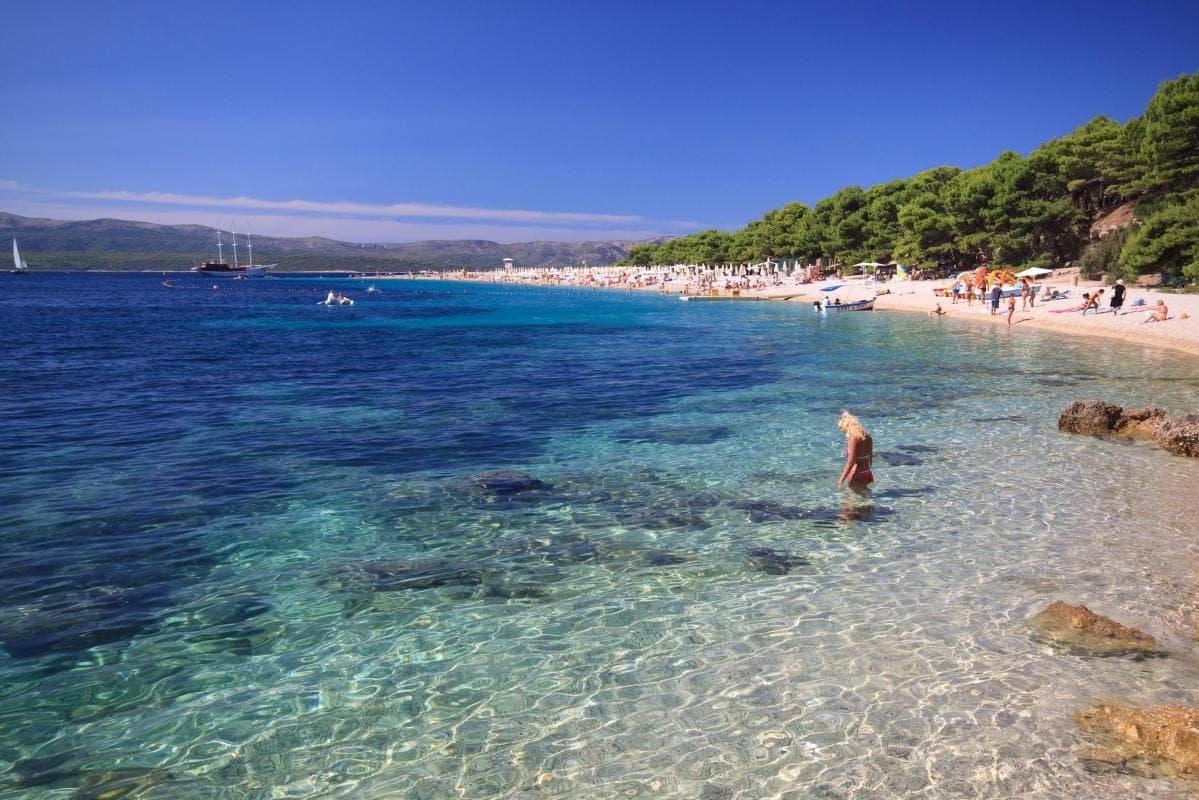
Morning light creeps across the Adriatic and the Golden Horn wakes slowly—first the silvery face of the sea, then the low roar of windsurfers carving the water, then the spit itself: a narrow tongue of white pebbles that points like a compass needle into the open blue. Walk the beach at dawn and you can feel the geography in motion. The tip of Zlatni Rat (Golden Horn), on the southern shore of Brač island, is not a static postcard; it’s a living edge that reshapes itself with each southern swell and northerly gale, a place where currents and wind argue and the shoreline answers.
For travelers who want more than a pretty photo, Zlatni Rat rewards curiosity with contrast. By day it’s a magnet for swimmers and windsurfers—its clear, shallow water warms quickly and visibility for snorkeling is excellent—and by late afternoon it becomes a vantage point: look back to the jagged silhouette of Vidova Gora rising inland, and across the channel to Hvar’s lavender hills. The best way to understand Zlatni Rat is to move: swim the clear crescent, stand on the horn and let the sea push your decisions, or climb a nearby ridge for a postcard-perfect panorama.
Geology and history are part of the performance. Zlatni Rat is a spit of Pešćenjak—small, round white pebbles—built and reshaped by longshore drift and storm surges. The island of Brač itself is famous for its dense limestone; quarried stone from Brač underpins much of Dalmatia’s coastal architecture and has a reputation for durability and a pale, luminous color that helps the towns glow in evening light. Human history here is a slower movement than the sea: fishing villages, Venetian trade, and traditional stone masonry in towns like Pučišća shaped local culture for centuries.
Culturally, the Dalmatian coast wears its food and music lightly. After a day of salt and sun, locals serve thin, fragrant peka—meat and vegetables slow-roasted under a metal bell—or plates of grilled fish, charred and fragrant with olive oil and lemon. In Bol, the town nearest Zlatni Rat, family-run konobas (tavernas) pour local wines and share stories about the sea. Boat crews will talk about the winds with the same certainty a farmer has for seasons; they’ll recommend moorings and hidden coves that don’t feature on every map.
That local knowledge is why travelers often pick a boat as their primary way to experience Zlatni Rat and the surrounding coast. Full-day and private charters launch from Split or Bol and string together the best hits—Blue Lagoon coves for snorkeling, Hvar’s harbor for a lunch stop, the hidden bays of Šolta, and time to float off Zlatni Rat itself. For those who want a different perspective, a short scenic flight from Brač Airport frames the horn’s ever-changing geometry against a mosaic of islands—an aerial reminder that the Adriatic is an archipelago of microclimates.
Practicalities make or break the day. Zlatni Rat is busiest mid-summer; arrive early for empty waters and softer light. If you’re staying in Split, expect a ferry-to-Brač crossing plus a short drive to Bol—book ferries ahead in July and August. From Bol the beach is a short walk; a rental bike or taxi eases heavier loads. If you plan a boat trip, choose small-group or private charters for flexibility: they allot more swim time, can navigate to quieter coves, and local skippers know when and where the currents favor safe anchoring.
Footwear and water sense matter. The pebble beach is comfortable for bare feet but can be hot midday; water shoes help for shallow entry points. Winds can come up quickly—if you’re on the horn’s tip you’ll feel it first—so pack a light wind layer even on warm days. For snorkeling, bring a mask and a reef-safe sunscreen; the underwater landscape near the spit is mixed rock and sparse Posidonia meadows, home to small fish and the occasional sea urchin.
For a fuller day, combine Zlatni Rat with a short hike up Vidova Gora, the highest peak on the Adriatic islands at 778 meters. From Bol, a roundtrip route to the summit is roughly 6–8 km depending on the trail, with about 700–780 meters of elevation gain—steep in sections but rewarded by sweeping views of the horn and the Hvar channel. Bring plenty of water and expect wind at the top.
If you’re thinking photography: arrive at golden hour. The light sculpts the white pebbles and brings a warm contrast to the blue sea; the horn’s point returns the aerial view best from Vidova Gora or a chartered flight. And if you’re booking a tour, ask about small-group options that stop at the shipwreck off Šolta or anchor in secluded bays where the Adriatic’s clarity is at its best.
Zlatni Rat is a study in motion—the sea nudges the shore, the wind writes and erases the tip, and human visitors rotate through with the seasons. It’s a place designed for active relaxation: float, paddle, sail, walk, and then sit with a plate of grilled fish as the light falls. Go with a plan and a sense of openness, and the Golden Horn will give you a view that stays with you long after the pebbles have shifted.
Recommended ways to experience Zlatni Rat from Split or Bol: take a small-group full-day tour to Brač that includes a village visit and Vidova Gora viewpoints; charter a private boat for a customizable day hitting Zlatni Rat, Hvar, and the Pakleni Islands; or book a short panoramic flight from Brač Airport for that aerial “live postcard” view. Each approach offers a different relationship with that thin, breathing strip of land where sea and wind are the architects.
Trail wisdom
Small choices, better day.
Arrive early
Beat the crowds and catch glassy morning water ideal for swimming and photos.
Bring water shoes
Pebbles are comfortable but can be hot and slippery; shoes protect your feet entering the water.
Choose a small boat charter
Private or small-group charters give flexible stops, quieter coves, and local skipper knowledge.
Use reef-safe sunscreen
Protect marine life and reduce skin irritation while snorkeling near Posidonia meadows.
Local knowledge
Read the place, not just the route.
Watch for native species including Mediterranean monk seal (rare, sightings very uncommon), Varieties of small reef fish and Posidonia sea grass communities.
Keep an eye out for wildlife during the transition between areas and habitats. Respect distance guidelines.
The spit is sensitive to erosion and human pressure—stick to designated paths, use licensed operators, and avoid leaving litter on the beach.
Follow the guide's instructions on size limits, ethical handling, and leave-no-trace practices.
Cove west of Zlatni Rat reachable by boat for clearer snorkeling and fewer crowds. Stone masonry village of Pučišća with its quarry workshops and small museum
Locally recommended viewpoints and quiet spots known best to local operators.
Brač has a long tradition of stone masonry; its limestone shaped local architecture and was valued across Dalmatia for centuries.
Maritime roots and regional tradition shape the waterways and working coasts.
Seasonal guide
Four versions of the same landscape.
Spring
Best forhiking Vidova Gora · blooming wildflowers · quieter beaches
Challengesunpredictable wind · cooler sea temperatures
Spring offers pleasant hiking and fewer crowds, though the sea can still be cool and winds variable.
Summer
Best forswimming & sunbathing · windsurfing conditions · full boat service
Challengespeak crowds · higher prices and limited ferry seats
Summer is ideal for water sports and long boat days—book ferries and tours early to avoid sold‑out peaks.
Fall
Best forwarmer sea in September · photo light · fewer tourists
Challengesshortening daylight · some boat schedules reduced
Late summer into early fall is the sweet spot: warm water, comfortable air, and thinner crowds.
Winter
Best forstorm-watching · local culture in Bol · low-season rates
Challengeslimited ferry schedules · many beach services closed
Winter is quiet and dramatic; the horn still shifts during storms, but many tourist services are reduced.
Pack with intention
What to bring.
Good to know
Common questions.
Take a ferry or catamaran to Supetar or Bol (seasonal direct catamarans may run to Bol), then a short drive or local bus to the beach—book crossings in high season.
Plan the edges
The details that make the day easier.
Zlatni Rat’s characteristic horn shifts its orientation in response to prevailing winds and currents—after heavy storms the tip can visibly change position.
Dalmatian cuisine centers on fresh seafood, olive oil, and slow-cooked peka; try iced rožata for dessert and pair local white wines with beachside grilled fish.
- Nearest town
- Bol on Brač; ferry from Split to Supetar
Support licensed boat operators, use reef-safe sunscreen, avoid trampling dune vegetation, and pack out all trash to preserve Zlatni Rat’s fragile coastal systems.
Explore by topic
Follow the threads.
Keep exploring
Make the story part of the trip.
Set out from Bass Harbor for a private, customizable day on Blue Hill Bay — lighthouses, puffins, seals, and the chance to feel Acadia from the water. Small groups, local captains, unforgettable views.
In four hours you can move from shaded canyon ferns to wind-scoured coastal ridgelines, guided by someone who knows where the light—and the hidden views—live. This private half-day hike on the Monterey Peninsula or Big Sur is compact, curated, and perfect for travelers who want depth without a multiday commitment.
 Related story
Beneath a sky of shifting light, Skaftafell’s ice reads like a map of time. This three-hour guided glacier hike mixes technical instruction with geology and culture: compact, safe, and unforgettable.