
What the day feels like
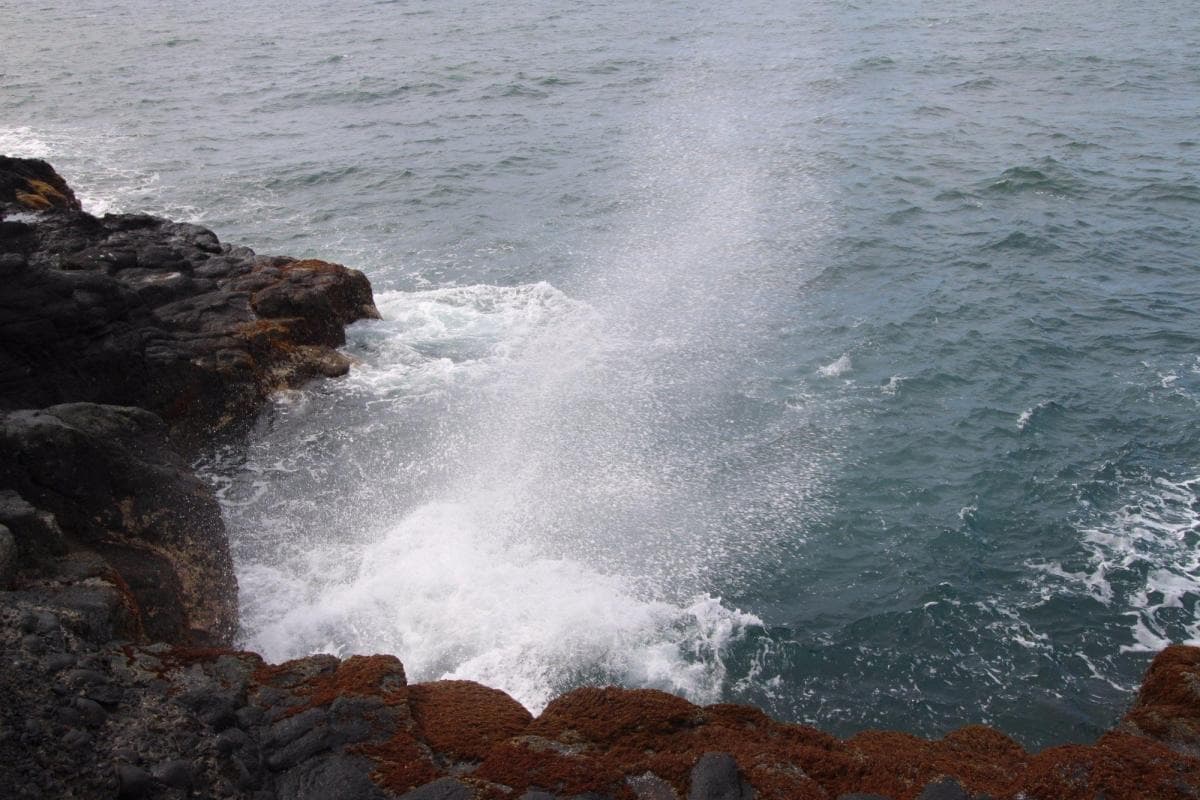
The first thing you notice at Arahoho is the sound — a low intake, then a sudden, delighted exhale as the ocean pushes a vertical jet of spray through a seam in the black basalt. Stand on the weathered viewing platform and wind will comb your hair, salt will sting your lips, and the cliff will feel alive beneath your boots: Tahiti, in one of its most theatrical moods.
Arahoho Blowhole sits on the island’s rugged east coast, a theatrical punctuation mark on the road that curls away from Papeete into a green, wet world. The blowhole isn’t dramatic for its height so much as its timing: approaching swells funnel into a sea cave, compressing until the water and air are driven up through the rock with a percussion that’s both musical and a little frightening. On a good swell the column can rise several meters; even on an ordinary day the spray stains the surrounding vegetation silver and leaves the basalt smelling clean.
This is coastal geology you can read with your eyes. Tahiti’s backbone is volcanic; the cliffs around Arahoho are the last visible edges of lava flows that cooled, fractured, and were slowly eaten back by the Pacific. Over millennia the sea carved cavities in the rock, and where a pocket aligns with the surface a blowhole is born. Locals often call it Trou de Souffleur — the blower’s hole — a name that’s both literal and affectionate. For centuries these coastal features have been landmarks for sailors and markers in oral geography: reefs to respect, cliffs to skirt, and places that carry stories.
Culturally, arrivals in Tahiti left their own marks along this coast. European navigators stopped at sites such as Point Venus and Matavai Bay, and the narrative of contact is visible in lighthouses and place names. But Arahoho is also very much a place of present-day life: fishermen check their lines nearby, families picnic in protected coves, and guides from Papeete bring visitors who are keen to understand how geology, tide, and weather stage such a spectacle.
For travelers, Arahoho makes for an elegant half-day outing or a stop on a longer east-coast circuit. Driving from Papeete along the coastal highway takes roughly 45–60 minutes depending on traffic. The route is scenic — palms, black-sand beaches, steep waterfall chasms — and many of the offered visit options center on the same corridor. If you want interpretation and context, book the Private Tour of Tahiti's East Coast (3 hours) or one of the full-day shore tours; guides will frame Arahoho alongside the Faarumai waterfalls, Venus Point, and the Maraa Caves, turning a handful of stops into a coherent story about the island’s geology and Polynesian history.
If your appetite leans toward adventure, pair a land tour with something airborne or marine: several operators combine island driving with paragliding flights over the lagoon or a taxi-boat ride to Teahupo’o to watch powerhouse surf from a safe distance. These multi-mode days reveal how Tahiti’s landscapes link — what you see on the cliff is connected to the swell that crafts mountain-breaching waves offshore.
Practicalities are simple but worth noting. Arahoho’s viewpoint is at sea level with almost no elevation gain to reach it, so it’s accessible to most visitors; the final stretch is a short walk over uneven rock that can be slippery with spray. The show is best around mid- to high-tide when waves have the momentum to force air through the cave. Mornings are typically calmer and offer softer light for photos; late afternoon can be windier and rawer.
Safety is non-negotiable: respect signage and barriers. The basalt is sharp and often slick; rogue waves can come with little warning. Keep children close and don’t try to get closer to the seam — the ocean in Tahiti is beautiful and blunt.
For planning: pair Arahoho with an East Coast half-day tour if you have limited time, or take a full-day private shore tour if you want deeper context and stops for lunch with views. If you’re on a cruise schedule, shore tours leaving from Tahiti’s port are structured to make the most of limited hours. For photographers, bring a fast shutter speed and a lens you can keep relatively dry; the unpredictable spray rewards readiness and a towel.
Arahoho is not about conquering a summit or ticking a famous reef off a list — it’s about patience and presence. A few minutes of waiting, and the cliff brews its own brief thunder. It’s a reminder that Tahiti’s drama is not always tropical postcard calm: sometimes the island breathes, and you get to stand in front of that breath and watch it shape the shoreline.
Whether you’re a casual traveler looking for a striking half-day excursion or a photographer chasing the perfect spray, Arahoho is an efficient and unforgettable lesson in the power of sea and stone. Walk with good shoes, come with respect, and leave with a vivid memory of a place that still, stubbornly, shows the ocean who’s in charge.
Trail wisdom
Small choices, better day.
Time it with the tide
Visit around mid- to high-tide for the most spectacular sprays; mornings tend to be calmer and better for photos.
Wear grippy shoes
Basalt is sharp and slippery when wet—closed-toe shoes with good traction reduce the risk of slips.
Respect viewing barriers
Stay behind platforms and signs; strong, unexpected waves can sweep people off exposed rocks.
Combine with an east-coast tour
Book a Private Tour of Tahiti's East Coast or a full-day shore tour to turn a single stop into a rich island narrative.
Local knowledge
Read the place, not just the route.
Watch for native species including Frigatebirds and terns hunting off the cliffs, Occasional spinner dolphins offshore during calmer seas.
Keep an eye out for wildlife during the transition between areas and habitats. Respect distance guidelines.
Stay on marked paths and avoid trampling coastal vegetation; support local guides and businesses to ensure tourism funds flow back into conservation and community projects.
Follow the guide's instructions on size limits, ethical handling, and leave-no-trace practices.
Little black-sand coves a short drive north of the blowhole with sheltered tide pools. A quiet viewpoint overlooking the reef where local fishermen mend nets at dawn
Locally recommended viewpoints and quiet spots known best to local operators.
European navigators anchored nearby in the late 1700s; the east coast’s headlands and bays were pivotal meeting points during early contact.
Maritime roots and regional tradition shape the waterways and working coasts.
Seasonal guide
Four versions of the same landscape.
Spring
Best forfewer crowds · lush coastal greenery
Challengesintermittent showers · variable swell
Spring (Southern Hemisphere spring months) brings fresh green growth and fewer tour groups—expect occasional rain that can freshen the display.
Summer
Best fordry, clear conditions · calm seas for boat pairings
Challengesstrong sun · higher visitor numbers
Tahiti’s dry season (May–October) offers the most reliable conditions for sightseeing and photography but can be busier and sun-intensive.
Fall
Best fordramatic swells · fewer tourists late in the season
Challengespossibility of larger waves · windier afternoons
Autumn can produce larger swells that make the blowhole more theatrical—take extra care on exposed rocks and platforms.
Winter
Best forstorm-sculpted coastal scenery · surf-watching at Teahupo'o
Challengesrough seas · some tours curtailed by weather
Winter months bring stormier seas and stronger winds; the blowhole can be spectacular but less predictable and sometimes inaccessible.
Pack with intention
What to bring.
Good to know
Common questions.
It’s about a 45–60 minute drive east from Papeete along the coastal road, depending on traffic and how many stops you make.
Plan the edges
The details that make the day easier.
Blowholes like Arahoho form when waves erode sea caves into volcanic rock; pressure pushes air and water upward through small openings creating the distinctive spout.
Taste Tahiti at the Papeete market before or after your visit: poisson cru (raw fish in coconut milk), fresh tropical fruit, and stalls selling black pearls and pareos make a perfect cultural add-on to the coastal scenery.
- From Papeete
- 45–60 min drive east; accessible viewpoint with short walk; best at mid
Use reputable local guides, avoid walking on fragile coastal vegetation, and carry out any trash—supporting small operators helps fund conservation of Tahiti’s shoreline.
Explore by topic
Follow the threads.
Keep exploring
Make the story part of the trip.
Set out from Bass Harbor for a private, customizable day on Blue Hill Bay — lighthouses, puffins, seals, and the chance to feel Acadia from the water. Small groups, local captains, unforgettable views.
In four hours you can move from shaded canyon ferns to wind-scoured coastal ridgelines, guided by someone who knows where the light—and the hidden views—live. This private half-day hike on the Monterey Peninsula or Big Sur is compact, curated, and perfect for travelers who want depth without a multiday commitment.
 Related story
Beneath a sky of shifting light, Skaftafell’s ice reads like a map of time. This three-hour guided glacier hike mixes technical instruction with geology and culture: compact, safe, and unforgettable.