
What the day feels like
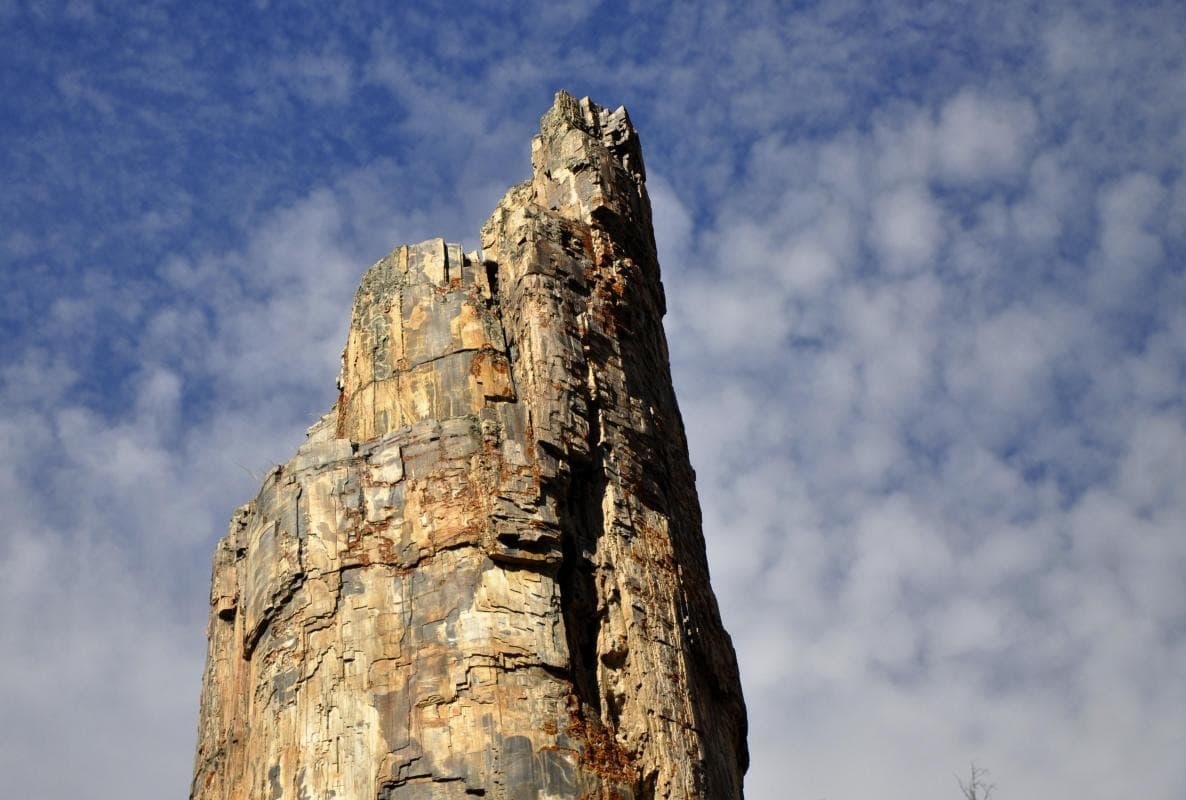
The path to the Yellowstone Petrified Tree begins as most memorable park moments do: with a small act of patience. Pull off the Grand Loop Road, step out of the car into a dry, clean air that smells faintly of sage and sun-baked soil, and you feel the park slow down. A short wooden sign marks the turn; beyond it is a compact loop trail that doesn’t demand hours of time but insists on a different kind of attention. The forest here—older than the road, greener than the parking lot—hushes you toward a trunk that looks, at first glance, like a fallen log petrified into dusky agate. Up close, the grain is preserved in stone, a fossilized memory of a tree that once stood where elk now graze.
There’s a neatness to visiting a single object in a park that contains geysers, canyons, and supervolcanoes. The Yellowstone Petrified Tree is not a cathedral to scale; it’s a tactile, geological keepsake that compresses deep time into something you can touch. Geologically, it’s an artifact of volcanic and fluvial processes that reshaped this landscape over millions of years. Silica-rich fluids replaced cellular wood tissues through permineralization, preserving growth rings and bark texture in mineral form. That transition—living tree to stone—is a quiet testament to Yellowstone’s violent and patient past.
To stand beside the petrified trunk is to feel the park’s two main stories intertwine: the living, mobile ecosystem of bison, wolves, and migrating birds, and the ancient, slow-moving forces that built the plateau and buried forests in ash and sediment. Those forces set the stage for the park’s thermal features; they also preserved relics like the petrified wood you see here. The Petrified Tree doesn’t scream for attention the way Old Faithful does, but it rewards the kind of slow-looking travel that makes a trip memorable—the small, intimate moments between the headline attractions.
Local guides and outfitters use the Petrified Tree as a moment of geological translation on longer itineraries. Full-day wildlife safaris into the Lamar Valley and private winter tours will often include a stop at the tree, a quick educational pause between bison sightings and thermal terrace walks. Multi-day Upper and Lower Loop explorations likewise tuck it into a broader narrative of the park’s history: hydrothermal activity, the sculpting of canyons, and the ebb and flow of wildlife. In winter, the petrified trunk sits framed by brilliant contrast—black rock against white snow—an illustration of how seasons reframe familiar features.
Planning your visit: the site is easy to reach from Gardiner or Mammoth Hot Springs and requires only a short, well-maintained walk. Expect interpretive signs rather than a staffed site—this is an object of observation more than a visitor center. The loop is kid-friendly and accessible to most abilities, but wildlife rules still apply: keep your distance from animals, and be prepared for sudden temperature shifts.
Why go beyond the petrified trunk? Because pairing this stop with other nearby experiences turns a small curiosity into a layered day. Drive the Lamar Valley at dawn with a naturalist guide to catch wolves and elk in the soft light; take a winter wildlife safari from Bozeman or West Yellowstone if you’re chasing the rare clarity of Yellowstone’s cold months; or opt for a relaxed 2-day loop that combines geysers, terraces, and historical sites with an overnight at a local hot spring to balance your fieldwork with warmth.
Practical considerations are straightforward but essential. Timing matters: sunrise and late afternoon are excellent for photography and wildlife sightings, and midday can be busier on summer weekends. Bring optics—a pair of binoculars or a spotting scope—because nearby valleys teem with life that you’ll want to observe from a respectful distance. Footwear should be sturdy but not extreme; the trail is short and generally comfortable but can be muddy in spring. Hydration, layered clothing, and a basic first-aid kit are standard Yellowstone practice.
Culturally, the Petrified Tree sits within a landscape that carries Native American histories, early explorer journals, and the conservation ethos that birthed America’s national parks. The site encourages a gentle curiosity—ask your guide about the fossil record here, the history of early scientific study, and how geology and ecology intersect in the modern park.
If you arrive with the expectation of a single spectacle, you’ll still leave satisfied. If you arrive ready to stitch small objects into a broader narrative of place, the Petrified Tree will feel like a key: it unlocks questions about how volcanic ash, ancient forests, and modern wildlife have threaded together across millennia. It’s an intimate encounter with deep time, a pause that makes the rest of Yellowstone’s drama—its geysers, valleys, and herds—readier to be understood.
Whether you’re a day-tripper connecting a few highlights or a wildlife-focused traveler booking a Lamar Valley or winter safari, include the Yellowstone Petrified Tree on your route. It’s a compact lesson in geology, a tactile museum without walls, and a reminder that, in Yellowstone, even the small things are part of a story that reshapes what you thought you knew about the natural world.
Trail wisdom
Small choices, better day.
Bring optics
Binoculars or a spotting scope let you scan nearby valleys for bison and wolves while keeping safe distance.
Layer for sudden weather
Temperatures swing quickly in Yellowstone—pack a windbreaker and insulating layer for comfort.
Respect wildlife distances
Park rules require staying 100 yards from bears and wolves and 25 yards from other wildlife—use optics instead of closing the gap.
Combine stops for context
Include the Petrified Tree as a stop on a Lamar Valley safari or a multi-day loop to add geological perspective to wildlife viewing.
Local knowledge
Read the place, not just the route.
Watch for native species including Bison, Elk (and seasonal wolf activity in Lamar Valley).
Keep an eye out for wildlife during the transition between areas and habitats. Respect distance guidelines.
Respect for wildlife distances and staying on established trails are key: Yellowstone’s ecosystem is fragile, and visitor behavior directly affects animal stress and habitat integrity.
Follow the guide's instructions on size limits, ethical handling, and leave-no-trace practices.
Old Gardiner Road scenic drive for quieter views. Mammoth Hot Springs terraces for contrasting geology and color
Locally recommended viewpoints and quiet spots known best to local operators.
Yellowstone was designated the world’s first national park in 1872; sites like the Petrified Tree reflect both ancient geologic processes and early scientific interest in the area.
Maritime roots and regional tradition shape the waterways and working coasts.
Seasonal guide
Four versions of the same landscape.
Spring
Best forWildflowers starting to bloom · Quieter trails · Active bird migration
ChallengesSnowmelt mud · Variable road openings
Spring brings variable conditions and fewer crowds—expect wet trails and the possibility that some park roads remain closed.
Summer
Best forFull access to roads and facilities · Long daylight for exploration · Family-friendly visits
ChallengesPeak crowds · High daytime temperatures
Summer offers the most predictable access but also the largest crowds—visit early or late in the day for a quieter experience.
Fall
Best forCrisp light for photography · Peak elk rut and wildlife activity · Fewer visitors
ChallengesCooling temperatures · Shorter daylight hours
Fall is ideal for wildlife watching and photography, with cooler air and thinner crowds—plan for chilly mornings and evenings.
Winter
Best forSnowy contrasts for photography · Specialized wildlife tours · Solitude
ChallengesLimited road access · Extreme cold and travel constraints
Winter reframes the site with snow and sharp light; guided winter safaris are the best way to experience the park safely this season.
Pack with intention
What to bring.
Good to know
Common questions.
The loop trail is short—typically 10–30 minutes on foot depending on how much time you spend reading signs and photographing the trunk.
Plan the edges
The details that make the day easier.
Yellowstone National Park was established in 1872 as the world’s first national park—its fossil sites, including petrified wood, record ancient forests from the Eocene epoch roughly 50 million years ago.
Gateway towns like Gardiner and West Yellowstone blend cowboy-town charm with national-park services—think hearty breakfasts, local guide shuttles, and artisanal gear shops to stock up before your outing.
- Know-before-you-go
- Northern park access via Gardiner; short interpretive loop trail; combine with Lamar Valley safaris or multi-day loops; pack layers, optics, and patience.
Stick to trails, maintain wildlife viewing distances, and follow Leave No Trace principles—small actions help protect Yellowstone’s delicate habitats and thermal features.
Explore by topic
Follow the threads.
Keep exploring
Make the story part of the trip.
Set out from Bass Harbor for a private, customizable day on Blue Hill Bay — lighthouses, puffins, seals, and the chance to feel Acadia from the water. Small groups, local captains, unforgettable views.
In four hours you can move from shaded canyon ferns to wind-scoured coastal ridgelines, guided by someone who knows where the light—and the hidden views—live. This private half-day hike on the Monterey Peninsula or Big Sur is compact, curated, and perfect for travelers who want depth without a multiday commitment.
 Related story
Beneath a sky of shifting light, Skaftafell’s ice reads like a map of time. This three-hour guided glacier hike mixes technical instruction with geology and culture: compact, safe, and unforgettable.