
What the day feels like
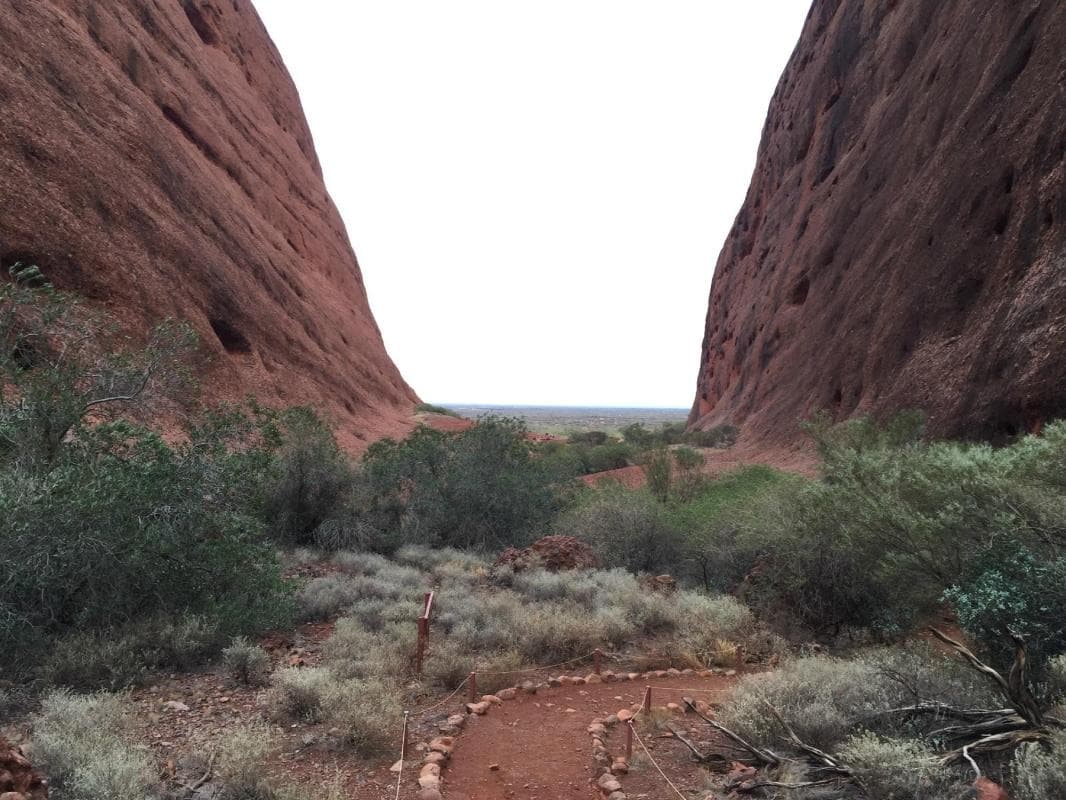
The first time you step into Walpa Gorge the world tightens and cools. The desert's wide, luminous sweep—sun-baked red earth and horizontal heat—gives way to a narrow cleft between enormous domes. Kata Tjuta’s rounded, ribbed walls read like the pages of a folded atlas; when wind and weather conspire, they catch your shadow and hold it. The air smells faintly of eucalyptus and iron; a whisper of shade runs along the spine of the trail. You slow down, not because you have to, but because the place asks for it.
Walpa Gorge (Olga Gorge) is a short, resolute walk on the western side of Kata Tjuta, part of Uluru-Kata Tjuta National Park. The route is modest in distance—a roughly 2.6 km return walk that most people complete in 45–90 minutes—but its compressed drama makes every step feel more consequential than the numbers suggest. Where the desert is a theatre of horizontals, the gorge is vertical storytelling: stacked layers of conglomerate rock—ancient cobbles cemented together—funnel light into cool slots and create pockets of plant life that defy the surrounding barrenness.
Kata Tjuta itself is older than the stories that now center Uluru. Geologically, the domes are conglomerate and sandstone laid down by ancient rivers and compressed into rock hundreds of millions of years ago. Over that span, erosion and tectonic shifts sculpted the rounded shapes visible today. For the Anangu—the park’s traditional owners—the whole place is a living cultural landscape. Walpa Gorge carries Tjukurpa (ancestral law and creation stories) that connect people to the land, to seasonal cycles and to the flora and fauna that make the gorge their home. Respect for that relationship shapes how visitors move here: stay on the path, heed signage, and visit the park’s cultural centre in Yulara for context before you enter the walk.
The trail itself is straightforward but tactile. After a short, exposed approach across red sand, you enter the gorge proper where the path tightens and rock walls loom. The floor alternates between packed sand and shallow rock steps; in places the trail threads between sheer faces only a few meters apart. There’s no steep climb—total elevation change is modest—yet the sense of enclosure and the coolness under the overhangs make the walk feel more like a discovery than an exercise. Vegetation is quietly abundant by desert standards: spinifex, desert oaks, and pockets of grasses and shrubs cling where moisture lingers. Listen and you might hear a thorny devil scuttle or a wedge-tailed eagle ride the thermal columns above the domes.
This is a short walk that rewards attentiveness. Early morning light spills gold on the eastern walls; late afternoon softens the stones to purple and rust. That interplay of light and form is a photographer’s dream, but it’s also a crucial planning note: temperature swings are dramatic. In summer the park can reach extreme heat and some walks close for safety, while winter mornings can be crisp and clear.
Practicalities are simple but important. Bring at least 1–2 liters of water per person, wear sun protection even when the gorge’s shade feels welcoming, and choose sturdy shoes with good grip—the trail can be sandy and slippery where rock is polished smooth. There’s no need for technical climbing gear; the walk is non-technical, family-friendly, and a natural complement to longer routes like the Valley of the Winds. Entry to Uluru-Kata Tjuta National Park requires a park pass—buy one at the park or online ahead of time—and stay aware of cultural signage: some parts of the park carry photography or access restrictions out of respect for Anangu.
Trail wisdom
Small choices, better day.
Start early or late
Temperatures in central Australia swing quickly; aim for first light or late afternoon to avoid heat and to catch the best light for photos.
Carry adequate water
Even for a short 2.6 km walk, bring 1–2 liters per person—there’s no water on the trail and desert dehydration is fast.
Wear sturdy shoes
Sandy sections and smooth rock surfaces mean ankle-supporting hiking shoes with good grip are the best choice.
Respect cultural signage
Some spots in the park have restricted access or sensitive cultural significance—follow signs and guidance from rangers.
Local knowledge
Read the place, not just the route.
Watch for native species including thorny devil (Moloch horridus), wedge-tailed eagle.
Keep an eye out for wildlife during the transition between areas and habitats. Respect distance guidelines.
Uluru-Kata Tjuta National Park is co-managed by Anangu and Parks Australia; visitors are asked to stay on trails, dispose of waste responsibly, and support local Aboriginal enterprises.
Follow the guide's instructions on size limits, ethical handling, and leave-no-trace practices.
A narrow alcove halfway into the gorge where morning light pools on lichen-covered rock. A small seep hidden in a side crevice—great for close-up plant and insect observation
Locally recommended viewpoints and quiet spots known best to local operators.
Kata Tjuta is part of the traditional lands of the Anangu people; its domes and gorges feature in Tjukurpa (creation stories) that guide cultural practice and stewardship.
Maritime roots and regional tradition shape the waterways and working coasts.
Seasonal guide
Four versions of the same landscape.
Spring
Best forwildflower spotting · milder temperatures · photography in soft light
Challengesvariable winds · occasionally cooler mornings
Spring brings warming days and bursts of desert wildflowers—great for color and comfortable walks, but be ready for blustery conditions.
Summer
Best fordramatic monsoon light · off-peak crowds in some cases · shorter daylight explorations
Challengesextreme heat · trail closures during high temperatures · risk of heat-related illness
Summer is hot and sometimes unsafe for walking; check park alerts and avoid midday, carrying extra water and sun protection.
Fall
Best forstable weather · crisp air for long views · comfortable hiking
Challengescool mornings with warm afternoons · increased visitor numbers
Autumn offers stable, comfortable weather ideal for exploring the gorge—days are pleasant, but pack a light layer for cool starts.
Winter
Best forclear skies · cool, comfortable hikes · excellent sunrise/sunset colors
Challengeschilly mornings and nights · shorter daylight hours
Winter is arguably the best season for Walpa Gorge: cool days and spectacular light, just bring warm layers for mornings.
Pack with intention
What to bring.
Good to know
Common questions.
The walk is approximately 2.6 km return and typically takes 45–90 minutes depending on stops for photos and interpretation.
Plan the edges
The details that make the day easier.
Kata Tjuta’s rounded domes are made of a coarse conglomerate—ancient river-deposited cobbles cemented into rock—formed hundreds of millions of years ago.
Yulara’s cultural centre and nearby Anangu-run experiences provide context on Tjukurpa and local arts; try bush-tucker–inspired dishes at resort restaurants and visit artists’ galleries for authentic textiles and prints.
- Distance
- ~2.6 km return; Time: 45–90 minutes; Difficulty: Easy; Access: Drive from Yulara (30–40 min), park pass required; Best time: May–September mornings
Stay on marked trails, avoid collecting rocks or plants, use refillable containers, and consider hiring Anangu-guided experiences to support local stewardship and cultural preservation.
Explore by topic
Follow the threads.
Keep exploring
Make the story part of the trip.
Set out from Bass Harbor for a private, customizable day on Blue Hill Bay — lighthouses, puffins, seals, and the chance to feel Acadia from the water. Small groups, local captains, unforgettable views.
In four hours you can move from shaded canyon ferns to wind-scoured coastal ridgelines, guided by someone who knows where the light—and the hidden views—live. This private half-day hike on the Monterey Peninsula or Big Sur is compact, curated, and perfect for travelers who want depth without a multiday commitment.
 Related story
Beneath a sky of shifting light, Skaftafell’s ice reads like a map of time. This three-hour guided glacier hike mixes technical instruction with geology and culture: compact, safe, and unforgettable.