
What the day feels like
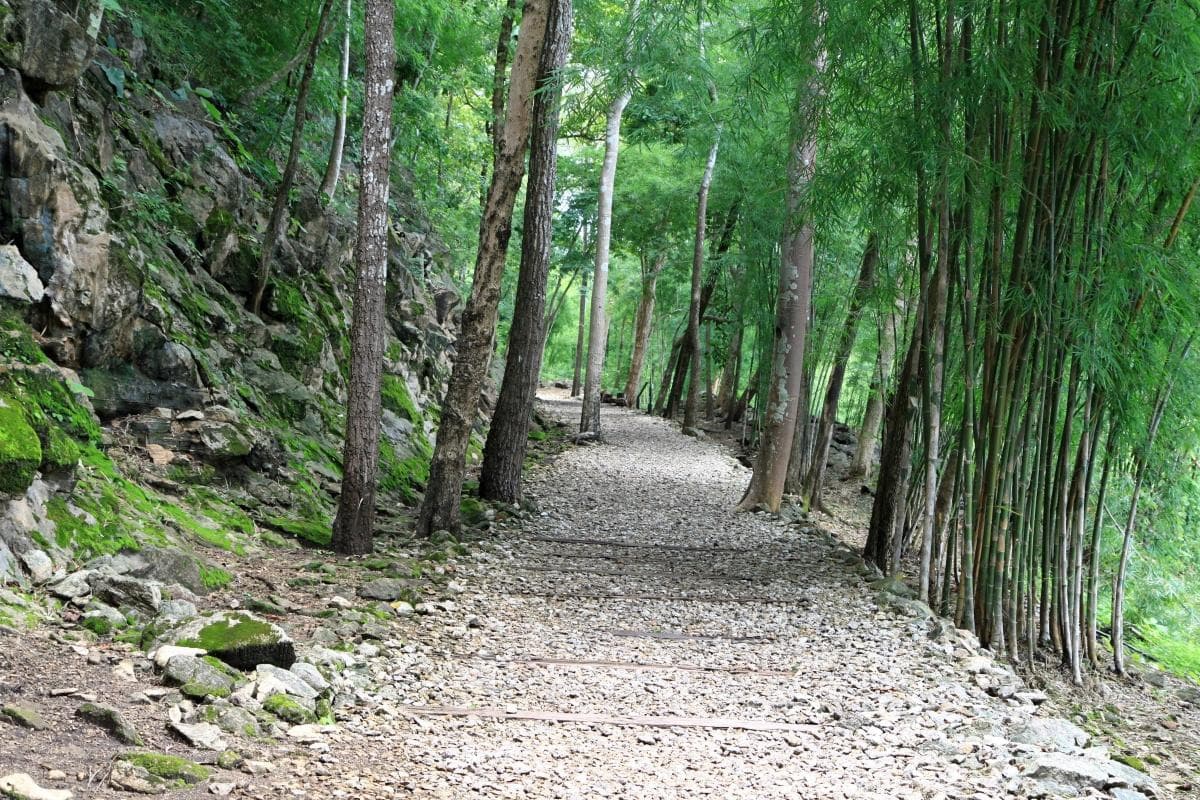
The path narrows and sunlight slips like a secret between two sheer faces of rock. Underfoot are the echoes of pick and hammer—grooves in the bedrock that read like a ledger of human effort. At Hellfire Pass, the cutting known locally as Konyu, the jungle leans close, and the air smells of damp leaf mold and teak. Visitors step carefully along the interpretive trail, where the original rail bed drops away and the rawness of a wartime landscape is preserved in stone. It’s not a trek for spectacle; it’s a walk that asks you to witness.
Hellfire Pass sits in the hills west of Kanchanaburi, Thailand, along the infamous Burma Railway—an engineering project carved through jungle and rock during World War II. The Japanese Army forced Allied prisoners of war and tens of thousands of Asian laborers to build the line between Thailand and Burma; the route demanded brutal cuts, bridges and river crossings. Hellfire Pass is the most dramatic of these works: a narrow gorge cleaved out by hand and blackened at night by oil lamps that cast flickering faces on the rock—hence the grim name. Today, the Hellfire Pass Interpretive Centre and Memorial Walking Trail preserve those scars and tell the human stories behind them.
Geology gives the place its stubborn personality. The pass is a manmade slit through resistant bedrock—layers that resisted the repeating rhythm of pickaxes and blasting charges. Over decades, vegetation has softened the edges, but the cut remains an architectural statement, raw and precise. The trail threads past informational panels, personal recollections, and plaques for prisoners and laborers whose names survive in the stone and records. It is both a natural amphitheater and an act of remembrance.
Visiting Hellfire Pass is an exercise in contextual travel. Most travelers arrive as part of a broader Kanchanaburi itinerary—half-day or full-day tours that combine the Hellfire Pass with the Bridge over the River Kwai, the Kanchanaburi War Cemetery, and sometimes the gentle cascades of Erawan Waterfall. Providers such as Bridge over River Kwai and Hellfire Pass Tour with Train Ride or Private Tour: Death Railway, Hellfire Pass and Erawan Waterfall make it convenient to stitch history, landscape and a scenic rail ride into a single day trip from Bangkok. A more reflective visit, however, is quiet and unhurried: allow two hours for the Hellfire Pass museum and an hour on the trail to read, sit, and let the place speak.
The cultural context is immediate. The Kanchanaburi War Cemetery is a short drive away—rows of marble crosses that catalog the cost of the railway—while the Bridge over the River Kwai stands as a filmic and physical reminder of the wartime narrative that drew global attention to this otherwise rugged province. Local guides are adept at balancing the technical history of the railway with the human stories; they also help visitors navigate the etiquette of a place that doubles as both national history and gravesite.
Practicalities matter here. The Hellfire Pass trail is roughly 3 kilometers round-trip if you include the museum loop and the cutting walkway; elevation changes are modest but involve stairs, exposed rock, and sometimes muddy sections when the region shifts into monsoon season. Good footwear and steady footing are non-negotiable. The interpretive center offers shade and exhibits, but on the trail you’re exposed to sun, occasional wind tunnels between the rock faces, and the smell of wet leaves after rain.
Timing your visit will shape the experience. Early morning brings cooler air and softer light that slants into the cutting; late afternoon lengthens shadows and quiets the small groups that typically pass through. If you’re combining Hellfire Pass with the Death Railway train ride, the rhythm of the day can be cinematic—train across the river, museum, then a meditative walk through the cutting.
Why go? There are dramatic viewpoints elsewhere in Thailand, but Hellfire Pass offers something rarer: a place where landscape and history are inseparable. The pass challenges the idea of the hike as mere playground; instead it makes the trail a classroom and a memorial. For adventurous travelers who want a physically approachable hike wrapped in sobering history, Hellfire Pass is an essential stop in Kanchanaburi.
How to plan it: If you’re based in Bangkok, expect roughly 2.5–3 hours driving each way, depending on traffic; private full-day tours minimize logistics stress and often include a stop at the Bridge over the River Kwai and the Kanchanaburi War Cemetery. If you have more time, consider an overnight in Kanchanaburi to explore Erawan National Park, or take the slow, nostalgic Death Railway train for a few stations of landscape that feels frozen in time. Bring water, a hat, sturdy shoes, and a small notebook if you want to record impressions—the place rewards quiet attention.
On a practical note, respect the memorial: photography is allowed but consider quieter tones and shorter shutter bursts near the plaques and cemetery. Learn a few Thai phrases; local guides will appreciate the effort and it opens up more personal exchange about the history and present-day community. And leave no trace: the cutting is fragile and the interpretive center is an educational resource supported by donations and careful maintenance.
Hellfire Pass isn’t about conquering a summit or finding an Instagram moment. It’s about bearing witness—feeling the weight of human labor and remembering the lives that intersected in this cutting of stone. Walk slowly. Read the names. Listen past the whisper of traffic and the rustle of teak leaves. The place will ask something of you—attention, humility, and a willingness to carry a small piece of its story home.
Trail wisdom
Small choices, better day.
Wear grippy shoes
The trail includes exposed rock, steps and occasional muddy patches—sturdy hiking shoes or trail sneakers make the walk safe and comfortable.
Time it for morning light
Early visits avoid heat and crowds and give you the best soft light through the cutting for thoughtful photos.
Bring water and insect repellent
There is minimal shade on some stretches and mosquitoes can be active near vegetation—carry 1L of water per person and repellent.
Combine sites logically
Pair Hellfire Pass with the Bridge over the River Kwai and the Kanchanaburi War Cemetery for a full historical day—many private tours include transit and lunch.
Local knowledge
Read the place, not just the route.
Watch for native species including long-tailed macaque, various forest birds such as hornbills and kingfishers.
Keep an eye out for wildlife during the transition between areas and habitats. Respect distance guidelines.
The interpretive centre emphasizes preservation and education; visitors are encouraged to stick to paths, avoid climbing the rock faces, and support the museum through donations.
Follow the guide's instructions on size limits, ethical handling, and leave-no-trace practices.
Short viewpoint east of the cutting with lower visitor traffic. Nearby small riverside eateries in Kanchanaburi serving grilled fish and local curry
Locally recommended viewpoints and quiet spots known best to local operators.
Hellfire Pass was part of the Burma Railway, a project completed in 1943 using forced labor of Allied POWs and tens of thousands of Asian laborers.
Maritime roots and regional tradition shape the waterways and working coasts.
Seasonal guide
Four versions of the same landscape.
Spring
Best forfewer tourists · mild temperatures
Challengesintermittent showers · mud on trails
Spring brings warming days with occasional rain—trail conditions can vary, but mornings are generally pleasant for walking.
Summer
Best forlush jungle photography · longer daylight
Challengeshigh heat and humidity · heavy monsoon rains late season
Summer is hot and humid; expect afternoon storms that can make the cutting slippery—start early to avoid the worst heat.
Fall
Best forclear skies · comfortable hiking temperatures
Challengesincreasing visitor numbers during holidays
Autumn is comfortable and increasingly popular—book tours ahead on weekends and Thai holidays.
Winter
Best forcool, dry conditions · easier walking
Challengescool mornings can be chilly
Thailand's cool season (November–February) is the nicest time to visit—clear air, lower humidity and stable trail conditions.
Pack with intention
What to bring.
Good to know
Common questions.
The interpretive route and cutting walkway typically take 1–2 hours total; allow extra time for the museum and reflective pauses—roughly 3 km round-trip if you include both exhibits and the cutting.
Plan the edges
The details that make the day easier.
Hellfire Pass was carved during the construction of the Burma Railway in World War II; approximately 12,000 Allied prisoners and an estimated 80,000–100,000 Southeast Asian laborers died building the railway.
Kanchanaburi blends wartime history with riverfront markets and simple Thai fare—try grilled river fish, kaw som (spicy soup), and visit a local market for fresh tropical fruit.
- Know-before-you-go
- 2.5–3 hour drive from Bangkok; allow 3–6 hours to combine museum, trail and nearby memorials; basic visitor facilities available at the interpretive centre.
Respect the memorial by staying on marked trails, take any trash with you, and consider donating at the Hellfire Pass Interpretive Centre to support maintenance and educational programs.
Explore by topic
Follow the threads.
Keep exploring
Make the story part of the trip.
Set out from Bass Harbor for a private, customizable day on Blue Hill Bay — lighthouses, puffins, seals, and the chance to feel Acadia from the water. Small groups, local captains, unforgettable views.
In four hours you can move from shaded canyon ferns to wind-scoured coastal ridgelines, guided by someone who knows where the light—and the hidden views—live. This private half-day hike on the Monterey Peninsula or Big Sur is compact, curated, and perfect for travelers who want depth without a multiday commitment.
 Related story
Beneath a sky of shifting light, Skaftafell’s ice reads like a map of time. This three-hour guided glacier hike mixes technical instruction with geology and culture: compact, safe, and unforgettable.