
What the day feels like
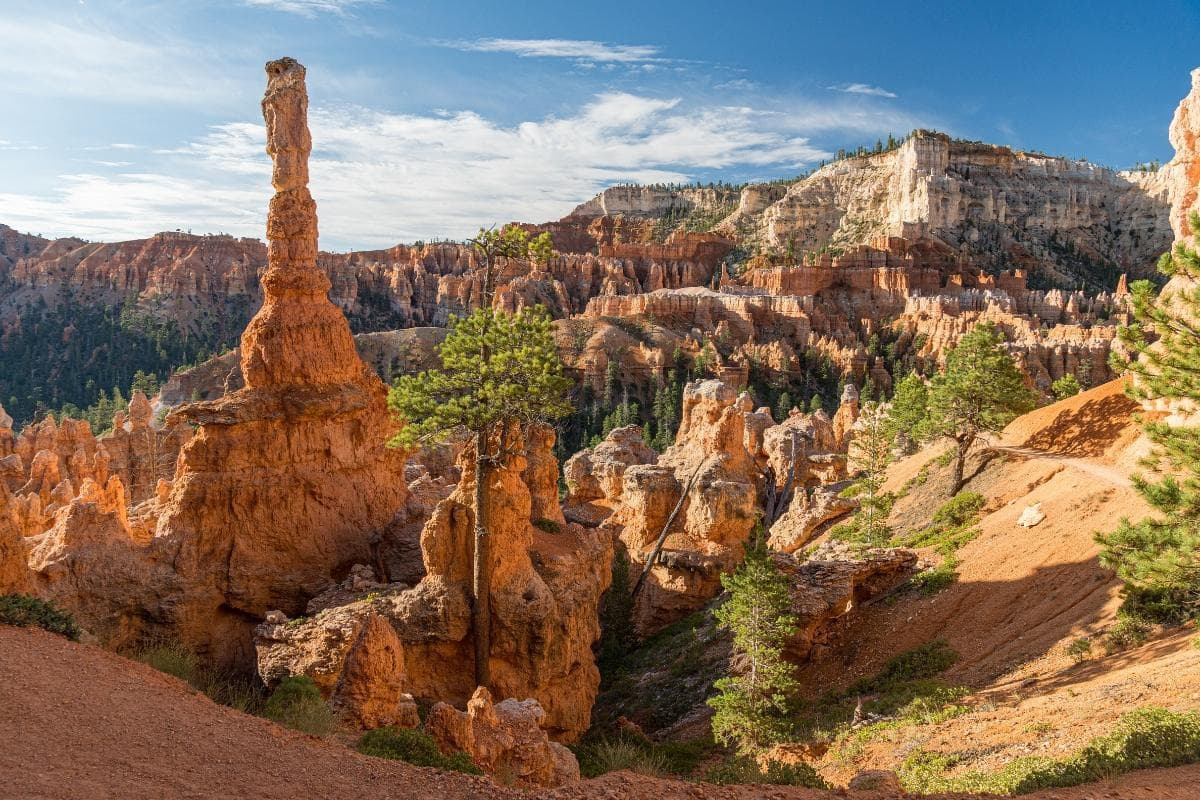
You step off the rim and the world changes. One moment the trail is rimmed by bristly pinyon and juniper; the next you’re weaving between rows of sculpted towers—hoodoos—that seem to have been arranged by a whimsical hand. The air tastes dry and clean, the sun cuts hard shadows, and for long stretches the only sound is the whisper of gravel underfoot. This is the Peekaboo Loop, one of Bryce Canyon National Park’s signature hikes: a compact lesson in erosion that gives the hoodoos room to reveal their personalities.
Peekaboo Loop begins with a descent that feels like entering a theater. The amphitheater’s sandstone curtains pull back and reveal an interior carpeted with pinnacles in cream, pink, and rust. Geology here is readable: alternating beds of limestone, siltstone, and mudstone laid down in a long-vanished lake environment have been sculpted by frost-wedging and rain. Over millennia, these processes have carved the park’s famous spires; the Peekaboo Loop is where you can move through their ranks at close quarters, sometimes squeezing between narrow fins and clambering on switchbacks that feel intentionally cinematic.
Historically, this landscape has a long human story. Paiute bands visited the rim and passed stories of the ‘red rocks’ long before settlers named Bryce Canyon after Ebenezer Bryce, a 19th-century Mormon settler. The National Park was established in 1928, preserving an eroding landscape that keeps reinventing itself with every freeze-thaw cycle. Guides on organized outings—like the Bryce Canyon Full Day Private Tour & Hike or the Bryce Canyon Full Day Small Group Tour & Hike—often stitch these human threads into their natural-history narratives, pointing out how native tribes, pioneers, and early park rangers shaped the cultural experience of the canyon.
The Peekaboo Loop rewards curiosity. Geological formations have little faces and ridges that change with the hour; birds flit between spires and chipmunks watch politely from crevices. In late afternoon light, the hoodoos blush and the valley seems to hold its breath. Guides on the private and small-group excursions tailor the route and pace, explaining technical rock layers and local flora as you go. Small groups—tours capped at eight hikers—make it easy to stop for photos and to listen while a guide points out lesser-known formations without feeling rushed. Private tours add flexibility: choose a longer route, a more relaxed pace, or a picnic at a scenic overlook.
Practically, Peekaboo is approachable but not casual. The loop is roughly 5.5 miles (about 8.9 km) round-trip, with cumulative elevation changes that can approach 800–900 feet depending on your chosen start and finish points. The trail is packed dirt with sections of loose gravel, steep switchbacks, and some exposed stretches where footing matters. Allow 3–4 hours at a steady pace; plan more time for frequent photo stops or interpretive pauses. Start early in summer to avoid midday heat and crowds; in shoulder seasons bring layers for cold mornings and potential wind. Because Bryce sits at over 8,000 feet (2,400 m) in places, listeners that feel shortness of breath should pace themselves—the altitude is a real factor.
What you’ll encounter on the trail is a mixture of the cinematic and the mundane: hoodoos that look like weathered statues, patches of resilient wildflowers clinging to shale, and the occasional mule deer slipping through the spires. Unlike some more remote backcountry experiences, Peekaboo sits within an embattled landscape: erosion is the process on full display, and your footprint—both literal and carbon—matters. Guides often stop to explain the park’s geology and to model low-impact behavior: stay on designated paths, carry out trash, and treat fragile cryptobiotic soils with respect.
If you’re plotting a trip, consider booking one of the organized hikes. The Bryce Canyon Full Day Small Group Tour & Hike is economical, social, and packed with interpretation; groups are capped at eight, which keeps the rhythm intimate. The Bryce Canyon Full Day Private Tour & Hike transfers all pace decisions to you and your party: perfect for families, photographers chasing light, or anyone who wants a picnic in a uniquely framed canyon bowl. Both options include knowledgeable guides who pick scenic spots for lunch and weave in the human and geological history of Bryce Canyon National Park.
Timing and logistics matter. Bring more water than you think (a liter per hour in summer is a good rule), solid hiking shoes, layered clothing, and a map or a guide who knows the trail network—some junctions can be confusing if you’re tired. Respect the weather: afternoon storms in late summer produce dramatic cloudscapes and flash-cooling that can quickly make slick surfaces treacherous. In winter the trail becomes a different animal—icy, deeper snow, and quieter—but stunning if you have the right gear.
Peekaboo Loop is not a stunt; it’s a lesson in scale. The hoodoos ask you to slow down and look up, to notice how light changes shape and how fragile rock refuses to stay still. Whether you join a small group hearing a guide’s stories, hire a private guide for a customized day, or stride the trail solo with a well-packed daypack, you come away with the same thing: a clearer sense of geological time and a handful of photos that never quite do the vista justice. The canyon keeps some of its magic for those willing to walk through it.
At day's end, consider lingering at a rim overlook for dusk. Hoodoos—those patient performers—have one more act as the sun slides away, and the amphitheater takes on a hush that is not silence but a close, respectful exhale. That’s when this place makes itself memorable in a way that feels earned.
Trail wisdom
Small choices, better day.
Hydrate for altitude
Start with at least 2 liters and top up; the high elevation dries you out quickly—drink before you feel thirsty.
Wear grippy footwear
Trail sections run on loose gravel and slick sandstone—sturdy hiking shoes with good tread reduce slips.
Time for light
Morning and late afternoon deliver the best light and fewer crowds—plan your route around sunrise or golden hour.
Stick to the trail
Hoodoos and cryptobiotic soils are fragile—staying on established paths prevents long-term damage.
Local knowledge
Read the place, not just the route.
Watch for native species including mule deer, peregrine falcon.
Keep an eye out for wildlife during the transition between areas and habitats. Respect distance guidelines.
The park emphasizes staying on trails to protect fragile soils and hoodoos; visitors are encouraged to pack out waste and minimize campfire impacts.
Follow the guide's instructions on size limits, ethical handling, and leave-no-trace practices.
Sunset Point overlook (early morning is quietest). A short detour to Bryce Point for panoramic views
Locally recommended viewpoints and quiet spots known best to local operators.
The area was used by Southern Paiute peoples before settlers arrived; Bryce Canyon National Park was established in 1928 to protect its distinctive erosion features.
Maritime roots and regional tradition shape the waterways and working coasts.
Seasonal guide
Four versions of the same landscape.
Spring
Best forwildflowers · cooler hiking temperatures · fewer crowds
Challengesvariable weather · muddy sections · possible late snow
Spring brings cool days and blooming high-desert plants; expect variable trails and dress in layers.
Summer
Best forlong daylight · accessible trails · guided tour availability
Challengesafternoon thunderstorms · crowds · high sun exposure
Summer is peak season with warm days—start early and carry sun protection and plenty of water.
Fall
Best forcrisp weather · fewer visitors · dramatic light
Challengescool nights · shorter days
Fall offers ideal hiking conditions and brilliant afternoon light; bring warm layers for mornings.
Winter
Best forsnow-dusted hoodoos · solitude · crisp vistas
Challengesicy sections · cold temperatures · limited services
Winter transforms Peekaboo into a quiet, snowy landscape—microspikes or snowshoes and winter layers are essential.
Pack with intention
What to bring.
Good to know
Common questions.
The loop is roughly 5.5 miles round-trip; expect 3–4 hours at a steady pace with stops.
Plan the edges
The details that make the day easier.
Bryce Canyon’s hoodoos form mainly through frost-wedging; water freezes in cracks, expands, and gradually breaks the rock apart—this ongoing process creates the park’s tallest concentration of hoodoos in the world.
Local eateries in Bryce Canyon City serve hearty mountain comfort—think stew, burgers, and pies—and the region’s Paiute heritage is visible in interpretive exhibits and occasional cultural programs at the park.
- Distance
- ~5.5 miles; Time: 3–4 hours; Difficulty: moderate; Permits: none for day hikes; Parking: limited—arrive early or join a guided tour; Cell service: limited
Stay on marked trails to protect fragile soils and hoodoos, pack out all trash, and use refillable water containers; consider a guided small-group tour to reduce vehicle congestion.
Explore by topic
Follow the threads.
Keep exploring
Make the story part of the trip.
Set out from Bass Harbor for a private, customizable day on Blue Hill Bay — lighthouses, puffins, seals, and the chance to feel Acadia from the water. Small groups, local captains, unforgettable views.
In four hours you can move from shaded canyon ferns to wind-scoured coastal ridgelines, guided by someone who knows where the light—and the hidden views—live. This private half-day hike on the Monterey Peninsula or Big Sur is compact, curated, and perfect for travelers who want depth without a multiday commitment.
 Related story
Beneath a sky of shifting light, Skaftafell’s ice reads like a map of time. This three-hour guided glacier hike mixes technical instruction with geology and culture: compact, safe, and unforgettable.