
What the day feels like
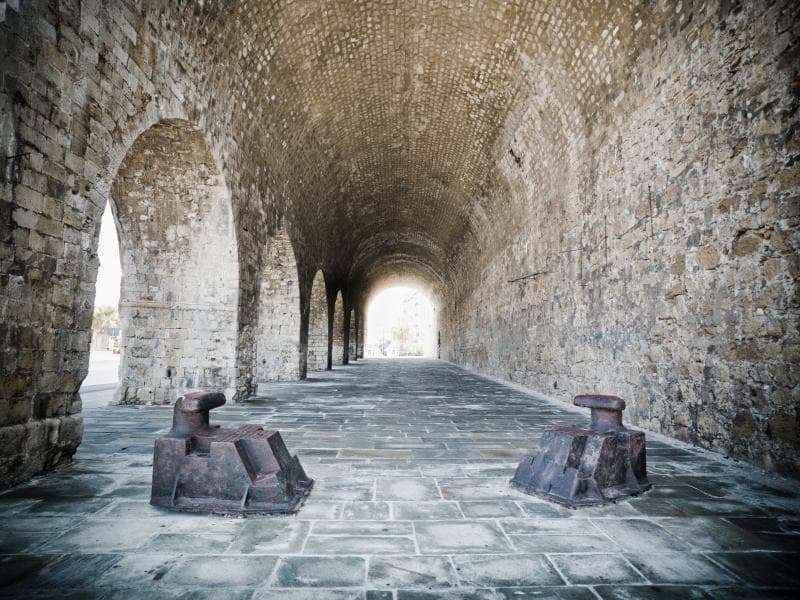
You round a low corner and the sea opens up like an old photograph: the harbor glitters, gulls quarrel over a scrap, and the thick stone rampart casts a long, patient shadow across the lane. In the middle distance the Koules fortress stands sentinel at the harbor mouth, a squat silhouette against the Mediterranean. This is the Venetian Walls of Heraklion — not just a set of stones but a stitched seam between eras that still holds the city together. The approach is physical in the simplest way: cobbles, steps, a short climb to a bastion. The reward is immediate, tactile and historical — a promontory of view and story where the sea dares you to remember what came before.
Built and rebuilt over centuries of Venetian rule, these fortifications are the spine of Heraklion, the medieval Candia that stubbornly resisted and reshaped the eastern Mediterranean. The walls you walk today were largely fashioned in the 1500s, when artillery redefined defense and Venetian engineers braided thick earthen ramparts with stone. They witnessed one of history's longest sieges, the decades-long struggle between Venice and the Ottomans that culminated in the mid-17th century and left their imprint on the city's layout, architecture and psyche. Follow the wall long enough and you move from merchant quarter to prayer house, from Ottoman masonry to modern municipal steps — each seam a practical answer to the city’s layered past.
Geologically the ground here is mild — low coastal limestone with a bedrock that has allowed stable construction and a coastline that shaped commerce. Culturally it is equally layered: you can stand on a bastion and look inland to narrow streets where kafeneia still pour thick coffee and thyme honey sits on pastry plates, while the harborside reminds you this was once a city that survived because it was both gate and prize. Locals still gather by the walls at dusk, walking dogs, sipping raki, and letting the wind take the heat out of the day. Food and history are braided here: many of the walking tours that thread the walls end at a small taverna or an olive oil tasting, a contemporary ritual that feels like the right companion to such ancient stones.
For travelers the walls are compact, immediate and versatile. The full circuit of the old city ramparts is roughly 3–4 kilometers, depending on how many detours you take into bastions and side streets. Expect flat stretches along the seafront interrupted by stepped approaches at bastions and gates; elevation gain is minimal but cobbles and narrow stairways make sturdy footwear essential. A relaxed walk around the ramparts will take 1–2 hours; add time for the Koules fortress, the Tomb of Nikos Kazantzakis panorama above the city, or a detour through the market, and you have a half- to full-day expedition.
Guided options turn the walk into a living story. The Historical Interactive Tour in Heraklion folds the siege into a hands-on labyrinth of clues, making the stones speak in fresh ways for adults and children alike. Private city and Knossos combos pair the ramparts with the Minoan palace and the Archaeological Museum, perfect if you want the chronological sweep from prehistory to Venetian artillery. For a lighter, environmentally friendly spin, an ecobike or e-bike tour skirts the same corridor and adds wine and food tasting — ideal if your legs are tired but your appetite isn’t.
Practical ground rules: go early or late to avoid the midday sun, carry water, and give the high bastions a respectful distance — the parapets are old and in places narrow. Wear soles that handle slick stone and uneven cobbles; a light windbreaker is useful on cooler evenings. If you’re photographing, aim for golden hour along the harbor; silhouette the Koules against the lowering sun and frame the crenellations with the sea beyond.
The Venetian Walls are accessible in fragments rather than as a single managed trail, which is part of their charm and their challenge. That means deeper histories are often discovered by walking with a local guide who can open small doors — both literal and archival. It also means supporting local conservation matters: the walls are heritage assets under strain from weather, sea spray and heavy foot traffic, and your quiet respect helps preserve them.
Whether you are a history lover, photographer, casual walker or culture-driven traveler, the ramparts deliver. They are a short, doable immersion into the long endurance of place: where geology meets human stubbornness, where food and ritual meet stone and salt, and where a two-hour walk can rearrange your sense of an island that has always looked outward to the sea. Accept the dare of the wind, let the walls push you forward into the city, and you’ll leave with a route map of stories to follow into Heraklion’s market stalls, museums and memory-rich tavernas.
Trail wisdom
Small choices, better day.
Time it for golden hour
Late afternoon light softens the stone and the harbor breeze keeps temperatures pleasant; it's also a prime time for photos.
Wear sturdy soles
Cobbles and narrow stairways demand firm, grippy footwear to avoid slips, especially after rain or near the sea.
Carry water and sun protection
Shaded spots are limited along the seafront stretches; bring a bottle and sunscreen even for short walks.
Respect fragile bastions
Stay on maintained paths and avoid leaning on or climbing fragile sections to protect the masonry.
Local knowledge
Read the place, not just the route.
Watch for native species including Mediterranean gull, Cretan wall lizard.
Keep an eye out for wildlife during the transition between areas and habitats. Respect distance guidelines.
The ramparts face wear from sea spray and foot traffic; stick to maintained paths, support local conservation initiatives and avoid leaning or climbing on fragile masonry.
Follow the guide's instructions on size limits, ethical handling, and leave-no-trace practices.
Tomb of Nikos Kazantzakis viewpoint for sweeping panoramas of sea and ramparts. The small kafeneia and olive oil shops behind Lion's Square for authentic tasting stops
Locally recommended viewpoints and quiet spots known best to local operators.
The walls were significantly fortified by Venetian engineers in the 16th century and played a central role during the long Siege of Candia in the 17th century.
Maritime roots and regional tradition shape the waterways and working coasts.
Seasonal guide
Four versions of the same landscape.
Spring
Best forcomfortable walking · wildflower-lined alleyways · museum visits
Challengespossible spring showers · varying temperatures
Spring brings mild temperatures and fewer crowds — ideal for combining a walls walk with museum time and outdoor tastings.
Summer
Best forlong daylight hours · evening strolls · harbor views at sunset
Challengesintense midday heat · crowded tourist spots
Summer offers brilliant seascapes but plan early or late walks to avoid the heat and peak crowds.
Fall
Best forwine and food tours · mild weather · photography
Challengesshortening days · occasional rain
Autumn balances pleasant temperatures with harvest menus, making food-and-history pairings especially satisfying.
Winter
Best forquiet exploration · museum visits · budget travel
Challengescooler, windy conditions · reduced hours at some sites
Winter is quiet and introspective; expect brisk winds off the sea and indoor options like the Archaeological Museum.
Pack with intention
What to bring.
Good to know
Common questions.
Expect 1–2 hours for the main circuit; add time for stops at Koules, museums or local cafes.
Plan the edges
The details that make the day easier.
Heraklion, historically known as Candia, endured a prolonged siege in the 17th century that lasted over two decades and left a lasting mark on the city's defenses and layout.
Pair a walls walk with a stop at a local kafeneion for Greek coffee and bougatsa, sample thyme honey and local olive oils, and finish at a seaside taverna with grilled fish and raki — Cretan hospitality is rooted in simple, bold flavors.
- Distance
- 3–4 km circuit. Time: 1–2 hours. Cost: Free to walk; some sites charge. Best access: walk from Heraklion center or port. Facilities: cafes and restrooms nearby in town.
Respect fragile masonry, avoid graffiti, use refillable bottles and support local conservation and responsible tourism initiatives to help preserve the ramparts for future visitors.
Explore by topic
Follow the threads.
Keep exploring
Make the story part of the trip.
Set out from Bass Harbor for a private, customizable day on Blue Hill Bay — lighthouses, puffins, seals, and the chance to feel Acadia from the water. Small groups, local captains, unforgettable views.
In four hours you can move from shaded canyon ferns to wind-scoured coastal ridgelines, guided by someone who knows where the light—and the hidden views—live. This private half-day hike on the Monterey Peninsula or Big Sur is compact, curated, and perfect for travelers who want depth without a multiday commitment.
 Related story
Beneath a sky of shifting light, Skaftafell’s ice reads like a map of time. This three-hour guided glacier hike mixes technical instruction with geology and culture: compact, safe, and unforgettable.