
What the day feels like
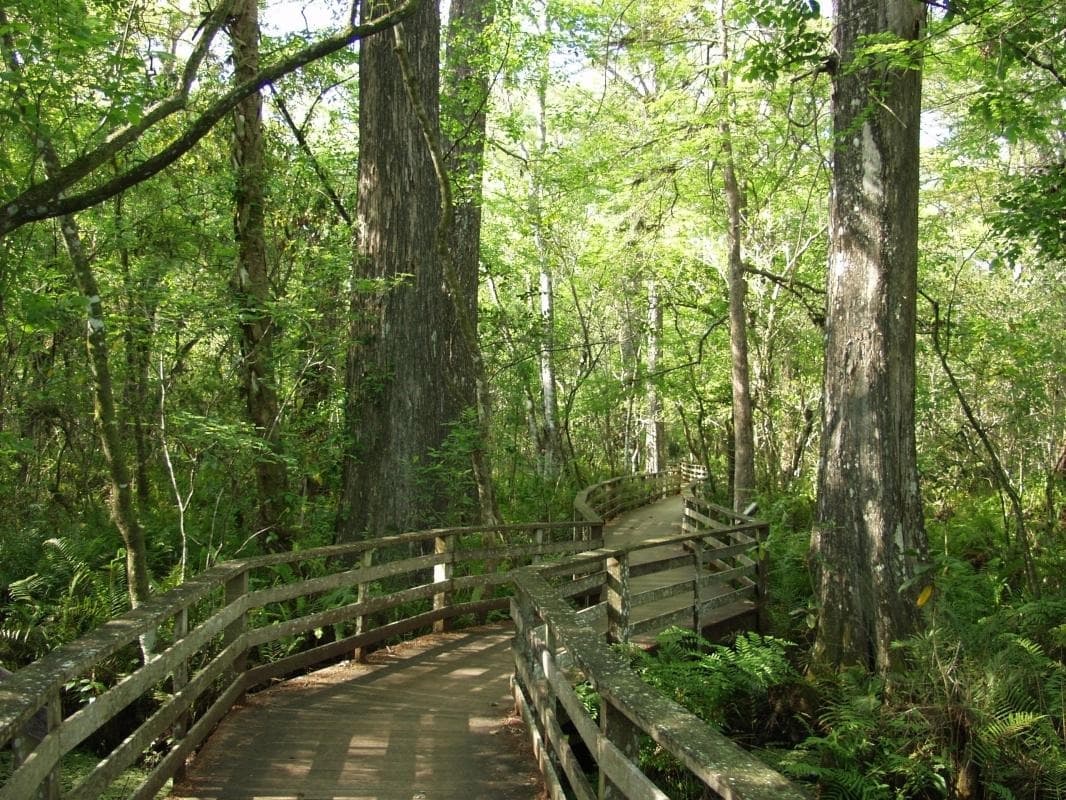
You step from the sun-baked parking lot into an embrace of shade so immediate it feels deliberate—the trees here have been waiting. The boardwalk eases you forward, a low, wooden ribbon laid above a world of dark water and sawgrass. Dragonflies patrol the air with precise, metallic whips of color. Somewhere to your right a squawk slices the hush—an anhinga, or perhaps a bold ibis—announcing itself like punctuation. In a place named after length and cypress, time slows to the cadence of your boots on boards and the small, patient dramas of wetland life.
Six Mile Cypress Slough Preserve sits like a green lung in Fort Myers, Florida: an urban preserve protecting a long curving swamp that drains toward the Caloosahatchee River. The slough’s low, slow water invites life—herons and egrets hunt in the shallows, turtles sun on half-submerged logs, and alligators, both ghostlike and indifferent, keep watch from shadowy margins. A raised boardwalk threads through much of the preserve, offering a close, noninvasive view of the ecosystem and a reliable route for families, photographers, and anyone who wants to compress a full natural history lesson into an hour.
History and geology are written in the water here. The slough formed where rain and groundwater collect in a broad, shallow depression—part of Florida’s low-relief landscape carved by the interplay of sea level change and the dissolving limestone beneath. Indigenous peoples used these wet corridors for generations before European settlers; later, the slough buffered Fort Myers from floods and became a refuge for wildlife as development marched outward. Today, roughly 3,500 acres of wetland are conserved—habitats that also act as filters for runoff and recharge zones for aquifers that supply local wells.
Walk slowly and the preserve tells you stories. Cypress knees cup the boardwalk like knuckles; their buttressed trunks are laced with moss and ferns that drink from the humidity. Water lilies patch the surface like green coins. In spring and fall, migratory songbirds use the slough as a rest stop—tiny travelers alighting like commas on branches. Local environmental stewards run education programs from the visitor center, turning curiosity into stewardship: kids learn to net, then identify, then release; adults learn that a healthy slough is a community resource.
Why come? For the simplicity of it. You won’t summit a peak, but you will watch a kingfisher hover like a punctuation mark before diving. You will photograph mirrored skies broken by wading birds, or learn the subtle differences between a great blue heron and a great egret (bill color and posture are good clues). The preserve is also a practical day trip from downtown Fort Myers—accessible, family-friendly, and rewarding whether you have thirty minutes or a half-day.
Practicalities lean simple: the main looped boardwalk is flat and mostly wheelchair-accessible, making it an easy stroll for most visitors. Expect to spend 45–90 minutes on a single pass if you stop often for birding or photos. In summer, early morning and late afternoon are both cooler and more active for wildlife; in winter the skies can be luminous and bird diversity often increases as migrants join the resident community.
Packing and planning are straightforward: bring water, sun protection, and a light pair of binoculars. Wear insect repellent—mosquitoes can be persistent, especially at dawn and dusk. The boardwalk is well maintained, but after heavy rains some side trails can be damp; closed signs are there for a reason—respect seasonal closures to protect fragile habitats.
For photographers, the best light is often the same as for everyone else: the soft edges of early morning and the long shadows of late afternoon. Look for reflections where birds patrol shallow water; composition wants both the subject and its mirrored counterpart. Keep a long lens ready if you want close-ups of bird behavior, and a wide lens when you want to show the slough as landscape—cypress knees, layered vegetation, and sky.
Beyond the boardwalk the preserve rewards exploration in small ways: quiet benches that face marsh flats where sunrise glows like poured honey; interpretive signs that explain the wetland’s role in regional hydrology; and seasonal displays of wildflowers that ripple across open patches. Local volunteers and rangers often lead guided walks and canoe programs in adjacent waterways—check the visitor center calendar before you go.
What the preserve asks of you is minimal and meaningful: leave no trace, stay on designated trails, and keep dogs on leash or at home if local rules prohibit them. The slough is fragile—plants and animals here tolerate human presence when it is respectful and regulated. By visiting responsibly you add your footsteps to those who defended this landscape and helped it survive development pressures.
Six Mile Cypress Slough Preserve is not a blockbuster destination; it’s a quietly compelling counterpoint to the region’s beaches and boat tours. It’s a place where the smallest things—the flick of a tail, the moment a sunbeam pours into a cattail stand—can be as captivating as anything more dramatic. For travelers looking for a clear window into Floridian wetlands, a family outing that connects kids to nature, or a contemplative morning among birds and water, the preserve offers an accessible, elemental experience.
Practical takeaway: arrive early for light and wildlife, wear insect protection, and bring binoculars. Walk the boardwalk deliberately—half of the reward here is slowing down enough to notice. In return, the slough will reveal its rhythms: patient, resilient, and alive.
Trail wisdom
Small choices, better day.
Go at golden hour
Early morning or late afternoon light brings birds and good photography while avoiding midday heat.
Bring binoculars
A small pair of 8x binoculars will reveal bird details and alligator behavior from the boardwalk without disturbing wildlife.
Wear insect repellent
Mosquitoes are most active at dawn and dusk—repellent and lightweight long sleeves help keep bites down.
Stay on the boardwalk
Boardwalks protect sensitive plant communities and reduce erosion—do not enter the marsh edges or closed trails.
Local knowledge
Read the place, not just the route.
Watch for native species including American alligator, great blue heron.
Keep an eye out for wildlife during the transition between areas and habitats. Respect distance guidelines.
The preserve acts as a natural filter for runoff and a recharge area for groundwater; staying on boardwalks and following posted rules limits human impact.
Follow the guide's instructions on size limits, ethical handling, and leave-no-trace practices.
Early-morning benches that overlook shallow flats, perfect for sunrise reflections. Interpretive exhibits at the visitor center that explain hydrology and local conservation efforts
Locally recommended viewpoints and quiet spots known best to local operators.
The slough is a remnant of historic wetland corridors in southwest Florida and now protects a long stretch of cypress and marsh as urban development expanded.
Maritime roots and regional tradition shape the waterways and working coasts.
Seasonal guide
Four versions of the same landscape.
Spring
Best formigratory songbirds · wildflower displays · comfortable temperatures
Challengesoccasional heavy rains · bugs increase late spring
Spring brings migrants and flowers; expect comfortable days but prepare for short, intense showers and more insects.
Summer
Best forlush green marshes · reptile activity · long daylight hours
Challengeshigh heat and humidity · mosquitoes · afternoon thunderstorms
Summer is alive with reptiles and greenery—start early to avoid heat and thunderstorms that build in afternoons.
Fall
Best formigratory shorebirds arriving · softer light for photography · fewer tourists
Challengeshurricane season remnants early fall · variable temps
Fall cools gradually and migratory patterns can increase bird diversity; watch the weather during hurricane season windows.
Winter
Best formigrant waterfowl · crisp clear days · excellent birdwatching
Challengescooler mornings · some visitors may find fewer insects/wildflowers
Winter offers clear skies and great birdwatching as northern migrants join the resident populations; mornings can be chilly.
Pack with intention
What to bring.
Good to know
Common questions.
The primary accessible boardwalk walk-through takes roughly 45–90 minutes at a relaxed pace, depending on stops for birding or photos.
Plan the edges
The details that make the day easier.
Six Mile Cypress Slough Preserve protects one of the largest remaining wetland corridors in Lee County and plays a key role in local groundwater recharge and flood mitigation.
Fort Myers’ outdoor culture blends seafood, small-plate dining, and low-key coastal vibes—pair a morning at the slough with lunch at a nearby restaurant serving Gulf fish and a cold citrus-forward drink.
- Location
- Fort Myers, FL | Main attraction: 1–2 hour accessible boardwalk through wetland habitat | Visitor center with exhibits | Best times: dawn and late afternoon | Bring: water, binoculars, repellent.
Stick to boardwalks and established trails to protect sensitive wetland plants and animal habitats; avoid feeding wildlife and dispose of trash in designated bins to reduce pollution and animal habituation.
Explore by topic
Follow the threads.
Keep exploring
Make the story part of the trip.
Set out from Bass Harbor for a private, customizable day on Blue Hill Bay — lighthouses, puffins, seals, and the chance to feel Acadia from the water. Small groups, local captains, unforgettable views.
In four hours you can move from shaded canyon ferns to wind-scoured coastal ridgelines, guided by someone who knows where the light—and the hidden views—live. This private half-day hike on the Monterey Peninsula or Big Sur is compact, curated, and perfect for travelers who want depth without a multiday commitment.
 Related story
Beneath a sky of shifting light, Skaftafell’s ice reads like a map of time. This three-hour guided glacier hike mixes technical instruction with geology and culture: compact, safe, and unforgettable.