
What the day feels like
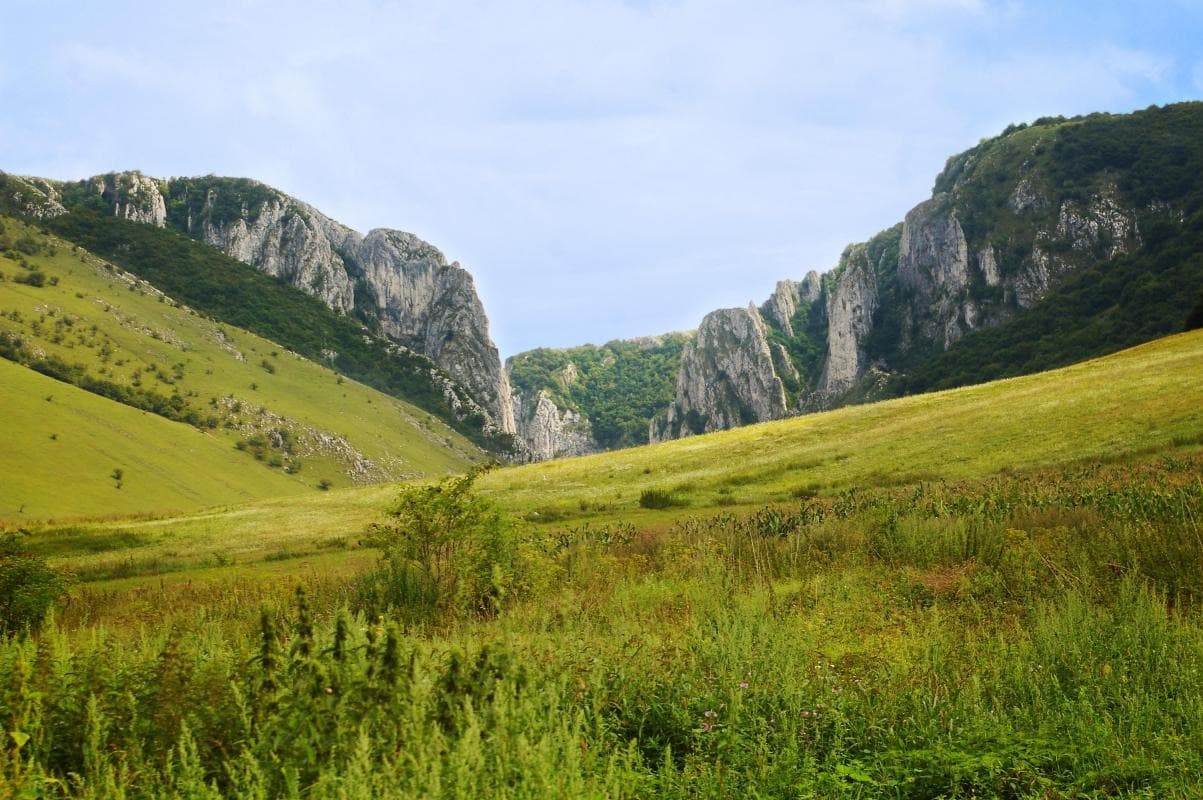
You step out of the car and the air changes—cooler, mineral-scented, the kind of crisp that can only exist where stone meets running water. From the parking lot a narrow trail threads into the throat of Turda Gorge (Cheile Turzii), and within minutes the canyon walls rise like the weathered ribs of a sleeping giant: sheer Jurassic limestone faces, streaked with moss and lichen, narrowing to a corridor of light and shadow. The Hășdate River, small and insistent, keeps time at the canyon’s floor, its riffles daring you to walk farther.
Turda Gorge is a compact, high-drama slice of Transylvania—roughly 2.9–3 km long with cliffs that tower up to about 300 meters. Hikers move in a gradient of pace: slow when the views are wide and reverent, quick and deliberate where the trail compresses under a stone overhang or across a creekbed. It’s an approachable hike for anyone who carries sensible shoes and a bit of curiosity; for rock climbers, the gorge is a magnet, its bolted sport routes and traditional lines running the faces like scarred ribbons.
Geology and history are inseparable here. The gorge is a product of water and time—millions of years in which the Hășdate Stream carved through Jurassic limestone, exposing fossils and creating vertical walls, ledges, and caves. Those same cliffs have been used for centuries as hunting grounds and gathering sites for local villagers; in the 20th century, recognizing both the ecological and scenic value, authorities protected the site—Cheile Turzii is among Romania’s better-known natural reserves.
Culturally, the gorge sits on the edge of two worlds: the small-town rhythms of Turda and the more cosmopolitan pulse of Cluj-Napoca, which is about a 40–50 minute drive away. That proximity explains why many visitors pair a morning in the gorge with an afternoon in Salina Turda (the salt mine-turned-museum-and-eye-popping-underground-park) or a stop in the Hungarian-influenced village of Rimetea for food and architecture. Local guides and small-group day trips—popular from Cluj—make it easy to see all three in a single, neatly organized day.
On the trail you notice the life that clings to verticality: beech and hornbeam at the canyon rim, clumps of alpine flowers and orchids in season, and the furtive silhouettes of bats in pockets of summer dusk. Peregrine falcons still use the heights as hunting perches, and if you’re quiet at dawn or dusk, you might glimpse roe deer moving along the lower slopes. Climbers share the space respectfully; many routes are sport-climbing lines with fixed bolts, but old-school trad climbs and easier scrambles exist too.
Practical side: the most popular approach is from the main parking area, where a marked trail leads in and a well-maintained path follows the gorge floor. The typical visitor route is a loop or out-and-back of roughly 3–6 km depending on how many viewpoints you tag; count on 2–4 hours to move at a relaxed pace, take photos, and have a snack. Cumulative elevation gain is modest—around 150–250 meters on many popular loops—but route choice can add scrambling sections and short steep staircases.
For climbers, the gorge is a well-equipped playground. Routes range from single-pitch sport climbs to multi-pitch lines, many protected with bolts and occasionally shared with hiking traffic at the base. If you plan to climb, bring your own rack, a guidebook or local beta, and contact local guides if you want instruction or gear rental; bolt density varies, and conditions change with rain and freeze-thaw cycles.
Timing matters. Midsummer draws crowds—start early to catch the canyon in that rare, cool morning glow and to secure a parking spot. Late spring and early summer offer wildflowers and active birdlife; autumn gives the gorge a burnished, golden quality. Winter can be stark and spectacular but icy; frozen waterfalls and rim ice make sections technical and call for crampons or ice gear.
Combine the gorge with: Salina Turda for an otherworldly subterranean contrast, and Rimetea for a dose of village architecture and food—cheese, mamaliga, and soups that resettle cold limbs.
Leave no trace is not just a slogan here: stick to the marked trails, avoid chalking rock faces unnecessarily, and pack out what you bring in. The reserve’s ecosystems are compact and sensitive; a tiny misstep can damage rare plants or disturb cliff-nesting birds.
Whether you come for a half-day to stretch your legs between larger Transylvanian stops or you’re chasing new routes on limestone faces, Turda Gorge delivers the kind of concentrated wilderness that feels both immediate and primal. It’s a place where the geology tells a story, the wildlife punctuates the silence, and the trail gives you exactly enough effort to make the views feel earned.
Trail wisdom
Small choices, better day.
Start early to beat the crowds
Parking is limited and the trail narrows in places—early morning gives you cool light, quiet viewpoints, and easier parking.
Footwear matters
Use sturdy hiking shoes with good grip; limestone can be slippery when wet and some sections include loose scree.
Bring water and snacks
There are no services inside the reserve—carry at least 1–2 liters per person and high-energy snacks for the return hike.
Respect climbing routes
If you’re hiking near bolted faces, yield to climbers and avoid disrupting gear or chalk on routes.
Local knowledge
Read the place, not just the route.
Watch for native species including peregrine falcon, bats.
Keep an eye out for wildlife during the transition between areas and habitats. Respect distance guidelines.
Stick to marked paths, avoid climbing on fragile vegetation, and pack out all waste; local guides promote low-impact visitation to protect nesting birds and rare plants.
Follow the guide's instructions on size limits, ethical handling, and leave-no-trace practices.
The west-facing viewpoint near the middle of the gorge—fewer visitors, excellent late-afternoon light. Combine with Salina Turda’s surface exhibits for a quick contrast between underground and canyon landscapes
Locally recommended viewpoints and quiet spots known best to local operators.
Cheile Turzii is part of a protected natural reserve with conservation recognition dating to the early 20th century, preserving its limestone cliffs and biodiversity.
Maritime roots and regional tradition shape the waterways and working coasts.
Seasonal guide
Four versions of the same landscape.
Spring
Best forwildflowers · birdwatching · moderate weather
Challengesmuddy trails after rain · bumps in early-season access
Late spring brings abundant wildflowers and active birdlife; expect softer ground after rains and bring waterproof shoes.
Summer
Best forfull-day excursions · combining with Salina Turda · longer daylight
Challengescrowds · heat on exposed sections
Summer is peak season—start early to avoid crowds and the hottest midday stretches in exposed parts of the gorge.
Fall
Best forautumn foliage · crisp air · photography
Challengesshorter daylight · cooler temperatures
Fall’s golden palette makes the canyon especially photogenic; pack warmer layers and plan shorter days accordingly.
Winter
Best fordramatic ice formations · quiet trails · unique textures
Challengesicy surfaces · limited accessibility · need for traction devices
Winter can be spectacular but hazardous—bring crampons and poles and expect sections of frozen rock and ice.
Pack with intention
What to bring.
Good to know
Common questions.
The gorge itself is about 2.9–3 km long; a typical loop or out-and-back outing takes 2–4 hours depending on stops and side trails.
Plan the edges
The details that make the day easier.
Cheile Turzii is one of Romania’s most visited natural reserves and is carved through Jurassic limestone; the gorge reveals fossil-rich rock layers formed millions of years ago.
Pair the gorge with a village lunch in Rimetea—sample hearty Transylvanian fare like mămăligă, local sheep cheese, and simple soups; many nearby villages retain Hungarian and Romanian culinary traditions worth tasting.
- Nearest city
- Cluj-Napoca (40–50 min drive). Trail length: ~3 km through the gorge; allow 2–4 hours. Difficulty: moderate. Services: limited at trailhead; plan for water and snacks.
Respect cliff-nesting bird seasons, stay on trails, avoid fixed-rope alterations, and choose local guides who support conservation fees or maintenance programs.
Explore by topic
Follow the threads.
Keep exploring
Make the story part of the trip.
Set out from Bass Harbor for a private, customizable day on Blue Hill Bay — lighthouses, puffins, seals, and the chance to feel Acadia from the water. Small groups, local captains, unforgettable views.
In four hours you can move from shaded canyon ferns to wind-scoured coastal ridgelines, guided by someone who knows where the light—and the hidden views—live. This private half-day hike on the Monterey Peninsula or Big Sur is compact, curated, and perfect for travelers who want depth without a multiday commitment.
 Related story
Beneath a sky of shifting light, Skaftafell’s ice reads like a map of time. This three-hour guided glacier hike mixes technical instruction with geology and culture: compact, safe, and unforgettable.