
What the day feels like
The Convict Trail arrives without fanfare. It begins where the highway eases through Campbell Town, Tasmania — a tidy ribbon of red brick running alongside quiet Georgian storefronts, a line of reclaimed masonry that asks you to slow down, to step out of the car and feel the town's weight. On a cool morning the bricks hold yesterday's rain like tiny mirrors; in summer they warm to your footsteps and the sound of distant road trucks fades until the town is only the soft murmur of wind through gums and the occasional gull over the South Esk River.
This is not a mountain climb or a multi-day trek. The Convict Trail is a short, deliberate walk — roughly 0.8–1.2 km of flat, brick-lined pathway that threads through Campbell Town, connecting public spaces, conserved buildings and interpretive plaques. It is a place where landscape and ledger meet: the ground underfoot is literally shaped by convict hands, the very bricks pressed and fired by inmates in the 19th century. Walking it feels like reading an archival paragraph that has been opened up to the sky.
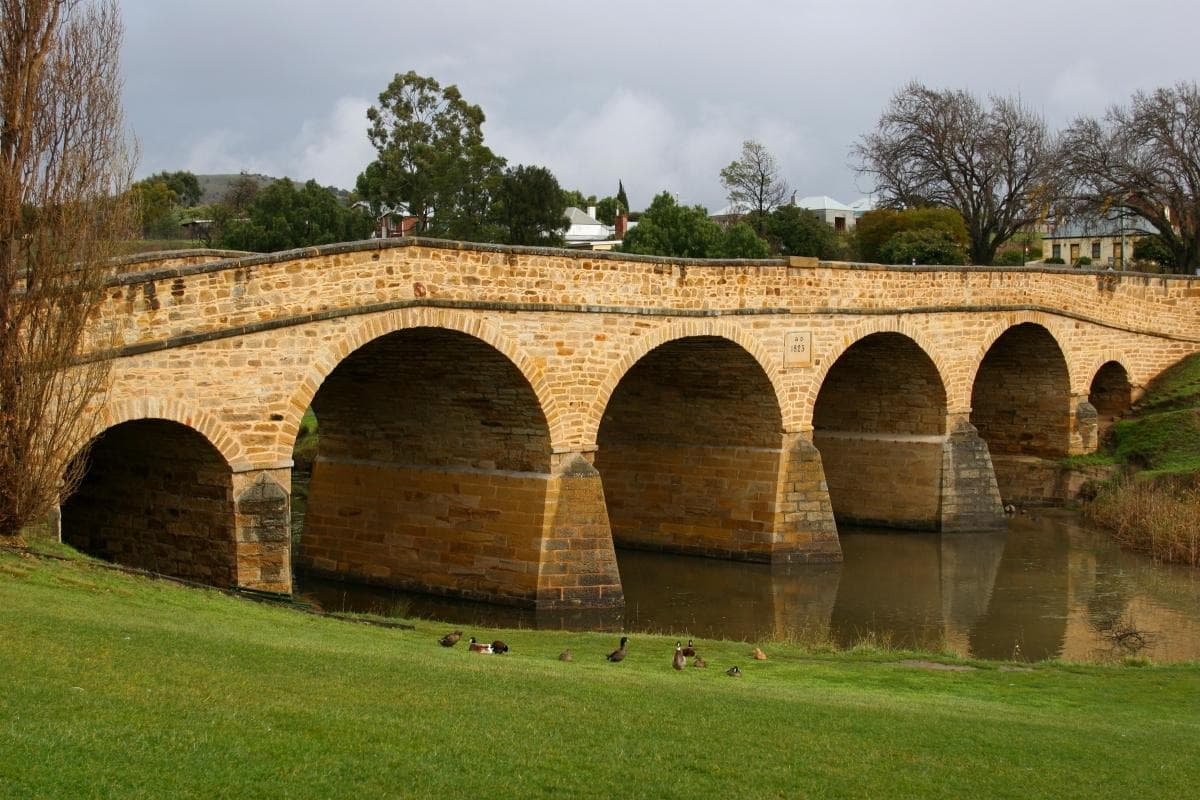
Geology here is soft and honest. The red bricks were made from local clay, baked in pit kilns not far from the town in an era when the colony’s infrastructure was built by forced labor. Campbell Town sits on a gentle plain beside the South Esk River — the highway slices through it, but the trail invites you to detour into a slower frame of time: a high-ceilinged courthouse, cedar shopfronts, and the brick lane itself that marks an era when Tasmania, then Van Diemen’s Land, was a penal landscape. The trail is part memorial, part civic seam: it connects plaques that name convicts, note local industries, and point to a past that still shapes present identities.
The Convict Trail is often experienced as a stopover on a longer route. For travelers bound for the pink sands of Wineglass Bay or the granite spines of Freycinet National Park, Campbell Town is a natural pause between Launceston and Hobart. Day tours such as the Launceston: Freycinet & Wineglass Bay Explorer Day Trip weave this short historical walk into a broader itinerary: a brisk coastal hike, seafood at Freycinet Marine Farm, a lighthouse stroll at Cape Tourville and, tucked into the middle, Campbell Town’s convict legacy. The contrast is telling — after hours of coastal exposure and sweeping ocean vistas, a stroll down the Convict Trail reorients you to human scale, to how labor and legislation shaped a landscape.
Culturally, Campbell Town is a textbook of Tasmanian colonial architecture and social memory. The town evolved as a service center during early road building; its Georgian facades remain remarkably intact. Local guides will point out the brickmakers’ names, the sites of old gaols, and the way the town adapted convict labor to agriculture and infrastructure. These stories are not sanitized; they’re layered — economic development and human suffering braided together — and they reward slow listening.
Practicalities are straightforward. The trail is flat and friendly to most walkers, families and active seniors. Allow 20–40 minutes to read plaques and visit a few heritage buildings; pair it with coffee at a local bakery to round out the visit. The bricks can be uneven in places and become slippery when wet, so sensible footwear and a cautious step are essential. There’s little shade, so on hot Tasmanian afternoons bring sun protection and water.
Why go? Because it’s the kind of short walk that deepens a trip — a small civic museum under open sky that helps explain Tasmania’s past while fitting cleanly into a day of hiking or wine tasting. It’s also an economical way to engage with heritage: no booking required, no trailhead fee, just a willingness to step off the highway and listen to history at ground level. For photographers the bricks offer a low-angle geometry against period buildings; for history buffs, the interpretive signs and nearby Campbell Town Museums provide richer context.
How to plan: Convict Trail is most often a stop on longer drives or organized day tours running between Launceston and coastal parks. If you’re self-driving, plan 30–60 minutes for the trail plus time for a coffee and the nearby convict sites. If you’re on a guided Freycinet tour, the stop is typically short but focused — an efficient way to add a historical layer to landscape-heavy excursions. Bring a lightweight daypack, a water bottle, and a camera; if it’s cooler months, a windproof layer will keep you comfortable during the stroll.
The Convict Trail is modest in scale but rich in implication: it makes visible the labor that shaped Tasmania's towns, it punctuates long drives with a human story, and it offers a quiet counterpoint to the island’s dramatic coasts. Walk it slowly and you’ll find the town unfolding like a well-maintained book — every brick a sentence, the street a paragraph of colonial life. It’s the kind of short, deliberate experience that rewards attention and fits neatly into an active Tasmanian itinerary.
Trail wisdom
Small choices, better day.
Watch your step on the bricks
The reclaimed bricks can be uneven and slippery when wet; wear sturdy shoes and take it slow.
Combine with a coffee stop
Local bakeries are minutes from the trailhead — pair the walk with a coffee or light brunch to make the most of the visit.
Short on time? Prioritize the plaques
If you only have 15–20 minutes, focus on the interpretive signs near the town center to get the historical overview.
Bring sun protection
The trail has limited shade; on sunny days bring sunscreen, a hat and water.
Local knowledge
Read the place, not just the route.
Watch for native species including Eastern Rosella, Swamp Harrier.
Keep an eye out for wildlife during the transition between areas and habitats. Respect distance guidelines.
Local heritage groups maintain the trail and buildings; support conservation by sticking to paths, respecting signage, and using local guides to deepen context.
Follow the guide's instructions on size limits, ethical handling, and leave-no-trace practices.
The nearby Campbell Town Convict Brickworks site (local council info point). Awnings and cedar shopfronts on High Street — subtle examples of Georgian craftsmanship
Locally recommended viewpoints and quiet spots known best to local operators.
Campbell Town was a key service center during Tasmania’s colonial road-building era; many public buildings and bricks were produced using convict labor in the early 1800s.
Maritime roots and regional tradition shape the waterways and working coasts.
Seasonal guide
Four versions of the same landscape.
Spring
Best forwildflowers nearby · mild walking weather · fewer crowds than summer
Challengesunpredictable showers · cool mornings
Spring (Sept–Nov) offers mild temperatures and blossoms in the surrounding countryside — ideal for combining the walk with longer drives.
Summer
Best forlong daylight hours · pairing with coastal trips · warmer temperatures
Challengeshigher road traffic · strong sun exposure
Summer (Dec–Feb) is warm and busy; mornings are best to avoid heat and peak tour traffic.
Fall
Best forcrisp air and light · photography · harvest-season produce
Challengescooler evenings · shorter days
Autumn (Mar–May) yields golden light and cool walking conditions — perfect for photographers and history buffs.
Winter
Best forquiet visits · dramatic skies · museum time indoors
Challengescold, wet weather · reduced services
Winter (Jun–Aug) is quieter and moodier; bring waterproof layers and expect some local businesses to have limited hours.
Pack with intention
What to bring.
Good to know
Common questions.
Allow 20–45 minutes depending on how many plaques and buildings you stop to read; a quick pass-through is under 15 minutes.
Plan the edges
The details that make the day easier.
Campbell Town’s brickmaking industry used locally dug clay and convict labor in the 1830s; many of those hand-made bricks were used in the town’s early buildings and pathways.
Campbell Town’s cafes and bakeries reflect Tasmanian produce — try local cheeses and seasonal pies; nearby farmers' markets showcase apples, berries and artisanal goods tied to the agricultural history of the Midlands.
- Distance
- ~0.8–1.2 km; Difficulty: Easy; Time: 20–45 minutes; Parking: On-street and small car parks; Cost: Free; Nearest towns: Campbell Town (local services), Launceston or Hobart for overnight stays.
Respect heritage surfaces by staying on paths, avoid disturbing interpretive signs, and support local conservation by choosing local guides and businesses that contribute to preserving Campbell Town’s historic fabric.
Explore by topic
Follow the threads.
Keep exploring
Make the story part of the trip.
Set out from Bass Harbor for a private, customizable day on Blue Hill Bay — lighthouses, puffins, seals, and the chance to feel Acadia from the water. Small groups, local captains, unforgettable views.
In four hours you can move from shaded canyon ferns to wind-scoured coastal ridgelines, guided by someone who knows where the light—and the hidden views—live. This private half-day hike on the Monterey Peninsula or Big Sur is compact, curated, and perfect for travelers who want depth without a multiday commitment.
 Related story
Beneath a sky of shifting light, Skaftafell’s ice reads like a map of time. This three-hour guided glacier hike mixes technical instruction with geology and culture: compact, safe, and unforgettable.