
What the day feels like
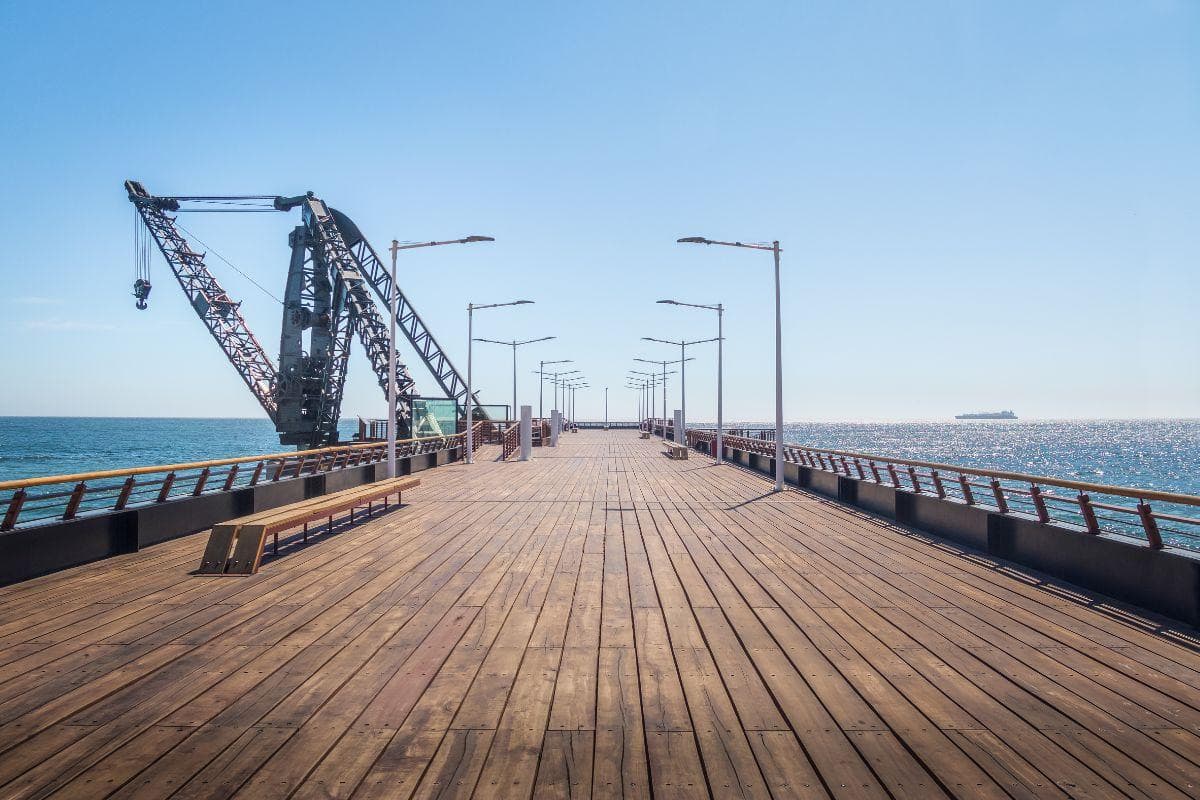
The morning air tastes of salt and roasted coffee. You step off Avenida Perú and onto Vergara Pier (Muelle Vergara), the slender promenade that juts into the Pacific like a hand offering the city another horizon. Fishermen string lines from the iron railings, their silhouettes punctuating the blue; gardeners from the nearby parks make their rounds, pruning bougainvillea that tumble toward the sea; and farther out, the ocean moves with the steady, patient cadence of a tide that has watched this shoreline change for centuries. It’s an easy walk that connects you to a coastal city whose charms unfold in small, precise details—ceramic tiles, clipped hedges, sea-spray-scented air—and the kind of civic pride that makes Viña del Mar worth more than a single glance.
Muelle Vergara does not demand heroics. Its appeal is immediate and democratic: families with children, couples on slow dates, solo walkers with earbuds, and bike groups rolling by on organized coastal rides. But for anyone who pays attention, the pier is also a gateway. From here a short stroll leads to Castillo Wulff, an old brick-and-stone lookout that anchors the shore with Gothic flourishes and stories about sailors. A five-minute walk inland puts you in Quinta Vergara, the park with terraces and an amphitheater that stages the Viña del Mar International Song Festival each February—an event that has shaped Chilean pop culture for generations.
Geology and history are quiet here. The coastline is a product of uplifted terraces and resilience—rocky outcrops that resist the relentless Pacific swell, with sand accumulated in pockets where currents allow. The Vergara name traces to the estate lands once held by a local aristocratic family; their gardens matured into the city’s public green lungs, the reason Viña del Mar earned the nickname Ciudad Jardín (Garden City). The pier itself is a civic gesture: a place to meet the sea without the need to get wet, to watch boats negotiate offshore currents and to let the wind revise your plans.
If you want to build a day around this compact pleasure, the neighborhood is perfectly suited for small itineraries. Start with a walking tour that threads the promenade, the casino district, and the garden squares—these guided options give context to landmarks like Castillo Wulff and the Municipal Flower Clock (Reloj de Flores). For a more active morning, join a bicycle ride along the coastal edge; the route hugs the ocean, with low rolling climbs and generous viewpoints that feel cinematic at every turn. Extend to a full-day tour and Viña del Mar becomes a launchpad for Valparaíso’s painted hills and the Casablanca Valley’s cool-climate vineyards—two very different landscapes linked by the same salt air.
Practicalities are refreshingly simple. The pier itself is short and flat; expect paved walkways, low steps at some corners, and open exposure to wind and sun. Distances: the main promenade between the casino area and the pier is walkable in 10–20 minutes; a leisurely bike loop that includes neighboring beaches can run 6–15 kilometers depending on route choices. Terrain: sidewalks, boardwalk sections, and some stair-access points near beaches. Elevation change is minimal, though Valparaíso’s hills introduce steep streets if you cross into that city.
Timing matters. Sunrise and sunset are the richest hours—soft light over the water, long shadows on the gardens, and fewer crowds. Midday is bright and windy; bring sun protection. Weekends and summer months are busy, with families and beachgoers; if you prefer quiet, aim for weekdays or early mornings.
Local food and flavor are part of the draw. Seafood dominates: caldillo de congrio (conger eel stew), fresh ceviche, and empanadas de mariscos appear on menus near the waterfront. And if your day includes the Casablanca Valley, pair your meal with a crisp sauvignon blanc—the region’s boutique wineries have made a name for themselves with cool-climate whites.
For travelers planning a visit: shoes with traction are useful if you plan to walk across rocky coves nearby; layers are essential—ocean winds can make warm afternoons feel cold. Keep reusable water and a small rain shell on hand. If you’re joining a guided bike ride or a walking tour, book ahead during high season (December–February) when cruise passengers and locals converge.
Why go? Vergara Pier is not an isolated spectacle to be checked off; it’s the spine of a coastal routine that lets you weave together architecture, green space, ocean-view promenades, and easy access to the bohemian maze of Valparaíso and the vineyards inland. It’s the kind of place that softens the edges of travel: you can sprint for a photo, or you can sit and measure the tide with a dulce de leche ice cream cone. Either way, the Pacific will be there—constant, direct, and insistently present.
If you want a single, well-paced day: walk the pier at dawn, have coffee in a café along the Avenida Perú, join a mid-morning bicycle ride along the coast, and finish with a late-afternoon wine tasting in Casablanca or a sunset stroll toward Castillo Wulff. Practical, comfortable, and layered with cultural touchpoints, a visit to Vergara Pier is the kind of coastal interlude that turns a beach town into a memory worth returning to.
Trail wisdom
Small choices, better day.
Go early or late
Sunrise and sunset offer the best light and cooler temperatures; midday can be windy and crowded in summer.
Layer for ocean wind
Even warm afternoons can feel brisk on the pier; pack a lightweight windbreaker.
Combine with nearby sites
Pair a pier walk with Castillo Wulff and Quinta Vergara to get cultural context in a compact loop.
Hydrate and protect
Bring water and SPF—the coastal reflection intensifies sun exposure.
Local knowledge
Read the place, not just the route.
Watch for native species including South American sea lions (near rocky outcrops), Cormorants and pelicans along the shoreline.
Keep an eye out for wildlife during the transition between areas and habitats. Respect distance guidelines.
Coastal erosion and plastic pollution are local concerns—efforts focus on beach cleanups and protecting intertidal habitats; visitors are encouraged to minimize single-use plastics.
Follow the guide's instructions on size limits, ethical handling, and leave-no-trace practices.
Castillo Wulff—historic seaside castle with exhibitions. Quinta Vergara gardens and the lesser-known sculpture trails
Locally recommended viewpoints and quiet spots known best to local operators.
The pier fronts areas once owned by the Vergara family; Quinta Vergara transformed private estate gardens into public cultural spaces that helped define Viña del Mar’s identity.
Maritime roots and regional tradition shape the waterways and working coasts.
Seasonal guide
Four versions of the same landscape.
Spring
Best forFlower displays in city parks · Mild walking weather · Photography of softer light
ChallengesUnpredictable breezes · Occasional light rain
Spring brings the gardens into bloom and mild temperatures ideal for walking the pier and exploring nearby parks.
Summer
Best forBeach time · Long daylight hours · Festivals and outdoor dining
ChallengesCrowds and higher prices · Strong midday sun · Busy weekends
Summer is peak season: lively beaches and festivals, but expect crowds and brighter, windier afternoons.
Fall
Best forGolden-hour photography · Quieter streets · Wine-tasting in Casablanca
ChallengesShorter daylight · Chillier evenings
Fall cools the air and thins crowds—great for coastal walks and pairing the city visit with nearby vineyard tours.
Winter
Best forStorm-watching from the pier · Fewer tourists · Inland wine tastings on crisp days
ChallengesColder winds · Occasional rain and rough seas
Winter offers dramatic seas and calmer promenades; bring warm layers and be cautious of rough surf.
Pack with intention
What to bring.
Good to know
Common questions.
The pier itself takes 15–30 minutes to walk; combine it with nearby parks and sites for a half- to full-day outing.
Plan the edges
The details that make the day easier.
Quinta Vergara, adjacent to Vergara Pier, hosts the Viña del Mar International Song Festival each February, one of Latin America’s longest-running music events.
Seafood and wine anchor the local palate—try ceviche or caldillo de congrio for lunch, then pair with a Casablanca sauvignon blanc. Street vendors and cafés around the casino and paseo offer empanadas, fresh juices, and Chilean pastries that reflect the city’s seaside rhythms.
- Nearest city
- Viña del Mar; access: walkable from central hotels or a short taxi; best times: sunrise
- sunset; booking
- reserve bike and combined tours in summer; cash: have small bills for vendors.
Support local conservation by joining beach cleanups when available, using refillable water bottles, and choosing operators who follow responsible tourism practices in coastal and vineyard areas.
Explore by topic
Follow the threads.
Keep exploring
Make the story part of the trip.
Set out from Bass Harbor for a private, customizable day on Blue Hill Bay — lighthouses, puffins, seals, and the chance to feel Acadia from the water. Small groups, local captains, unforgettable views.
In four hours you can move from shaded canyon ferns to wind-scoured coastal ridgelines, guided by someone who knows where the light—and the hidden views—live. This private half-day hike on the Monterey Peninsula or Big Sur is compact, curated, and perfect for travelers who want depth without a multiday commitment.
 Related story
Beneath a sky of shifting light, Skaftafell’s ice reads like a map of time. This three-hour guided glacier hike mixes technical instruction with geology and culture: compact, safe, and unforgettable.