
What the day feels like
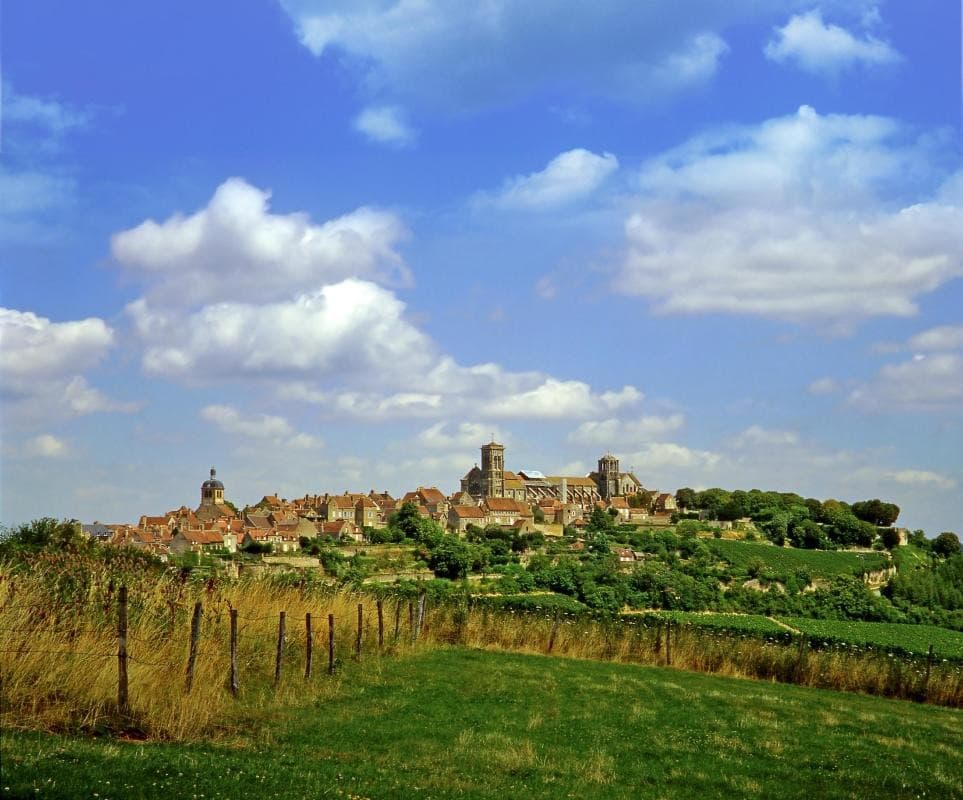
You climb in stages: a ribbon of cobbles, shopfronts that smell of fresh bread and wood smoke, a line of plane trees that shade the last steep push. Above them all sits the Basilica of Sainte-Marie-Madeleine, its weathered stones catching light like a held breath. In Vézelay, the landscape doesn’t scream for attention — it persuades. The hill draws you in, the basilica commands you to look, and the valley below simply waits, full of vines and quiet roads that seem designed for long thinking.
Set on a limestone outcrop in Burgundy, Vézelay is compact enough to learn by foot and generous enough to reward slow travel. Romans and medieval craftsmen carved a route here that would shape Europe: Vézelay became one of the principal starting points for pilgrims bound for Santiago de Compostela. That legacy hasn't left; you can still feel the intention in the place — in worn thresholds, in the basilica's heavy doors, and in the pattern of pilgrim scallop shells scattered across town.
The Basilica of Sainte-Marie-Madeleine is the magnet. Built in the 11th and 12th centuries and later recognized by UNESCO as part of the Routes of Santiago de Compostela in France, it’s Romanesque architecture at its most eloquent — massive piers, carved capitals that tell stories in stone, and vaults that shape light into a language. The structure was planned around the sun’s arc; during the solstices, light moves through the building in a theatrical choreography that the locals still celebrate. One of the available experiences here is a summer solstice visit, where a guide grounds that ephemeral spectacle in the building’s geometry and the craftsmen’s intent at the Visitor’s House alongside scale models.
Vézelay’s hill is not dramatic in alpine terms — this is Burgundy, not the high Pyrenees — but the ascent from the parking and lower village up to the basilica is honest: plan for approximately 0.6–1 km of distance with 80–120 m (260–400 ft) of elevation gain via narrow, sometimes uneven cobbled lanes. Surfaces vary between well-worn flagstones and larger granite setts; even for a short climb you’ll want footwear with good traction. Those lanes curve past ateliers, antique shops, and cafés where farmers meet visitors for a small glass of local wine.
History and geology are stitched together here. The hill is a limestone outcrop that provided both strategic vantage and the raw material for the masonry that would define the town. In the Middle Ages Vézelay was flush with pilgrims and clout: it hosted preaching for the Second Crusade and was a hub of spiritual and commercial exchange. That movement shaped the town’s character — high, narrow houses leaning in to keep the wind off the streets, a market tradition that persists on select mornings, and a deliberate economy built on hospitality.
But Vézelay isn’t only about saints and stones. Burgundy is famously a wine country, and Vézelay sits within reach of Chablis and other appellations. A private day tour to Chablis from Paris is one of the common ways travelers stitch a Vézelay visit into a larger wine-focused itinerary: a 12-hour day that trades urban pace for vineyard rows, cellar visits, and taste-led conversations about Chardonnay’s northern expressions. Combine both experiences and you get a clear, complementary portrait: sacred architecture by morning, the cultivated slopes of viticulture by afternoon.
Practicalities matter here. Vézelay is a walking town; you can see everything in a day but staying a night lets you catch sunrise and the dusk hush when lights come on across the valley. Public transportation options are limited — the easiest access is by car or organized tour. From Paris, a two-to-three hour drive puts you at the base of the hill; trains and buses reach nearby towns such as Avallon or Auxerre, where you can rent a car for the last leg. If you’re joining a structured visit — like the summer solstice Basilica event or a Chablis wine tour — book early for peak weeks, and expect small-group formats that add depth through local guides.
How to spend your time: start with the basilica and the crypt below; take the guided solstice visit if timing aligns; linger in the Visitor’s House to see the builders’ models and learn about the symbolic play of light. Afterward, walk the ramparts for a panoramic sweep over Burgundy’s patchwork — vines, cider orchards, and the slow, graceful rivers. Stop for lunch at a bistro doing boeuf bourguignon or a simple plate of local cheese and bread. If your legs still want work, take one of the small walking routes out of town — low-traffic backroads and paths that pass through vineyards and woodland.
Practical advice: bring a small daypack, water, and a jacket. Respect the basilica’s sacred spaces — modest dress and quiet behavior are appropriate, and photography policies vary by event. Cash still helps in smaller shops. In summer, mornings and late afternoons are the most agreeable for touring; midday can be bright and busy. For photographers, the basilica in early morning or late afternoon light is a study in textures and shadow — and the solstice days reward patient watching.
Vézelay feels like a place that rewards curiosity more than checklist tourism. It's a village where stones keep stories and where the horizon is a neat, cultivated promise: vineyards awaiting discovery, small inns ready for slow meals, a culture that understands pace. Whether you’re tracing pilgrim steps, chasing a sunlit stone spectacle, or pairing a medieval village with a modern cellar, Vézelay offers a compact, rich dose of Burgundy that reads like a long conversation rather than a postcard.
Trail wisdom
Small choices, better day.
Wear grippy shoes
Cobbled streets and granite setts are charming but uneven—sturdy footwear reduces the risk of slips on steep stretches.
Time the light
For the best photography and cooler walking, visit the basilica at golden hour or join solstice visits to see the building’s deliberate light play.
Carry small change
Many local shops and cafés accept only cash or prefer it; bring euros for market stalls and smaller purchases.
Respect sacred spaces
Dress modestly inside the basilica, keep voices low during services or guided heritage talks, and follow posted photography rules.
Local knowledge
Read the place, not just the route.
Watch for native species including Common buzzard (Buteo buteo) often seen circling above the ridge, Roe deer in the surrounding hedgerows and vineyard margins.
Keep an eye out for wildlife during the transition between areas and habitats. Respect distance guidelines.
Tourism is concentrated on a small hilltop—respect marked paths to prevent erosion, support local businesses, and avoid parking in sensitive fields.
Follow the guide's instructions on size limits, ethical handling, and leave-no-trace practices.
The small terrace viewpoint behind the basilica for wide valley panoramas. The Visitor’s House models and the crypt for intimate architectural details
Locally recommended viewpoints and quiet spots known best to local operators.
Vézelay’s basilica dates from the 11th–12th centuries and was a major medieval starting point for pilgrims to Santiago de Compostela; it’s now part of a UNESCO World Heritage listing.
Maritime roots and regional tradition shape the waterways and working coasts.
Seasonal guide
Four versions of the same landscape.
Spring
Best forwildflower walks · short hiking routes · fewer crowds
Challengesunpredictable rain · cool mornings
Spring thaws make the countryside green and the village quieter; bring layers and a light rain shell for intermittent showers.
Summer
Best forsolstice events · longer daylight · vineyard visits
Challengespeak visitor numbers · hot afternoons
Summer hosts the basilica’s light events and wine-season bustle—arrive early or late in the day to avoid crowds and heat.
Fall
Best forharvest-time in vineyards · crisp walking conditions · autumnal photography
Challengesshorter daylight · some wineries close after harvest
Fall is prime for vineyard colors and cellar visits; book tastings ahead and enjoy cooler, pleasant walking weather.
Winter
Best forquiet heritage visits · reflective travel · off-season lodging deals
Challengesshort days · some attractions with reduced hours
Winters are quiet and intimate; check opening times for the basilica and Visitor’s House, and bundle up for brisk hilltop winds.
Pack with intention
What to bring.
Good to know
Common questions.
A focused visit to the basilica and village can take 2–3 hours; allow a full day if you plan to take a guided solstice event, explore trails, or visit nearby wineries.
Plan the edges
The details that make the day easier.
The Basilica of Sainte-Marie-Madeleine in Vézelay is part of the UNESCO Routes of Santiago de Compostela in France and was a major medieval pilgrimage starting point.
Dine on Burgundy staples — boeuf bourguignon, local cheeses and a glass of Chablis or Vézelay white; small, family-run inns and seasonal markets give a taste of rural Burgundian life.
Stick to marked paths to limit erosion, buy from local producers to support the small economy, and consider public transport or shared transfers to reduce visitor traffic in the hilltop village.
Explore by topic
Follow the threads.
Keep exploring
Make the story part of the trip.
Set out from Bass Harbor for a private, customizable day on Blue Hill Bay — lighthouses, puffins, seals, and the chance to feel Acadia from the water. Small groups, local captains, unforgettable views.
In four hours you can move from shaded canyon ferns to wind-scoured coastal ridgelines, guided by someone who knows where the light—and the hidden views—live. This private half-day hike on the Monterey Peninsula or Big Sur is compact, curated, and perfect for travelers who want depth without a multiday commitment.
 Related story
Beneath a sky of shifting light, Skaftafell’s ice reads like a map of time. This three-hour guided glacier hike mixes technical instruction with geology and culture: compact, safe, and unforgettable.