
What the day feels like
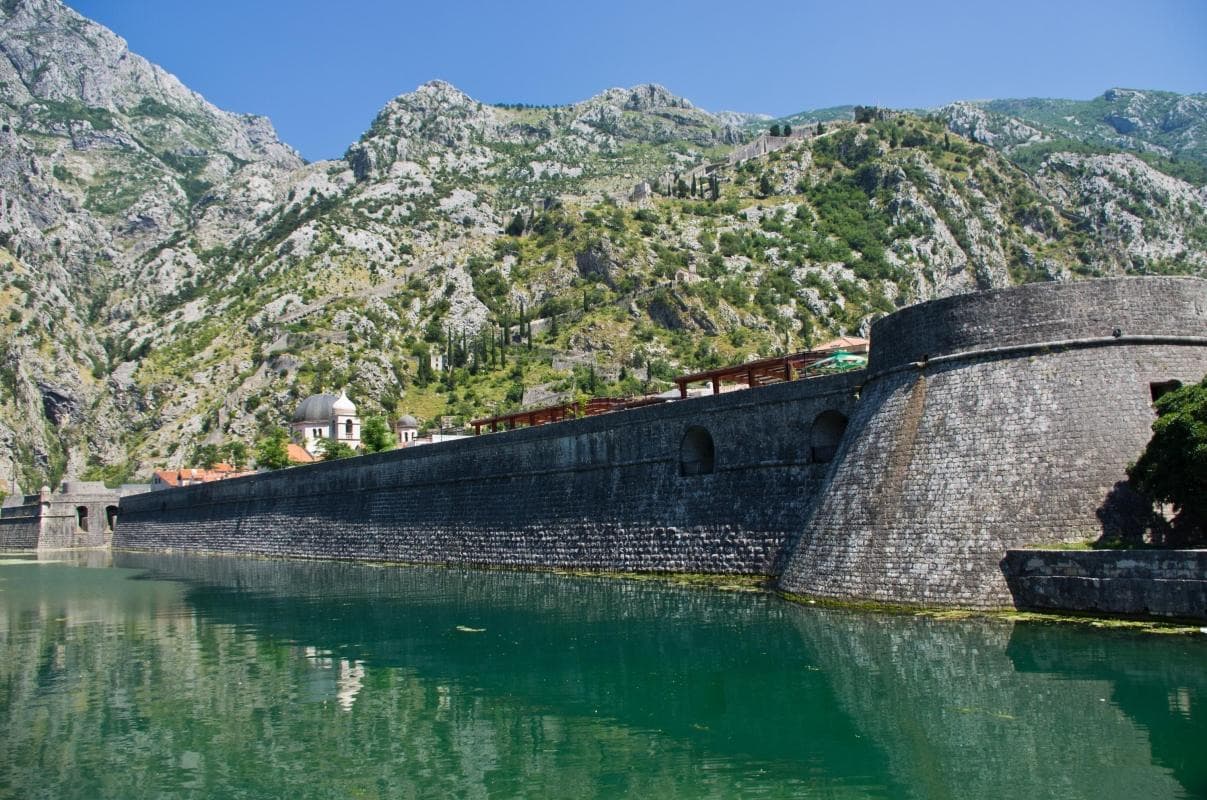
The stone steps begin with a question rather than a view: will you climb? They rise out of the Old Town like a memory made visible, a serpentine spine of walls that drape the limestone flank above the Bay of Kotor. Early morning, when the cruise ships are still a rumor on the horizon and the bell towers smoke the town with thin blue light, the climb feels private—one foot in front of the other, the air smelling faintly of salt and pine, the town below shrinking into an amphitheater of terracotta roofs. The walls don’t give themselves up all at once. They coax you around corners, over gates and battlements, then offer a sudden, cinematic payoff: the fjord-like bay, framed by steep mountains that press close enough to listen.
Kotor City Walls are less a single monument than a living map of history. Built and rebuilt over centuries—by Venetians, Ottomans, Austrians and local builders—the fortifications trace political fault lines as clearly as the contours of the rock. The ramparts climb to the ruined Castle of San Giovanni (St. John’s), about 260 meters above the town, along roughly 4.5 kilometers of walls that zigzag and survey the bay below. In UNESCO’s judgment, Kotor’s fortified Old Town and its dramatic setting form a cultural landscape where human craftsmanship collides productively with raw geology.
Geologically, the Bay of Kotor is a drowned river canyon compressed into something like a Norwegian fjord but softer, Mediterranean. The karst limestone cliffs that host the walls are ancient and prone to sudden slopes; the fortifications were designed to make the most of every natural ledge. The result is an ascent that alternates between engineered staircases and what feel like natural terraces—places where the ground itself seems to have been coaxed into service.
Culturally, the climb is stitched into Kotor’s rhythms. Locals will tell you about the days when the walls were defensive lifelines, when the Old Town sheltered merchants and fishermen against raids. Today the battlements are a shared backyard for both residents and visitors—grandparents sit in cafés near the southern gate, teenagers practice photography on the ramparts, and guides shepherd groups through layers of stone while reciting dates and anecdotes.
There are practical ways to approach this classical Kotor experience. The most obvious is to book a guided walking tour of the Old Town and the walls—a brisk, one-hour private tour will give you the town’s key stories and show you the hidden stairways that lead uphill. For a wider taste of Montenegro’s coast, consider the Montenegro Coastline Magic: a private tour that combines Kotor with nearby Perast and the tiny islands of Our Lady of the Rocks, or a full-day private drive that spins the map out to Mostar, Split and Sarajevo for travelers who want a border-crossing, regional day trip.
On the wall itself, expect a demanding but rewarding climb. The stairs are uneven; the gradient can be steep in places; there are short sections with little shade. That said, you don’t need technical climbing skills—just steady legs, sensible shoes and a willingness to stop for the views. The pace of the ascent is part of the delight: the walls give you vantage points to pause, to watch fishing boats thread the bay, to hear the sea daring you to lean a little closer.
Timing matters. Sunrise and late afternoon light are the richest for photography and for avoiding the heat of summer. In high season (June–August) the walls can feel crowded between 10:00 and 16:00; mid-May and September deliver the best balance between light and crowd size. If you come on a private walking tour, your guide can tailor the climb to your pace and interest—focusing on military architecture, local legends, or the best café to decompress afterwards.
Practicalities you’ll want to know: tickets to the fortifications are modest but enforced; bring cash for the gate. Water and sunscreen are non-negotiable. The descent is often the trickiest part for tired knees, so take it easy and use the many viewpoints as natural brakes. If you’re combining Kotor with Perast or the larger coast, a private vehicle tour is the easiest way to move between sites while keeping the day flexible.
The walls reward a mindful tempo. Walk them once to feel the geography and anger of the ascents; walk them again more slowly to read the stones—names, dates, repairs—left by generations of hands. And when you reach the Castle of San Giovanni, stand on that ruined ridge and let the bay’s currents feel like an answer. The landscape below is a conversation between sea and mountain; the walls are the human voice elevated into that dialogue.
For anyone who loves short, intense hikes woven through culture and history, Kotor’s walls are an exact fit: strenuous enough to feel earned, compact enough to be part of a half-day itinerary, and beautiful enough that the view repays every step. Whether you come with a guide, hop on a private coastline tour to extend your day, or linger in the Old Town afterward with a plate of grilled fish and a glass of Vranac, the climb is a compact epic—and one that leaves room for curiosity beyond the stones.
Trail wisdom
Small choices, better day.
Start early or late
Beat the midday heat and crowds—aim for sunrise or late afternoon for cooler temperatures and better light.
Wear grippy shoes
Stairs are uneven and sometimes steep; closed-toe shoes with good traction reduce slip risk.
Bring water and shade
There’s little shade on the upper sections—carry at least 1 liter per person on hot days and a brimmed hat.
Pace your descent
Descending can be harder on knees than the ascent—take short breaks at viewpoints and use handrails where available.
Local knowledge
Read the place, not just the route.
Watch for native species including Common kestrel, Mediterranean lizard species.
Keep an eye out for wildlife during the transition between areas and habitats. Respect distance guidelines.
The site is a UNESCO World Heritage property; stay on marked paths, avoid graffiti, and support local guides to help fund conservation efforts.
Follow the guide's instructions on size limits, ethical handling, and leave-no-trace practices.
Climb the short side-track to the old bastion above the southern gate for a quieter viewpoint.. Stop at a small café on the eastern wall for coffee and a view of the bay—locals favor an espresso mid-climb.
Locally recommended viewpoints and quiet spots known best to local operators.
Kotor’s fortifications were developed over centuries—major Venetian-era construction dates to the 15th–17th centuries—and adapted to the bay’s strategic importance for maritime trade.
Maritime roots and regional tradition shape the waterways and working coasts.
Seasonal guide
Four versions of the same landscape.
Spring
Best forWildflower-lined paths · Milder temperatures · Fewer crowds
ChallengesOccasional rain · Cool mornings
Late spring offers the best balance of comfortable weather and fewer visitors—expect green slopes and crisp light for photos.
Summer
Best forLong daylight hours · Combining beach time · Vibrant town life
ChallengesHigh heat and crowds · Limited shade on higher sections
Summer brings lively streets and easy boat access to neighboring towns, but midday heat and crowds can make the climb strenuous.
Fall
Best forGolden light for photography · Cooler hiking conditions · Harvest-season local food
ChallengesShorter days · Occasional storms
Autumn’s softer light and pleasant temperatures make the walls especially photogenic and comfortable for longer walks.
Winter
Best forQuiet town atmosphere · Low-season prices
ChallengesCool, windy conditions · Some facilities closed
Winter is quiet and atmospheric, but bring warm layers—the higher ramps can be exposed and chilly.
Pack with intention
What to bring.
Good to know
Common questions.
A direct ascent to the Castle of San Giovanni and back typically takes 1–2 hours depending on pace and photo stops; allow up to 3 hours for a relaxed visit including time in Old Town.
Plan the edges
The details that make the day easier.
The fortifications around Kotor extend roughly 4.5 kilometers up to the Castle of San Giovanni and rise to about 260 meters above the town; the Old Town and its natural setting were inscribed as a UNESCO World Heritage site in 1979.
Kotor’s cuisine mixes Mediterranean seafood with inland flavors—try grilled octopus or a platter of Njeguški pršut and local cheeses, and pair it with a glass of Montenegrin Vranac red wine. The town’s summers hum with festivals and slow café culture; small family-run konobas offer the most authentic meals.
- Know-before-you-go
- ticketed fortifications, uneven steps, limited shade—start early, carry water, wear sturdy shoes, and expect 1–3 hours round-trip.
Respect the site by staying on marked paths, avoiding litter, supporting certified local guides and restaurants, and minimizing single-use plastics during your visit.
Explore by topic
Follow the threads.
Keep exploring
Make the story part of the trip.
Set out from Bass Harbor for a private, customizable day on Blue Hill Bay — lighthouses, puffins, seals, and the chance to feel Acadia from the water. Small groups, local captains, unforgettable views.
In four hours you can move from shaded canyon ferns to wind-scoured coastal ridgelines, guided by someone who knows where the light—and the hidden views—live. This private half-day hike on the Monterey Peninsula or Big Sur is compact, curated, and perfect for travelers who want depth without a multiday commitment.
 Related story
Beneath a sky of shifting light, Skaftafell’s ice reads like a map of time. This three-hour guided glacier hike mixes technical instruction with geology and culture: compact, safe, and unforgettable.