
What the day feels like
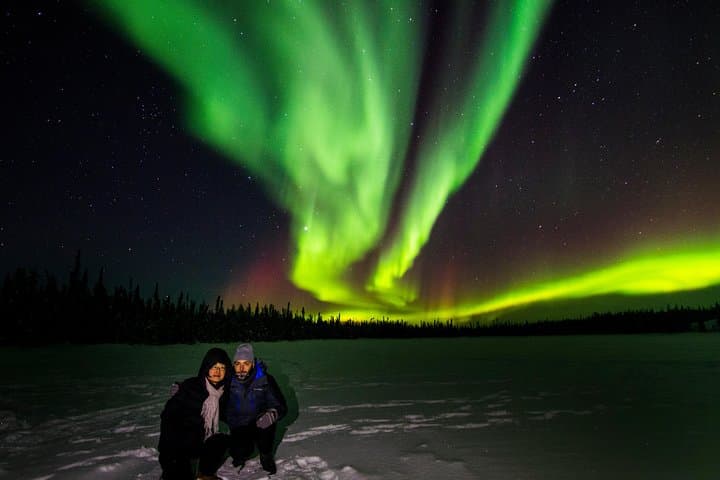
It starts as a bruise of violet behind a low bank of cloud—an impossible smear that slowly breathes and blooms. You feel it before you see it properly: the air seems to charge, a hush falls over the small group, breath becomes visible in the cold. Then the first ribbon unfurls, thin as a brushstroke, and the horizon that had been ordinary a moment ago becomes an active ceiling. In Yellowknife, the aurora is not background scenery; it is the main event. On a good night the sky moves with intent, daring you to keep your eyes on the ground.
Yellowknife sits just under the auroral oval, a ring around the magnetic pole where charged solar particles meet the Earth’s atmosphere. That geography makes the city one of the most reliable places on the planet to witness the Northern Lights, and local guides have learned to read the weather and geomagnetic conditions with near-scientific precision. The <a href="https://app.advcollective.com/local-experts/yellowknife-northern-lights-tour-best-aurora-viewing-with-pro-photography-transport">Yellowknife Northern Lights Tour</a> leans into that expertise: rather than betting on a single public viewing site, the guides shift with the forecasts and take you to the best viewing corridor for that night.
There’s history layered into the experience. Indigenous Dene and Inuvialuit peoples have long stories and cultural interpretations of the aurora—tales that treat the lights as animate presences with agency, not mere spectacle. That personification echoes in the way you watch the sky: the curtains of light seem to respond to a conductor’s hand, rushing, rippling, and sometimes collapsing in on themselves. Geologically, you’re standing on Canadian Shield bedrock that has resisted glaciers for eons; it’s a cold, exposed landscape that reflects light differently than the dense boreal forest, which also influences the way the aurora looks to the naked eye and on camera.
The tour’s practical edge is obvious the moment you sign up. There are no time limits—the guides will wait as long as the conditions demand because aurora viewing is not a schedule-bound game. The package often includes hotel pickup and drop-off in Yellowknife, hot drinks and snacks, and unlimited professional photography service. That last piece matters: aurora photography is a different discipline from daytime shooting. A steady tripod, the right ISO and exposure, and a guide who can help with composition and camera settings will make the difference between a pale memory and a gallery-ready print.
Expect cold—this is the subarctic—and plan accordingly. Good gloves, insulated boots, and a windproof shell keep you comfortable while you stand and watch. The guides know quick routes away from city light pollution and will take you to areas where the sky is a clean, uninterrupted theatre. You’ll likely stand on snow, sometimes on frozen lakes, sometimes beside shrubby trees that silhouette against the curtains. The experience can be surprisingly social: quiet conversations, shared binoculars, and a communal thrill when a green sash turns into a crown.
Who should go? Anyone who can tolerate standing out in cold weather for several hours and wants to increase their odds of seeing striking auroral displays. Families with younger children should plan for shorter windows of exposure or a warm vehicle fallback; photography enthusiasts will benefit enormously from the included pro help. The tour’s 4–6 hour duration is flexible—guides make choices based on real-time conditions, and they’ll keep you as long as the aurora is cooperative.
Practicalities you’ll appreciate: arrive in Yellowknife with some buffer time so you’re not rushed if the tour departs in the late evening. Charge batteries—cold drains them fast—and bring spares. If you’re renting camera gear, request weather-sealed equipment and a sturdy tripod. Small comforts like a thermos, warm socks, and hand warmers are underrated luxuries when you’re standing still for long periods.
The best nights are crisp and clear, but some of the most memorable displays arrive after a storm clears and the sky snaps to clarity—when the air is clean and the stars have poundingly bright contrast with the aurora. Guides will use geomagnetic indices and on-the-ground cloud forecasts to select the location that maximizes your chance of seeing the show; they’ll also coach you on spotting subtle activity that builds into full-fledged curtains.
Yellowknife’s compact size means the cultural payoff is immediate after a night under the lights. You can warm up with local fare, meet people who live in the North year-round, and learn more about the land that makes such celestial drama possible. If you go ready—physically and mentally—the aurora will repay you in spectacular, quiet increments.
For travelers, there’s a practical lesson in all this: the Northern Lights are a cooperative phenomenon. Your odds improve with the right geography, the right forecast, and the right people steering you to the dark places. That’s why a guided option that includes professional photography and flexible timing is worth considering—and why many visitors return to Yellowknife with pictures that look like they belong in a magazine. To increase your chances and avoid the common pitfalls, book with a local operator who understands both the sky and the land. See more and reserve a spot on an expert-led outing at this <a href="https://app.advcollective.com/local-experts/yellowknife-northern-lights-tour-best-aurora-viewing-with-pro-photography-transport">Yellowknife Northern Lights Tour</a>.
Trail wisdom
Small choices, better day.
Dress in layers
Bring a moisture-wicking base, insulating mid-layer, and windproof outer shell—the layered system keeps you warm while allowing mobility for photography.
Protect your batteries
Store camera and phone batteries inside your jacket to prevent rapid drain in subzero temperatures and bring spares.
Bring a tripod
Long exposures are needed for aurora shots—rent or bring a sturdy tripod rated for cold-weather use to avoid camera shake.
Plan for late nights
Tours run well into the night; eat a good meal beforehand and bring snacks and hot drinks provided by the guide to stay comfortable.
Local knowledge
Read the place, not just the route.
Watch for native species including Moose, Snowy owl.
Keep an eye out for wildlife during the transition between areas and habitats. Respect distance guidelines.
Respect dark-sky practices—limit artificial light and stay on designated routes; local operators work to minimize vehicle noise and disturbance to wintering wildlife.
Follow the guide's instructions on size limits, ethical handling, and leave-no-trace practices.
Drive or walk to Yellowknife’s Old Town for quiet viewpoints and historic cabins. Visit Frame Lake at dusk for chance aurora reflections on still water when conditions align
Locally recommended viewpoints and quiet spots known best to local operators.
Yellowknife grew from a 1930s gold-rush settlement into the capital of the Northwest Territories; its Arctic-adjacent location made it a hub for northern pilots and researchers.
Maritime roots and regional tradition shape the waterways and working coasts.
Seasonal guide
Four versions of the same landscape.
Spring
Best forFewer tourists · Clearer skies after storms
ChallengesCold nights · Unpredictable melt
Late winter into early spring (March–April) can deliver strong aurora with slightly longer daylight—expect cold nights but often stable skies.
Summer
Best forLong daylight activities · Local festivals
ChallengesMidnight sun limits visibility · Short aurora season
Summer brings long days and the midnight sun—aurora viewing is generally not possible during peak daylight months.
Fall
Best forEarly-season aurora · Crisp clear nights
ChallengesVariable weather · Shorter days
September to November offers the first clear nights of the season; temperatures drop quickly after sunset so dress warm.
Winter
Best forPeak aurora season · Dark skies
ChallengesExtreme cold · Icy conditions
Winter offers the most consistent aurora opportunities and long dark hours—prepare for cold and occasional travel delays due to weather.
Operator details
What the booking data adds.
Included
- ✓Hotel pickup and drop-off
- ✓Snacks
- ✓Beverages
- ✓Professional photo taking by us of you and aurora!
- ✓Coffee and/or Tea
- ✓Guide
- ✓Transport by mini coach
Not included
- —Dinner
Good to know
- ✓Travelers should have at least a moderate level of physical fitness
- ✓May be operated by a multi-lingual guide
- ✓Operates in all weather conditions, please dress appropriately
Pack with intention
What to bring.
Good to know
Common questions.
The guides choose viewing locations based on real-time geomagnetic and cloud forecasts to maximize your odds; while sightings are never guaranteed, Yellowknife’s location under the auroral oval gives you one of the best probabilities worldwide.
Plan the edges
The details that make the day easier.
Yellowknife sits directly under the auroral oval and averages visible aurora on more than 200 nights per year, making it one of the world’s most reliable aurora-viewing destinations.
After a night under the lights, head back to Franklin Avenue for casual bites and friendly bars—locally run bistros and cafes (including longtime favorites like Bullock’s Bistro) offer warming, hearty fare and a chance to chat with residents about life in the North.
- Closest airport
- Yellowknife Airport (YZF); meeting point: downtown hotels or designated pickup zones; driving distance: most viewing sites are 10–60 minutes from town depending on conditions; cell service: intermittent in remote viewing areas; permits: none typically required for guided tours.
Support operators who practice dark-sky ethics and minimize off-road travel; pack out all trash and avoid disturbing shoreline and tundra habitats.
Explore by topic
Follow the threads.
Keep exploring
Make the story part of the trip.
Set out from Bass Harbor for a private, customizable day on Blue Hill Bay — lighthouses, puffins, seals, and the chance to feel Acadia from the water. Small groups, local captains, unforgettable views.
In four hours you can move from shaded canyon ferns to wind-scoured coastal ridgelines, guided by someone who knows where the light—and the hidden views—live. This private half-day hike on the Monterey Peninsula or Big Sur is compact, curated, and perfect for travelers who want depth without a multiday commitment.
 Related story
Beneath a sky of shifting light, Skaftafell’s ice reads like a map of time. This three-hour guided glacier hike mixes technical instruction with geology and culture: compact, safe, and unforgettable.