
What the day feels like
You step off the Link light rail at the University of Washington station and the city hum fades—replaced by a different sort of traffic: students moving between classes, cyclists negotiating cobbled crosswalks, the steady exhale of plane wings above. For a moment you could be anywhere a campus becomes its own small town, except the skyline behind the elms gives it away: Space Needle to the south, the pale sweep of the Cascades to the east, and a narrow band of water—Lake Washington—framed by the stadium to the north.
In spring the Quad is the reason most people come. A dozen mature Yoshino cherry trees form a pink canopy, petals drifting like small, polite snow in the midday breeze. Walk the stone steps out of Suzzallo Library and the scene arrests even the hurried—photographers lower their tripods, lovers pause mid-stride. That immediacy is the University of Washington’s signature: moments of quiet beauty tucked inside a working research campus.
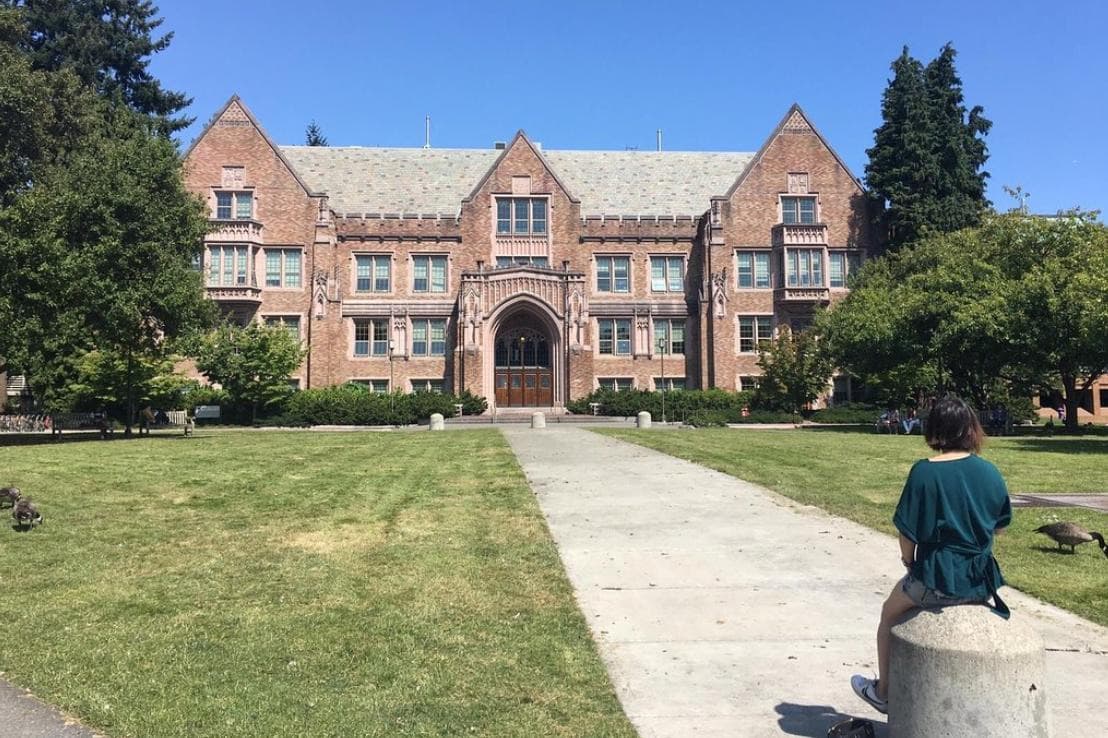
But the UW is more than a picture. Founded in 1861, the university sits where the last ice sheet left the Puget Sound region a braided mix of lakes, flats and hills. You can feel the geology in the campus topography—gentle rises and drops that lead down to Montlake and the narrow Montlake Cut, where rowing shells skim like ink through the city. The campus itself reads like a condensed Seattle: collegiate Gothic stone (Suzzallo), modern glass (Allen Center for the Visual Arts), an archaeological museum quietly re-housing the region’s first peoples’ stories (Burke Museum), and the almost theatrical presence of Husky Stadium perched at the lake’s edge.
Visiting UW is an activity that rewards both slow, sensory exploration and smart planning. A typical walking loop—starting at Red Square, curving through the Quad, past the fountain at Drumheller, down toward Husky Stadium and the waterfront—covers 2–3 miles on mostly paved paths with a handful of stairs and short, steep ramps. It’s an easy day that can be paired with two of Seattle’s classic half-day experiences: a four-hour city tour that takes you up to Queen Anne for postcard views and through Chinatown, and a two-hour Lake Union cruise that glides past Gas Works Park and the floating home community where Seattle’s maritime eccentricity is on full display.
The city tour is useful for context. If you’ve only come for the campus, a guided loop gives you a sense of how the university sits inside a broader urban landscape: tech campuses and research labs humming to the south, small businesses and international markets to the north. The Lake Union cruise, by contrast, slows everything down. From the water the campus looks different—the stadium’s concrete terrace read against the calm of the lake—while the neighborhood of Wallingford and Gas Works Park offer a quieter, industrial counterpoint to the manicured green of UW.
A practical visit is part leisurely walk, part logistical puzzle. The best time to arrive is early—mornings under the cherry trees are still cool, pathways less crowded, and the light soft across Suzzallo’s façade. Weekdays are busier with student traffic; weekends empty out certain buildings but fill tour areas. If you plan to pair your campus visit with the Lake Union cruise, allow an extra 2–3 hours: the cruise is compact—about two hours—perfect for seeing the floating homes and the city skyline from a low-slung vantage.
Footwear matters more than you’d expect. The campus is largely paved but alder roots and rainy-season mud can surprise you along the Montlake trails. Bring a lightweight waterproof layer and a daypack with room for water, a snack, and a compact tripod if you intend to photograph the Quad. Public transit is the most sustainable option: the Link to UW, buses that loop through the U District, and a compact network of bike lanes make car-free travel not only possible but easier than hunting for parking. If you drive, expect metered lots and time limits; arrive early to find a reasonable space.
Beyond the obvious photo ops, the UW carries quieter cultural textures. Stop into the Suzzallo Reading Room for a sense of the university’s academic heartbeat—the vaulted ceilings and long oak tables have the hush of a cathedral. The Burke Museum brings the region’s natural history into sharp focus, connecting glacial geology to contemporary ecosystems. If the Huskies are in town, Husky Stadium adds a raucous beat to an otherwise contemplative campus; game days are electric and radically different from a weekday stroll.
For travelers, the University of Washington is the kind of place that offers layered returns: a first visit for the seasonal spectacle, subsequent ones for museum exhibits, performances, or simply to trace a new footpath down by the lake. When paired with a guided city tour or an hour on Lake Union, the campus becomes both anchor and gateway—an accessible, urban wilderness with a clear sense of place.
Practical note: take the day slowly. Let the city tour orient you, walk the Quad when the light is low, and keep an eye on ferry and bus schedules if you’re moving between activities. Seattle’s weather can change on a whim; plan accordingly. The payoff is reliable: a campus that feels like a neighborhood, a lake that dares you to linger, and a skyline that keeps reminding you you’re in a Pacific Northwest city built around water and ideas.
Trail wisdom
Small choices, better day.
Time your visit for morning light
Arrive early to avoid crowds in the Quad and to catch warm, directional light for photos of Suzzallo and the cherry trees.
Use public transit
Take the Link light rail or buses to avoid parking headaches—UW Station drops you steps from Red Square.
Dress for quick weather shifts
Bring a lightweight waterproof layer and non-slip shoes; pavements can become slick during rain.
Combine activities logically
Pair a 2-hour Lake Union cruise with a campus visit—timing the cruise midday keeps the campus stroll for morning or late afternoon.
Local knowledge
Read the place, not just the route.
Watch for native species including Bald eagles near Lake Washington, Great blue herons along the Montlake shoreline.
Keep an eye out for wildlife during the transition between areas and habitats. Respect distance guidelines.
The campus prioritizes sustainability with extensive recycling programs and transit access; opt for public transport and minimize single-use plastics when visiting.
Follow the guide's instructions on size limits, ethical handling, and leave-no-trace practices.
The Suzzallo Reading Room for quiet, vaulted study-room architecture. Montlake Cut rowing docks—watch crews practice at dawn for a local ritual
Locally recommended viewpoints and quiet spots known best to local operators.
Founded in 1861, the University of Washington is one of the oldest public universities on the U.S. West Coast and has played a central role in Seattle’s civic and scientific development.
Maritime roots and regional tradition shape the waterways and working coasts.
Seasonal guide
Four versions of the same landscape.
Spring
Best forcherry blossoms · photography · outdoor campus strolls
Challengespeak crowds mid-April · variable rain showers
April brings the Quad’s cherry trees into dramatic bloom—expect crowds and vivid photo opportunities, with the occasional spring shower.
Summer
Best forlake cruises · al fresco dining · walking tours
Challengesoccasional heat waves · more tourists
Warm, long days are ideal for pairing a campus walk with a Lake Union cruise or a city tour; sunscreen and water are musts.
Fall
Best forcolorful foliage · fewer crowds · museum visits
Challengesshorter daylight hours · cooler, wet weather
Autumn cools down the campus and brings golden leaves to the Quad; it’s a quieter time to explore indoor exhibits like the Burke Museum.
Winter
Best forquiet exploration · indoor cultural visits · budget travel
Challengesrain and drizzle · muddy paths
Winters are mild but wet—good for indoor museum days and empty campus roads, though bring waterproof layers and good footwear.
Pack with intention
What to bring.
Good to know
Common questions.
A focused loop covering Red Square, the Quad, Suzzallo Library, and the Husky Stadium waterfront is roughly 2–3 miles and takes 2–4 hours depending on stops.
Plan the edges
The details that make the day easier.
The University of Washington was founded in 1861, making it one of the oldest public universities on the U.S. West Coast.
The U District is a student-driven food scene—coffee shops, international eateries and an outdoor farmers market offer casual, local bites; plan an afternoon espresso and poke bowl after your walk.
- Getting there
- Link light rail (UW Station) or buses; cost: campus walk is free, museum and cruise tickets vary; time needed: 2–4 hours for campus, add 2 hours for Lake Union cruise or 4 hours for city tour.
Favor public transit to reduce car congestion and carbon footprint; bring a reusable bottle and respect campus recycling stations to minimize waste.
Explore by topic
Follow the threads.
Keep exploring
Make the story part of the trip.
Set out from Bass Harbor for a private, customizable day on Blue Hill Bay — lighthouses, puffins, seals, and the chance to feel Acadia from the water. Small groups, local captains, unforgettable views.
In four hours you can move from shaded canyon ferns to wind-scoured coastal ridgelines, guided by someone who knows where the light—and the hidden views—live. This private half-day hike on the Monterey Peninsula or Big Sur is compact, curated, and perfect for travelers who want depth without a multiday commitment.
 Related story
Beneath a sky of shifting light, Skaftafell’s ice reads like a map of time. This three-hour guided glacier hike mixes technical instruction with geology and culture: compact, safe, and unforgettable.