
What the day feels like
The track begins with a hush — damp leaf litter, the soft molting chatter of lorikeets, and the steady, patient drip of water off palm fronds. A shaft of late-morning sun finds its way through the canopy and for a moment the rainforest lights up like a dark room exposed to development: ferns unfurl, lichen glows silver, and a rainforest gullies' scent — earth, wet bark, green resin — fills the lungs. This is Tamborine National Park, a patchwork of ancient Gondwana rainforest, lookout ridges and waterfall bowls that hover above the Gold Coast’s surf and glittering skyline. It’s compact enough for an easy day escape and varied enough to shape a full weekend of hikes, ziplines, winery tastings and nighttime glow-worm hunts.
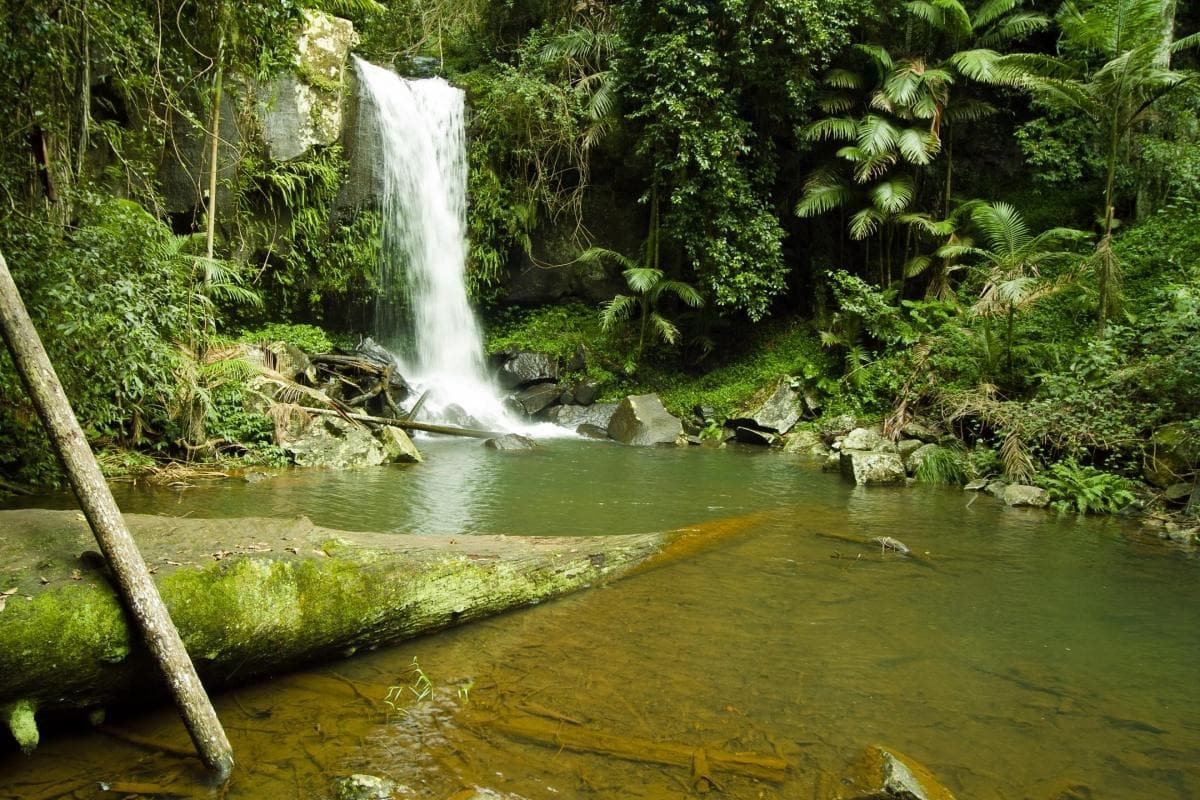
For anyone who comes here expecting nothing but a single summit or a row of shops, Tamborine surprises. The national park itself is scattered across small reserves on the plateau of Tamborine Mountain — a remnant of old volcanic flows — and protects a series of interpretive trails that thread between subtropical rainforest, eucalypt open forest and cliff-line lookouts. Geologically the mountain is a plateau formed by ancient lava flows; today it rises roughly 525 meters above sea level, and that elevation is what makes the microclimates here so lush. The result is a mosaic of waterfalls — Curtis Falls, Cedar Creek, and smaller cascades tucked into gullies — where water, in the words of the place, dares you to slow down.
The cultural layer is as textured as the moss on the rocks. Indigenous Yugambeh peoples have long-standing connections to the mountain and its resources. European settlement brought timber cutters and later artists and craftspeople who established Gallery Walk, the village’s creative spine where artisan shops, fudge makers, distilleries and cellar doors gather. A visit to Tamborine, then, is often double-headed: you follow a damp rainforest track one hour and sit with a hand-crafted gin or a wine tasting the next.
Activities here are fit to how you want to feel that day. Walkers can pick from short, accessible circuits like the Curtis Falls Walk (an easy boardwalk and creek-side path of roughly 1–2 km return) to longer combinations that stitch together lookouts and creeks for half-day outings. The rainforest Skywalk gives a canopy-level perspective without a strenuous climb — a 1–2 km elevated loop that puts you at eye level with strangler figs and the birdlife that lives in the canopy. If you want to let adrenaline set the pace, the Tamborine Mountain TreeTop Challenge threads ziplines and rope bridges through the rainforest — Australia’s largest aerial adventure of its kind — where you literally fly through the forest and feel the wind push you forward.
At dusk the forest takes on another personality. Guided glow-worm tours at Cedar Creek — best taken with a knowledgeable operator — light up the undersides of caves and overhangs with the soft, non-intrusive glow of Arachnocampa larvae. Night tours combine stargazing, a guided waterfall walk and careful explanations of nocturnal ecology. For a more terrestrial, slower sort of wildlife viewing, private rainforest and wildlife tours will often place you quietly among grazing kangaroos or point out koalas in the treetops.
Practical planning here is refreshingly straightforward. Trails are generally well-marked but often wet and slippery after rain; good grip and caution on roots and rocks are essential. Distances range from short 1–2 km loops to more adventurous 6–10 km days if you link multiple reserves. Elevation change is rarely brutal, but expect short, steep sections when you're moving between ridge lookouts and creek lines. If you’re coming from the Gold Coast or Brisbane, allow 40–60 minutes by car; the Mt Tamborine shuttle service gives a simple no-worry alternative if you prefer not to drive.
A balanced Tamborine itinerary might start early on a shaded trail, move to a mid-morning stop at Gallery Walk for coffee and a scone, take a Skywalk in the early afternoon, and finish with a winery or distillery tasting as the light softens. For families, the TreeTop Challenge has courses for beginners and kids (age and weight restrictions vary, so check ahead). For photographers: golden hour over the plateau creates deep ridgelight and long shadows worth staying for.
Timing matters. The plateau’s microclimate brings sudden showers; a lightweight waterproof and quick-dry layers will save the day. For glow-worm viewing and many guided night tours you’ll need to book in advance and follow strict low-light rules (no flash, no phone screens). Respect wildlife: the kangaroos are wild and used to people, but feeding them stresses their health; keep your distance and leave no trace.
Tamborine’s charm is in this mix — the slow hush of rainforest and the conviviality of cellar doors, the adrenaline of ziplines and the hush of glow-worm caves. It’s a place you can move through quickly or stretch into a slow, sensory weekend. Either way, the mountain invites you to listen. The rainforest will respond.
Practical snapshot: expect varied terrain, wear shoes with grip, bring water, and plan to split your day between walks and the village for a full feel of this hinterland jewel. For anyone seeking an accessible combination of mountain trail, wildlife viewing and local food and drink, Tamborine National Park delivers a few hours of true wilderness temperament — and a strong handful of local flavors to savor afterward.
Trail wisdom
Small choices, better day.
Start early to beat crowds and heat
Begin hikes at first light for cooler temperatures, better wildlife sightings, and easier parking around Gallery Walk.
Footwear matters
Wear sturdy shoes with good tread — trails are often muddy with exposed roots and wet rocks after rain.
Pack a headlamp for night tours
Glow-worm walks and any after-dark rainforest tours require hands-free light for walking to and from meeting points.
Balance trail time with tasting time
Schedule a mid- or late-afternoon winery or distillery visit after a morning on the trails—many tours include lunch.
Local knowledge
Read the place, not just the route.
Watch for native species including Eastern Grey Kangaroo, Koala.
Keep an eye out for wildlife during the transition between areas and habitats. Respect distance guidelines.
Sections of Tamborine protect Gondwana rainforest fragments; stay on marked trails, dispose of waste properly and support local producers to keep tourism sustainable.
Follow the guide's instructions on size limits, ethical handling, and leave-no-trace practices.
Small creek pools along the Joalah section where dragonflies hover and fewer visitors stop. Early-morning vantage at the Witches Falls lookout for mist over the valley
Locally recommended viewpoints and quiet spots known best to local operators.
Tamborine’s plateau was settled for timber and later developed into an artists’ and growers’ community; parts of the park are protected remnant rainforest dating back to the Gondwana period.
Maritime roots and regional tradition shape the waterways and working coasts.
Seasonal guide
Four versions of the same landscape.
Spring
Best forWildflower displays · Comfortable hiking · Canopy birdwatching
ChallengesVariable spring showers · Increased weekend crowds
Spring is ideal for flowers and milder temperatures; expect occasional showers and busy weekends around Gallery Walk.
Summer
Best forWaterfalls at full flow · Glow-worm nights · Longer daylight hours
ChallengesHigh humidity and heat · Thunderstorms and slippery trails
Summer brings lush rainforest and energetic waterfalls but also humidity and sudden storms—start early and carry rain protection.
Fall
Best forClearer skies · Cooler hiking · Photography with crisp light
ChallengesShorter daylight · Variable temperatures between morning and afternoon
Autumn’s drier air makes for comfortable hikes and great light for photos, though mornings can be cool.
Winter
Best forCrisp, clear views · Quieter trails · Cozy cellar-door visits
ChallengesCooler nights · Early sunset (affects night tours schedule)
Winter is dry and clear — perfect for lookouts and cellars — but nights are cold and many tours run limited hours.
Pack with intention
What to bring.
Good to know
Common questions.
No entry permit is required for the national park; most walking tracks are open to the public. Paid experiences like TreeTop Challenge or guided glow-worm tours require bookings.
Plan the edges
The details that make the day easier.
Tamborine Mountain is a plateau formed by ancient volcanic lava flows and rises to about 525 metres (1,722 ft) above sea level.
Gallery Walk is the cultural heart — artisan fudge, pottery studios, small-batch distillers and family-run cellar doors make for a convivial après-hike scene. Try a local gin or honey and a warm scone at a café overlooking the valley.
- Nearest city
- Gold Coast (40–60 min drive). No park fees for day walks. Book guided tours and TreeTop sessions ahead. Facilities: picnic areas and public toilets in village hubs; some trails have boardwalks and interpretive signs.
Stick to marked trails, pack out what you pack in, avoid feeding wildlife, and choose local guides and producers to support the community and reduce your trip’s footprint.
Explore by topic
Follow the threads.
Keep exploring
Make the story part of the trip.
Set out from Bass Harbor for a private, customizable day on Blue Hill Bay — lighthouses, puffins, seals, and the chance to feel Acadia from the water. Small groups, local captains, unforgettable views.
In four hours you can move from shaded canyon ferns to wind-scoured coastal ridgelines, guided by someone who knows where the light—and the hidden views—live. This private half-day hike on the Monterey Peninsula or Big Sur is compact, curated, and perfect for travelers who want depth without a multiday commitment.
 Related story
Beneath a sky of shifting light, Skaftafell’s ice reads like a map of time. This three-hour guided glacier hike mixes technical instruction with geology and culture: compact, safe, and unforgettable.