
What the day feels like
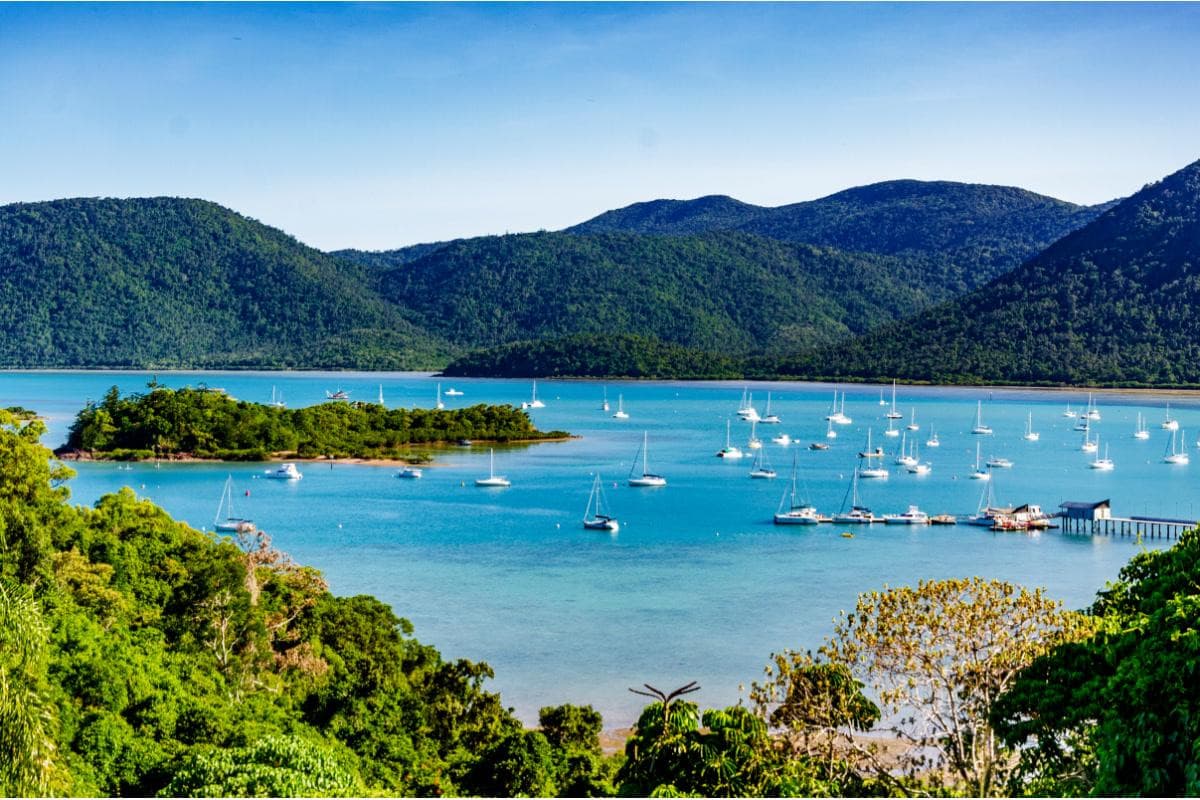
You step off the shuttle and the heat of Airlie Beach eases like a hand lifting from your shoulder. The road shrinks to a ribbon of dust and the rainforest swallows sound—cars, conversation, the distant churn of the Whitsunday sea—until only birds and the occasional drip of water remain. Conway National Park is immediate in its intimacy: a patchwork of lowland rainforest, eucalypt woodland and coastal headlands that feels both wild and imminently reachable from town. Here the forest leans toward the ocean, ferns crowd your boots, and small falls thread through gullies, daring you to follow their course upstream.
The park is the kind of landscape that rewards both curiosity and patience. Geologically it sits on coastal plain and folded sedimentary rocks uplifted over millennia; valleys are shallow, slopes are short, and the sea sits within sight of many ridgelines. That closeness to the ocean shapes the ecology—humidity, salt-influenced winds and tropical storms create a mosaic of habitats that support rainforest pockets where many other places would be dry woodlands.
Conway’s human story is layered. The Ngaro and Gia peoples are the traditional custodians of the Whitsunday region; their connection to the land and sea predates modern maps and remains an essential part of the area’s cultural fabric. European settlers came later, carving roads and clearing land for small-scale agriculture before conservation efforts preserved the best of what remained. Today, locals and visitors alike value the park for its accessibility: short bushwalking tracks, shaded picnic spots, and lookout ridges where you can watch sunbreaks spill across the Coral Sea.
For travelers wanting to feel the place rather than just pass through, the park’s trio of experiences—guided bushwalks to waterfalls, the only Segway rainforest tour in Australia, and customizable trike rides—fit neatly into different appetites. The Airlie Waterfalls & Rainforest Bushwalk Eco Adventure folds natural history into an easy-to-moderate walk that highlights seasonal cascades and the plants and birds that live among them. Guides emphasize context—how the forest responds to cyclone events, which plants are used medicinally, which birds indicate healthy water—and they’ll tell you upfront that the waterfalls are seasonal. In the dry months they soften to trickles; after heavy rains they become theatrical.
If you want a different rhythm, the Whitsunday Segway Rainforest Discovery Tour offers a pleasantly odd way to pass beneath the canopy. It’s a 3.5-hour curated glide: you’ll be trained, outfitted, and given commentary as you roll along shaded paths. The novelty of the Segway is practical here—quiet enough not to scare wildlife, stable enough for gentle slopes—and it makes more of the park accessible to people who might struggle on longer foot trails.
For a greater sense of autonomy, the Airlie Beach Trike Tours let you design the ride. These are light, motorized loops that take you from town into the park’s coastal fringes and back via scenic roads. The trikes are conversational—drivers wear Bluetooth headsets so you can ask questions on the go—and they function as a comfortable way to stitch together beach viewpoints, short hikes, and a café stop.
Practicalities matter: most walking trails in Conway are short to moderate—expect 2–6 km outings with modest elevation gain (typically under 200 m). Terrain varies from packed dirt and boardwalks to leaf-littered gullies that can get slippery after rain. Footwear with grip is non-negotiable; a light rain jacket is worthwhile even if the forecast is fair (tropical showers appear without much warning). Hydration is critical—there’s shade, but humidity makes exertion feel heavier—and bugs can be persistent in warm months so insect repellent is a small comfort that goes a long way.
Timing your visit changes the mood of the park. Visit in winter and you’ll find clear days, crisp mornings, and the best chance of flowing falls after a wet spring. Summer is lush but hot and storm-prone; trails will be greener, but some creeks will be swollen. Guided tours are an excellent investment: guides translate the landscape into stories and give you practical options for where to go when water levels are low or when tidal access affects coastal viewpoints.
For photographers and quiet observers, Conway rewards restraint. The forest refrains from grand gestures; it offers instead intimate frames—sunlit ferns, a kingfisher on a low branch, leaf-litter patterning that tells you where a wallaby has passed. For families or mixed-ability groups, the Segway tour is uniquely inclusive. For small-group travelers who want to press beyond official trails, a trike loop gives local perspective—with the rider as a rolling guide who can detour to a lesser-known lookout or a favorite seafood shack back in Airlie Beach.
Conway National Park is not a single, dramatic summit or a long alpine traverse; it’s a compact coastal rainforest that rewards curiosity and offers multiple ways to engage. Walk slowly, listen—nature here has a low, persistent voice—and plan around the seasons. Whether you lace up boots to chase waterfalls, learn to lean into a Segway under the canopy, or customize a trike ride that stitches together coast and forest, Conway offers an accessible wilderness that’s close to town but far enough from routine to feel like an adventure.
If you go: respect cultural sites, stay on marked trails, carry water and insect repellent, and consider booking a guide—more than convenience, a local guide transforms a pleasant walk into a place you’ll remember.
Trail wisdom
Small choices, better day.
Carry 1–1.5L of water
Trails are short but humid; dehydration can sneak up even on easy walks.
Wear grippy shoes
Routes include muddy gullies and short rocky steps—trail runners or hiking shoes are ideal.
Watch for seasonal flow
Waterfalls may be dry in late dry season; plan visits after wet periods for best cascades.
Book a guide for deeper context
Eco-guides and Segway operators provide local ecology and cultural insights you’ll miss on your own.
Local knowledge
Read the place, not just the route.
Watch for native species including Eastern Grey Kangaroo / wallabies, Rainbow lorikeets and forest honeyeaters.
Keep an eye out for wildlife during the transition between areas and habitats. Respect distance guidelines.
Stay on marked paths, pack out all waste, and support licensed local guides—these actions reduce trail erosion and protect sensitive coastal rainforest pockets.
Follow the guide's instructions on size limits, ethical handling, and leave-no-trace practices.
Small, lesser-visited creek pools upstream from main falls (ask a guide for access). Coastal headland nooks that frame sunrise over the Whitsunday islands
Locally recommended viewpoints and quiet spots known best to local operators.
The park sits within the traditional lands of the Ngaro and Gia peoples, whose cultural connection to the land and sea continues today.
Maritime roots and regional tradition shape the waterways and working coasts.
Seasonal guide
Four versions of the same landscape.
Spring
Best forWaterfall flow after winter rains · Birdwatching during breeding season · Lush rainforest colors
ChallengesOccasional heavy showers · Sticky humidity in late spring
Spring (Sep–Nov) brings renewed water flow and active wildlife; expect intermittent rain and rapidly greening trails.
Summer
Best forDense rainforest growth · Tropical storm-watch photography · Lush creek pools
ChallengesHigh heat and humidity · Frequent tropical showers or storms
Summer (Dec–Feb) is the greenest season but also the hottest and wettest—storms can close low-lying paths.
Fall
Best forClearer trails after summer storms · Comfortable temperatures for long walks · Good visibility from headlands
ChallengesResidual humidity early in the season · Variable waterfall flow
Autumn (Mar–May) is pleasant for hikes—warm days with diminishing storms—ideal for mixed activity days.
Winter
Best forCool, dry walking conditions · Stable weather and clear coastal views · Best overall hiking comfort
ChallengesShorter daylight hours · Early mornings can be chilly
Winter (Jun–Aug) offers the most reliable hiking weather: cooler, drier days and crisp visibility over the sea.
Pack with intention
What to bring.
Good to know
Common questions.
Guided walks are typically 2–4 hours covering 2–6 km; many routes are short loops suitable for half-day visits.
Plan the edges
The details that make the day easier.
Conway National Park forms part of the Whitsundays coastal ecology adjacent to the Great Barrier Reef Marine Park and protects important pockets of coastal rainforest near Airlie Beach.
Airlie Beach’s cafes and seafood shacks pair naturally with a park visit—look for local prawns and reef fish, and seek out cultural tours that highlight Ngaro connection to the islands and coastline.
- Distance from Airlie Beach
- 10–15 minutes by shuttle or short drive; parking and courtesy pickups available with tour operators; trails vary 2–6 km; best visited in dry winter months for stable weather.
Choose licensed local guides, stay on trails to protect understorey plants, avoid single-use plastics, and support businesses that contribute to local conservation efforts.
Explore by topic
Follow the threads.
Keep exploring
Make the story part of the trip.
Set out from Bass Harbor for a private, customizable day on Blue Hill Bay — lighthouses, puffins, seals, and the chance to feel Acadia from the water. Small groups, local captains, unforgettable views.
In four hours you can move from shaded canyon ferns to wind-scoured coastal ridgelines, guided by someone who knows where the light—and the hidden views—live. This private half-day hike on the Monterey Peninsula or Big Sur is compact, curated, and perfect for travelers who want depth without a multiday commitment.
 Related story
Beneath a sky of shifting light, Skaftafell’s ice reads like a map of time. This three-hour guided glacier hike mixes technical instruction with geology and culture: compact, safe, and unforgettable.