
What the day feels like
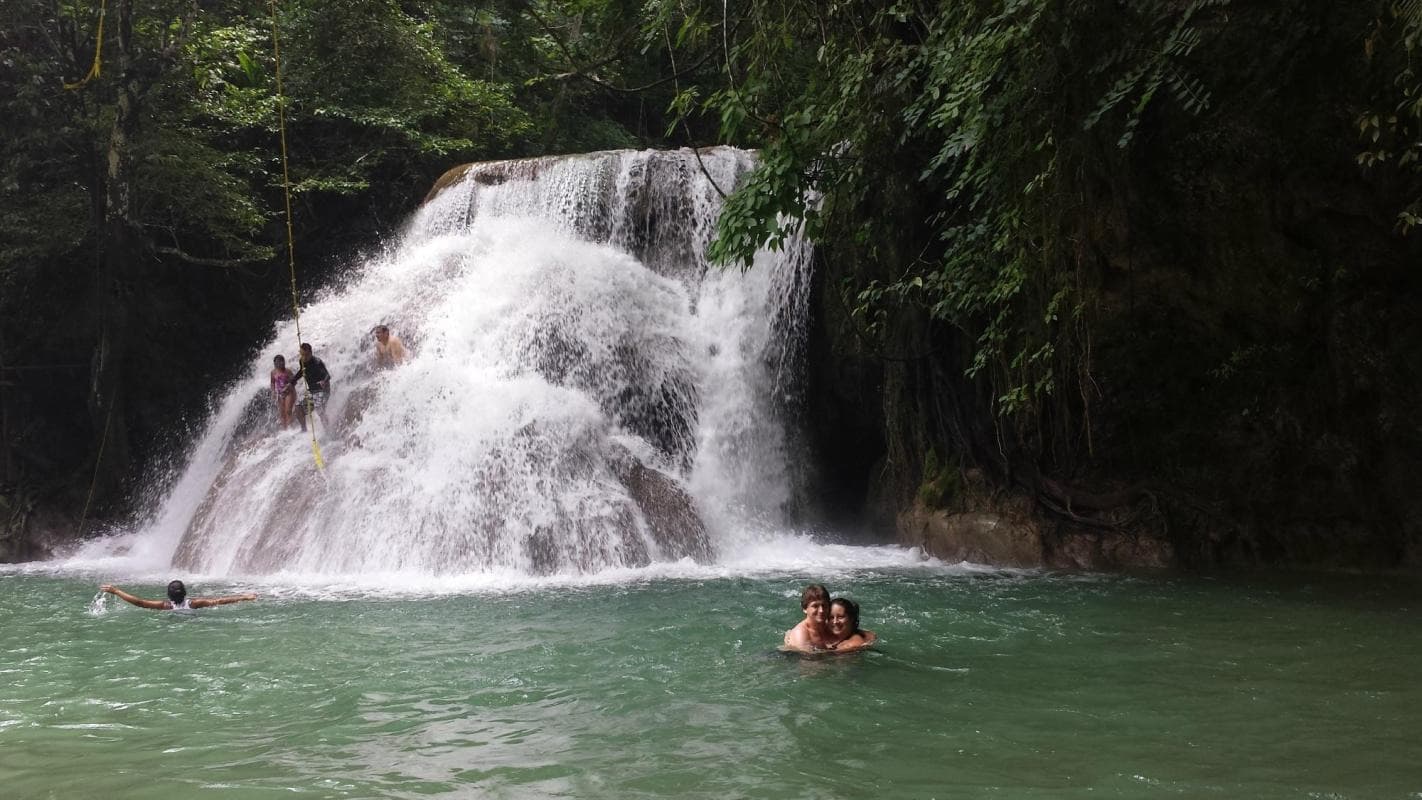
The path into Llano Grande begins with a sound more than a sight—a layered, distant percussion of water on stone that grows louder with every switchback. You climb from the bay heat of the Pacific into the cooler, greener bracket of the Sierra Madre del Sur, where the air smells of wet coffee leaves and crushed earth. The trail narrows under a canopy of ceiba and fig, sunlight filtering as mottled gold. When the trees finally break, the waterfall appears not as a single grand cascade but as a string of crystalline pools, each one a shallow mirror fed by the river’s gentle insistence. It’s the kind of place that asks you to stop and remove something—shoes, watch, the default setting of rush—and simply be present.
Cascadas de Llano Grande sits in a remote stretch of southern Oaxaca, a region known for its biologically rich slopes and coffee-growing microclimates. Tours to Llano Grande typically start from the Huatulco bays and wind inland toward small mountain communities like Llano Grande and San Miguel del Puerto. These villages, some of them under a hundred people, are woven into the day’s itinerary on most guided trips: you’ll hike along a riverside trail, plunge into shallow, cool pools, and often share a home-cooked Oaxacan meal prepared by local cooks. On private tours you also get the added taste of coffee from nearby farms—La Gloria appears on several itineraries—along with chocolate tasting and a chance to sample regional mezcal.
Geologically the falls are the work of a coastal mountain range that funnels sediments and rainfall into steep, short watersheds. The falls are not vertiginous cliffs so much as stepped granite and limestone ledges that have carved pools perfect for swimming and cliff-side soaking. That layered formation makes Llano Grande feel intimate: every pool is its own room, every lip a lookout, and currents dare you to move from one to the next. Plant life around the streams changes fast as you ascend—lowland tropical species give way to cloudier, more moisture-loving shrubs and a thriving understory that supports an abundance of birds and small mammals.
Culture threads through the visit. Many tours include a stop at a coffee plantation where beans are still tended by hand and roasted on small scales; you’ll be offered a cup that is literal proof of place. Another local custom you’ll encounter is the clay bath—a mineral-rich masque applied by village hosts, touted to invigorate skin after the river chill. These interactions are not theatrical add-ons; they’re part of a daily economy that ties tourism to agriculture and artisanal production in communities of roughly 90 inhabitants.
Practical realities: expect a full-day outing. Most operators list half- to full-day schedules depending on your pick-up point (Huatulco is the usual departure hub). The walk from the village to the main pool is moderate—plan on roughly 3–4 km round-trip with an elevation change of 150–300 meters, on uneven, sometimes muddy trail. Terrain alternates between packed dirt, river stones, and short rocky scrambles near the main falls. Guided tours handle logistics—transport, entry access, and a local meal—while private excursions may include coffee-farm tastings and mezcal samplings.
Safety and comfort are straightforward. Bring sturdy trail shoes that can get wet, a swimsuit, reef-safe sunscreen, and a script for leaving no trace—there are no formal facilities beyond what communities provide. Hydration matters: a liter of water at minimum is smart, more on hot days. Rain is a double-edged sword; it deepens the pools and brightens the forest, but it can turn trails slippery and close smaller seasonal cascades.
How to choose a tour: if you want coffee and a deeper cultural exchange, pick the “Full-Day Tour Llano Grande Waterfalls and Coffee Plantation,” which pairs the walk with farm visits and a traditional meal. If you’re traveling as a family or group and prefer privacy, the “Amazing Waterfalls Private Tour” often includes chocolate and mezcal tastings on top of the hike. For a straightforward nature-focused visit, the standard “Llano Grande Waterfalls Tour” delivers the trail, pools, and local cooking without additional stops.
Timing is everything. Visit in the dry season (roughly November–April) for safer trails and clearer pools; shoulder months keep the landscape green and the coffee harvest active. Early starts mean quieter trails and softer light for photos; late afternoons are cooler but busier. Regardless of season, respect the community rhythms—meals are often communal and scheduled around market and farm work.
Llano Grande is not about conquering a summit; it’s about measured encounters—with water, with a small community’s way of life, and with a slice of Oaxaca that still feels slightly off-map. The falls reward slow travel: linger at the ledge, let the current nudge your limbs, and listen to the forest’s small talk—the flit of a hummingbird, the shift of leaves, the distant call of village dogs. This is a place where practical preparation—good shoes, sun protection, a willing palate—meets a kind of restorative simplicity. It’s an accessible wilderness, one that invites swimmers and curious travelers to touch both land and culture without exhausting either.
Trail wisdom
Small choices, better day.
Wear sturdy, water-ready shoes
The trail includes wet rocks and muddy sections—trail runners or sandals with good grip work best.
Bring at least 1 liter of water and a small snack
Local meals are provided on most tours, but carry water for the hike and sun/hydration breaks.
Respect the community schedule
If your tour includes a village meal or farm visit, arrive on time and follow local guidance for photography and interaction.
Use reef-safe sunscreen and insect repellent
Protect the watershed by choosing eco-friendly products and reduce mosquito bites in the humid understory.
Local knowledge
Read the place, not just the route.
Watch for native species including hummingbirds, coatis.
Keep an eye out for wildlife during the transition between areas and habitats. Respect distance guidelines.
Support local guides and small cooperative farms to ensure tourism revenue stays in the community; avoid single-use plastics and use reef-safe products to protect the watershed.
Follow the guide's instructions on size limits, ethical handling, and leave-no-trace practices.
La Gloria coffee farm—small tastings and views of the valley. A downstream series of shallow pools where locals picnic (ask your guide for the quieter spots)
Locally recommended viewpoints and quiet spots known best to local operators.
The area’s coffee cultivation and small mountain communities have been shaped by centuries of local agricultural practices and Oaxacan rural traditions.
Maritime roots and regional tradition shape the waterways and working coasts.
Seasonal guide
Four versions of the same landscape.
Spring
Best forDry trails · Coffee farm visits · Clear swimming pools
ChallengesSun exposure · Trail crowds on holidays
Spring is typically dry and green—ideal for hiking, photography, and tastings at local coffee farms.
Summer
Best forLush jungle scenery · Fuller waterfalls · Birdwatching
ChallengesFrequent afternoon rains · Slippery trails
Summer brings dramatic greenery and higher flows; bring rain gear and plan for slick footing.
Fall
Best forHarvest-time coffee tours · Cooler hikes · Fewer tourists
ChallengesOccasional rains early in season · Variable water clarity
Autumn aligns with coffee harvests in some farms—good for pairing nature with agritourism experiences.
Winter
Best forStable weather · Easy access · Clear skies
ChallengesCooler mornings · Lower water levels in smaller pools
Winter’s dry months make for reliable hiking and clearer pools, though some small cascades may be reduced.
Pack with intention
What to bring.
Good to know
Common questions.
Most guided walks total about 3–4 km round-trip with an elevation gain of roughly 150–300 meters; expect 45–90 minutes each way depending on pace.
Plan the edges
The details that make the day easier.
The Sierra Madre del Sur is a recognized biodiversity hotspot, and southern Oaxaca’s microclimates produce distinctive coffee beans that are prized regionally.
Meals at Llano Grande are often homemade Oaxacan staples—think stewed meat, fresh tortillas and local moles—paired with coffee from nearby plots and small-batch mezcal tastings when available.
- Departure
- Huatulco; Duration: half-day to full-day; Difficulty: Moderate; What’s included: transport (if booked), local guide, meal on many tours; Bring: water, shoes, swimwear, cash.
Choose tour operators that hire local guides and use community-based experiences; avoid single-use plastics, and support coffee and mezcal producers who practice sustainable farming.
Explore by topic
Follow the threads.
Keep exploring
Make the story part of the trip.
Set out from Bass Harbor for a private, customizable day on Blue Hill Bay — lighthouses, puffins, seals, and the chance to feel Acadia from the water. Small groups, local captains, unforgettable views.
In four hours you can move from shaded canyon ferns to wind-scoured coastal ridgelines, guided by someone who knows where the light—and the hidden views—live. This private half-day hike on the Monterey Peninsula or Big Sur is compact, curated, and perfect for travelers who want depth without a multiday commitment.
 Related story
Beneath a sky of shifting light, Skaftafell’s ice reads like a map of time. This three-hour guided glacier hike mixes technical instruction with geology and culture: compact, safe, and unforgettable.