
What the day feels like
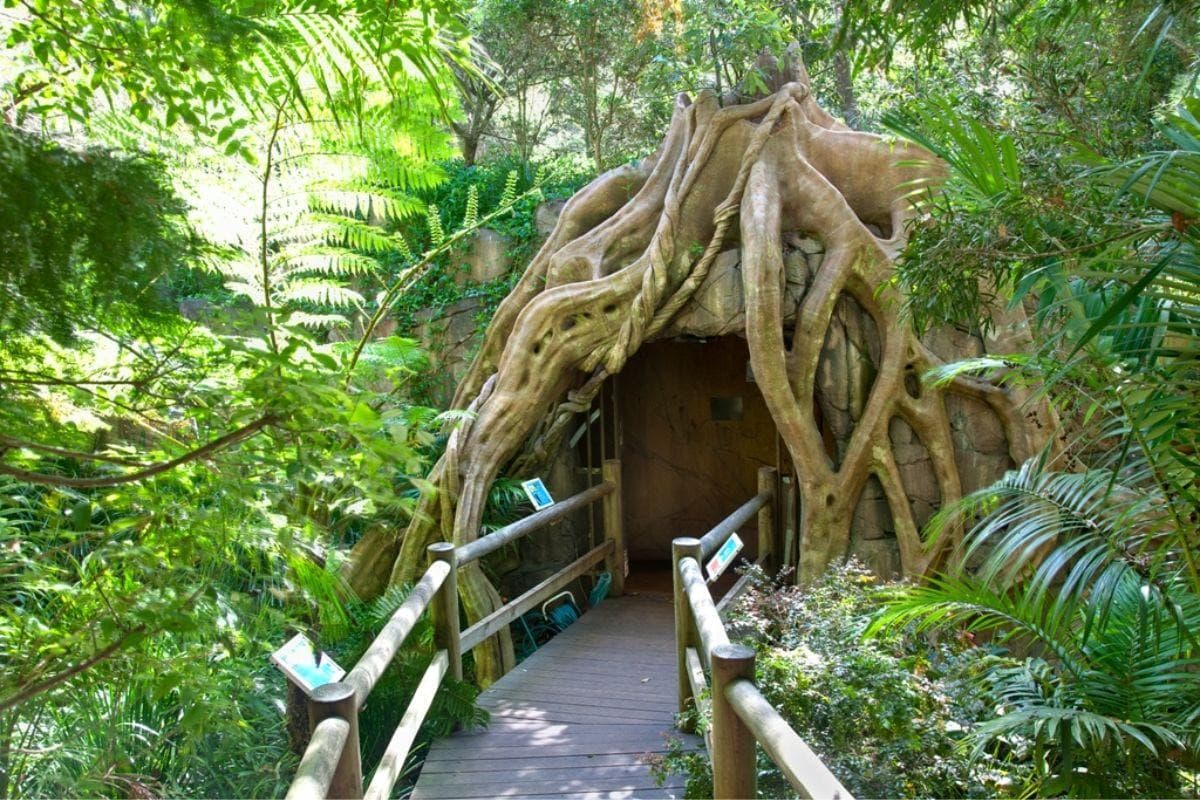
The evening on Tamborine Mountain arrives not with a fanfare but with a hush. The last bus of day-trippers has driven back down the winding road and the Gallery Walk’s lights dim to amber; in the rainforest below, the air feels thicker, the eucalyptus deeper. A guide leading a small group slips a hand over the carved wooden gate of the man-made cave and motions for silence. Inside, the darkness is not empty — it is studded with the spectral green of thousands of glow worms, each a tiny lantern hung from the cave’s ceiling. They pulse like a private galaxy, insect bioluminescence tuned to the slow rhythm of the rainforest. It is the sort of sight that reteaches you how quiet wonder can be.
Tamborine Mountain isn’t a single destination so much as a compact temperate rainforest and community perched on a basalt plateau above the Gold Coast. At roughly 550 meters above sea level, the plateau channels moisture and cool air into a network of gullies, walking tracks, waterfalls and lookouts. The glow worm experience—offered in several small-group and hop-on/hop-off formats from Brisbane and the Gold Coast—sits within this living matrix: a controlled cave environment designed to mimic the permanently moist conditions glow worms need, paired with the broader attractions of the mountain like the Rainforest Skywalk, Curtis Falls and the artisanal Gallery Walk.
Geology and human history are quietly written into the landscape. The Scenic Rim and its ridges are the eroded remains of ancient volcanic activity; waterfalls thread through basalt and rhyolite, and the Natural Bridge at nearby Springbrook (another commonly combined stop on full-day tours) is a volcanic legacy carved over millennia. Tamborine’s tourism history goes back to the 19th century, when visitors from Brisbane were lured to the cooler air and panoramic vistas. Today that tradition continues with family-friendly tours that pair accessible hikes and skywalks with pockets of quieter exploration—like the glow worm caves that require a whisper and a careful step.
If the glow worm encounter is the night’s jewel, the Skywalk and short rainforest hikes are the appetizer. The Tamborine Rainforest Skywalk is a raised boardwalk — including a dramatic cantilever bridge — that threads canopy and understorey for about 1.5 kilometers, offering a close view of epiphytes, strangler figs and birds that use those upper galleries. Curtis Falls is a short 1–1.5 kilometer return walk through ferns and mossed boulders to a basalt waterfall plunge pool; a few steps and platforms make it family-friendly but rewarding. Together these elements make Tamborine an ideal day trip: you can move from coffee and local fudge in the village to a sky-level stroll, a waterfall ramble and an intimate glow worm show without a long drive.
Practicalities matter here as much as the spectacle. Most visitors arrive via organized tour (small-group minivan tours from Brisbane, hop-on/hop-off services from the Gold Coast) that include hotel pickup and a guide who stages the logistics—timing the cave visit so humidity is optimal and ensuring group sizes don’t stress the habitat. Driving up yourself from Brisbane takes roughly 1–1.5 hours depending on traffic; from the Gold Coast it’s usually 30–40 minutes. The man-made cave tours are short and strict: no flash photography, no touching the walls or the silk threads glow worms produce, and low light to keep the insects undisturbed.
A few practical rules will make the trip cleaner and more memorable: wear sturdy, closed-toed shoes for the Skywalk and waterfall tracks (sections can be slippery after rain), bring a lightweight waterproof layer and insect repellent for humid gullies, and carry a small headlamp for walking between car parks in the dusk (turned off during the cave visit). Hydration is simple—an insulated bottle and a refill strategy—because the mountain’s cafes and artisan shops at Gallery Walk are more about nibbling and browsing than long backcountry provisioning.
For photographers, the glow worm display is best captured with tripod-mounted long exposures inside the cave; bring a lens that performs well at high ISO and plan for no flash. Outside, early morning or late afternoon on the Skywalk gives the canopy a warm edge and soft side-light on ferns and moss. Respect the cave’s rules—glow worms are sensitive to light and vibration, and the best images are the ones you leave the creatures to enjoy.
Conservation is part of the story. Many tours emphasize that the Tamborine glow worm site is managed to provide suitable conditions as surrounding rainforest patches suffer from fragmentation and climate pressures. By visiting on guided, low-impact experiences you support both local small businesses and the caretaking measures that help sustain these insects. Consider pairing a cave visit with a shorter interpretive walk or a coffee at a local producer to spread your tourism dollars through the mountain’s community.
Who should go? Families, first-time national park visitors and photographers will all find something here; seasoned hikers will appreciate the ease of access to richer hinterland trails if they want to extend the day into the Scenic Rim. For a single-day itinerary, aim for a morning Skywalk and Curtis Falls circuit, a midday Gallery Walk and honey or fudge tasting, then book an evening glow worm slot. Tours vary in size—options include boutique six-person vans, small-group minibuses capped at 11, or larger group shuttles—but the best experiences keep group size low and guide knowledge high.
Leave the mountain with something small and local—a jar of wildflower honey, a handmade ceramic cup, or a map of trails that point to quieter corners. The memory you’ll carry isn’t just the glowworm glow; it’s the way the mountain organizes air and light and sound so that even in a small, managed cave, the natural world gets the last word.
If you go: pick a cooler, wet day for the best glow worm activity, book an afternoon–evening combo to make the most of the Skywalk’s light and the cave’s dark, and choose a small-group tour that includes interpretive time rather than a straight in-and-out show. The hush at the cave’s entrance is the beginning, not the end, of what Tamborine Mountain can teach about the quiet architecture of rainforest life.
Trail wisdom
Small choices, better day.
Book a small-group tour
Small-group tours (6–12 guests) limit disturbance to the glow worm habitat and often include transportation from Brisbane or the Gold Coast.
No flash photography in the cave
Flash and bright lights disrupt glow worms; bring a tripod and use long exposures with permission from guides.
Wear grippy footwear
Skywalks and waterfall tracks can be wet—trail runners or hiking shoes with good traction keep you stable.
Pack a light rain layer
Mountain weather shifts quickly; a lightweight waterproof keeps you comfortable on rain-prone trails.
Local knowledge
Read the place, not just the route.
Watch for native species including Glow worms (Arachnocampa species), Eastern grey kangaroo herds in early morning or dusk at open edges.
Keep an eye out for wildlife during the transition between areas and habitats. Respect distance guidelines.
The glow worm cave operates as a controlled habitat to replicate the humidity and shelter these insects need, and many local operators emphasize low-impact tours to reduce pressure on remnant rainforest patches.
Follow the guide's instructions on size limits, ethical handling, and leave-no-trace practices.
Eagle Heights Lookout’s quieter scenes for paragliders and afternoon light. Small artisan honey producers off Gallery Walk for tastings and local craft goods
Locally recommended viewpoints and quiet spots known best to local operators.
Tamborine Mountain has been a popular escape from coastal heat since the 19th century; its plateau was developed for tourism and orchards as Brisbane’s visitors sought cooler air.
Maritime roots and regional tradition shape the waterways and working coasts.
Seasonal guide
Four versions of the same landscape.
Spring
Best forWildflowers · Mild hiking · Birdwatching
ChallengesSticky afternoons · More insects · Variable rain
Spring (Sept–Nov) brings blossoms and comfortable temps—ideal for canopy walks and wildlife spotting, but expect increased insect activity.
Summer
Best forLush rainforest · Waterfalls at peak flow · Evening glow worm tours
ChallengesHot, humid conditions · Summer storms · Slippery tracks
Summer (Dec–Feb) intensifies humidity and waterfall flow—spectacular scenery but prepare for storms and slick trails.
Fall
Best forCooler days · Clear views · Lower insect activity
ChallengesShorter daylight · Cool nights
Autumn (Mar–May) offers stable weather, crisp air and excellent late-afternoon light for the Skywalk and lookouts.
Winter
Best forBrisk walks · Clear vistas · Fewer crowds
ChallengesCool mornings · Possible mist and low cloud
Winter (Jun–Aug) is cool and clear—great for views and quieter trails; layer up for chilly mornings and evenings.
Pack with intention
What to bring.
Good to know
Common questions.
Glow worms are most visible in humid, stable conditions—book an evening tour after rain or on a damp night; managed cave environments also ensure good conditions year-round.
Plan the edges
The details that make the day easier.
Tamborine Mountain sits around 550 metres above sea level and has been a tourist destination since the 19th century, prized for its cooler climate and rainforest scenery.
Gallery Walk is the social heart of the mountain—cafés, fudge shops, honey tastings and artisan galleries give a local, farm-to-table vibe; pairing a cave visit with a stop at a honey producer supports micro-businesses.
- Getting there
- 1–1.5 hours from Brisbane, 30–40 minutes from Gold Coast; tours range from small-group minivans to hop-on hop-off services; book evening cave slots; no flash photography in the cave.
Support operators that limit group sizes and explain habitat protection; the managed cave is one conservation response to declining natural rainforest habitat for glow worms.
Explore by topic
Follow the threads.
Keep exploring
Make the story part of the trip.
Set out from Bass Harbor for a private, customizable day on Blue Hill Bay — lighthouses, puffins, seals, and the chance to feel Acadia from the water. Small groups, local captains, unforgettable views.
In four hours you can move from shaded canyon ferns to wind-scoured coastal ridgelines, guided by someone who knows where the light—and the hidden views—live. This private half-day hike on the Monterey Peninsula or Big Sur is compact, curated, and perfect for travelers who want depth without a multiday commitment.
 Related story
Beneath a sky of shifting light, Skaftafell’s ice reads like a map of time. This three-hour guided glacier hike mixes technical instruction with geology and culture: compact, safe, and unforgettable.