
What the day feels like
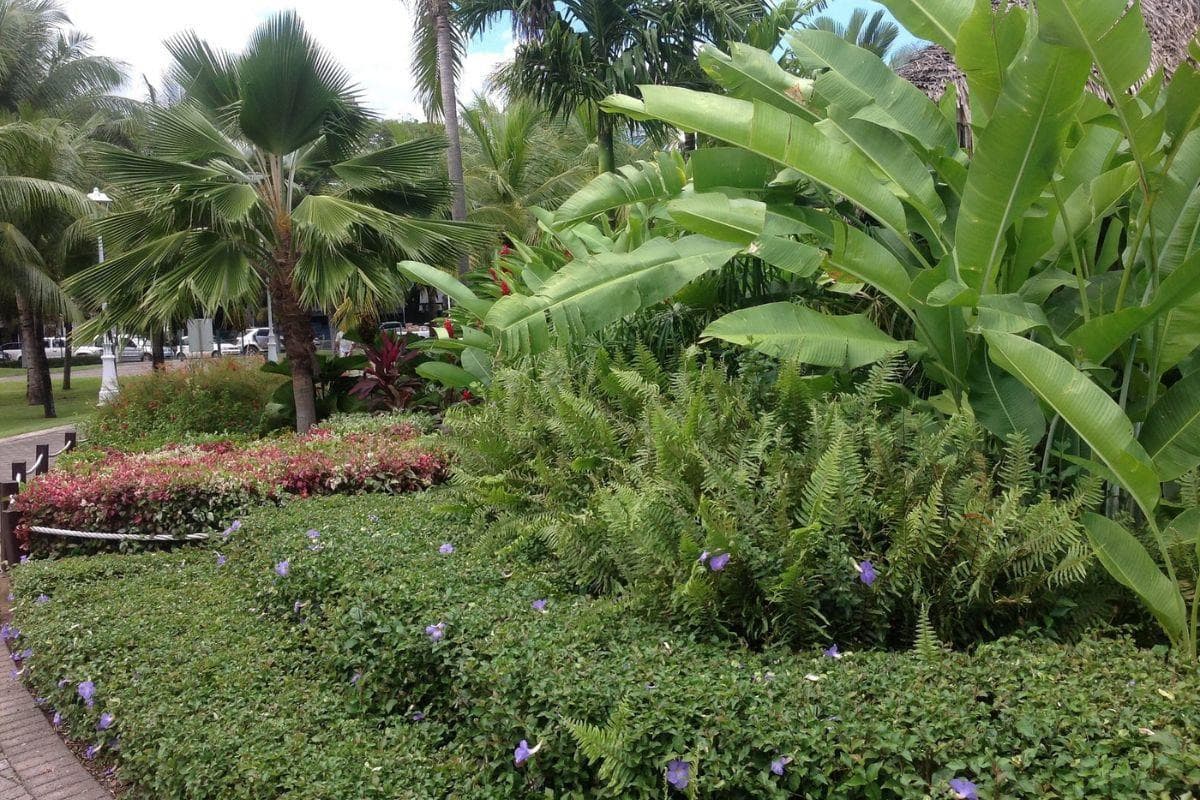
The humid air off the harbor carries the smell of coconut and warm tarpaulin stalls as you step into Bougainville Park. Shade trees, palms and blooms of magenta bougainvillea frame a tidy lawn that faces the harbor; gulls wheel above the quay and the city’s pulse — the market, the municipal bandstand, the cathedral bell — hums a few blocks inland. It’s the kind of green pocket that offers more than a place to sit: it is a hinge between Tahiti’s colonial history, its modern commerce and the island’s profound natural rhythms.
Bougainville Park is compact — an urban sanctuary rather than a wilderness — but its lines point toward everything that makes Papeete worth lingering in: the market’s cacophony, the jewel-toned pareu on display, the rhythms of vendors calling out produce and fish, and the unassuming civic buildings that chart the island’s political life. Walking tours that stop here — whether a shared two-hour city stroll, a private two-hour exploration, or a longer 3.5–4 hour itinerary that includes the Robert Wan Pearl Museum — use the park as a starting point. Guides will point out the park’s plantings, tell the story of early European contact, and orient you to the narrow city blocks where modern Tahiti unspools.
History and geology arrive in small, revealing gestures. The park’s name recalls Louis-Antoine de Bougainville, the French explorer whose voyages in the 18th century are part of the colonial ledger here; the bougainvillea plant itself, ubiquitous across Polynesia, is named for him. Beneath your feet the island’s geology is older volcanic material softened by reef and lagoon; Papeete’s shorefront is a ledger of reef-building and human reclamation, where coral-based sand thins into docks and seawalls. Strolling here, you’ll hear of the French protectorate that rearranged local governance, and of the modern political life that now convenes in the Assembly of French Polynesia a few blocks away.
Culture lives loudly and sociably around the park. The nearby municipal market is a cathedral of local life: early-morning fish purchases, handmade tivaevae quilts, and stalls selling poisson cru (raw fish cured in coconut milk and lime) give a sensory primer on Tahitian foodways. The Robert Wan Pearl Museum, included on longer tours, tells another story — the slow alchemy of black pearl farming that has shaped Tahiti’s modern economy. Museums and vendors alike offer context: this is a place where ancient voyaging, European contact and 20th-century commerce converge into something that feels distinctly Polynesian.
The practical pleasures of Bougainville Park are immediate. Morning is the best time to visit: the market is at full tilt; the light off the water is clean; and guides tend to schedule the walking tours early to avoid midday heat. A two-hour shared tour’s pace is conversational — a steady walk past the cathedral and Town Hall, a stop in the market and a sit in the park. The private two-hour tour tightens that lens, allowing more time for questions and detours. If you choose the longer guided city-and-museum outing, expect a gentle increase in walking and a deep dive into pearls: how they’re cultivated, graded and used in local customs.
Logistics are simple but worth noting. Wear comfortable shoes and a light layer — mornings are cool and by noon humidity rises. Carry a refillable water bottle; vendors sell fresh coconut water and local snacks if you want a mid-tour pick-me-up. Bring reef-safe sunscreen and a hat; the sun off the water cuts through even under clouds. Few urban hazards present themselves beyond busy streets and afternoon showers, but keep belongings close in the market and be ready for minor bargaining on crafts.
Why plan a visit to Bougainville Park? For travelers it’s a compact, efficient primer: a place where you can touch the threads of Tahiti — its plant life and harbor, its market fare and pearl economy — within a single stroll. For photographers the color and geometry are immediate: market stalls, the bandstand silhouette, and bougainvillea framing the harbor provide tidy compositions. For families and casual walkers, the park is forgiving; for those who want deeper context, options to add the Pearl Museum or a private guide give depth.
Practical tips: book morning tours for the best light and market energy; if visiting on a weekend, note that some government buildings may be closed and guides may substitute Jacques Chirac Place on the itinerary; and if you’re considering a pearl purchase, allow time to understand grading and origin — legitimate black pearls bear hallmarks of local cultivation and come with provenance from houses like Robert Wan’s.
Bougainville Park doesn’t promise a Himalayan summit or a coral atoll escape; it promises something steadier and equally useful: the city’s anatomy, rendered approachable. For travelers who want to feel the pulse of Tahiti without losing themselves in its postcard surfaces, the park and its associated walking tours offer an urban route into the island’s deeper story. The next time you stand under a magenta cascade of bougainvillea with the harbor at your feet, take a breath and listen: the city is telling you how it got here, what it values, and what it still hopes to be.
Trail wisdom
Small choices, better day.
Go early
Morning light is cooler, the market is busiest and vendors have the best selection — aim for a 7–9am start.
Bring cash (CFP franc)
Many market stalls and small vendors accept only cash—ATMs are nearby but bring small bills for ease.
Wear reef-safe sunscreen
If you plan to head to nearby lagoons after the walk, use mineral-based sunscreen to protect reefs.
Try poisson cru
Sample Tahiti’s signature dish at a market stall for a fresh, local snack between stops.
Local knowledge
Read the place, not just the route.
Watch for native species including White-tailed tropicbird and various herons by the harbor, Tropical garden birds attracted to bougainvillea and coconut palms.
Keep an eye out for wildlife during the transition between areas and habitats. Respect distance guidelines.
Local efforts emphasize reef protection and sustainable pearl farming; visitors are encouraged to use reef-safe sunscreen and avoid single-use plastics.
Follow the guide's instructions on size limits, ethical handling, and leave-no-trace practices.
Jacques Chirac Place (alternative civic square often quieter than the main market). A quiet quay walk east of the park with fishing boats and local fish stalls
Locally recommended viewpoints and quiet spots known best to local operators.
Bougainville Park references Louis-Antoine de Bougainville, the French explorer; Papeete developed as a trading and administrative center in the 19th century.
Maritime roots and regional tradition shape the waterways and working coasts.
Seasonal guide
Four versions of the same landscape.
Spring
Best forFlower displays · Fewer crowds · Mild rains
ChallengesIntermittent showers · Slightly humid afternoons
Spring sees fresh tropical growth and fewer visitors; expect occasional showers but vibrant plant life in the park.
Summer
Best forDry weather (May–Oct) · Market mornings · Pearl museum visits
ChallengesStrong midday sun · Higher hotel rates
The island’s drier season runs roughly May–October, making for reliable mornings — ideal for walking tours and outdoor markets.
Fall
Best forOff-peak travel · Warm water for swimming · Calmer tours
ChallengesOccasional tropical showers · Shorter daylight
Fall brings warm water and quieter streets; packs a light rain layer for afternoon squalls.
Winter
Best forCooler evenings · Cultural festivals · Clear harbor views
ChallengesShort bursts of rain · Variable sea conditions
Tahiti’s ‘winter’ is mild and often dry — comfortable walking weather and crisp harbor light make tours pleasant.
Pack with intention
What to bring.
Good to know
Common questions.
Shared and private walking tours typically last two hours; combined city-and-pearl museum tours run about 3.5–4 hours.
Plan the edges
The details that make the day easier.
The Robert Wan Pearl Museum in Papeete highlights the development of Tahiti’s black-pearl industry; Robert Wan is widely credited with popularizing the Tahitian black pearl internationally.
Sample poisson cru from a market stall and pair it with fresh coconut water; listen for live ukulele and drum at nearby cafes and look for handcrafted pareu and tivaevae textiles — these items make meaningful souvenirs and support local artisans.
- Know-before-you-go
- short, easy walks; morning markets best; cash preferred; tours available as 2-hr (shared
Support sustainable tourism by choosing certified pearl vendors, avoiding single-use plastics at the market and using reef-safe sunscreen to protect fragile lagoon ecosystems.
Explore by topic
Follow the threads.
Keep exploring
Make the story part of the trip.
Set out from Bass Harbor for a private, customizable day on Blue Hill Bay — lighthouses, puffins, seals, and the chance to feel Acadia from the water. Small groups, local captains, unforgettable views.
In four hours you can move from shaded canyon ferns to wind-scoured coastal ridgelines, guided by someone who knows where the light—and the hidden views—live. This private half-day hike on the Monterey Peninsula or Big Sur is compact, curated, and perfect for travelers who want depth without a multiday commitment.
 Related story
Beneath a sky of shifting light, Skaftafell’s ice reads like a map of time. This three-hour guided glacier hike mixes technical instruction with geology and culture: compact, safe, and unforgettable.