
What the day feels like
The bus leaves Reykjavík with a hush that feels like permission to listen. Streetlights shrink behind us, the harbor’s sodium glow giving way to a blackness that makes the first stars feel impossibly near. Our guide—an easy voice with a weathered smile—keeps one eye on the sky and one on the road, scanning for gaps in the cloud deck and for that faint, electric green that can appear like someone flipped a switch over the horizon. For three hours you are not just on a tour; you are in a negotiation with the weather, the Earth’s magnetic mood, and a sky that delights in surprise.
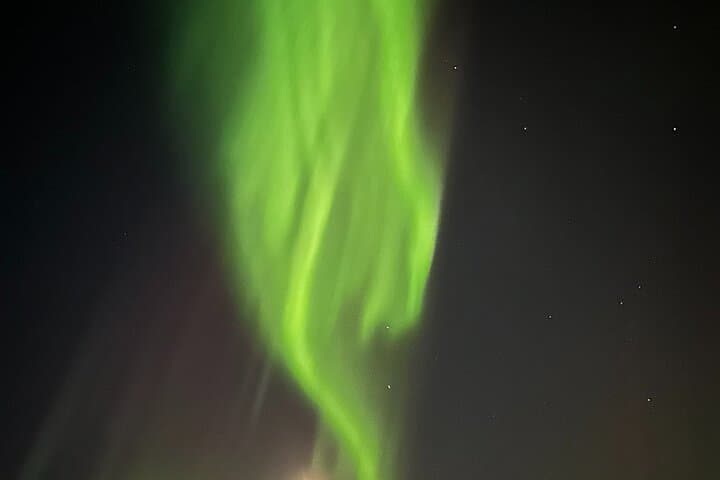
Chasing the aurora is half science, half patience, and all atmosphere. The Northern Lights—aurora borealis—are born when charged particles from solar winds slam into Earth’s magnetic field and excite atoms in the upper atmosphere. In Iceland, where dark skies and high geomagnetic latitude conspire in your favor, the show is often visible from late autumn through early spring. This particular tour, launching from Reykjavík and designed for small groups, treats the hunt like a craft: minimized light pollution, flexible routing based on real-time forecasts, and an emphasis on giving photographers and first-time viewers space to process what they’re seeing.
Geologically, Iceland feels built to host a cosmic performance. The island sits astride the Mid-Atlantic Ridge; basalt fields and lava-scoured plains absorb city glow instead of reflecting it. Travel a short distance from the capital and you enter landscapes scheduled for the aurora’s stage: black sand, low ridgelines, and the occasional snowfield. Cultural context shades the experience too. Icelanders have long read the sky—old sagas refer to strange lights and omens—so there’s a quiet reverence on a night like this, a modern echo of seafarers watching the heavens for weather and fate.
Practicalities matter here. The tour runs roughly three hours and usually departs after dinner time, a timeframe that keeps you docked in Reykjavík but away from urban luminescence. The operator prices this evening at the premium end of local excursions; the listed rate is approximately $357.68 per person. That cost reflects small-group guiding, flexible routing, and the bespoke nature of aurora chases—sometimes you watch from a hilltop outside town, sometimes you drive an hour into the countryside for a clearer horizon.
When you step out of the van, the cold is an actor too—sharp, insulating, and honest. Keep moving, breathe slowly, and let the night pull you. Photographing the phenomenon is straightforward if you come prepared: a tripod, a wide-angle lens at low aperture, and manual controls will turn the sky’s whispers into images you can return to. Guides on these trips often help with camera settings and placement—knowledge that takes some of the stress out of shooting while you’re grappling with the pure astonishment of the first curtain of green.
Safety and tempering expectations are part of the package. The aurora is never guaranteed—solar activity fluctuates, clouds roll in, and sometimes the show is a faint ripple rather than an overwhelming curtain. That uncertainty, though, is part of the attraction. You’re signing up for a night of possibility in a country where the landscape seems tuned to the cosmos.
How to maximize your odds: pick a night with clear skies or flexible dates across multiple nights, favor the equinox months when geomagnetic activity often increases, and go with a small-group operator that can drive for better conditions. Dress in layers: Icelandic nights can be bitter even when the aurora is booming. And adopt a patient, observant posture; the sky often teases, with long lulls punctuated by sudden crescendos of color.
Beyond the lights themselves, the trip will leave you with a more intimate sense of Icelandic night: the hush of sheep in distant fields, the way mountains swallow sound, and the unexpected warmth of a small heater in an empty parking lot. Guides often weave local lore into the narrative—how fishermen and farmers used celestial cues, how modern Icelanders treat auroral lore as part of a living cultural thread—and that human layer is as compelling as the physics above.
For photographers, the payoff is practical: this tour typically offers ample dark-sky locations away from the city, and the guides’ experience helps you chase the lights without wasting time. For travelers less focused on gear, it’s a profoundly human experience—strangers on a hill, breath making clouds, heads tilted back like children. Either way, the trip does what good adventures are meant to do: it dislodges your routine and asks you to look up.
If you go, remember this: the aurora is a show that depends on many backstage players. Respect the landscape—don’t trample moss or private property—trust the guides, and bring patience. Whether the night gives you a gentle green brushstroke or a full theatrical sweep of color, the memory is durable and oddly consoling: the planet and the sun conspiring to put on a spectacle just for you.
Trail wisdom
Small choices, better day.
Layer for the cold
Bring a windproof outer shell, insulating mid-layers, and warm gloves—standing still at night exposes you to wind chill.
Use a tripod and manual camera settings
Set your shutter between 5–20 seconds, aperture wide (f/2.8–f/4), and ISO 800–3200 depending on brightness.
Trust the guide’s routing
Operators change locations based on cloud cover and aurora forecasts—follow their timing for the best odds.
Protect fragile ground
Stay on tracks and parking areas—Icelandic moss is easily damaged and slow to recover.
Local knowledge
Read the place, not just the route.
Watch for native species including Arctic fox (rare sightings), Various seabirds and, offshore, occasionally seals.
Keep an eye out for wildlife during the transition between areas and habitats. Respect distance guidelines.
Stick to roads and designated parking to avoid fragile vegetation; operators should follow low-impact practices and minimize engine idling when possible.
Follow the guide's instructions on size limits, ethical handling, and leave-no-trace practices.
Þingvellir National Park (for combined day/night visits outside heavy tourist hours). Small coastal fishing villages like Vík offer dramatic shorelines for aurora reflections
Locally recommended viewpoints and quiet spots known best to local operators.
Icelanders long observed unusual sky phenomena and incorporated celestial events into sagas and seafaring lore; modern aurora tourism taps into that cultural continuity.
Maritime roots and regional tradition shape the waterways and working coasts.
Seasonal guide
Four versions of the same landscape.
Spring
Best forLower crowds · Longer nights in early spring · Still good aurora activity
ChallengesUnpredictable weather · Lingering snow on country roads
Early spring (March) often delivers strong aurora activity with slightly milder temperatures than mid-winter, but weather can swing quickly.
Summer
Best forMidnight sun photography (non-aurora) · Milder conditions for other activities · Long daylight exploration
ChallengesMidnight sun prevents dark skies · Auroras are unlikely June–August
Summer’s bright nights make aurora hunting impractical; use this season for daylight adventures instead.
Fall
Best forIncreasing aurora probability · Cool, crisp skies · Fewer tourists than peak winter
ChallengesShorter daylight can complicate travel plans · Variable cloud cover
Autumn provides a strong aurora window as nights lengthen—September through November are productive months.
Winter
Best forHigh aurora activity · Classically dark skies · Snow-dusted landscapes for foregrounds
ChallengesCold temperatures · Occasional road closures due to storms
Winter yields the best long-term probability for auroras but requires robust clothing and flexible timing for weather delays.
Operator details
What the booking data adds.
Included
- ✓Coffee and/or Tea
Good to know
- ✓Infants and small children can ride in a pram or stroller
- ✓Service animals allowed
- ✓Public transportation options are available nearby
- ✓Specialized infant seats are available
- ✓Suitable for all physical fitness levels
Pack with intention
What to bring.
Good to know
Common questions.
There’s no guarantee—the aurora depends on solar activity and clear skies—but operators maximize chances by choosing dark locations and monitoring forecasts; travel between September and March increases odds.
Plan the edges
The details that make the day easier.
Iceland sits on the Mid-Atlantic Ridge, a geological boundary that shapes the island’s dramatic terrain and provides the dark, open landscapes ideal for aurora viewing.
After the tour, warm up in downtown Reykjavík—try lamb stew or seafood at Matur og Drykkur, sip a craft beer at Skúli Craft Bar, or grab a quick hot dog at Bæjarins Beztu Pylsur; if you have a spare day, relax in a geothermal pool like the Blue Lagoon or the local Laugardalslaug.
- Closest airport
- Keflavík International Airport (KEF); Driving time to Reykjavík: ~45–60 minutes; Meeting point: central Reykjavík pickup or designated meeting spot; Cell service: strong near Reykjavík, spotty in rural dark-sky areas; Permits: none required for this tour.
Minimize light pollution by using red lights, avoid parking on delicate moss fields, and follow guide instructions to protect Iceland’s fragile ecosystems.
Explore by topic
Follow the threads.
Keep exploring
Make the story part of the trip.
Set out from Bass Harbor for a private, customizable day on Blue Hill Bay — lighthouses, puffins, seals, and the chance to feel Acadia from the water. Small groups, local captains, unforgettable views.
In four hours you can move from shaded canyon ferns to wind-scoured coastal ridgelines, guided by someone who knows where the light—and the hidden views—live. This private half-day hike on the Monterey Peninsula or Big Sur is compact, curated, and perfect for travelers who want depth without a multiday commitment.
 Related story
Beneath a sky of shifting light, Skaftafell’s ice reads like a map of time. This three-hour guided glacier hike mixes technical instruction with geology and culture: compact, safe, and unforgettable.