
What the day feels like
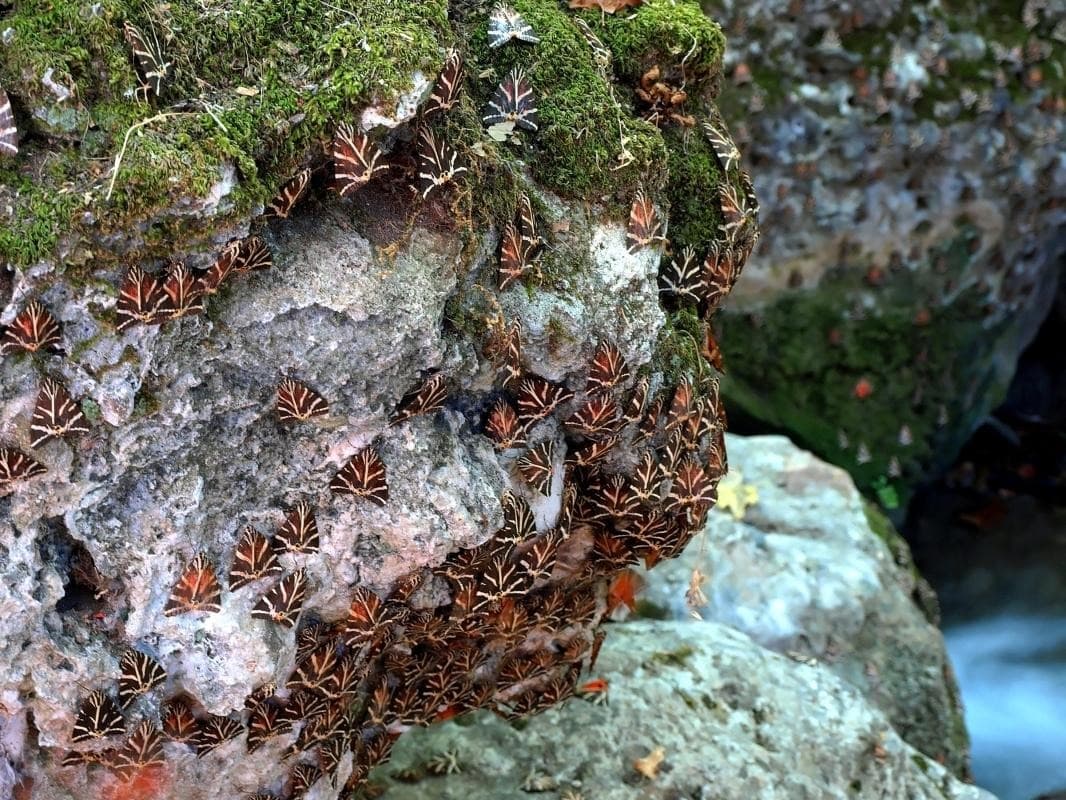
You arrive on a humid morning and the valley meets you like a secret: a narrow gorge of plane and oriental sweet‑gum trees, a courthouse of dappled light where trunks lean in and streams murmur under wooden footbridges. The air smells faintly of resin and river-rot; somewhere overhead a low, leathery rustle hints at movement that is not bird or leaf. Then the first butterfly lands—brown with a deep, rust-red sheen—and where there was one, there are suddenly dozens. Walk a little deeper and the forest becomes a living shawl of wings, a slow tidal pull of color that gathers around the trunks and the cool, shaded pools.
The Valley of the Butterflies (Petaloudes) is less a single spectacle than a mood: humid, shaded, and alive with an insect congregation that makes the most of Rhodes' brief, hot summers. The species most visitors come to see is Callimorpha quadripunctaria—commonly called the Jersey tiger moth in other parts of Europe—and other day-flying moths that gather on the resinous leaves of Liquidambar orientalis, the oriental sweet‑gum tree. From mid‑June through mid‑September, the valley quietly fills with their presence; the trees become meeting places where thousands of wings rest in mottled clusters. It’s not chaos so much as congregation: a natural shelter where life slows to the insect’s pace.
Geologically, Petaloudes sits where the island’s limestone spine gives way to softer deposits that funnel water through a series of small waterfalls and pools. That water, combined with a microclimate of shade and humidity, creates the exact conditions the butterflies require. Historically, local shepherds and villagers knew the valley as a rich place for beekeeping and medicinal plants; its modern conservation history began in the mid‑20th century as Rhodes developed into a major tourist hub and authorities recognized the need to protect the valley’s rare environment.
Culturally, the valley ties into Rhodes' quieter interior life. Nearby hill towns like Embona and Siana still gather around wineries and stone tavernas; many of the guided experiences that include Petaloudes—like private vineyard tastings or full‑day island tours—are deliberately paired to show both the island’s ecological wonder and its agricultural tradition. A typical day can start with a shaded circuit through Petaloudes, followed by a visit to a family winery where local varietals and thyme‑infused honey are sampled on a sunlit veranda—an appetizing palette cleanser after the valley’s cool hush.
For the traveler, the Valley of the Butterflies is oddly democratic: it offers an easy, accessible walk that feels intimate enough for solo travel but cinematic enough for families. The paths are wooden and paved in places; bridges curve over trickling pools. Expect slippery sections, low light, and the sense that your presence is an intrusion into a delicate world. The best viewing comes in the cooler morning or late afternoon hours, when butterflies settle and light softens. Midday can be hot and bright, scattering the congregation and making observation harder.
Practical side: allow 60–90 minutes for a good walk. Wear closed‑toe shoes with decent grip—the paths can be wet—and a light, waterproof layer in case of spray from falls. Hydrate before you descend; there’s limited shade on the approaches and the humidity can be deceptively draining. Respect the signs: do not handle the butterflies, do not disturb the trees’ bark, and stick to the marked walkways. Consider a combination tour if you have limited time—popular options include a private wine and olive oil tasting or a full‑day that pairs the valley with the unspoiled island of Chalki or ancient Kamiros. These let you balance the valley’s contemplative pace with coastal swimming or archaeological exploration, making for a day that is varied and efficient.
Timing is everything. If you want wings, plan your visit between late June and early September when the population is largest. If you prefer fewer people and milder temperatures but still hope for sightings, late May—after early rains—can be excellent. Weekdays outside peak July–August tourist weeks will offer quieter paths.
For photographers, a long lens and a steady hand win out; avoid flash and try for the soft, enveloping light in the understory. Use slower shutter speeds to render wings in a gentle blur, or focus on the intimate—drops on a leaf, or the patterning on a clustered mass.
Beyond the valley, Rhodes’ interior rewards slow travel. Savor a lunch in Embona’s stone‑walled tavernas, taste local assyrtiko and moschofilero at a boutique vineyard, or layer in ancient sites like Kamiros to connect ecology with a civilization that has long worked this land. And remember: the valley is protected—your care keeps it so. Leave nothing but footprints, and the wings will keep arriving.
Trail wisdom
Small choices, better day.
Go early or late
Visit in the cooler morning or late afternoon for the best chance to see large numbers of butterflies and to avoid the midday heat.
Stick to paths
Wooden and paved walkways protect fragile habitat—do not step off them or touch tree bark where butterflies cluster.
Wear good shoes
Paths can be wet and slippery; closed‑toe shoes with grip will keep you steady.
Combine it thoughtfully
Pair your visit with a nearby winery or Chalki boat trip to make the most of a full day on Rhodes.
Local knowledge
Read the place, not just the route.
Watch for native species including Callimorpha quadripunctaria (day‑flying moths commonly called tiger moths), Mediterranean tree frogs and small woodland birds.
Keep an eye out for wildlife during the transition between areas and habitats. Respect distance guidelines.
The reserve is managed to protect the butterflies’ breeding habitat—visitors are asked to stay on paths, avoid smoking, and minimize noise to reduce stress on the insect populations.
Follow the guide's instructions on size limits, ethical handling, and leave-no-trace practices.
Embonas village winery terraces for tasting regional varietals. The small museum near the valley entrance with insect displays and conservation info
Locally recommended viewpoints and quiet spots known best to local operators.
Petaloudes became a protected area as Rhodes grew into a major tourist destination in the 20th century; locals historically used nearby valleys for beekeeping and grazing.
Maritime roots and regional tradition shape the waterways and working coasts.
Seasonal guide
Four versions of the same landscape.
Spring
Best forWildflower displays · Fewer crowds
ChallengesButterfly numbers are lower · Cooler, changeable weather
Late spring brings green valley floors and flowering plants; butterfly congregations are building but not yet at peak.
Summer
Best forPeak butterfly viewing · Long daylight hours · Paired wine‑tasting tours
ChallengesHigh temperatures · More visitors
Mid‑June through August is prime for seeing thousands of moths on the sweet‑gum trees, though heat and crowds rise with the season.
Fall
Best forCooler walks · Quiet trails
ChallengesButterfly numbers decline · Shorter days
Autumn offers peaceful visits and pleasant temperatures but the insect spectacle diminishes after September.
Winter
Best forOff‑season solitude · Birdwatching
ChallengesReserve is quieter with few butterflies · Rain can make paths muddy
Winter is low season for butterflies; the valley is still scenic, with wetter conditions and fewer amenities open.
Pack with intention
What to bring.
Good to know
Common questions.
Peak season is mid‑June to mid‑September when the oriental sweet‑gum trees attract the largest numbers; for fewer crowds, aim for early morning or late afternoon.
Plan the edges
The details that make the day easier.
The butterflies that flock to Petaloudes are attracted to the resin of oriental sweet‑gum trees (Liquidambar orientalis), a species native to southwestern Turkey and nearby Aegean islands.
Pair your valley walk with local Rhodes flavors: assyrtiko and moschofilero wines from Embona, thyme‑infused honey, and grilled lamb in village tavernas to round out a day of nature and regional gastronomy.
- Know‑before‑you‑go
- Allow 60–90 minutes, modest entrance fee, best visited early
Stay on marked trails, don’t touch butterflies or strip tree bark, avoid single‑use plastics, and support local conservation fees or guided providers who contribute to habitat protection.
Explore by topic
Follow the threads.
Keep exploring
Make the story part of the trip.
Set out from Bass Harbor for a private, customizable day on Blue Hill Bay — lighthouses, puffins, seals, and the chance to feel Acadia from the water. Small groups, local captains, unforgettable views.
In four hours you can move from shaded canyon ferns to wind-scoured coastal ridgelines, guided by someone who knows where the light—and the hidden views—live. This private half-day hike on the Monterey Peninsula or Big Sur is compact, curated, and perfect for travelers who want depth without a multiday commitment.
 Related story
Beneath a sky of shifting light, Skaftafell’s ice reads like a map of time. This three-hour guided glacier hike mixes technical instruction with geology and culture: compact, safe, and unforgettable.