
What the day feels like
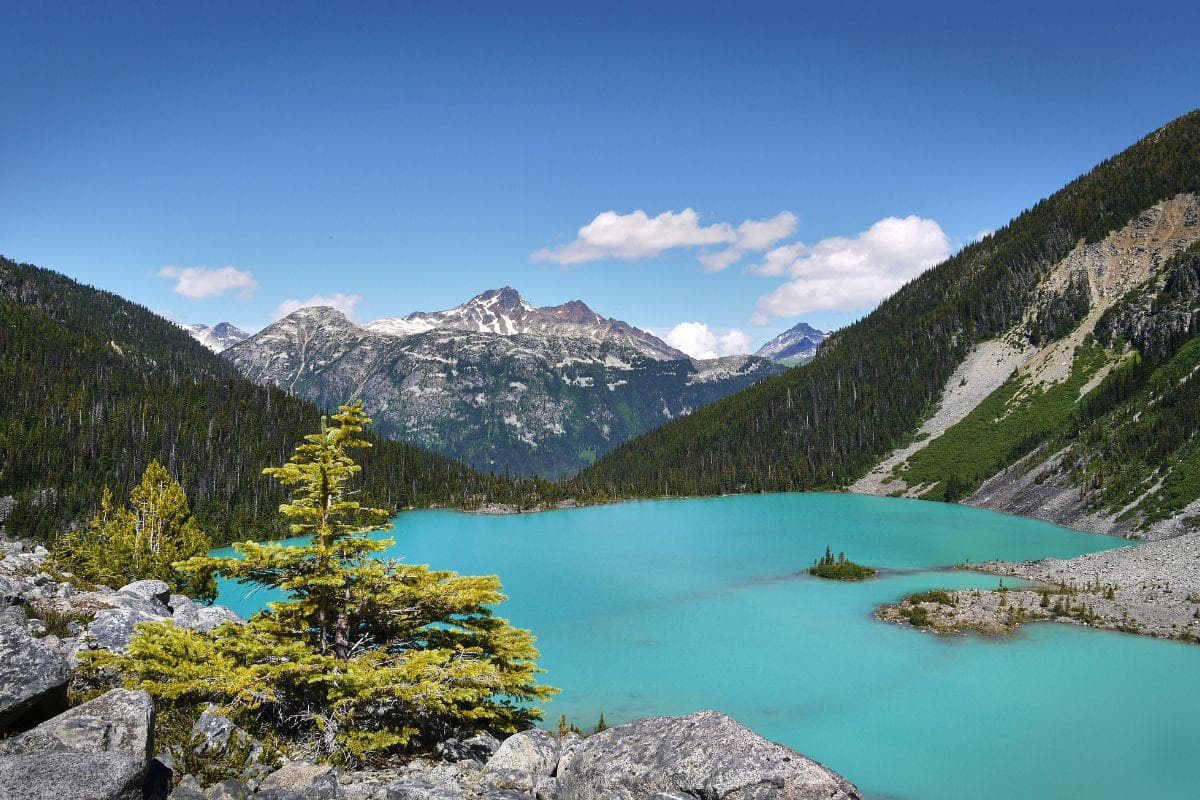
By the time the car grinds to a halt at the pullout, the colour has already stolen your breath. Three bands of water—each a different, impossible blue—sit like gemstones in a grey-green bowl of rock and fir. Above them, the Coast Mountains tilt into the sky: serrated ridgelines, glaciers that feed the lakes, and the occasional goat silhouette on a distant ledge. This is Joffre Lakes Park, a compact, glacier-carved theater of alpine drama a scenic hour or so north of Whistler along the Sea-to-Sky corridor.
Start the hike and the forest reaches in to greet you. Old-growth hemlock and cedar soften the first kilometre; a river, braided from meltwater, daring you to find its crossings; and—further up—the trail sheds its canopy and the colour of the landscape changes. The lower lake is the appetizer: a quiet, accessible sheet of turquoise cradled beneath an amphitheater of talus. A short climb later and the middle lake arrives, broader and more vivid. Keep going and the final reveal—Upper Joffre Lake—appears like a glacier's ledger: a moraine, a turquoise basin, and above it the ragged white of a hanging glacier.
Geology is the book that wrote this place. Over tens of thousands of years, alpine glaciers gouged the valley, ground granite to glacial “flour” and deposited it in the lakes. Those suspended rock particles scatter sunlight and produce Joffre’s signature blue. The lakes are not just visually arresting; they’re a live portrait of ongoing glacial processes. On colder days the same turquoise hardens to a sheet of glass; in winter, guided trips strap crampons to boots and send small groups onto snow-draped approaches under the hush of frozen timber.
The park sits within the dramatic Sea-to-Sky corridor, the route that links coastal communities and mountain towns and that has shaped settlement and tourism in British Columbia. This road—part infrastructure and part scenic attraction—unspools with views of ocean, fjord and mountain, and passes other waterfalls and stops that make a day-trip richer: Brandywine Falls, Shannon Falls and Mamquam Falls are all reasonable add-ons for a longer outing, each a different note in the region’s chorus of water and rock.
Why go? Joffre is compact but layered: it’s an accessible alpine day-hike that rewards modest effort with views typically reserved for multiday backpacking. It’s family-friendly if you manage the distance and elevation, and it scales—equipment and experience allowing—into snowshoe and crampon adventures in winter. For photographers and non-photographers alike, the colour of the lakes and the sense of high-alpine exposure make for a satisfying return on the time spent.
Practicality: the classic route to Upper Joffre Lake is roughly 11 km (about 7 miles) round-trip with roughly 400–500 m (1,300–1,600 ft) of elevation gain. The trail is well-marked but deceptively varied: expect boardwalks and mellow pitches early, a steeper forested middle, and rocky scree and moraine near the upper lake. In summer it’s mostly a dirt trail with some rooty sections; in shoulder seasons and winter, snow and ice are common—crampons and gaiters are standard in guided winter departures. Parking is small and fills up quickly on sunny weekends; many visitors choose timed shuttles, early starts, or organized tours from Whistler or Pemberton to avoid the lot lottery.
Timing matters. Early morning brings still water and soft light; late afternoon produces deep contrasts and fewer people. If you’re planning a summer weekend, consider a midweek visit or a sunrise push to dodge both congestion and afternoon weather—the Coast Mountains can build convective storms by late afternoon.
Safety and preparation are straightforward if you respect the setting. Wear sturdy hiking boots with traction for the final moraine; bring layers (mountain weather flips quickly), sunscreen and a buff for wind; pack enough water and a filter or purification tablets if you plan to top up from melt-fed streams (the glacial water is pristine but brutally cold). Bear spray is prudent in the region; know how to use it and keep food sealed in your vehicle or a bear-canister if camping.
Beyond the trailhead, extend the day along the Sea-to-Sky highway. Brandywine Falls—a dramatic 70-meter drop—adds variety, and Whistler Village is an easy, indulgent bookend: restaurants, shops, and the Peak 2 Peak Gondola (weather permitting) for another aerial perspective on the same mountain system.
Local guides and private hikes are especially valuable here. A guide can turn a trail into a lesson: pointing out glacial geomorphology, reading avalanche terrain in winter, or simply parsing the best compositions for your camera. Guided small-group winter treks even provide crampons and instruction so you can experience the iced lakes safely.
If you go, think like a land steward. The lakes’ popularity has put pressure on parking, fragile alpine mosses and informal trails. Stick to established paths, pack out what you pack in, and consider traveling by shuttle or guided tour to reduce vehicular congestion. The best memories from Joffre don’t come from a selfie in front of the upper lake; they come from the full sequence—the climb, the changing light, the quiet moments at the shoreline.
Joffre is not the world's highest mountain nor its toughest trail. It is, instead, a distilled alpine experience: easy to reach, visually dramatic, and honest about what it asks for—moderate effort and good planning. For a day in the mountains that rewards preparation with turquoise water, glacier views and a real sense of wildness, Joffre Lakes is hard to beat.
Trail wisdom
Small choices, better day.
Start early
Parking is limited—arrive before 8:00 AM or take a shuttle/tour from Whistler to secure a spot and enjoy calmer water.
Layer for sudden weather
Bring a breathable waterproof jacket and insulating midlayer—mountain weather shifts quickly, even in summer.
Expect mixed terrain
Trail includes roots, rocky pitches and a final moraine—sturdy hiking boots and trekking poles help with balance.
Respect fragile alpine areas
Stay on designated trails and avoid stepping on alpine mosses and meadows to prevent long-term damage.
Local knowledge
Read the place, not just the route.
Watch for native species including black bear, mountain goat.
Keep an eye out for wildlife during the transition between areas and habitats. Respect distance guidelines.
High visitation stresses fragile alpine ecosystems and parking infrastructure—travelers can reduce impact by using shuttles, following established trails and packing out all waste.
Follow the guide's instructions on size limits, ethical handling, and leave-no-trace practices.
Visit the moraine viewpoint above Upper Joffre Lake for an alternate perspective of the glacier and basin. Combine a Joffre day with a stop at Brandywine or Nairn Falls along the Sea-to-Sky for varied scenery off the main trail
Locally recommended viewpoints and quiet spots known best to local operators.
Joffre Lakes sits within the Coast Mountains sculpted by repeated glaciation; the Sea-to-Sky corridor has long been a travel route linking coastal and interior communities.
Maritime roots and regional tradition shape the waterways and working coasts.
Seasonal guide
Four versions of the same landscape.
Spring
Best forlate snow displays · early wildflower blooms · quieter trails
Challengessnowfields on upper trail · slick boggy sections · limited parking access
Spring brings melting snow and shifting water levels—expect lingering snow and potentially muddy approaches; crampons may be necessary higher up.
Summer
Best forclear views · warmest conditions · full lake colour
Challengescrowds · limited parking · afternoon storms
Summer is the busiest time with the most stable weather and brightest lake colour—go early to avoid crowds and afternoon weather swings.
Fall
Best forlarch and fall colours · fewer crowds · crisp air and visibility
Challengesrapid temperature drops · early snow · shorter daylight
Fall offers cooler air and great visibility; be ready for early-season snow and shorter days, especially late in the season.
Winter
Best forsnow-covered landscapes · iced turquoise surfaces · guided crampon hikes
Challengesdeep snow and avalanche hazard in some zones · short daylight · cold temperatures
Winter turns Joffre into an alpine whitescape—guided trips with crampons are advised unless you have winter mountaineering skills and gear.
Pack with intention
What to bring.
Good to know
Common questions.
The round-trip distance is roughly 11 km (about 7 miles) with approximately 400–500 m (1,300–1,600 ft) of elevation gain; allow 4–7 hours depending on pace and photos.
Plan the edges
The details that make the day easier.
The vivid turquoise colour of the Joffre Lakes is caused by 'glacial flour'—finely ground rock particles from nearby glaciers suspended in the water that scatter light.
Pair your hike with a Whistler village stop: local cafes serve hearty bannock and farm-to-table fare, and many outfitters in town offer guided trips and shuttle options—supporting local guides helps manage visitor impact.
Choose guided shuttles or tour operators to reduce parking pressure, stick to trails to protect alpine vegetation, and pack out all waste—high-use parks need conscientious visitors.
Explore by topic
Follow the threads.
Keep exploring
Make the story part of the trip.
Set out from Bass Harbor for a private, customizable day on Blue Hill Bay — lighthouses, puffins, seals, and the chance to feel Acadia from the water. Small groups, local captains, unforgettable views.
In four hours you can move from shaded canyon ferns to wind-scoured coastal ridgelines, guided by someone who knows where the light—and the hidden views—live. This private half-day hike on the Monterey Peninsula or Big Sur is compact, curated, and perfect for travelers who want depth without a multiday commitment.
 Related story
Beneath a sky of shifting light, Skaftafell’s ice reads like a map of time. This three-hour guided glacier hike mixes technical instruction with geology and culture: compact, safe, and unforgettable.