
What the day feels like
The trail opens with a sound before you see the water—a bright, impatient roar that moves through the jungle like a conversation. Step past the parking area and the chatter of vendors, and the noise becomes a presence: the river insisting forward, colliding over terraces the color of crushed aquamarine. At Agua Azul, the falls do not scream for attention so much as invite it. They reach out in broad, tiered sheets and plunge into deep, rounded basins where you can stand on sun-warmed rock and let the current dare you to jump.
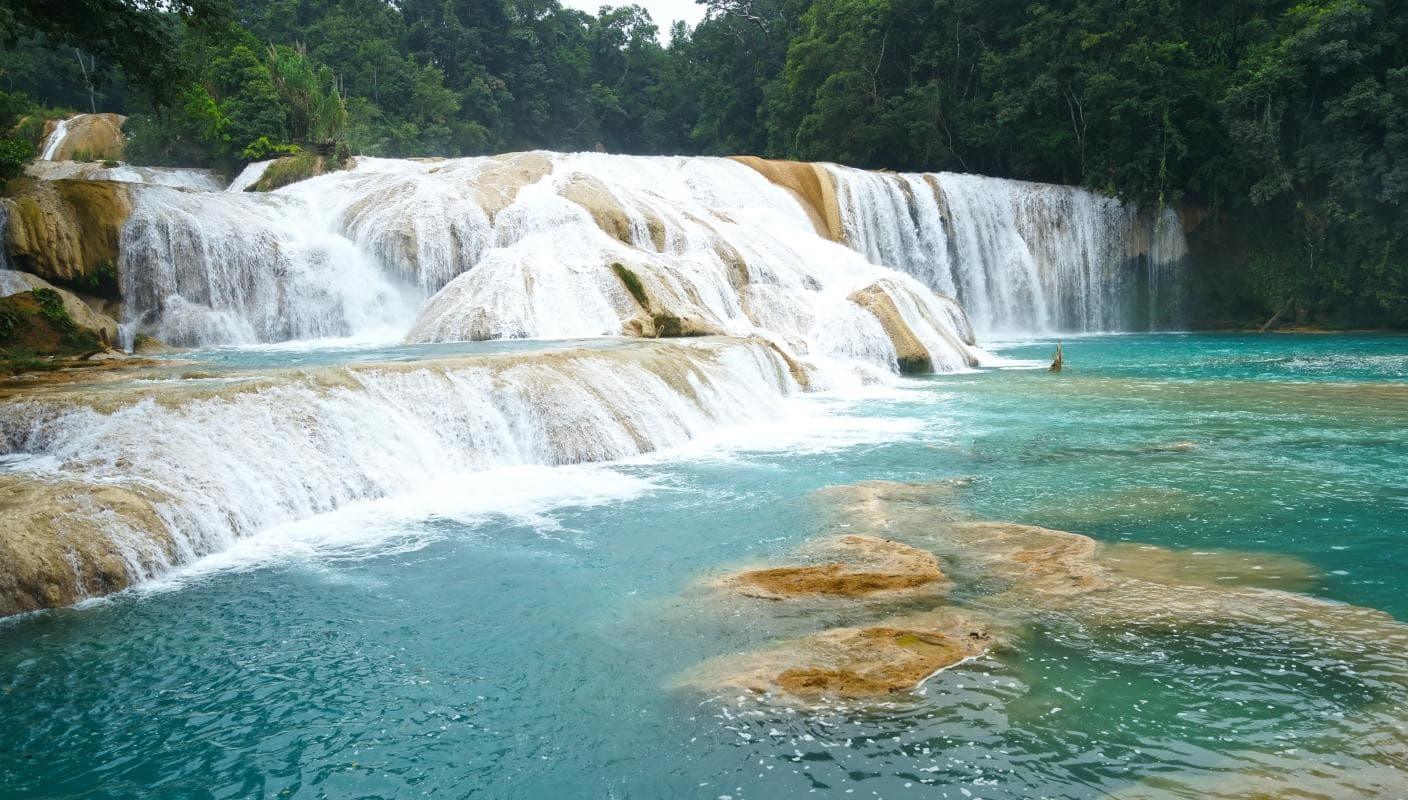
Agua Azul (Cascadas de Agua Azul) sits where limestone meets fast-moving water and the two keep making art. Geologically, the site is a study in travertine formation—calcium carbonate precipitates out of the river, building natural dams and a patchwork of pools whose saturated blue-green is brightest when the sun hits suspended mineral particles. The color can be so vivid it reads like a filter in your camera, but it is utterly real, seasonal, and fragile.
The human story here threads through the same landscape. This stretch of Chiapas is the eastern edge of the Lacandon Jungle, a living border between indigenous communities—Tzeltal, Tzotzil and Lacandon peoples—and the more recent waves of adventure tourism drawn to the state’s waterfalls, canyons, and ancient ruins. For travelers, Agua Azul is often paired on a long daytrip with Misol-Há and the archaeological site of Palenque, a pattern reflected in many local tours that shuttle visitors between tropical waterfalls and Mayan stonework. Operators such as those running the “Agua Azul, Misol-Há & Palenque Tour” fold natural spectacle and cultural history into a single, full-day arc.
What you actually do at Agua Azul is straightforward and sensory: walk the wooden boardwalks and stone paths that link viewing platforms, peek into emerald cavities below high curtains of water, and—if conditions allow—swim in designated pools. The paths are compact: expect 1–2 kilometers of walking over uneven rock and flagstone with modest stair sections and occasional slick surfaces. There is little elevation gain; the site is about a gentle series of descents toward the river rather than a climb.
Timing matters. The dry season (roughly December through April) generally produces the clearest turquoise colors and safer swimming conditions. During the rainy months flows become heavier and more turbid, and authorities sometimes close swimming access. Many visitors travel from nearby Palenque (about a 45–60 minute drive) or from San Cristóbal de las Casas on longer day trips (three-and-a-half to four-hour transfers each way), so plan arrivals mid-morning to avoid the largest tour groups and to get the light you want for photos.
There is an economy that grows around the cascades—small eateries serving grilled fish and tamales, vendors selling carved wood and woven bracelets, and local guides offering brief interpretive walks. Use them. A local guide can point out how water chemistry shapes each terrace, show quieter upper pools where fewer people go, and explain conservation concerns: Agua Azul’s travertine is alive, rebuilding itself slowly; anything that alters the water’s chemistry—soaps, oils from sunscreen, or trash—has an outsized effect.
Practicalities: the site has public facilities, but bring cash (pesos) for entrance fees, lockers, food, and tips—cards are rarely accepted. Footwear matters—water shoes or sandals with good grip let you step safely across wet rock and into the pools. If your trip includes Misol-Há, expect a deeper, jungle-shadowed fall where a single drop creates a dramatic curtain; if it includes Palenque, build in time for slow, quiet exploration of Maya reliefs and plazas.
Safety-wise, follow the posted warnings and the guidance of staff. The pools at Agua Azul range from placid to deceptively powerful; currents can surprise you where the river funnels between terraces. Hydrate before you swim, and be prepared for sun exposure on the open platforms. If you’re renting a full-day guided tour from San Cristóbal or Palenque, check the schedule: most start very early and return late. If you’re self-driving, know that rainy-season roads can be sluggish.
Why go? Agua Azul rewards three kinds of travelers. There are casual visitors who want a dramatic splash of color and the chance to cool off mid-journey. There are photographers who can spend hours finding the right light and composition—polarizing filters and slow shutter speeds will make the blue sing. And there are travelers curious about the junction of nature and culture: the waterfalls are an active geological feature in a landscape shaped by ancient and living communities.
Conscientious travel elevates the experience: arrive with biodegradable sunscreen, keep to the paths, take your trash with you, and support local vendors and guides. Leave the travertine the way you found it—undisturbed and unmistakably blue.
A visit to Agua Azul is rarely a single, neat memory. It’s the last-minute run into a cool pool, the splintery boardwalks, the smell of wet jungle, and the knowledge that a river’s chemistry and time made something almost impossibly beautiful. It’s a natural place that still needs you to behave like a neighbor, not a conqueror—come for the color, leave knowing you helped it keep its hue.
Trail wisdom
Small choices, better day.
Footwear for wet rock
Wear water shoes or grippy sandals—stone and boardwalks are often wet and slippery, and footwear helps you move between pools safely.
Bring cash
Entrance fees, small food stalls, and local artisans typically accept only pesos—carry small bills for convenience.
Check swimming conditions
Swimming is allowed only when park staff confirm safe conditions—ask before entering the water and avoid strong currents.
Visit early or late
Arrive in the morning or late afternoon to avoid peak crowds and to get softer light for photography.
Local knowledge
Read the place, not just the route.
Watch for native species including Howler monkeys, Toucans and other tropical birds.
Keep an eye out for wildlife during the transition between areas and habitats. Respect distance guidelines.
Travertine terraces are sensitive to changes in water chemistry—visitors should avoid soaps and sunscreen residue in pools, and support local conservation fees when available.
Follow the guide's instructions on size limits, ethical handling, and leave-no-trace practices.
Upper pools and terraces upstream of the main viewpoints—quieter and better for early-morning photos. Misol‑Há waterfall (short drive) for a deeper, jungle-shrouded plunge nearby
Locally recommended viewpoints and quiet spots known best to local operators.
The cascades lie at the ecological edge of the Lacandon Jungle and near trade routes that linked Maya settlements; nearby Palenque preserves one of the region’s most important Maya sites.
Maritime roots and regional tradition shape the waterways and working coasts.
Seasonal guide
Four versions of the same landscape.
Spring
Best forclear turquoise pools · swimming (when permitted) · photography
Challengesoccasional post-winter rains · higher visitor numbers during Semana Santa
Spring (Mar–May) often has bright water color and comfortable temperatures—expect more visitors around holidays and intermittent afternoon showers.
Summer
Best forlush jungle scenery · combining with Palenque · longer daylight hours
Challengesheavy rains, murkier water · possible closures for safety
Summer is lush but wetter; flows increase and visibility in the pools drops, so swimming may be restricted after storms.
Fall
Best forfewer crowds · stable temperatures · late-season greenery
Challengesresidual rainy-season runoff early in fall · road conditions can be variable
Autumn sees gradual drying and cooler mornings; crowds thin and the cascades retain their tropical character.
Winter
Best forclear water color · daytime swimming (when warm) · photography at golden hour
Challengescooler mornings · early darkness
The dry season (Dec–Feb) yields the clearest waters and safer swimming; mornings are cool but comfortable by midday.
Pack with intention
What to bring.
Good to know
Common questions.
Swimming is often allowed in designated pools when staff deem conditions safe; rules change with river flow and season—ask on arrival.
Plan the edges
The details that make the day easier.
The vivid turquoise of Agua Azul comes from travertine—calcium carbonate deposits that form natural dams and terraces, created as limestone-rich water loses carbon dioxide and drops dissolved minerals.
Chiapas blends Maya heritage with highland and jungle foodways—try tamales de chipilín, grilled river fish, and local coffee; artisans from nearby towns sell woven textiles and carved wood.
- Know before you go
- nearest hub Palenque (45–60 min); day trips available from Palenque or San Cristóbal; bring pesos; swimming allowed only when posted; basic food and restrooms on site.
Protect the travertine: use biodegradable products, stay on marked paths, avoid applying lotions before entering pools, and dispose of waste responsibly to preserve water chemistry.
Explore by topic
Follow the threads.
Keep exploring
Make the story part of the trip.
Set out from Bass Harbor for a private, customizable day on Blue Hill Bay — lighthouses, puffins, seals, and the chance to feel Acadia from the water. Small groups, local captains, unforgettable views.
In four hours you can move from shaded canyon ferns to wind-scoured coastal ridgelines, guided by someone who knows where the light—and the hidden views—live. This private half-day hike on the Monterey Peninsula or Big Sur is compact, curated, and perfect for travelers who want depth without a multiday commitment.
 Related story
Beneath a sky of shifting light, Skaftafell’s ice reads like a map of time. This three-hour guided glacier hike mixes technical instruction with geology and culture: compact, safe, and unforgettable.