
What the day feels like
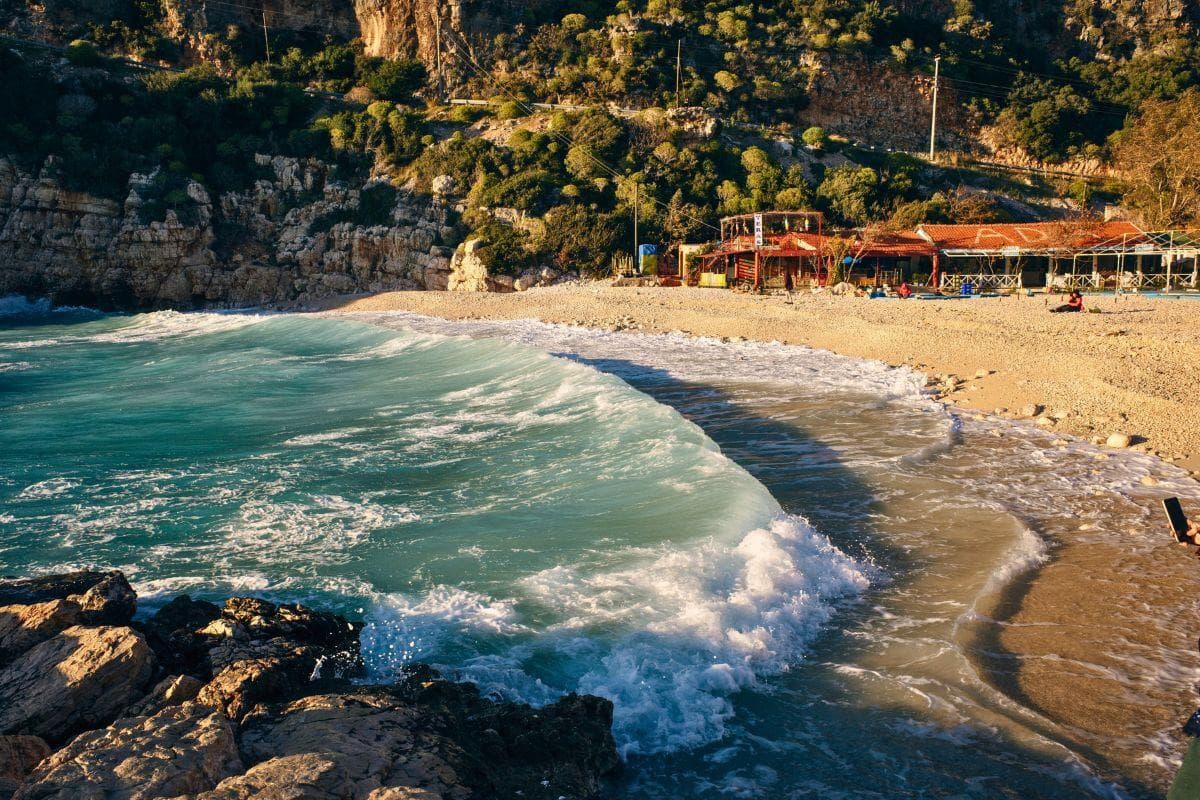
The gulet eases into a cove that looks painted by someone who loves sharp color: limestone cliffs the color of old bone, a ribbon of pebbles that flash like coins as waves reorganize them, and water that slides from glassy aquamarine into a deep, fathomless blue. You jump from the swim platform, feel the sea’s cool insistence, and when you surface the town of Kaş is a postcard behind you—whitewashed houses draped in bougainvillea, a fishing boat idling, and the distant silhouette of Lycian ruins. This is Big Pebble Beach: a small, unassuming strip of shore that’s become a hinge between easy seaside pleasure and the deeper, marine-focused adventures that have made the Kaş–Kekova coast a must for Mediterranean travelers.
Big Pebble Beach is less about sandcastles and more about texture—the soles of the sea-worn stones underfoot, the way the waves roll pebbles into new patterns, and the scent of salt and grilled fish from a nearby boat. It’s also a strategic launching point. From here you can let a private gulet whisk you on a full-day loop—the Private Boat Trip to Kaş Islands including BBQ Lunch—through Limanağzı Bay, past Pigeon Island, and into pockets of water where snorkeling uncovers amphorae and the bright flashes of Mediterranean fish. Or you can opt for a two-hour Sunset Tour from Kaş to drink the light as the coast becomes a silhouette. For those who want to stay at sea, the 3 Nights 4 Days Gulet Charter from Kaş to Kekova unfolds a slow, lyrical cruise through Lycian history and the Sunken City off Kekova—a ruined, partially submerged world that still speaks of earthquakes and lost harbors.
The region’s story is geological and ancient at once. The Taurus Mountains, folded and faulted millions of years ago, feed limestone ridges into the sea; erosion has sculpted cliffs and hidden coves, while wave action rounded fragments into the pebbles that give the beach its name. Human history sits on top of that geology. Kaş was a Lycian port, later Hellenistic and Roman settlements left amphorae and anchors to be found underwater; the Sunken City near Kekova is the most dramatic evidence of a coastline that keeps revealing its past beneath the waves.
Kaş’s culture is low-key and maritime. Locals still make their living from small-scale fishing and guiding—many boat crews are third-generation sailors who know which reef holds grouper at noon, where the monk seals sometimes haul out, and the hour when the wind will fill sails for a fast, exhilarating ride. Food is coastal and direct: sea bass grilled with lemon, mezes heavy on olive oil and capers, and the unmistakable Turkish tea served steaming when you step back on deck.
Why plan a trip that centers on Big Pebble Beach? Because it’s a pivot: lazy mornings on shore, afternoon snorkeling in crystalline bays, a sunset sail that rewrites your idea of golden hour. Choose a Private Sailing Yacht With Crew in Kaş - Kekova Tour for a day of targeted highlights—Aquarium Bay’s snorkel sites, the historic Sunken City from the surface, and a tea pause in Yağlıca Bay. If diving is your interest, Scuba Diving in Kaş for Certified Divers offers access to more than 30 sites: wrecks, canyons, caves, and seagrass meadows where sea turtles are routine and the occasional Mediterranean monk seal still surprises divers.
Practical edge: the water temperature ranges from about 19°C in winter to nearly 29°C in late summer, so plan suits and exposure protection accordingly. Many boats run shore-to-boat ladders; good balance and basic swimming ability are required to enter and exit the water. If you’re diving, bring certification paperwork—liveaboards and dive centers check credentials. For sunset or multi-day gulet trips, pack a light windbreaker and a headlamp for early-morning swims.
Timing is everything. July and August deliver the warmest water and busiest harbors—perfect for full sunseeking and long swim sessions, but expect crowds at prime stops. May–June and September into October are often the best months: water is comfortable, wind is manageable, and you’ll share bays with fewer boats. For short travelers, the 2 Hours Sunset Tour offers a compact, high-reward slice of the coastline. For slow travelers, a three-night gulet charter lets the Lycian coastline unwrap at a human pace.
Safety and respect matter. Kaş lies in the Kaş–Kekova Marine Protected Area—anchoring rules, no-take zones, and responsible dive practices are enforced intermittently. Use reef-safe sunscreen, avoid touching or collecting archaeological artifacts, and listen to crew instructions when mooring or swimming near rocky outcrops. The sea here is generous but not obliging: currents can push unexpectedly near underwater canyons and at the mouths of bays.
If you come hungry for experience as much as scenery, Big Pebble Beach delivers in manageable, memorable pieces: swim to a shoal and find an amphora shard glinting beneath, join a private gulet for a family-style BBQ on board after a day of jumps and snorkels, surface from a dive with a loggerhead turtle gliding by. It’s a place that rewards modest curiosity with remarkable moments—no mountain to summit, no glacier to tame—just very good sea, very old stones, and the human geography of a town that still indexes life to the tides.
Bottom line: Big Pebble Beach is not a one-note destination. It’s a hub for day sailors, divers, and slow-boat romantics. Come prepared—simple gear, basic swim fitness, a respect for protected waters—and you’ll find why locals and repeat visitors return to these pebbled shores every summer.
Trail wisdom
Small choices, better day.
Bring water shoes
The beach is pebbly and sometimes sharp underwater; water shoes make wading and getting on and off boats easier.
Book a private gulet for flexibility
Private Boat Trip or a multi-night gulet lets you choose snorkeling spots and avoid crowded piers—ideal mid-summer.
Carry dive certification
If you plan to Scuba Dive in Kaş for Certified Divers bring your license and logbook; operators require verification.
Use reef-safe sunscreen
Protect marine life—regular sunscreen can harm seagrass and corals; apply well before entering the water.
Local knowledge
Read the place, not just the route.
Watch for native species including loggerhead (Caretta caretta) sea turtles, Mediterranean monk seal (rare).
Keep an eye out for wildlife during the transition between areas and habitats. Respect distance guidelines.
Big Pebble Beach lies inside the Kaş–Kekova Marine Protected Area; visitors should avoid anchoring on seagrass beds and follow local guidance to protect marine habitats.
Follow the guide's instructions on size limits, ethical handling, and leave-no-trace practices.
Underwater canyon sites near Big Pebble Beach—excellent for experienced divers. Small, secluded coves along Limanağzı Bay that fill with light in the afternoon
Locally recommended viewpoints and quiet spots known best to local operators.
This stretch of coastline forms part of the ancient Lycian region; the Sunken City near Kekova sank after earthquakes in late antiquity and remains visible from the surface.
Maritime roots and regional tradition shape the waterways and working coasts.
Seasonal guide
Four versions of the same landscape.
Spring
Best forcalmer seas · wildflower-draped cliffs · fewer crowds
Challengescooler water temperatures · occasional northerly winds
Spring (April–June) brings mild weather, great visibility for diving, and quieter bays—pack a thin wetsuit for early dives.
Summer
Best forwarm water · long swim days · full gulet schedules
Challengescrowded anchorages · strong midday sun
Summer is peak season: expect busy harbors and perfect swimming—start early or late to avoid the hottest hours.
Fall
Best forpleasant sea temps · clear skies · best visibility
Challengesshorter daylight · some operators reduce schedules
September–October offers warm seas and excellent visibility—ideal for snorkeling and diving with fewer boats.
Winter
Best forquiet harbors · off-season rates · coastal walks
Challengescool water (≈19°C) · limited boat services
Winter is quiet; some dive sites and services remain open but bring a 5mm wetsuit and plan around fewer daily departures.
Pack with intention
What to bring.
Good to know
Common questions.
Basic swimming ability is required to enjoy snorkeling and getting back onto boats; tour crews will assist, but non-swimmers should remain near shallow entry points.
Plan the edges
The details that make the day easier.
Kaş is part of the Kaş–Kekova Marine Protected Area, and the nearby Sunken City of Kekova was submerged by an earthquake around the 2nd century CE—a popular site visible from surface tours.
Kaş is a low-key coastal town where fishing trawlers share space with boutique dive shops and family-run meyhane (taverns). Try grilled fresh fish with a glass of ayran or end the day with a Turkish tea on the harbour.
- Nearest town
- Kaş. Transfers: short ride from Kaş harbour. Best booking: private gulet or day-sail in shoulder season. Bring: swim gear, reef-safe sunscreen, shoes.
Choose operators that practice mooring buoy use, avoid anchoring on seagrass, and enforce no-touch rules for marine life—your choices matter to endangered seagrass and turtle habitats.
Explore by topic
Follow the threads.
Keep exploring
Make the story part of the trip.
Set out from Bass Harbor for a private, customizable day on Blue Hill Bay — lighthouses, puffins, seals, and the chance to feel Acadia from the water. Small groups, local captains, unforgettable views.
In four hours you can move from shaded canyon ferns to wind-scoured coastal ridgelines, guided by someone who knows where the light—and the hidden views—live. This private half-day hike on the Monterey Peninsula or Big Sur is compact, curated, and perfect for travelers who want depth without a multiday commitment.
 Related story
Beneath a sky of shifting light, Skaftafell’s ice reads like a map of time. This three-hour guided glacier hike mixes technical instruction with geology and culture: compact, safe, and unforgettable.