
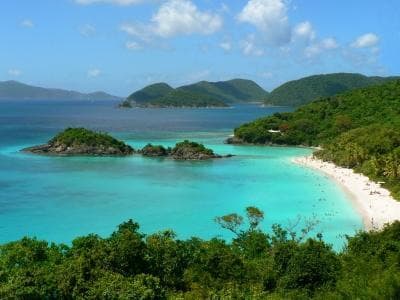
What the day feels like
You step out of the shade and the beach hits you like an exhale: a wide sweep of sugar-white sand, a shallow turquoise shelf that deepens into cobalt, and an arc of coral-stippled reef running like a seam offshore. That first inhale of sea air at Trunk Bay is deceptively simple—this is a place that reads like an island postcard—but its power is cumulative. Walk the shore for an hour and you’ll understand why the U.S. Virgin Islands’ most photographed beach is also one of its best-kept natural classrooms.
Trunk Bay sits on St. John’s northern shore, a short drive from the ferry town of Cruz Bay and inside the protective fold of Virgin Islands National Park. The bay is small and civilized—picnic tables, restrooms, a concession stand and a lifeguard chair—yet it opens onto living coral: a shallow reef that invites snorkelers with a marked underwater trail. Wooden posts with numbered plaques lead you through a sequence of sights—sea fans, brain coral, parrotfish busy with their blunt beaks—making the water next to the beach feel like an outdoor marine museum.
History and geology here are modest but telling. The sand is the product of time: coral and calcareous organisms ground down into powder and washed ashore. The reef is part of a larger fringing system that runs along St. John’s north shore, formed over millennia as coral adapted to currents and storms. Culturally, the beach sits a few minutes’ drive from Cruz Bay’s cluster of shops and eateries, where the easy-going rhythm of island life—rum bars, fishermen, and locally run guides—meets the steady stream of visitors who come to experience the park’s protected shorelines.
For many travelers the main draw is uncomplicated: snorkeling. The underwater trail is an equal-opportunity experience for novice and experienced snorkelers; you don’t need dive certification to encounter vibrant reef life, just steady breathing and a willingness to keep your hands off the coral. Because Trunk Bay is sheltered, the water is often glassy in the morning, and the reef’s shallow sections are bright, warm and easy to navigate. If you prefer to stay dry, the beach itself is a sublime place to read, nap or watch the parade of swimmers and kayakers pulling away from shore.
The practical side of Trunk Bay is simple but important. Parking is limited and fills fast—plan to arrive at sunrise if you want quiet and a close spot. The lifeguarded zone provides a measure of safety, but currents set up along the reef edges; always swim with a buddy and be mindful of posted warnings. Reef-safe sunscreen is not just courteous here—it’s essential for preserving the corals you came to see. Snorkel gear can be rented at the concession stand if you don’t want to pack your own; bring a lightweight mask and fins if you can, they make the experience far more comfortable.
Timing matters. Morning is best for snorkeling—fewer crowds, calmer seas, better light for viewing reef details. Late afternoon softens the light and cools the sand but also tends to bring more local visitors and tour groups. Weather is predictably sidelong: trade winds pick up through the day and can make the surface choppy; heavy rains in the brief summer storms reduce visibility. For a balanced visit, aim for shoulder seasons such as late spring or early fall to dodge peak crowds while still enjoying settled water.
Trunk Bay can feel like a museum with a view, but it’s also alive. Watch for colorful tangs and parrotfish grazing the reef, for sea urchins tucked into crevices, and for the occasional nurse shark cruising in deeper water beyond the trail. Respect the ecosystem by keeping your distance, never touching the coral, and using a reef-safe sunscreen. The park operates with a conservation-first mindset; ranger programs and interpretive signs help visitors understand both fragility and resilience here.
For trip planning: stay in Cruz Bay if you want convenience—most ferries arrive there and taxis, rental cars, and island shuttles serve the route. If you’re combining Trunk Bay with other island objectives, plan strategy: combine a morning at Trunk with an afternoon hike in the National Park or a late-day drive to the more secluded North Shore overlooks. Don’t overpack; a dry bag, reef-safe sunscreen, a hat and a 1–2 liter water bottle will cover the essentials. And bring a camera with a water housing or a quality waterproof phone case—underwater photos at Trunk are reliably rewarding.
Trunk Bay is not about conquering a peak or paddling through whitewater. Its appeal is quieter: a clear window into a reef ecosystem that’s easily accessible, a shoreline rebuilt by coral and current, and a place where the ocean does most of the talking. If you go with curiosity and care, you’ll leave with more than a tan—you’ll have a better sense of why protecting shallow reefs matters, and how tourism and stewardship can coexist when visitors arrive prepared and respectful.
Trail wisdom
Small choices, better day.
Arrive early
Parking is limited and the best snorkel conditions are in the morning; plan to be on the sand by sunrise to avoid crowds and secure a spot.
Use reef-safe sunscreen
Apply mineral-based sunscreen before entering the water and reapply on land; this protects the coral that defines Trunk Bay.
Buddy up in the water
Snorkel with a partner and stay inside the lifeguarded area; currents can pick up beyond the reef line.
Rent fins for longer swims
Fins increase efficiency and minimize contact with the reef by keeping you higher in the water column.
Local knowledge
Read the place, not just the route.
Watch for native species including parrotfish, sea turtles (occasionally).
Keep an eye out for wildlife during the transition between areas and habitats. Respect distance guidelines.
The park emphasizes reef protection—visitors are asked to use reef-safe sunscreen, avoid touching marine life, and pack out all trash to minimize impact.
Follow the guide's instructions on size limits, ethical handling, and leave-no-trace practices.
Walk the shoreline toward the eastern point for quieter pockets and tidepools. Combine a morning at Trunk Bay with a short drive to nearby overlooks for broad North Shore views
Locally recommended viewpoints and quiet spots known best to local operators.
Trunk Bay is part of Virgin Islands National Park, which preserves roughly 60% of St. John’s land and surrounding marine areas, protecting beaches and coral reefs for public enjoyment.
Maritime roots and regional tradition shape the waterways and working coasts.
Seasonal guide
Four versions of the same landscape.
Spring
Best forcalmer seas · fewer crowds · good visibility
Challengesoccasional rain squalls · increase in algae after winter storms
Spring offers warm water and generally calm mornings—ideal for snorkeling the marked underwater trail.
Summer
Best forwarmest water · slower tourist pace · long daylight hours
Challengeshot midday sun · higher humidity · hurricane season risk
Summer brings quieter beaches but hotter conditions and the occasional tropical storm—monitor forecasts.
Fall
Best forlower prices · good snorkeling conditions · fewer crowds
Challengesincreasing risk of tropical storms · variable sea state
Early fall can be a sweet spot for fewer visitors and pleasant water temperatures, with some hurricane-season risk.
Winter
Best forclear water · stable weather · peak wildlife viewing
Challengescrowds and higher prices · windier afternoons
Winter has the best overall conditions for visibility but also the most visitors—arrive early to beat tours.
Pack with intention
What to bring.
Good to know
Common questions.
Yes—Trunk Bay’s shallow reef and marked underwater trail are well suited to beginners; stay inside the lifeguarded area and snorkel with a buddy.
Plan the edges
The details that make the day easier.
Approximately 60% of St. John is protected as Virgin Islands National Park, which includes Trunk Bay and its underwater trail.
Cruz Bay offers simple Caribbean flavors—fresh seafood, conch fritters and rum cocktails—paired with small shops and friendly island hospitality after a day on the beach.
Use reef-safe sunscreens, avoid standing on or touching coral, dispose of waste properly, and support local guides who practice low-impact tourism.
Explore by topic
Follow the threads.
Keep exploring
Make the story part of the trip.
Set out from Bass Harbor for a private, customizable day on Blue Hill Bay — lighthouses, puffins, seals, and the chance to feel Acadia from the water. Small groups, local captains, unforgettable views.
In four hours you can move from shaded canyon ferns to wind-scoured coastal ridgelines, guided by someone who knows where the light—and the hidden views—live. This private half-day hike on the Monterey Peninsula or Big Sur is compact, curated, and perfect for travelers who want depth without a multiday commitment.
 Related story
Beneath a sky of shifting light, Skaftafell’s ice reads like a map of time. This three-hour guided glacier hike mixes technical instruction with geology and culture: compact, safe, and unforgettable.