
What the day feels like
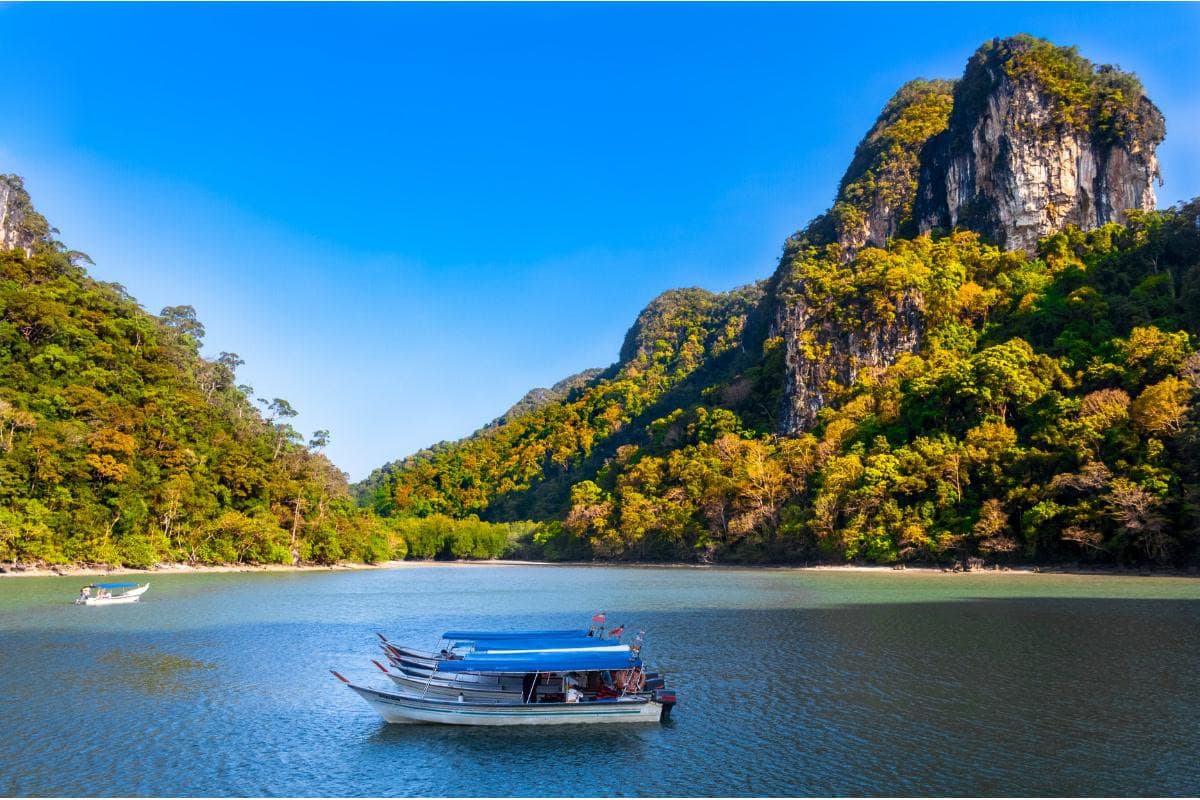
You step off the pier and the air changes—salt and swamp and something older, mineral and marine, that seems to belong to the rocks as much as to the sea. The boat slips forward, engines mellowing to a pulse. Towering limestone karsts rise like petrified waves from the water, their vertical faces pocketed with caves and strangled roots. Mangrove trunks thread the shoreline, black like charcoal, their buttress roots reaching outward as if testing the tide's patience. Here at Kilim Geoforest Park Langkawi, the land and sea are not separate things; they curve into one another, daring you to follow the channels and read the story written in stone and root.
A two- to three-hour mangrove cruise is the standard entry point: roughly 10–12 kilometers of wind and water, intimate channels and open bays, punctuated by stops where the shoreline opens to reveal bat caves, eagle-feeding stations and floating fish farms. But the park rewards the slower traveler as well: boardwalks and short trails peel away from the waterline into stands of coastal forest, and local guides will take you by longtail or skiff into narrower tributaries where macaques blink from the branches and kingfishers flick like living jewels.
The geology here is the headline act. Kilim's limestone towers are part of the Langkawi Geopark, a UNESCO Global Geopark since 2007, whose rock history stretches back hundreds of millions of years. You can see it in the layers—pitted faces and dramatic overhangs that tell a history of seabeds uplifted and sculpted by wind and water. The karsts are not just scenic; they host caves dotted with guano and bats, and they are the anchors for mangrove ecosystems that filter pollutants and protect the shoreline.
Culturally, this place sits at the crossroads of fishing communities and the modern tourism economy. Floating fish farms and humble seafood restaurants cluster around the river mouths; menus lean on freshly grilled fish and spicy relishes that taste like the sea distilled. Many of the boat operators are local families who have run these channels for generations; hiring a licensed guide means supporting both livelihood and local stewardship.
If the mangrove is the park’s circulatory system, the wildlife is its heartbeat. White-bellied sea eagles wheel and dive, their wings cutting the sky with patient authority. Monitor lizards habitually line the mud, and macaques are famous for their opportunistic curiosity—bring your camera, but be ready for a cheeky probe for snacks if you’re not careful. Guides know the quiet grooves the animals use and can get you close without disrupting rhythm.
Kilim's practical side is refreshingly simple. Trips run year-round, best booked in the drier months between November and April, when visibility is clear and tides are cooperative. Tours typically leave from the Kilim jetty near Tanjung Rhu and last anywhere from 2 hours to half a day. Boats are stable but exposed; shade is limited and the sun is relentless. Expect warm, humid air and, sometimes, sudden tropical squalls that rearrange the light into dramatic, rain-sliced panoramas.
For the traveler preparing to go: be deliberate about timing. Early morning trips catch wildlife at its most active and avoid the midafternoon heat. Bring a wide-angle lens for the karsts and a medium-telephoto (200–400mm) for eagles and monkeys. A polarizer cuts glare from the water and deepens the green of the mangroves, while a lightweight rain shell will keep you comfortable if a squall arrives.
Respect is also a part of good planning here. Avoid feeding wildlife, stick to licensed operators who follow no-trace practices, and keep plastic use minimal—mangroves do the cleaning, but that doesn’t mean they can manage our refuse. Many operators have small floating platforms where they demonstrate traditional fishing and explain the mangrove’s role in protecting the coastline—take these moments to listen and learn.
If you want to extend the adventure, combine a Kilim cruise with a stop at the nearby Tanjung Rhu beach or the Langkawi Geopark visitor trail. For hands-on experiences, look for operators offering kayaking into narrower channels; paddling lets you hear the mangrove's softer sounds—the slap of mudskippers, the whisper of leaves—without the boat’s engine in the background. For photographers and naturalists, a dusk return can catch eagles coming home to roost and the sky burning crimson against the limestone silhouettes.
Kilim Geoforest Park is not a remote wilderness in the cinematic sense—it’s an active, living system folded into a community. That interplay is its allure: geology that makes you feel small, wildlife that makes you feel present, and local people who make it feel human. Do the standard boat loop, yes, but leave room for a slower channel, a longer stare into a cave mouth, a conversation about how the tides are changing. It’s there—in the patient erosion of stone, in the battlemented faces of karsts, in the hum of the mangrove—that the trip becomes more than a postcard. It becomes a place you learn to negotiate, respect, and remember.
Trail wisdom
Small choices, better day.
Go early for wildlife
Book a morning cruise (before 9 AM) to see eagles and macaques at their most active and avoid the midday heat.
Bring a small towel and quick-dry clothing
Humidity and occasional spray make quick-dry fabrics and a travel towel practical for comfort after the boat ride.
Use a polarizing filter
A polarizer reduces glare on the water and enhances contrast on limestone cliffs for better photos.
Respect wildlife and operators
Don't feed animals, keep distance, and choose licensed guides who practice sustainable tourism.
Local knowledge
Read the place, not just the route.
Watch for native species including White-bellied sea eagle, Long-tailed macaque.
Keep an eye out for wildlife during the transition between areas and habitats. Respect distance guidelines.
Choose licensed guides who follow no-feed, no-litter rules; mangroves are crucial coastal buffers that need protection from pollution and overdevelopment.
Follow the guide's instructions on size limits, ethical handling, and leave-no-trace practices.
Bat Cave (local guides call it Gua Kelawar) — an intimate cave visit off a side channel. Floating fish farms and local seafood platforms where you can see traditional fish farming techniques
Locally recommended viewpoints and quiet spots known best to local operators.
Langkawi was designated a UNESCO Global Geopark in 2007, recognizing its unique karst geology and coastal ecosystems.
Maritime roots and regional tradition shape the waterways and working coasts.
Seasonal guide
Four versions of the same landscape.
Spring
Best forCalmer seas for boat trips · Migratory birds passing through · Lush mangrove growth
ChallengesIntermittent afternoon showers · Higher humidity
March–May offers warm weather and verdant mangroves; expect occasional showers and muggy afternoons but generally good wildlife viewing.
Summer
Best forClear visibility · Long daylight hours · Kayaking in narrower channels
ChallengesHeat and sun exposure · Moderate tourist crowds
June–August tends to be drier and sunnier—ideal for photography and paddling, but plan for strong sun and limited shade.
Fall
Best forTransitional weather offers varied light · Lower chances of heavy monsoon storms · Good time for boat operators to offer flexible routes
ChallengesChanging tides and wind patterns · Possible increased rainfall later in the season
September–November can be changeable as the monsoon shifts; it yields dramatic skies and fewer crowds if you time it right.
Winter
Best forPeak dry-season conditions · Calmer seas and predictable tours · Best overall wildlife sightings
ChallengesHigher tourist numbers · Some reef and open-water activities may be busier
December–February is the most reliable period for clear days and steady water, making it the optimal season for most visitors.
Pack with intention
What to bring.
Good to know
Common questions.
Most tours last 2–3 hours and cover roughly 10–12 kilometers of channels, with half-day and full-day options available.
Plan the edges
The details that make the day easier.
Langkawi was declared a UNESCO Global Geopark in 2007, recognizing its unique karst formations and ecological importance.
Combine your Kilim trip with a meal at a floating seafood restaurant—try ikan bakar (grilled fish) and sambal made with local lime. Local operators often include cultural anecdotes about fishing practices and mangrove uses—listen for stories that connect tide and town.
- Getting there
- Kilim jetty (Tanjung Rhu) — 20–30 min drive from Kuah. Typical duration: 2–3 hours. Cost: Varies by operator; book in advance during high season. Essentials: water, sun protection, camera, licensed operator.
Support guides who follow no-feed and no-litter policies, use refillable water bottles, and avoid single-use plastics; these practices protect mangrove health and coastal fisheries.
Explore by topic
Follow the threads.
Keep exploring
Make the story part of the trip.
Set out from Bass Harbor for a private, customizable day on Blue Hill Bay — lighthouses, puffins, seals, and the chance to feel Acadia from the water. Small groups, local captains, unforgettable views.
In four hours you can move from shaded canyon ferns to wind-scoured coastal ridgelines, guided by someone who knows where the light—and the hidden views—live. This private half-day hike on the Monterey Peninsula or Big Sur is compact, curated, and perfect for travelers who want depth without a multiday commitment.
 Related story
Beneath a sky of shifting light, Skaftafell’s ice reads like a map of time. This three-hour guided glacier hike mixes technical instruction with geology and culture: compact, safe, and unforgettable.