
What the day feels like
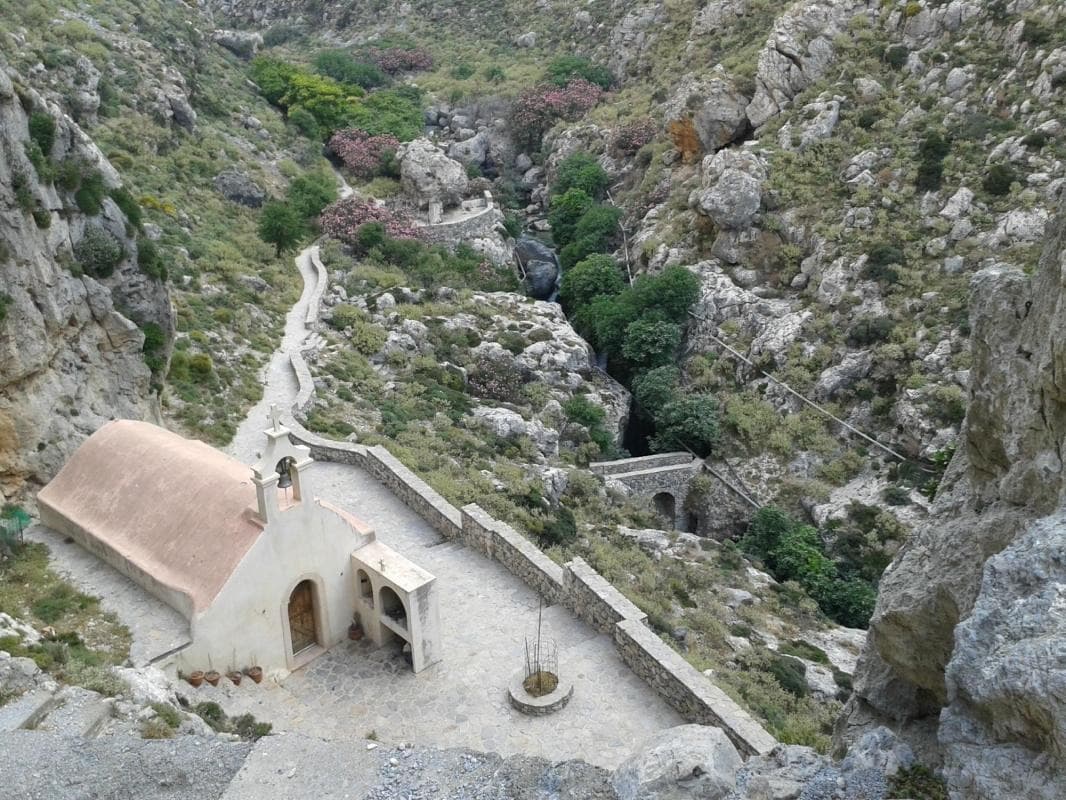
You step off the narrow lane and the canyon swallows the noise of the car. Sunlight slices through rock ribs and the air cools with the scent of river-stone and thyme. Kourtaliotiko Gorge doesn’t announce itself with a single scenic flourish; it reveals itself in a series of small, exacting moments: a spray of water from a hidden cascade, a sudden bowl of sky framed by limestone cliffs, the staccato clack of boots on riverbed. This is a place that asks for attention—and rewards it with a sharp, elemental kind of beauty.
The gorge cuts a definitive line across southern Crete, where the island’s limestone backbone splinters toward the Libyan Sea. Geologically, Kourtaliotiko is a classic karst canyon: rain and mountain springs have hollowed fissures, carved amphitheaters and left polished boulders in the river’s path. The stream that threads the gorge is the river’s second act—sometimes a gentle ribbon, sometimes a play of slabs and mini-waterfalls—ending on the palm-fringed sands of Preveli where freshwater meets the Mediterranean.
Human history is layered into the limestone too. Venetian-era routes and Ottoman-era stories echo in the villages above the gorge; nearby Spili’s Venetian fountain and the hilltop Monastery of Agia Irini are reminders that this landscape has sustained communities for centuries. Local guides often point out ancient shepherd paths and the places where Greeks once harvested wild herbs and kept small terraces of olives and grapes.
Kourtaliotiko is not a single hike but a family of ways to experience the canyon. The most accessible is a stepped descent to the gorge rim—short, sharp and great for a morning outing—while the more committed pursuits include full river-trekking days that mix scrambling with waist-deep wades. Commercial operators book a handful of signature experiences: guided river treks that trace the second, rockier section of the gorge and finish at Preveli; snorkel-and-waterfall excursions that combine short coastal swims with cliffside walks; and full-day private tours that stitch the gorge into a larger loop that includes Spili, Preveli and even family-run wineries.
For adventurous travelers, the river-trekking routes are the draw. These excursions—most guides plan 4–6 hour itineraries—require moving through the actual riverbed, negotiating slippery boulders and small cascades. The second half of Kourtaliotiko, where many operators take groups, is the trickier stretch: expect uneven footing, occasional clambering over rock steps and the exhilaration of sudden pools that invite swims. For photographers, the gorge’s contrast—dense shade under cliffs, bright Mediterranean light at the mouth—creates cinematic framing; for naturalists, the limestone microclimates host rare flora and the odd endemic insect.
The human payoff comes when the canyon opens toward the sea. Preveli’s palm forest, a rare stand of Phoenix theophrasti, feels almost tropical against Crete’s more familiar scrub and olive groves. It’s a reminder that this island sits at the crossroads of climates and histories.
Practicalities are straightforward if you plan with respect. River treks are best with a local guide who knows seasonal flows and the technical spots; several companies run family-friendly snorkeling trips that add water-based variety without committing to a full day of scrambling. Spring and early autumn are the sweet spots: water is cool and flows are lively, but temperatures aren’t searing. Summer brings heat and popular beaches at Preveli can be crowded; winter can make the gorge raw and wet—excellent for dramatic photos but harder to navigate.
When you go, pack light but smart: good traction footwear that can handle wet rock, a small dry bag for phones and snacks, and a sense of patience for moving over uneven terrain. Bring water and electrolytes—Crete’s sun is persuasive—and consider trekking poles for the uphill return. If you have the time, stitch the gorge into a day that includes Spili’s fountains and a slow taverna lunch; the island’s food—thick yogurt with honey, dakos salad, grilled fish and the ubiquitous raki—grounds a day of exertion.
Kourtaliotiko is a canyon of contrasts: accessible yet adventurous, geologically blunt yet ecologically delicate. It’s not an empty landscape to conquer; it’s a place to calibrate your pace, to trade city noise for the small, exacting music of water over stone. For anyone who wants Crete’s wild side with a practical edge, a day in Kourtaliotiko is a good, direct answer.
Length & logistics at a glance: guided river-trekking trips typically run 4–6 hours, cover roughly 4–6 kilometers with 250–350 meters of elevation change on descent and return routes, and are best booked with a licensed local operator who can advise on seasonal water levels and transport links to Rethymno or Plakias.
Trail wisdom
Small choices, better day.
Go with a local guide
Seasonal flows and tricky boulder sections are best navigated with a licensed guide who knows the safest lines and exit points.
Wear river-capable footwear
Choose shoes with a grippy sole that dry quickly—wet rock is the main hazard in the canyon.
Start early
Morning light keeps temperatures cooler and yields better photos; crowds build later, especially in summer.
Protect electronics in dry bags
There are opportunistic swims and spray near waterfalls—seal valuables to avoid losses.
Local knowledge
Read the place, not just the route.
Watch for native species including Griffon vulture (soaring above the cliffs), Mediterranean gecko and local endemic plants.
Keep an eye out for wildlife during the transition between areas and habitats. Respect distance guidelines.
The Preveli palm forest and river ecosystems are fragile—stick to marked paths, avoid trampling vegetation and follow local guidance to limit erosion and disturbance.
Follow the guide's instructions on size limits, ethical handling, and leave-no-trace practices.
Spili village and its Venetian fountain (ideal for a restorative coffee stop). Argyroupoli Springs—cool pools and a shaded taverna near the gorge approach
Locally recommended viewpoints and quiet spots known best to local operators.
The gorge sits along traditional inland routes used since Venetian times; nearby monasteries and villages reflect Crete’s layered history of Byzantine, Venetian and Ottoman influence.
Maritime roots and regional tradition shape the waterways and working coasts.
Seasonal guide
Four versions of the same landscape.
Spring
Best forwildflowers · river trekking · cool swims
Challengesvariable water levels · muddy approaches
Spring is ideal: river flows are lively, temperatures are mild and the gorge is verdant—expect occasional muddy approaches after rains.
Summer
Best forsnorkeling · beach time at Preveli · long daylight
Challengesheat on approach trails · crowds at Preveli
Summer offers warm sea swims and long days but bring sun protection and plan around crowds at the gorge mouth.
Fall
Best forpleasant hiking temps · fewer visitors · photography
Challengesshorter daylight · occasional storms
Early fall provides warm water and thinner crowds—ideal for combined trekking and beach stops—watch for sudden weather shifts late in the season.
Winter
Best fordramatic water flows · storm-swept photography
Challengescold water · potentially impassable sections
Winter can be raw and dramatic; some river sections may be unsafe—book with an experienced guide and expect fewer tour options.
Pack with intention
What to bring.
Good to know
Common questions.
Guided river treks are challenging: expect uneven, slippery rock, short climbs and river wading over several hours—good balance and stamina are required.
Plan the edges
The details that make the day easier.
Preveli’s palm forest contains the Cretan date palm (Phoenix theophrasti), one of only a few native palm species in the Mediterranean.
After a day in the gorge, settle at a family-run taverna for dakos (Cretan barley rusk salad), fresh grilled fish and a shot of raki—a local ritual that pairs well with stories of the day’s route.
- Closest city
- Rethymno (30–60 min by car); Typical tour length: 4–6 hours; Difficulty: challenging river trekking sections; Best time: May–June, Sept–Oct; Bring: water shoes, sun protection, dry bag.
Respect seasonal flows and sensitive habitats—stick to marked routes, carry out all waste, and book small-group local guides who contribute to community conservation.
Explore by topic
Follow the threads.
Keep exploring
Make the story part of the trip.
Set out from Bass Harbor for a private, customizable day on Blue Hill Bay — lighthouses, puffins, seals, and the chance to feel Acadia from the water. Small groups, local captains, unforgettable views.
In four hours you can move from shaded canyon ferns to wind-scoured coastal ridgelines, guided by someone who knows where the light—and the hidden views—live. This private half-day hike on the Monterey Peninsula or Big Sur is compact, curated, and perfect for travelers who want depth without a multiday commitment.
 Related story
Beneath a sky of shifting light, Skaftafell’s ice reads like a map of time. This three-hour guided glacier hike mixes technical instruction with geology and culture: compact, safe, and unforgettable.