
What the day feels like
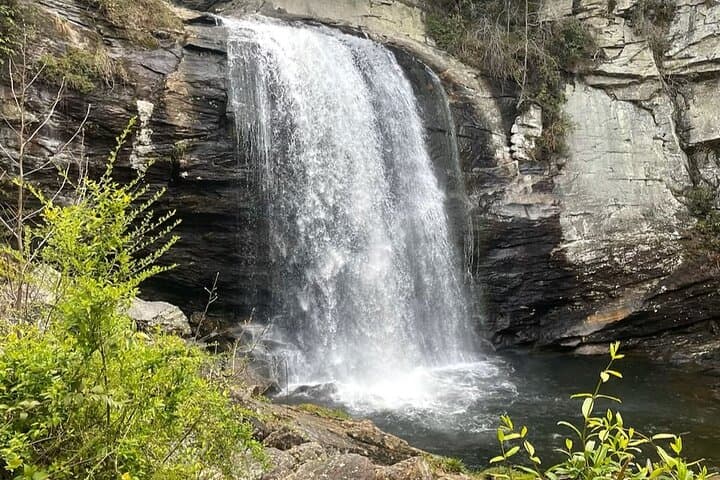
By the time the van peels away from downtown Asheville the city’s brick and brewpub chatter recedes and the road narrows into hardwoods. Light pockets through rhododendron and oak play across the windshield; every few minutes the guide points left and right at a pulled-aside vista where the parkway opens like a breath. This is not a wilderness expedition, but it’s an efficient, tuned-in way to touch the heart of the southern Appalachians: three waterfalls, two protected forests and a stretch of the iconic Blue Ridge Parkway—returned to Asheville by early afternoon, changed but not exhausted.
The rhythm of the day is deliberate. You’re driven—picked up within three miles of One North Pack Square or met downtown—so the drive becomes part of the experience: a narrated slide of geology and local lore. The hiking itself is modest: roughly three miles of walking over about two hours, with short climbs and a few staircases that push you up to lookout benches and the bases of falls. Trails underfoot switch from packed soil to rock steps and wooden boardwalks; expect intermittent roots and slick stone after rain. If you’re imagining a hard day in the high peaks, that’s not this tour. If you want close, immediate encounters with mountain water and old-growth forest in a half-day—this is it.
The waterfalls are the star, but their charm comes from being set in living Earth. The Blue Ridge is an ancient range, its roots dating back more than a billion years; the folded, resistant metamorphic rock here was worn into the rounded ridgelines that create dozens of short, steep drainage channels—perfect recipes for cataracts. Put another way: the parkway follows the spine of erosion, and the falls you visit are the place where geology meets gravity.
Culturally, this strip of the Parkway is stitched into Appalachian history—earth farms, moonshine lore and early logging, then the 20th-century conservation-era vision that built the Parkway to connect and protect these landscapes. Your guide will likely touch on those threads—how Civilian Conservation Corps crews carved overlooks and how local communities steward the forests now. There’s a living economy here too: small trail crews, artisanal farms and breweries in Asheville that depend on visitors finding their way back home, hungry and thirsty.
Practicalities matter on a half-day tour. The operator provides climate-controlled van transport and snacks; you should arrive hydrated and ready for short spurts of climbing. Wear trail shoes with grip—stone at the falls can be unexpectedly slick. Layer for the mountains: mornings can be cool on the Parkway even in summer. Expect some cell-service blackspots on the Parkway; bring a printed or offline map if you need to stay connected.
Why do this instead of a self-drive? For many travelers the value is local knowledge compressed into a morning: a driver/guide reads the weather and the crowds, times stops to avoid parking headaches, and brings interpretation that makes the views mean more. If you like geology, botany, or somebody who knows where the best mid-morning light hits the spray for photos, this is as efficient as it is enjoyable. Booked tours like this one also reduce the logistics of parking passes and route-finding; you get a curated sequence of waterfalls and overlooks rather than a scattershot afternoon of searching.
If you want to maximize the day: aim for mid-week or early season to avoid the high-traffic weekends and the late-October leaf-peeping crush. In fall the Parkway sings—if color is your priority, plan for the peak leaf-window and reserve early.
A few precise notes: the hiking portion is about three miles and roughly two hours total on foot; the full outing runs around 5–6 hours door to door, with return to Asheville by mid-afternoon. The trails include some short scrambles and staircases; estimated cumulative elevation gain is moderate, suitable for anyone comfortable with steady walking and short uphill stretches. The tour includes snacks, water and seat-back storytelling in the van. You can learn more or reserve a seat through the local experts here: <a href="https://app.advcollective.com/local-experts/blue-ridge-parkway-waterfalls-hiking-tour-from-asheville">Blue Ridge Parkway Waterfalls Hiking Tour from Asheville</a>.
A half-day of waterfalls leaves room for the rest of Asheville: plan a late lunch at a tapas bar, a brewery visit, or a visit to the River Arts District. Because the tour returns early, you can transform a morning hike into a full-day immersion—rule of thumb for longer stays: book the tour early in your trip to orient yourself to the region’s geology and communities.
Who is this for? Hikers who want a concentrated sample of southern Appalachia without committing to overnight logistics; families comfortable with a few uphill steps and a two-hour walk; photographers chasing water-and-forest frames who appreciate a local guide’s timing. It’s not a technical climb—no ropes or advanced navigation—but it delivers sensory, close-in mountain time that lingers.
The Blue Ridge Parkway is also a conservation corridor, and these tours help fund local stewardship and employment while channeling visitors onto established trails where impact can be managed. If you’re looking for a short, impactful mountain morning that balances ease with substance, this trip gives you three waterfalls, a scenic stretch of the Parkway and a local storyteller—exactly the kind of intro that makes you want to come back and stay longer. Reserve a seat or learn more with the local team here: <a href="https://app.advcollective.com/local-experts/blue-ridge-parkway-waterfalls-hiking-tour-from-asheville">Blue Ridge Parkway Waterfalls Hiking Tour from Asheville</a>.
Trail wisdom
Small choices, better day.
Sturdy Grip Shoes
Wear trail shoes with good tread—rocks near falls are often wet and slippery.
Layer for Mountain Mornings
Bring a light windbreaker; temperatures can be 10–15°F cooler on the Parkway than in downtown Asheville.
Timing for Photos
Ask your guide when to shop for light—late morning often softens glare on cascades.
Hydrate and Snack
Carry a filled 20–24 oz water bottle—snacks are provided, but personal hydration keeps energy steady.
Local knowledge
Read the place, not just the route.
Watch for native species including White-tailed deer, Pileated woodpecker.
Keep an eye out for wildlife during the transition between areas and habitats. Respect distance guidelines.
Much of the area sits within protected national forest and parkway lands—stay on marked trails, pack out trash and respect seasonal trail closures to protect sensitive habitats.
Follow the guide's instructions on size limits, ethical handling, and leave-no-trace practices.
Early-morning overlooks along the Parkway where fog clings to ridgetops. Small pullouts with historic CCC-era stonework and interpretive plaques
Locally recommended viewpoints and quiet spots known best to local operators.
The Blue Ridge Parkway was conceived during the 1930s and completed mid-century as a scenic, conservation-minded route connecting the Great Smoky Mountains and Shenandoah National Parks.
Maritime roots and regional tradition shape the waterways and working coasts.
Seasonal guide
Four versions of the same landscape.
Spring
Best forWildflowers · Runoff-fed waterfalls · Quieter trails
ChallengesMud and slick rocks · Unpredictable weather
Spring brings abundant waterfalls and blooming understory, but expect muddy trails and variable conditions—pack traction and rain layers.
Summer
Best forWarm weather · Full foliage · Family outings
ChallengesHot afternoons off the Parkway · Higher visitor numbers
Summer offers green, shaded walks but plan for warmer temps and occasional crowds—start early for cooler hiking.
Fall
Best forFall foliage · Photography · Crisp mornings
ChallengesPeak leaf-peeper crowds · Limited parking on busy weekends
Fall is peak season for color and atmosphere; reserve tours early and aim for weekday departures when possible.
Winter
Best forClear vistas · Quieter parkway · Crisp landscapes
ChallengesIcy spots and closed overlooks · Shorter daylight hours
Wintry days are quiet and scenic, but bring traction for icy sections and check the guide for any weather-related changes.
Operator details
What the booking data adds.
Included
- ✓Hotel pickup and drop-off within 3-miles of city center
- ✓Driver/guide
- ✓Drink and snack
Not included
- —Gratuities
- —A meeting place and time for pickup can be arranged if you are more than 3 miles from city center
Good to know
- ✓Not recommended for travelers with spinal injuries
- ✓Not recommended for travelers with poor cardiovascular health
- ✓Travelers should have at least a moderate level of physical fitness
- ✓Minimum of 2 people per booking required before tour will run, individual travelers welcome
- ✓Maximum of 8 people per tour
- ✓Not suitable for participants who have had a knee or hip replacement within the last year
- ✓Not recommended for participants with back problems, heart complaints, or other serious medical conditions
- ✓Hike is at a comfortable pace for approximately 3.0 miles about 1 1/2 miles per hour for hiking portion of the tour
- ✓Operates in most weather conditions; please dress appropriately
- ✓No pets permitted on this tour
- ✓Not recommended for children under 10 years of age
Pack with intention
What to bring.
Good to know
Common questions.
Expect about three miles of walking over roughly two hours, with breaks at each waterfall and overlooks.
Plan the edges
The details that make the day easier.
The Blue Ridge Parkway runs approximately 469 miles and is the longest linear park in the United States, connecting the Great Smoky Mountains and Shenandoah National Parks.
After the hike, head back to downtown Asheville for tapas at Cúrate or a pint at Wicked Weed Brewing; the River Arts District offers gallery studios and local crafts if you want to linger.
- Closest airport
- Asheville Regional Airport (AVL); Typical drive from downtown Asheville to Parkway stops: 30–60 minutes; Cell service: intermittent on the Parkway; Permits
- passes
- no special permits—small parking fees may apply at some state-managed waterfall sites
This corridor is part of protected national forest and parkway lands—practice Leave No Trace, stick to established trails, and avoid disturbing shoreline vegetation around falls.
Explore by topic
Follow the threads.
Keep exploring
Make the story part of the trip.
Set out from Bass Harbor for a private, customizable day on Blue Hill Bay — lighthouses, puffins, seals, and the chance to feel Acadia from the water. Small groups, local captains, unforgettable views.
In four hours you can move from shaded canyon ferns to wind-scoured coastal ridgelines, guided by someone who knows where the light—and the hidden views—live. This private half-day hike on the Monterey Peninsula or Big Sur is compact, curated, and perfect for travelers who want depth without a multiday commitment.
 Related story
Beneath a sky of shifting light, Skaftafell’s ice reads like a map of time. This three-hour guided glacier hike mixes technical instruction with geology and culture: compact, safe, and unforgettable.