
What the day feels like
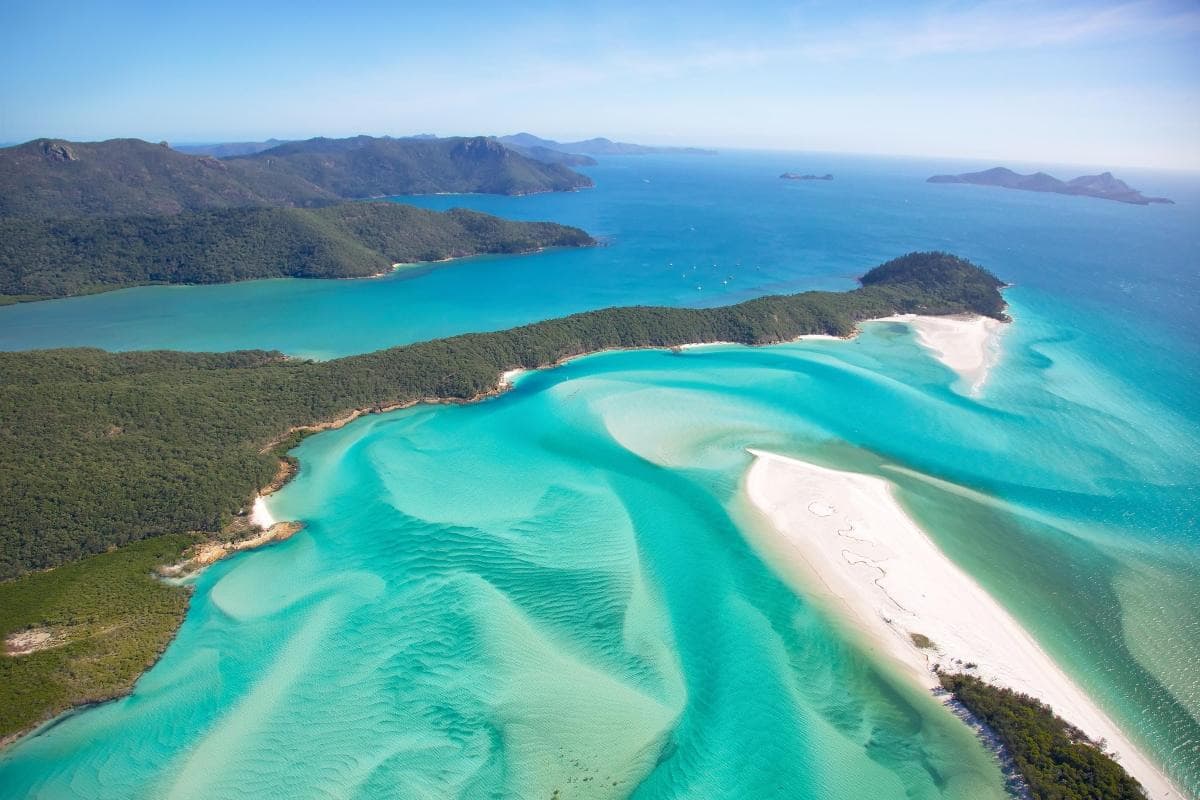
The moment the boat rounds the last headland and the bruise-blue water gives way to a pale opal shallows, Hill Inlet announces itself. From the deck you watch the coastline reshape itself — a braided pattern of white sand and turquoise water that seems to breathe with the tide. At the lookout, the view frames a natural masterpiece: Whitehaven Beach’s silica ribbons twisting into the inlet like paint stirred slowly into water. It is the kind of scene travel posters are made for, but up close the spectacle is kinetic. The sand doesn’t sit still; currents pull and fold it into ephemeral calligraphy that changes hour by hour.
Hill Inlet sits on the northern end of Whitsunday Island, a short walk from the Tongue Bay landing. The track is mercifully brief — most boats leave you at the beach and a tidy 5–10 minute climb leads to the vantage platform — but the payoff is immediate. From the lookout you read the coast like a layered map: the whiteness of the sand (not just pale but nearly surgical in its brightness), the shallow channels that slice through it, and the dark of the ocean beyond. Photographers and early-risers favor morning light when the low sun scours the textures and the tide is often mid-change, drawing the sand into its most dramatic forms.
Geology gives Hill Inlet its personality. Whitehaven’s sand is made up of up to 98% pure silica — a fineness that leaves surfaces cool underfoot and grains that refuse to hold heat the way darker sands do. This composition, combined with the inlet’s tidal funnel, causes the sand to be continually reworked. The result is not only stunning but scientifically interesting: you’re watching an active sedimentary system where wind and water conspire to create continually shifting patterns.
The cultural story here runs deeper than the scenic viewpoint. The Whitsunday Islands are part of the traditional sea-country of the Ngaro people, known as the 'canoe people', who navigated and sustained life among these reefs and islands for millennia. Much of today’s visitor infrastructure is conscious of that legacy; look for local storytelling offered on some tours and interpretive signage on routes into the national park.
How you visit changes the experience. Speed-boat operators like Ocean Rafting and Thundercat push the adrenaline pedal: they get you to Hill Inlet fast, with time for snorkeling on fringing reefs and a guided walk to the lookout. Tall ships and schooners — think Providence or Solway Lass — trade speed for atmosphere: the long sweep of a gaff-rigged mast, the low hum of canvas and the chance to learn a few knots while cruising slowly through the islands. Private charters on craft such as the Rayglass Protector or Axopar 37 let you design your day: linger longer at secluded bays, or time arrival at Hill Inlet for the light you prefer. For a literal change of perspective, scenic flights and helicopter tours thread the islands from above; Heart Reef and the inlet’s swirl are compelling in the round.
Practicalities matter here because the picture changes with tide, light and weather. Best viewing generally coincides with mid to low tide when the swirling silica contrasts strongest with shallow turquoise channels. Early mornings offer soft light and calmer seas; late afternoons bring long shadows and fewer crowds. In summer (December–March) stinger season means operators provide or require protective suits for ocean swimming; in winter you might be gifted with clearer skies and even migrating humpbacks sighted from a passing yacht.
What to expect on the path: the climb to the lookout is short but exposed — a steady incline of packed sand, wooden steps and coastal scrub. Bring sun protection and a bottle of water; the walk is simple but the heat can be deceptive. Boat transfers from Airlie Beach range from 40 minutes to two hours depending on vessel and itinerary — fast-rigid rafts cut travel time, while sailing vessels take the scenic route. Most full-day tours combine a Hill Inlet stop with extended time on Whitehaven Beach and a snorkeling visit to a reef in the Great Barrier Reef Marine Park.
Leave no trace is more than a slogan here: the island’s ecosystems are delicate, and your footprints matter. Stay on marked paths to preserve vegetation, use reef-friendly sunscreen if you plan to swim, and follow your guide’s instructions around wildlife. Operators licensed by the Great Barrier Reef Marine Park Authority have specific rules to protect coral and marine life.
When to go comes down to priorities. Want the most dramatic sand patterns and fewer people? Aim for shoulder seasons — late spring or early autumn — and book an early departure. Want calm seas and the best chance of clear water for snorkeling? Winter (June–August) typically delivers the calmest windows. If your trip hinges on whale sightings, plan for the southern migration months when humpback whales pass through these waters.
Hill Inlet is a brief encounter by design: the lookout is a deliberate pause in a day of island-hopping. But its impact is outsized. It’s where the geological, cultural and maritime narratives of the Whitsundays converge in a single, shifting tableau. Whether you arrive by high-speed raft, wind-filled schooner, or rotor-wing helicopter, the inlet asks for one small thing — attention. Stand on the platform, feel the breeze, watch the sand rewrite the shoreline, and you’ll know why people keep coming back to see it again.
Trail wisdom
Small choices, better day.
Time your visit with the tide
Mid to low tide emphasizes the sand-and-water contrasts that make Hill Inlet so photogenic; consult your operator for ideal timing.
Bring sun and sea protection
The lookout and Tongue Bay are exposed—wear a wide-brim hat, reef-safe sunscreen and bring a lightweight layer for wind off the water.
Choose your vessel to match your mood
Fast rafts maximize time on the beach and reefs; tall ships and private charters offer slower travel and a more relaxed atmosphere.
Respect reef and country
Stay on marked paths, use reef-friendly sunscreen, and follow guides to protect fragile habitats and cultural sites.
Local knowledge
Read the place, not just the route.
Watch for native species including green sea turtles, humpback whales (seasonal).
Keep an eye out for wildlife during the transition between areas and habitats. Respect distance guidelines.
The area is managed under national park and Great Barrier Reef Marine Park regulations; stick to marked paths, avoid disturbing wildlife, and use reef-safe products when swimming.
Follow the guide's instructions on size limits, ethical handling, and leave-no-trace practices.
Tongue Bay beaches at low tide for quiet beachcombing. Nearby Betty's Beach at Whitehaven for excellent snorkeling away from crowds
Locally recommended viewpoints and quiet spots known best to local operators.
The Whitsunday Islands are traditional sea-country of the Ngaro people, whose knowledge of tides and marine resources guided navigation and seasonal use for generations.
Maritime roots and regional tradition shape the waterways and working coasts.
Seasonal guide
Four versions of the same landscape.
Spring
Best forfewer crowds · warm water snorkeling · vivid tidal patterns
Challengesoccasional summer storms developing · variable charter schedules
Spring offers warm water and vibrant tidal displays with generally stable weather; book ahead for popular operators as capacity climbs.
Summer
Best forlong daylight hours · lively marine life · boat-based beach BBQs
Challengesstinger season (requires protective suits) · hot, humid conditions
Summer brings high energy — great for full-day beach time and snorkeling, but plan for stinger suits and midday heat.
Fall
Best forcalmer seas · shoulder-season rates · crisp morning light
Challengesremnant summer humidity early in the season · some operators shift schedules
Autumn balances pleasant weather with fewer crowds; it’s a smart choice for photographers and travelers seeking quieter trips.
Winter
Best forcalm seas and clear skies · whale-watching opportunities · peak snorkeling visibility
Challengescooler mornings · higher demand for tours
Winter is the most stable season for sea conditions and visibility, ideal for snorkeling and scenic flights — book early.
Pack with intention
What to bring.
Good to know
Common questions.
From the Tongue Bay landing it’s typically a 5–10 minute climb to the lookout; allow 20–30 minutes round-trip for photos and pauses.
Plan the edges
The details that make the day easier.
Whitehaven Beach sand is composed of up to 98% pure silica, which is why it feels so cool underfoot and remains bright white year-round.
Island barbecue lunches, tropical seafood caught locally, and Ngaro cultural stories often shared on longer charters — pair a day at Hill Inlet with a seaside dinner in Airlie Beach to complete the experience.
Choose licensed operators, use reef-safe sunscreen, stick to boardwalks and marked paths, and avoid collecting shells or sand — small actions keep the inlet vibrant for generations.
Explore by topic
Follow the threads.
Keep exploring
Make the story part of the trip.
Set out from Bass Harbor for a private, customizable day on Blue Hill Bay — lighthouses, puffins, seals, and the chance to feel Acadia from the water. Small groups, local captains, unforgettable views.
In four hours you can move from shaded canyon ferns to wind-scoured coastal ridgelines, guided by someone who knows where the light—and the hidden views—live. This private half-day hike on the Monterey Peninsula or Big Sur is compact, curated, and perfect for travelers who want depth without a multiday commitment.
 Related story
Beneath a sky of shifting light, Skaftafell’s ice reads like a map of time. This three-hour guided glacier hike mixes technical instruction with geology and culture: compact, safe, and unforgettable.