
What the day feels like
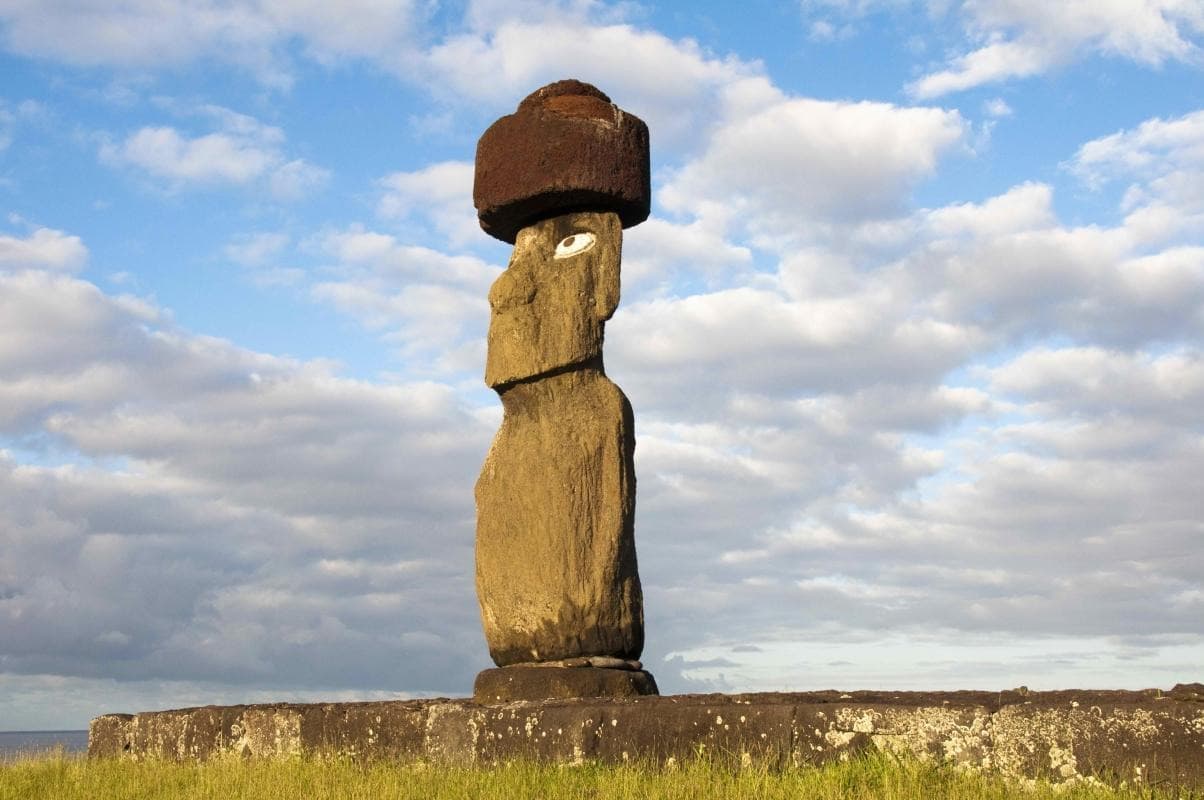
The air over Tahai has a way of arranging itself like a low, deliberate breath. Stand on the bluff as the Pacific pulls the light out of the sky and the three ceremonial ahu—Tahai, Vai Uri and Ko Te Riku—throw their long, emptied shadows across the lava flats. The moai here are not anonymous monuments; they’re sentries with faces weathered by wind and salt, their carved expressions arrested between vigilance and repose. At Ko Te Riku, the statue with restored white coral eyes appears to blink when the last of the sun slides behind distant clouds. The moment is immediate, cinematic, and oddly domestic: locals walking dogs, fishermen packing up for the night, and a scattering of visitors who’ve timed things right.
Tahai is the kind of place that rewards slow arrival. The geology is blunt and honest—basalt benches and pahoehoe lines give way to low grass and the occasional cactus. But beneath that hard volcanic surface is a softer story: a culture that wrestled rocks into faces and carried them to shorelines, a people whose history is both visible and absent on the very same horizon. That contrast is the pulse of any visit here. You can arrive on your own from Hanga Roa, or fold Tahai into one of the island’s many guided circuits—half-day tours such as "Half Day Tour to Ahu Tahai and Ahu Akivi" or themed experiences like "The Birdman Quest" position Tahai as the perfect sunset bookend to mornings spent at Rano Raraku or Orongo.
The archaeology at Tahai tells a layered tale. The moai of Tahai include both restored and unrestored statues; Ko Te Riku’s eyes were reinserted during mid-20th century restorations that sought to revive Rapa Nui’s monumental landscape. The island’s volcanic anatomy—chiefly tuff from Rano Raraku and the basalt flows that shape the coast—made the carving, moving and erecting of moai both possible and maddening. Scholars now suggest rapid, highly organized efforts of carving and transport rather than the slow collapse-and-rebuild scenarios popularized in older theories. Touring Tahai with an informed guide (many private tour options available) makes those dry facts live: the guide points to tool marks, explains quarry logistics and reads oral histories that still shape contemporary Rapa Nui identity.
Tahai also sits at the edge of community life. Hanga Roa, the island’s one town, is a five-minute drive away; fishermen often tie up their boats near the ahu, and families pass through the site on evening walks. Respecting that living context matters. The Rapa Nui National Park pass governs access to many archaeological sites; a portion of those fees supports conservation and local cultural programs. That’s one reason guided tours—both short and multi-day, private or small-group—are popular: they combine logistical simplicity (pickup, permits, timing) with cultural context, and they help manage the small but real impact of visitor traffic on fragile coastal soils and restored stonework.
For the practical traveler: timing is everything. Sunrise and sunset are the light you came for—Tahai’s western exposure makes it a sunset spectacle. If you have only a half-day, choose the "7 Guardians of the Pacific: Ahu Akivi Half-Day Tour" or the bundled Super Saver packages that include Tahai and other key sites. If you have 48 hours or more, book a 2-day highlights tour to string Tahai into a larger narrative that covers Rano Raraku’s quarry, Ahu Tongariki, Orongo’s birdman petroglyphs and Anakena’s white sand beach. Longer itineraries—like the 6-day archaeology and hiking adventure—go even further, letting you cross the island on foot to less-visited ahu and sea cliffs.
On the ground at Tahai, practicalities are straightforward but important. Wear sturdy shoes—the coastal lava is sharp and uneven. Bring sun protection year-round: the equatorial sun is unforgiving, and reflections off the rocks intensify exposure. Carry water; amenities are limited after dusk. Stay on marked paths and do not climb on the moai: erosion is cumulative, and even well-restored stones can crumble under tourist weight. Photo etiquette matters—use a zoom rather than pushing into sacred spaces, and ask before photographing locals engaged in cultural practice.
Tahai is not about adrenaline; it’s about attentiveness. The site asks you to listen—to the hollow whistle of wind through lava fissures, the distant slap of surf, and the patient stories the stones still seem to want to tell. Whether you arrive as part of a half-day excursion or as the closing chapter on a multi-day archaeological tour, Tahai rewards the curious traveler with clarity: a place where geology, ritual and contemporary life converge at the water’s edge.
Practical tips: aim for late afternoon to secure the best light; confirm inclusion of the Rapa Nui National Park pass with your tour operator; and leave time afterward to explore nearby Hanga Roa restaurants offering fresh fish and local cuisine—you’ll want to process the day with something warm and salty. Tahai is small in geography but large in consequence. It’s the kind of place that makes you slow down, refocus and remember why remote places leave such permanent impressions.
Trail wisdom
Small choices, better day.
Time the light
Arrive an hour before sunset for the best views and to avoid crowds; the last 20 minutes often produce the best colors.
Respect the ahu
Stay on designated paths, don’t climb the moai, and avoid touching restored surfaces to prevent erosion.
Bring hydration
Carry at least 1–2 liters of water—shade is limited and the wind can dehydrate you quickly.
Combine sites smartly
Fold Tahai into a half-day circuit with Ahu Akivi or a sunset stop on a full-day Grand Tour to maximize light and context.
Local knowledge
Read the place, not just the route.
Watch for native species including Sooty terns, Galápagos shearwaters (seasonal).
Keep an eye out for wildlife during the transition between areas and habitats. Respect distance guidelines.
Visitor fees to Rapa Nui National Park fund site preservation and community programs; staying on paths and following guide directions helps protect fragile stonework and coastal vegetation.
Follow the guide's instructions on size limits, ethical handling, and leave-no-trace practices.
Walk the low lava terraces west of Tahai for quiet coastal panoramas. Visit early morning to spot local fishermen and community life along the shoreline
Locally recommended viewpoints and quiet spots known best to local operators.
Tahai contains restored ahu and moai; several restorations in the mid-20th century, including projects associated with archaeologists and expeditions, revived these coastal ceremonial sites.
Maritime roots and regional tradition shape the waterways and working coasts.
Seasonal guide
Four versions of the same landscape.
Spring
Best formild weather · fewer crowds · wildflowers
Challengesunpredictable showers · strong winds some days
Southern spring (Sept–Nov) brings mild temps and fewer tourists—great light for photography and comfortable walks.
Summer
Best forlong days · festival season (Tapati in Feb) · boat access
Challengeshigher visitor numbers · hot sun
Summer (Dec–Mar) is warm and lively—book ahead during festival dates and bring sun protection.
Fall
Best forstable weather · good sea conditions · crisp sunsets
Challengesshortening daylight hours
Autumn (Mar–May) offers stable conditions and dramatic light as days shorten—ideal for late-afternoon visits.
Winter
Best forquiet visits · dramatic skies
Challengescooler evenings · higher chance of wind
Winter (Jun–Aug) is the quietest season; layers and windbreakers are essential for comfortable evenings.
Pack with intention
What to bring.
Good to know
Common questions.
Tahai sits near Hanga Roa and some areas require a Rapa Nui National Park pass—confirm with your guide or operator as passes are often included in organized tours.
Plan the edges
The details that make the day easier.
Tahai was among the first archaeological sites on Easter Island to be actively restored during mid-20th century projects that involved researchers such as William Mulloy and others, helping re-erect several moai.
Taste the island’s seafood—fresh ceviche and grilled fish are common in Hanga Roa; if visiting in February, the Tapati Rapa Nui festival showcases traditional dance, carving and competitions that amplify Rapa Nui cultural pride.
- Closest town
- Hanga Roa (5–10 min drive); access: short walk from coastal parking; permits: Rapa Nui National Park pass may be required; best time: sunset; nearby facilities: limited—plan accordingly.
Stay on marked paths, avoid touching stonework, and choose local guides—these practices reduce erosion, support community stewardship and ensure the moai remain for future generations.
Explore by topic
Follow the threads.
Keep exploring
Make the story part of the trip.
Set out from Bass Harbor for a private, customizable day on Blue Hill Bay — lighthouses, puffins, seals, and the chance to feel Acadia from the water. Small groups, local captains, unforgettable views.
In four hours you can move from shaded canyon ferns to wind-scoured coastal ridgelines, guided by someone who knows where the light—and the hidden views—live. This private half-day hike on the Monterey Peninsula or Big Sur is compact, curated, and perfect for travelers who want depth without a multiday commitment.
 Related story
Beneath a sky of shifting light, Skaftafell’s ice reads like a map of time. This three-hour guided glacier hike mixes technical instruction with geology and culture: compact, safe, and unforgettable.