
What the day feels like
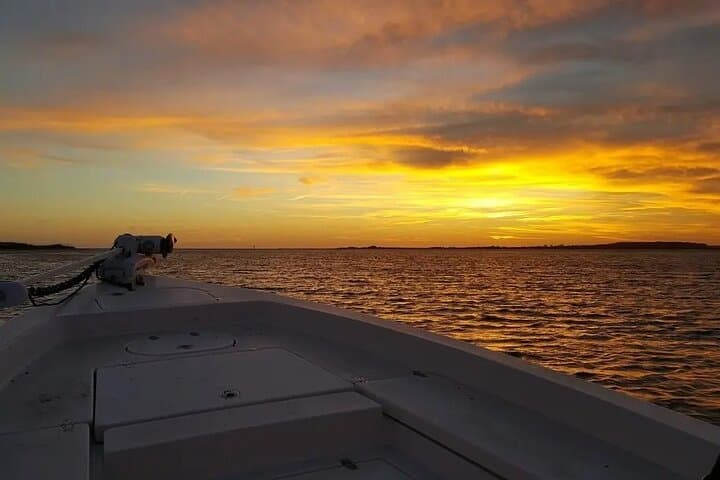
The first thing you notice is how the horizon insists on showing off. The sun tilts low over the Atlantic, laying a ribbon of molten gold across water that was minutes before only blue and wind. The Navigator slips its way out of the inlet—steady, deliberate—while the engine hums like a patient animal. Salt air tugs at your hair and the rod in your hands feels equal parts promise and responsibility. Around you, gulls patrol the light; below, shadowed fish scout the changing tide. This is a Myrtle Beach–area sunset made for rods and stories.
Calabash sits at the soft wedge where North Carolina and South Carolina trade weather and seafood lore. The town’s name is synonymous with the lightly breaded, fried seafood known nationally as “Calabash-style,” and the waters off its coast have fed communities here for generations. Geologically, you’re on a coastal shelf dotted with sandbars and channels that, at dusk, draw baitfish and predators into a nightly, sensational choreography. For anglers that means action: Black Sea Bass, Spanish Mackerel and King Mackerel that hunt fast; Cobia that cruise in the twilight; and encounters with shy bottom species that reveal themselves in tugged lines.
On a private four-hour charter aboard the Navigator, the evening compresses into an elegantly simple sequence—cast, wait, feel, reel. Crew members, seasoned in both seamanship and local patterns, read the water the way a chef reads a pantry. They’ll pick a strategy based on tide and wind—drift over a patch of reef, sit near a current seam, or troll slowly along a drop. The charter advertises accessibility: families and novices are welcome, but the trip delivers enough tactical nuance to keep experienced anglers on their toes.
The culture of Calabash and nearby Myrtle Beach pairs well with this kind of outing. You’re likely to return to shore smelling of salt and frying oil, ready for a plate piled with local catch or a stop at a small, friendly tavern where the beer is cold and the chef will cook the bounty you didn’t keep. The experience is as social as it is sporty—kids learn to bait hooks, hands are bandaged and rinsed with practiced efficiency, and someone always manages to tell the story of the fish that got away.
Practical realities matter here. A four-hour sunset charter is intensely weather-dependent: light winds and a clean sea make for comfortable casting and steady fishing, while a choppy chop turns patience into its own sport. Bring layers: evening temperatures can fall quickly near the water, and the wind off the shelf carries a chill even on summer nights. Footwear should be non-marking and grippy; the deck is efficient, not plush. Seasickness medicine is a smart addition for first-timers. On board, the crew will help with tackle and bait, but knowing a little about bottom rigs, trolling speed, and how to play a strong fish will deepen the day.
The best times to fish vary by species: Spanish Mackerel and King Mackerel spike in spring to early fall; cobia and larger migratory fish show up as seasons warm. Sunset is more than an aesthetic choice—it’s a shift in the feeding rhythm of many species. As daylight thins, fish move from scatter to focus. For photographers, this is prime golden-hour drama: low light, long shadows, reactive faces and water that changes color by the minute.
Conservation is quietly woven into the charter model here. Responsible captains enforce size and bag limits, educate guests about seasonal closures, and practice selective harvesting—keeping what’s legal and table-worthy, releasing the rest to fight another day. Handling practices matter: wet your hands, use barbless or circle hooks when appropriate, and avoid dragging fish across hot decks. The ocean will never forget how it was treated.
Who is this for? Families looking for a memorable, low-commitment maritime experience; intermediate anglers who want a guided push during prime light; and anyone who loves the tidy combination of a short, productive outing followed by dinner ashore. If you want a long offshore marathon, this is not that: it’s an evening of compact intensity—four hours of sunset, pursuit, and a calm ride home.
Book a private charter when you want control over pace and targets; new anglers will appreciate the hands-on coaching, while veterans can test tactics and local knowledge. Remember: the captain’s knowledge is your advantage. Ask which species they expect, what rig to use, and whether the boat will provide ice, cleaning, and filleting. If you plan to eat your catch ashore, call ahead to local restaurants about their policies for cooking fresh-caught fish.
At the end of the evening, when lines are stowed and the sky cools into violet, the Navigator eases back through the inlet as the first porch lights along the coast flicker on. You will have a handful of stories, a salt-line memory on your jacket, and maybe a fillet or two to test the town’s frying pans. It’s a tidy, elemental, and accessible way to measure time by sun and tide—an entirely human ritual refracted through a boat’s wake.
If you go: arrive early to watch the boat prep, bring layered clothing and motion-sickness remedies, and consider an afternoon nap—this is a short, intense night that rewards alert eyes and quick hands. Leave room for dessert: a local seafood dinner and a craft beer make the right punctuation to an evening where the Atlantic did most of the work and the sky supplied the show.
Trail wisdom
Small choices, better day.
Bring layers and a windbreaker
Even in summer, evenings off the shelf can be cool and breezy—pack a lightweight jacket to stay comfortable.
Manage seasickness early
Take preventative medication 30–60 minutes before departure if you’re prone to motion sickness.
Wear non-marking, grippy shoes
Decks can be wet; closed-toe shoes with traction keep you safe while reeling in fish.
Ask the crew about limits and handling
Confirm bag/size limits, cleaning, and whether the crew will fillet your catch for the trip home.
Local knowledge
Read the place, not just the route.
Watch for native species including Bottlenose dolphins, Gulls and terns.
Keep an eye out for wildlife during the transition between areas and habitats. Respect distance guidelines.
Charter operators here often follow state size and bag limits and encourage catch-and-release for undersized or non-target species; use of circle hooks and proper handling minimizes harm to released fish.
Follow the guide's instructions on size limits, ethical handling, and leave-no-trace practices.
Early-evening sandbar stops near the inlet where birds congregate and smaller fish feed. Short, sheltered estuary runs that light up with baitfish in low light
Locally recommended viewpoints and quiet spots known best to local operators.
Calabash is famous for the ‘Calabash-style’ seafood tradition—lightly battered and fried seafood that grew out of local coastal cooking and became a regional trademark.
Maritime roots and regional tradition shape the waterways and working coasts.
Seasonal guide
Four versions of the same landscape.
Spring
Best forSpanish Mackerel runs · Mild evenings · Learning basics
ChallengesUnstable spring fronts · Cooler nights · Mixed species behavior
Spring brings active migratory species and comfortable temperatures, but weather can swing quickly—check forecasts before heading out.
Summer
Best forExtended daylight · Warmer water species like cobia · Family-friendly outings
ChallengesHigher humidity · Potential for afternoon storms · Busy marinas
Summer offers reliable warm-water targets and long light—pick a calm evening and bring sun protection earlier in the day.
Fall
Best forPeak mackerel and cobia action · Clear water · Fewer crowds
ChallengesCooler nights later in season · Changing currents · Shortening daylight
Fall is often the most productive fishing season as species fatten and move—sunset trips are especially dramatic and productive.
Winter
Best forCalmer off-seasons for those who brave it · Off-peak pricing · Targeting hardier species
ChallengesColder temps · Rougher seas · Limited species variety
Winter trips are possible but require warmer gear and flexibility; expect fewer species and chiller evenings.
Operator details
What the booking data adds.
Included
- ✓All rods, reels, tackle, bait, and fishing licenses are included
Good to know
- ✓Wheelchair accessible
- ✓Infants and small children can ride in a pram or stroller
- ✓Public transportation options are available nearby
- ✓Travelers should have at least a moderate level of physical fitness
Pack with intention
What to bring.
Good to know
Common questions.
Requirements vary by state and species; many private charters include licensing or advise guests—confirm with the operator before booking.
Plan the edges
The details that make the day easier.
Calabash, NC is the namesake of ‘Calabash-style’ seafood—lightly breaded and fried seafood that originated in the town and popularized in restaurants across the Southeast.
After the trip, sample Calabash-style seafood at waterfront restaurants in Calabash or head into Myrtle Beach for craft breweries and seafood shacks where the day’s catch is often on the menu—ask for local preparations that showcase fresh fillets.
- Closest airport
- Myrtle Beach International Airport (MYR); Marina
- Pickup
- Calabash area marina (confirm exact pier with operator); Driving distance: ~20–30 minutes from central Myrtle Beach; Cell service: intermittent offshore—expect reduced coverage; Permits: check state fishing license requirements and any seasonal closures with the charter.
Follow local size/bag limits, consider catch-and-release for trophy or out-of-season fish, and dispose of line and bait responsibly to protect birds and marine life.
Explore by topic
Follow the threads.
Keep exploring
Make the story part of the trip.
Set out from Bass Harbor for a private, customizable day on Blue Hill Bay — lighthouses, puffins, seals, and the chance to feel Acadia from the water. Small groups, local captains, unforgettable views.
In four hours you can move from shaded canyon ferns to wind-scoured coastal ridgelines, guided by someone who knows where the light—and the hidden views—live. This private half-day hike on the Monterey Peninsula or Big Sur is compact, curated, and perfect for travelers who want depth without a multiday commitment.
 Related story
Beneath a sky of shifting light, Skaftafell’s ice reads like a map of time. This three-hour guided glacier hike mixes technical instruction with geology and culture: compact, safe, and unforgettable.