
What the day feels like
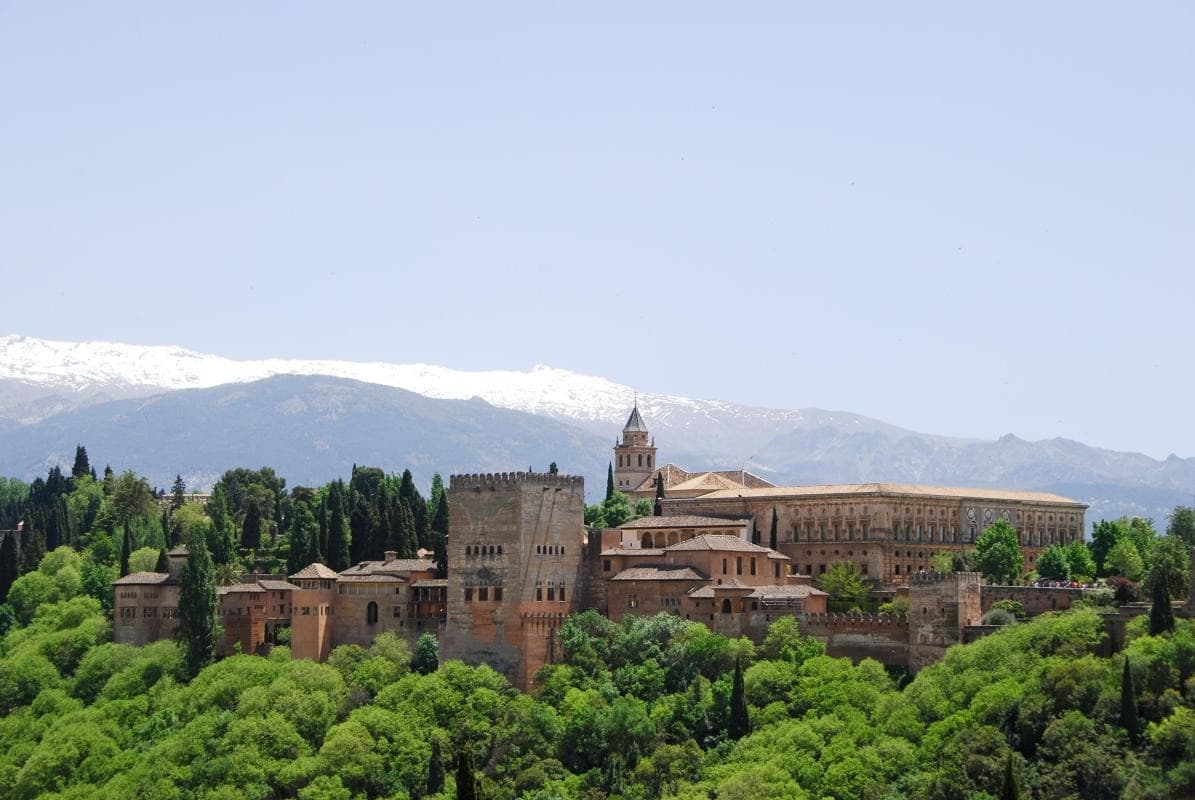
The first time you arrive at Mirador de San Nicolás, the city seems to exhale. Granada unfolds below: the terracotta tiles of the Albaicín huddle along narrow lanes, the Alhambra perches on its hill like an ancient watchman, and beyond it, the Sierra Nevada rises skeletal and blue. The mirador is a small plaza—stone benches, a scattering of potted geraniums, a handful of street musicians—that funnels people toward the view. It is not so much a place as a pause where the city insists you take a long look.
Walk up from Plaza Nueva and the ascent softens your senses. Cobbled streets tighten into alleyways, whitewashed walls lean in conspiratorially, and the scent of orange trees threads through doors left ajar. The climb is short—about 0.6 miles (1 km) with roughly 60–80 meters of elevation gain—but it feels like stepping back through layers of time. At the top, the plaza opens and the Alhambra answers in silhouette, its palaces and towers carved against the Sierra. On clear evenings, the whole scene erupts into color: the fortress catching late light while the mountains take on a pinkish breath.
There is a history here you can feel in the stones. The Albaicín was Granada’s medieval Moorish quarter, its labyrinthine streets laid out over centuries of Nasrid urban life. The Mirador de San Nicolás faces the Alhambra across the Darro Valley, creating the exact perspective that 19th‑century travelers and painters packaged for the world. The view you see today is part natural geography and part cultural choreography—a meeting of human architecture and mountain geology that has defined Granada’s image.
Geologically, the city sits where the Sierra Nevada’s foothills fall away to the Genil and Darro rivers, and the Alhambra itself leverages a defensible ridge. The mirador’s position—on the northern slope, across a narrow ravine—gives you the clearest staged view of the fortress and the sloping orchards below. Wind here has a voice; it moves through the olive trees and pushes light across the castle’s facades in a way that changes the mood by the minute.
Culture threads into any visit. The Albaicín and the Alhambra were inscribed together as a UNESCO World Heritage Site in 1984; the neighborhood still houses teterías (tea houses), family-run tapas bars, and cave flamenco venues in nearby Sacromonte. Street performers come to Mirador de San Nicolás for a reason: the plaza’s acoustics and the crowd’s attention make it one of Granada’s most democratic stages. Respect for local rhythms is part of the experience—people come here to watch the light change, and the plaza rewards patience.
Practicalities are simple but matter. Getting there from central Granada takes 10–20 minutes on foot. Expect cobbled, sometimes uneven surfaces; wear sturdy shoes. The plaza itself is free and open 24/7, though sunset is prime time and gets crowded—arrive 45–60 minutes before dusk if you want a good spot. For quieter photos, mornings are your best bet, when the light is soft and the tour groups are still sleeping off their day trips. If you’re combining this stop with other highlights, pair the mirador with a walking tour of the Albaicín and a booked visit to the Alhambra—both lie within easy reach by foot.
For hikers, the approach through Albaicín is short and charming rather than a wilderness trek: narrow lanes, scattered steps, occasional steep pitches. If you plan to explore beyond the mirador and into the upper Albaicín or the Sacromonte trails that climb toward the hills, expect steeper, rockier terrain and bring layers—the mountain wind can arrive suddenly. There are also guided options: evening flamenco-and-sunset tours, photography walks oriented around the mirador, and combined Alhambra/Albaicín excursions that give historical context to what you’re seeing.
Crowds and timing are the other practical edge. Sunset is spectacular but busy; street vendors and performers gather, and the plaza fills with people. If you’re going for a contemplative hour—or for photos without dozens of strangers in frame—plan an early-morning visit or a late evening after the day-trippers have gone. Carry water, wear sun protection in summer, and be mindful of pickpockets in crowded moments.
What you’ll remember is simple: the Alhambra holding court, Sierra Nevada’s ridgeline pressing the horizon, and the city below moving to its own pace. The mirador is not an isolated wilderness vista; it’s a civic balcony, where locals and travelers mingle, where light and stone conspire to make the past feel close. Go with a camera or no camera, come for the sunset or the soft morning light—either way, leave space for the view to work on you.
If you’re planning the trip, pair the visit with a meal in Albaicín’s quieter tapas bars, or cross the Darro to stroll the Carrera del Darro riverside path. Consider a guided walk that ties the mirador into Granada’s deeper story: the Nasrid palaces, the Moorish city planning, and the persistent culture of tea, song, and terrace life that lends the mirador its lasting charm.
Trail wisdom
Small choices, better day.
Arrive early for sunset
Plan to be at the mirador 45–60 minutes before sunset to secure a spot and watch the light build across the Alhambra.
Watch your step
The route is cobbled and uneven—sturdy shoes with grip reduce the chance of a twist or fall, especially after rain.
Carry water and a light layer
Even short climbs can be dehydrating; bring water and a windproof or light jacket for mountain breezes.
Respect local space
Keep noise to a minimum during quiet moments, support local vendors and performers, and avoid blocking views for others.
Local knowledge
Read the place, not just the route.
Watch for native species including house sparrows and urban songbirds, peregrine falcons and kestrels hunting the ravine.
Keep an eye out for wildlife during the transition between areas and habitats. Respect distance guidelines.
The Alhambra and Albaicín are UNESCO heritage sites; visitors should stick to paths, avoid trampling fragile terraces, and support local businesses to help sustain the neighborhood.
Follow the guide's instructions on size limits, ethical handling, and leave-no-trace practices.
Carmen de los Mártires (gardens) for quieter terraces and views. Carrera del Darro riverside walk beneath the Alhambra
Locally recommended viewpoints and quiet spots known best to local operators.
The Albaicín was Granada’s medieval Moorish quarter; its narrow lanes and mirador viewpoint were shaped by centuries of Nasrid-era urbanism.
Maritime roots and regional tradition shape the waterways and working coasts.
Seasonal guide
Four versions of the same landscape.
Spring
Best forwildflower blooms · milder temperatures · photography in soft light
Challengesoccasional rain · variable evening chill
Spring offers comfortable days and vivid colors, though bring a light layer for cool evenings and be ready for occasional showers.
Summer
Best forlong daylight hours · vibrant street life · evening flamenco shows
Challengescrowds at sunset · high daytime heat
Summer evenings are animated and warm; visit after sunset to avoid peak heat and the largest crowds.
Fall
Best forclear skies · crisp sunsets · fewer tourists
Challengesshortening daylight · cooler nights
Fall is ideal—clear views and pleasant temperatures—just plan around earlier sunsets as the season progresses.
Winter
Best forsnow-capped Sierra Nevada backdrop · quiet mornings · dramatic light
Challengescold winds · short daylight window
Winter offers striking mountain contrast and fewer visitors, but dress warmly—the wind off the Sierra can bite.
Pack with intention
What to bring.
Good to know
Common questions.
Yes—there is no entrance fee to the mirador plaza; it’s a public viewpoint open day and night.
Plan the edges
The details that make the day easier.
The Alhambra and the Albaicín were jointly inscribed as a UNESCO World Heritage Site in 1984, cementing the mirador’s view as one of Spain’s most recognized cultural landscapes.
Granada pairs its view-driven tourism with a street-level culture of teterías (Arab-style tea houses), tapas bars, and cave flamenco in Sacromonte—plan an evening in a cave tablao after your sunset visit.
- Nearest base
- Granada city center; Getting there: 10–20 min walk from Plaza Nueva via cobbled lanes; Cost: Free; Best time: Sunrise or 1 hour before sunset; Accessibility: Limited due to steps and uneven surfaces.
Respect the UNESCO-listed Albaicín by staying on marked paths, minimizing noise at the mirador, avoiding single-use plastics, and choosing local guides and businesses that reinvest in the neighborhood.
Explore by topic
Follow the threads.
Keep exploring
Make the story part of the trip.
Set out from Bass Harbor for a private, customizable day on Blue Hill Bay — lighthouses, puffins, seals, and the chance to feel Acadia from the water. Small groups, local captains, unforgettable views.
In four hours you can move from shaded canyon ferns to wind-scoured coastal ridgelines, guided by someone who knows where the light—and the hidden views—live. This private half-day hike on the Monterey Peninsula or Big Sur is compact, curated, and perfect for travelers who want depth without a multiday commitment.
 Related story
Beneath a sky of shifting light, Skaftafell’s ice reads like a map of time. This three-hour guided glacier hike mixes technical instruction with geology and culture: compact, safe, and unforgettable.