
What the day feels like
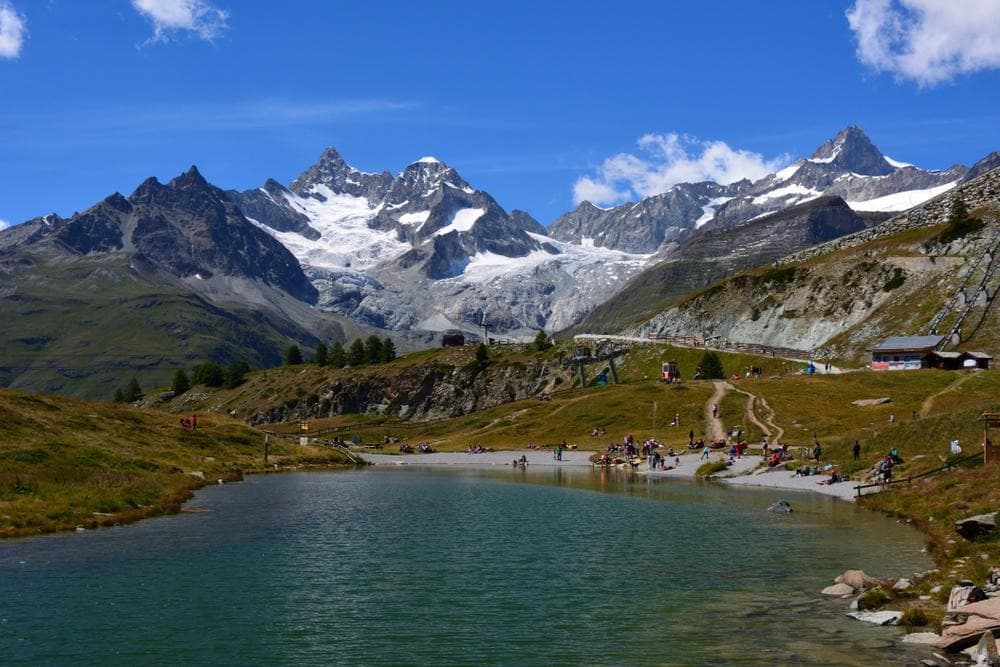
If the Matterhorn is Zermatt’s headline, Sunnegga is the paragraph break that makes the view readable. Step out of the funicular and the air changes—thinner, colder, but bright in a way that sharpens shapes. The ridge at Sunnegga sits like a natural terrace above town at roughly 2,288 meters, a place where larches lean into the view and high-alpine lakes mirror the Matterhorn’s stoic cone. Hikers angle past rock and heather, bikers choose a line on dusty singletrack, and in winter, people trade powder for a sauna and an ice bath that wakes every blood vessel. Nature here has a steady patience; it dares you to move through it and then rewards you with a clarity that makes decisions—go left or right, climb or rest—feel elegant.
Sunnegga’s appeal is straightforward: it’s reachable without a long uphill march, it opens quickly to classic high-Alpine scenery, and it plugs you into some of the best day itineraries in the Zermatt area. Geologically, you’re standing on ancient crystalline rocks scoured by successive glaciers. The bowls and ridgelines around Sunnegga were carved in ice, and the five lakes that dot the nearby valleys are glacial in origin—pearly basins that trap the sky and the Matterhorn’s reflection on calm afternoons. Culturally, this is Valais country—small mountain farms, alpine dairies, and chalets with weathered shutters. Mountain restaurants around the trail serve rösti and raclette that taste like altitude and slow summers.
The most immediate day outing out of Sunnegga is the famed Five Lake Trail, a flexible route that can be done as a full-day guided hike. The operator’s private full-day option allows up to six hours of exploration. Expect a loop of roughly 8–10 kilometers across rocky alpine path and sturdy switchbacks, with cumulative elevation changes in the several-hundred-meter range depending on your start and pauses. You’ll cross larch forests and scree slopes, and encounter lakes whose surfaces are small, still worlds—Stellisee, Grindjisee, and the rest—each offering a different perspective of the Matterhorn. The terrain ranges from easy walking to intermittently rocky sections that demand steady footing, and the best light for reflections is often late afternoon when wind dies down.
If you want speed and a different kind of craft, ride. The half-day private bike tour out of Zermatt uses lift access—start at Sunnegga without fighting the climb, then ride into a high glacier valley and loop around pristine alpine lakes before finishing on a fun flow trail into town. There are choices on technical difficulty: flow trails for a fun descent, or advanced singletrack if you want to push your skills. Rentals are usually arranged separately, so plan that before you meet your guide. The payoff is quick: dramatic panoramas, a heart-rate-raising descent, and the town piazza as a final, civilized finish line.
And when winter folds the valley in snow, Sunnegga becomes a different kind of sanctuary. The “ski in / ski out outdoor sauna ceremony” is less a sport and more a deliberate re-tuning. After a lap on the slopes, you move through steam and birch twig massage, then follow it with an ice bath or snow plunge—an Alpine ritual that leaves you alert and unusually present. It’s a blend of slow-living wellness and raw elements: hot, cold, mountain air.
Practical side: timing matters. For hiking and biking, the trail season typically runs from late June through September—higher snowpack years push that window later. Start early for quieter trails and to avoid afternoon weather changes; thunderstorms can develop rapidly in the Alps. Shoes should be ankle-supporting and grippy; the mix of rock, scree and muddy sections rewards traction. Bring layers—alpine sun in the morning can turn into brisk wind at sunset. Hydration is simple math: higher altitude, more water loss. Aim for at least 1.5–2 liters for a half-day, more for full-day outings. For biking, a basic level of technical skill is required for advanced tracks; the guided half-day option can be tailored to fitness and skill level.
Local logistics are friendly. Sunnegga is accessed by a short funicular from Zermatt village—no car required, and that sense of a car-free valley permeates the experience. Guides and local operators know the microclimates and will reroute if weather or visibility is poor. Mountain huts along the Five Lake route offer simple meals and shelter; plan to stop in one if you want a warm meal and a place to take off boots.
For the traveler who wants to leave this place with something that lasts beyond a photo, pick an itinerary that matches the pace you want. A full-day Five Lake hike gives contemplative time at each lake; a half-day bike tour gives adrenaline and a clockwise appreciation of the valley’s geometry; the sauna-and-ice-bath ceremony gives you a felt memory—muscles, breath, and the electric jolt of cold. All three turn Sunnegga’s viewpoint into a day of coherent choices.
Leave no trace: the high-alpine flora is slow-growing and fragile; stay on trail, pack out what you pack in, and consider a local guide to support the valley’s outdoor economy. Whether you’re watching the Matterhorn reflected in a lake, choosing a line on a narrow trail, or breathing out steam on a sauna bench, Sunnegga rewards attention. It’s a place that asks only for your presence and gives back a clear, high-alpine version of the world.
Trail wisdom
Small choices, better day.
Start early for reflections
Visit Stellisee or another lake in the morning or late afternoon for calm winds and the best Matterhorn reflections.
Layer for rapid change
Bring windproof and insulating layers—the temperature can drop quickly above 2,000 m even on sunny days.
Footwear matters
Use ankle-supporting hiking boots with grippy soles for the mixed rocky and scree sections on the Five Lake Trail.
Book lifts and rentals ahead
If you plan to bike from Sunnegga, reserve lift tickets and a rental bike in advance during high season.
Local knowledge
Read the place, not just the route.
Watch for native species including Alpine marmot, Chamois.
Keep an eye out for wildlife during the transition between areas and habitats. Respect distance guidelines.
Stick to marked trails to protect fragile alpine plants; support local guides and mountain restaurants who invest in sustainable trail maintenance.
Follow the guide's instructions on size limits, ethical handling, and leave-no-trace practices.
Quiet morning reflection at Grindjisee for Matterhorn reflections. The small dairy hut near Sunnegga for fresh alpine cheese and minimal crowds
Locally recommended viewpoints and quiet spots known best to local operators.
Sunnegga’s funicular connects the town of Zermatt to the high pasture area and has been a key access point for visitors exploring the Matterhorn region for decades.
Maritime roots and regional tradition shape the waterways and working coasts.
Seasonal guide
Four versions of the same landscape.
Spring
Best forearly-season wildflowers · quiet trails · transition skiing
Challengespatchy snow at higher elevations · variable trail conditions
Late spring brings melting snow and early alpine blooms—expect mixed footing and pockets of snow above tree line.
Summer
Best forFive Lake Trail hikes · lift-access mountain biking · clear Matterhorn views
Challengescrowds on weekends · afternoon thunderstorms
Summer is peak hiking and biking season—long daylight and clear views make it ideal, but start early to avoid afternoon storms.
Fall
Best forautumn larch color · crisper air for reflection photos · quieter trails
Challengesshortening daylight · first snows at higher elevation
Fall delivers golden larch and quieter trails; dress warmly and check lift schedules as the season winds down.
Winter
Best forskiing · sauna and ice-bath rituals · snowshoeing
Challengescold temperatures · possible avalanche closures
Sunnegga becomes a winter playground—groomed runs and wellness rituals thrive, but weather and avalanche conditions control access.
Pack with intention
What to bring.
Good to know
Common questions.
A guided private full-day itinerary allows up to six hours of exploration; independent hikers can plan 4–6 hours depending on pace and stops.
Plan the edges
The details that make the day easier.
Sunnegga sits at approximately 2,288 meters above sea level and is accessed from Zermatt via a short funicular ride, making high-alpine scenery accessible without a strenuous climb.
Valais specialties—raclette, hearty rösti, and mountain cheeses—are staples at huts around Sunnegga; pair a lakeside stop with a simple alpine meal and a local apricot schnapps for an authentic taste of the valley.
- Access
- Sunnegga funicular from Zermatt • Typical outings: half-day bike tour or full-day Five Lake hike • Peak season: July–August • Essentials: lift tickets, rentals booked, layered clothing, and water.
Limit group size, stay on marked trails, use a local guide to support the community, and avoid single-use plastics—alpine ecosystems recover slowly from disturbance.
Explore by topic
Follow the threads.
Keep exploring
Make the story part of the trip.
Set out from Bass Harbor for a private, customizable day on Blue Hill Bay — lighthouses, puffins, seals, and the chance to feel Acadia from the water. Small groups, local captains, unforgettable views.
In four hours you can move from shaded canyon ferns to wind-scoured coastal ridgelines, guided by someone who knows where the light—and the hidden views—live. This private half-day hike on the Monterey Peninsula or Big Sur is compact, curated, and perfect for travelers who want depth without a multiday commitment.
 Related story
Beneath a sky of shifting light, Skaftafell’s ice reads like a map of time. This three-hour guided glacier hike mixes technical instruction with geology and culture: compact, safe, and unforgettable.