
What the day feels like
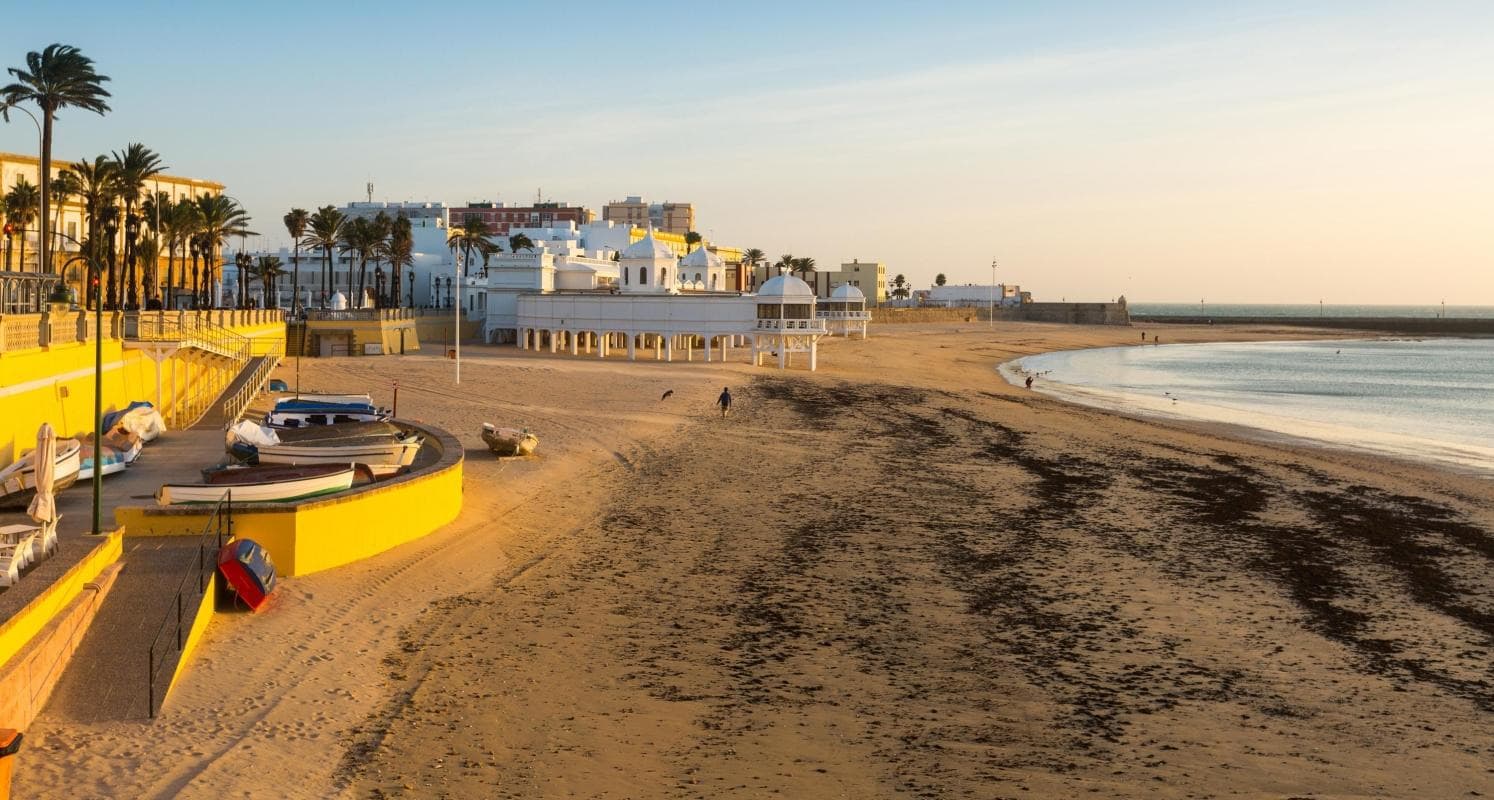
The day tilts golden over Cádiz and La Caleta tightens like a secret — a narrow crescent of sand cradled between two low, weathered bastions that have watched the Atlantic all the way from the age of sail. Walk up to the rail of the promenade and the city breathes salt and frying oil; walk down the worn steps and you’re suddenly intimate with the sea. La Caleta is small — a compact urban beach hemmed by Castillo de Santa Catalina and Castillo de San Sebastián — but it carries a weight of atmosphere most larger shores envy. Locals come for the light, for late-afternoon swims, and for the particular kind of calm that only a city shoreline can offer: the sound of gulls, the slap of small waves, and the murmur of people who have all come to the same simple conclusion — this is a good place to be.
Geologically, the beach tells a familiar Andalusian story. Cádiz sits on a thin spit of land projecting into the Atlantic; La Caleta occupies a sheltered notch carved by tides and time. The sand is fine and pale, the water shallow for the first stretch and then suddenly more honest as it slips into the bay. The wind here has a long memory — it presses currents toward the horizon and shapes the day’s rhythm. That rhythm is why early morning and the hour before sunset are the most delicious times to visit: the light softens the city’s ochres and the sea seems to lean in closer.
La Caleta is, of course, more than a place to swim. It’s a cultural hinge — a stretch of shore threaded into Cádiz’s history. Phoenicians, Romans and medieval merchants made routes nearby; in the 18th century, fortifications rose to guard a port that was Spain’s maritime eye to the Atlantic. Today the beach sits within a neighborhood alive with character: La Viña, famed for carnival and for small taverns where pescaíto frito (fried fish) arrives hot and unsentimental. The seawall is an open-air gallery where the city’s pulse slows for a few meters and you’ll overhear arguments about football and family plans, punctuated by someone asking whether to jump in now or wait for the sun to cool.
For travelers, La Caleta is a beautifully contained study in contrasts: a compact natural edge with civic energy. That’s what makes the curated activities here fit so well. A two-hour private bike tour along Cádiz’s peninsula is perfect for stretching the experience outward — the cadence of pedaling complements the shoreline’s slow tempo while a guide points out remnant Roman walls and the island-like Castillo de San Sebastián. If you prefer to stay grounded, the private walking tours thread the beach into the city’s historical tapestry, stopping at the Tavira Tower and Genovés Park before the final, restorative walk along La Caleta’s sand.
Then there’s the sea as vantage point: an aperitif by boat in the Bay of Cádiz flips the perspective, giving you the city’s low-slung silhouette from water level. One hour with cava, a small snack and a gentle hull roll shows Cádiz the way sailors have known it for centuries — an approachable port, a city that keeps its lights low but sings when you get close. These short, targeted experiences are practical for travelers on tight schedules (cruise passengers, for example) and also for anyone who wants a compact, well-rounded impression of Cádiz in a single afternoon.
Practicality, though, is part of La Caleta’s charm. This is not a long hike or a remote wilderness; it’s an urban beach with practical considerations: tides, occasional currents beyond the breakers and the fact that the beach fills quickly on sunny weekends. Footwear matters less than timing — get here early for clear sand and photographs without crowds; come late for the best light and to watch the city shift toward evening. Sunscreen and water are essentials and, if you’re taking a boat trip, leave space in your bag for a light wind layer — the Bay of Cádiz is an honest little ocean and it likes to remind you of it.
For photographers, La Caleta is forgiving: wide-angle shots capture the castles framing the beach, while telephoto lenses compress the promenade into a study of faces and lines. For families, the sheltered waters near the shore make good paddling for small kids, provided you stay within the break. For culture seekers, a walking tour that drops you in a tapas bar in La Viña delivers both context and taste.
If you go, do so with respect. This beach threads into a living neighborhood; enjoy the snacks, the bars and the conversation, and leave the place as you found it. Swim where lifeguards advise, mind local signage for tides, and consider booking one of the short guided experiences — a bike tour, a walking tour or a one-hour boat aperitif — to deepen your visit without lengthening your schedule. La Caleta doesn’t demand grand gestures. It asks only that you arrive with curiosity and a readiness to slow down. In return, it offers a compact, honest piece of Cádiz: layered, seaworn, and quietly difficult to leave.
Trail wisdom
Small choices, better day.
Time your visit
Arrive at sunrise for empty sand and soft light, or late afternoon for warm colors and local crowds; mid-day can be busy in summer.
Combine activities
Pair a 2-hour bike tour with a short walking tour to cover Cádiz’s seaside sights efficiently.
Watch the water
Swim inside the break and heed lifeguard flags; currents pick up beyond the shallow shelf.
Pack light for boat trips
Bring a light wind layer and secure sun protection—one-hour aperitifs are breezy and bright.
Local knowledge
Read the place, not just the route.
Watch for native species including common gulls, occasional dolphins seen offshore.
Keep an eye out for wildlife during the transition between areas and habitats. Respect distance guidelines.
Local efforts focus on preserving coastal habitats and maintaining clean beaches; visitors are asked to avoid littering and to respect protected marine areas in the Bay of Cádiz.
Follow the guide's instructions on size limits, ethical handling, and leave-no-trace practices.
Sunset viewpoint on the Castillo de Santa Catalina ramparts. The small seafood bars in La Viña that serve pescaíto frito
Locally recommended viewpoints and quiet spots known best to local operators.
La Caleta sits between two 18th-century coastal forts (Santa Catalina and San Sebastián) and the area has been a maritime gateway for Cádiz since Phoenician and Roman times.
Maritime roots and regional tradition shape the waterways and working coasts.
Seasonal guide
Four versions of the same landscape.
Spring
Best formild swimming · photography · bike touring
Challengesunpredictable showers · cooler water
Spring offers pleasant temperatures and fewer crowds, making it ideal for cycling the peninsula and shooting clear morning light.
Summer
Best forbeach swimming · late sunsets · boat aperitifs
Challengesheat and crowds · peak ferry and cruise activity
Warm water and long days make summer prime beach season, but expect fuller sand and busy promenades.
Fall
Best forcalmer seas · tapas and culture · walking tours
Challengesshortening days · sporadic storms
Autumn brings milder crowds and comfortable conditions for exploring Cádiz on foot or by bike.
Winter
Best forquiet reflection · city culture · photography
Challengescool water · windy days
Winter is quiet and atmospheric; not ideal for long swims but excellent for intimate city walks and storm-watching.
Pack with intention
What to bring.
Good to know
Common questions.
La Caleta is a compact urban beach — roughly a few hundred meters long — best enjoyed in short visits combined with nearby landmarks.
Plan the edges
The details that make the day easier.
La Caleta was used as a filming location for the James Bond movie Die Another Day (2002).
Tuck into a plate of pescaíto frito in La Viña after a swim, sip a vermouth at a nearby bar, and time a stroll for the evening paseo when locals slow down and the city hums softly.
Use public transport or bike to reach the beach, avoid single-use plastics, and choose local guides and eateries to support the community and reduce your footprint.
Explore by topic
Follow the threads.
Keep exploring
Make the story part of the trip.
Set out from Bass Harbor for a private, customizable day on Blue Hill Bay — lighthouses, puffins, seals, and the chance to feel Acadia from the water. Small groups, local captains, unforgettable views.
In four hours you can move from shaded canyon ferns to wind-scoured coastal ridgelines, guided by someone who knows where the light—and the hidden views—live. This private half-day hike on the Monterey Peninsula or Big Sur is compact, curated, and perfect for travelers who want depth without a multiday commitment.
 Related story
Beneath a sky of shifting light, Skaftafell’s ice reads like a map of time. This three-hour guided glacier hike mixes technical instruction with geology and culture: compact, safe, and unforgettable.