
What the day feels like
A gray November light lifts over Oslo and the park inhales. You step through an iron gate into Frogner Park and the city falls away: gravel alleys line up with rowed plane trees, lawns slope toward a placid pond, and around every bend a bronze or granite figure freezes a gesture—laughing, striding, clutching a child. The sculptures don't feel like ornaments; they feel like a neighborhood cast. Gustav Vigeland carved, cast, and placed more than 200 works here, and for a few quiet hours you move among their private conversations.
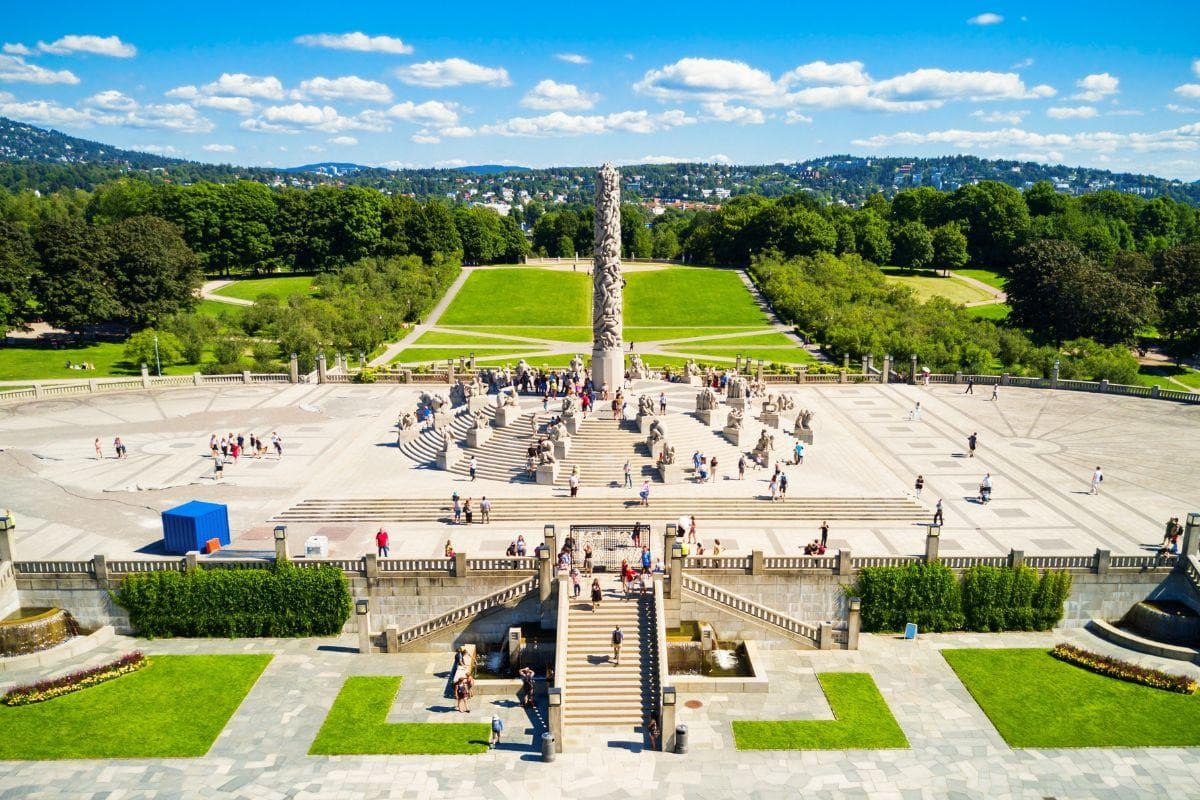
Frogner Park (Frognerparken) is not a museum with walls; it is a civic stage where Norwegians have picnicked, protested, and promenaded for more than a century. The park sits on the former estate of Frogner Manor; the city acquired the grounds in the early 1900s and commissioned Vigeland—Norway's best-known sculptor—to design a monumental public artscape. The result, Vigelandsparken, is singular: a unified sculptural program that charts human emotion in bronze, wrought iron and granite. Its centerpiece, the Monolith, is carved from a single granite block and rises like a compact cathedral of bodies, 121 figures stacked in a primal vertical spiral.
Geology and place deserve a line: the granite used for the Monolith and other works was quarried nearby and finished on site, a slow, physical labor that anchors the sculptures in the Oslo landscape. The park’s topography is gentle—a city green that was reshaped into terraces and axes to give the sculptures breathing room. You can feel how the designer thought in sequences: long lawn vistas lead to gates; paths funnel toward the bridge and fountain; the Monolith sits at the highest point like the final movement of a symphony.
Frogner is also civic theater. On summer evenings families spread blankets and the grass takes on the personality of a living room—inviting, slightly damp, utterly friendly. Tourists come with cameras, but local joggers respect the statues as if they were neighbors. The park is woven into Oslo's cultural calendar: Christmas light tours thread past evergreen boughs and holiday markets, while private guides and scavenger-hunt experiences turn a visit into a game of local lore and observation skills. If you want a tailored introduction, a private minivan tour or a local host will fast-track context, taking you from the Royal Palace gardens to the sculpture park before delivering you back to a neighborhood café to digest it all.
For travelers, Frogner Park is one of those rare urban outdoors experiences that blends art, leisure and easy logistics. Walking the main axis from the wrought-iron gate at the west entrance to the Monolith Plaza is a compact loop—plan 60–90 minutes if you want to linger at the Angry Boy (Sinnataggen) bronze or sit on a terrace to watch the world. If you add a picnic and a slow photography session at golden hour, it becomes a half-day. Accessibility is straightforward: the park is free and open year-round, and the Majorstuen transit hub sits nearby for buses, trams and the metro.
Practicalities matter. Wear solid shoes—paths are gravel and can get slick after rain or during an early-winter thaw. Pack a waterproof layer; Oslo's weather changes by the hour. If you plan to visit during high season (June–August), arrive early in the morning to avoid tour groups circling the Monolith and the most famous bronzes. In winter, the sculptures glisten with rime and the park feels private; just be ready for shorter daylight and icy steps near the hilltops.
There are several ways to experience Frogner Park beyond a standalone wander. Holiday walking tours fold the park into an atmospheric route of decorated streets, churches and Christmas markets; a themed scavenger hunt makes the visit competitive and engaging for families and small groups; private guides (on foot or by car) can combine Vigelandsparken with Holmenkollen, the Fram Museum, or a fjord viewpoint so you get a taste of Oslo’s contrasts in a single day. Each format suits different travelers: independent walkers savor the sculptures on their own cadence; families or teams prefer the puzzle element of a scavenger hunt; history buffs and those short on time will appreciate a private, contextual tour.
Prepare like a local. Hydrate—there are cafés surrounding the park, but a refillable bottle keeps you mobile. Bring a compact tripod or a wide-angle lens if you care about composition; the Monolith deserves a low, centered shot. And hold back from climbing or touching delicate pieces: Vigeland's works are public, but they are also fragile cultural property.
Frogner Park is not just Instagram scenery. It's a place to slow and observe the way ordinary life and grand ideas coexist: children chasing pigeons at the fountain, elderly couples taking the same bench year after year, students sketching in the shadow of granite muscles. If you want to leave Norway with something besides photos, go with a guide who can translate Vigeland’s body language into the social history of modern Oslo—how a nation shaped its public spaces to reflect openness, communal access, and a conversation between people and the landscape.
At its best, Frogner is equal parts art lesson, open-air theater, and green lung. The statues will not perform for you, but they will hold their gestures; the park will accept your footprint and your picnic wrapper, but it will ask that you treat its sculptures as neighbors—respectfully and with curiosity. Walk slow, look long, and let the place do the rest.
Trail wisdom
Small choices, better day.
Go early or late
Visit at sunrise or late afternoon to avoid tour groups and get softer light for photos.
Respect the sculptures
Do not climb on the Monolith or pat fragile bronzes; the park is free but cultural property is protected.
Dress for changeable weather
Carry a light waterproof layer and wear shoes with traction—paths are gravel and can be slick.
Combine with nearby sites
Pair your visit with the Royal Palace gardens or a private city tour to maximize your time in Oslo.
Local knowledge
Read the place, not just the route.
Watch for native species including Mallard ducks at the park ponds, Urban red fox occasionally seen at dusk.
Keep an eye out for wildlife during the transition between areas and habitats. Respect distance guidelines.
The Vigeland Museum and the city maintain the sculptures; visitors are asked to keep to paths, avoid climbing, and carry out litter to protect the installations.
Follow the guide's instructions on size limits, ethical handling, and leave-no-trace practices.
The small rose garden east of the fountain—less visited and fragrant in summer. Pathways north of the Monolith where locals feed ducks at a quiet pond
Locally recommended viewpoints and quiet spots known best to local operators.
Frogner Park was part of the Frogner Manor estate before Oslo purchased the grounds in the early 20th century and commissioned Gustav Vigeland to create the permanent sculpture installation.
Maritime roots and regional tradition shape the waterways and working coasts.
Seasonal guide
Four versions of the same landscape.
Spring
Best forblooming plane trees · quiet walks · family picnics
Challengesmuddy paths after thaw · cool mornings
Spring brings crocuses and a quick green-up; days lengthen but mornings can still be chilly—layer up and expect soft mud.
Summer
Best forlong daylight visits · picnics and concerts · family outings
Challengescrowds · limited shade during heat spells
Summer is peak time—ideal for lingering and people-watching, but early starts help avoid tour-group clusters.
Fall
Best forautumn color · dramatic light · solitary walks
Challengeswindy days · shortening daylight
Fall paints the plane trees amber and makes for dramatic photos; bring a warm jacket for cool afternoons.
Winter
Best forsnow-draped sculptures · quiet solitude · unique photo opportunities
Challengesicy steps · short days
Winter’s cold hush transforms the park into a minimalist landscape; traction soles and layered warm clothing are essential.
Pack with intention
What to bring.
Good to know
Common questions.
No—Frogner Park and the Vigeland sculpture installation are free to visit year-round.
Plan the edges
The details that make the day easier.
Vigelandsparken contains over 200 sculptures by Gustav Vigeland and the park’s Monolith is carved from a single granite block featuring 121 human figures.
Frogner district has a relaxed café culture—try a brunost-topped waffle or a simple pølse from a nearby vendor, then stroll down Bygdøy allé for galleries and bakeries.
Stay on established paths, dispose of waste in city bins, avoid touching or climbing sculptures, and choose public transit to reduce local carbon impact.
Explore by topic
Follow the threads.
Keep exploring
Make the story part of the trip.
Set out from Bass Harbor for a private, customizable day on Blue Hill Bay — lighthouses, puffins, seals, and the chance to feel Acadia from the water. Small groups, local captains, unforgettable views.
In four hours you can move from shaded canyon ferns to wind-scoured coastal ridgelines, guided by someone who knows where the light—and the hidden views—live. This private half-day hike on the Monterey Peninsula or Big Sur is compact, curated, and perfect for travelers who want depth without a multiday commitment.
 Related story
Beneath a sky of shifting light, Skaftafell’s ice reads like a map of time. This three-hour guided glacier hike mixes technical instruction with geology and culture: compact, safe, and unforgettable.