
What the day feels like
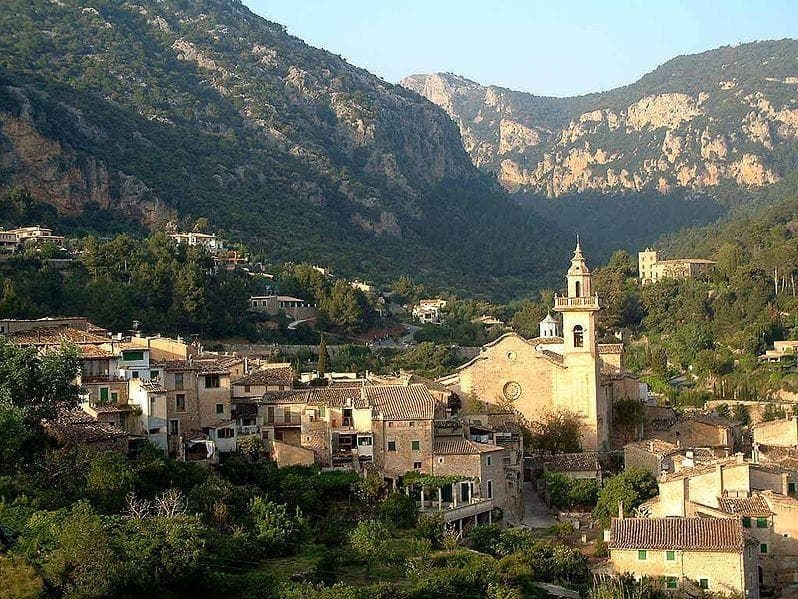
The morning light in Valldemossa arrives like a patient guest — slow, steady, and a little reverent. You step out onto a narrow cobbled lane and the village responds: limestone walls exhale the warmth of yesterday’s sun, shutters open like small faces waking. Bougainvillea spills over low balconies, and somewhere high in the Tramuntana the wind trims the pine needles into neat, audible paper. Valldemossa feels made for walking, for the kind of small discoveries that make a day feel like a story.
Perched on the western spine of Mallorca, Valldemossa is a stitched-together village of stone houses, quiet courtyards and steep streets that hinge into views — of terraced fields, of the blue that becomes sea. Its most famous doorway is the Royal Charterhouse (Cartoixa de Valldemossa), whose cells once held Carthusian monks and later, for a winter in 1838–39, the pianist Frédéric Chopin and writer George Sand. That fleeting residency is easy to romanticize, but it also left a concrete cultural trail: Chopin’s piano room, the narrow corridor where he walked away the cold, the same air that still seems to pause in the monastery’s cloisters.
The landscape around Valldemossa is as important as its history. The Serra de Tramuntana, a UNESCO World Heritage cultural landscape, is an ancient, terraced skeleton of mountains and dry-stone walls. Geologically, it’s limestone folded into ridges and cliffs that funnel Mediterranean weather and light into sharp contrasts: sun on stone, shade on moss, wind that thinks it owns the place. Trails range from gentle village loops to the long-distance GR 221 — the Dry Stone Route — which threads mule tracks, olive groves and shepherd paths across the spine of the island. For travelers, Valldemossa is both a basecamp and a destination: short walks that reveal everyday life, and longer hikes that reward with sea views and lonely stone refuges.
Culture here is tactile. Bakery ovens warm tiny squares of plaza; the ensaimada, a spiraled pastry, still smells like childhood. There are modern ceramic workshops and a handful of family-run cafés where Catalan and Spanish mix with English from visitors. Tourism is constant but careful — islands are good at sheltering their quieter rhythms from the busy world.
If you prefer a structured way in, local experiences connect the leisurely with the practical. The full-day "Valldemosa and Valley of Soller Tour in Mallorca" stitches Valldemossa with Soller and Puerto de Soller, including the iconic tram ride between Soller and its port — a short, scenic run that brightens the valley with citrus trees and modernista facades. For deeper immersion, consider the "3- Days Weekend Tour in Valldemossa with Pick up," which bundles transport, two nights in a curated local hotel, and skip-the-line tickets to the Cartoixa so you can spend your time listening instead of waiting. If you want a flexible private pace, the "Visit two of the most beautiful villages of Mallorca on a private tour" puts a guide at your side to translate history into lived detail while you sample coffee, local pastries, and the small courtyards not listed on every map.
Practicalities are straightforward but matter. Walks in and around Valldemossa are often steeper than they look: expect short, punchy climbs of 200–500 meters on many classic routes, and midday sun that will make a short outing feel long. Footwear with good grip and ankle support is worth the extra weight. Water is not everywhere; a 1–2 liter bottle per person for a half-day walk is a sensible baseline. The small shops and cafés often accept cards, but carry some cash for roadside bakeries and small artisan stalls.
Timing is everything. Spring and fall bring the island’s best temperatures and the wild olive and rosemary scents that make walking so addictive. Mornings are for hikes and village wandering; save late afternoons for slow coffee, pastry and the sort of aimless, contented observation that turns into a travel memory. If you visit the Cartoixa, book entrance times in advance — the rooms are small and popular, and a timed ticket will save a lot of waiting.
For a day itinerary: start early with a short loop from the village to Miramar Monastery for a coastal glimpse, return for a café and a Cartoixa visit (reserve ahead), then catch the midafternoon shuttle or private transfer down to Soller for the tram to Puerto de Soller. If you’ve got a weekend, use a local guide to unlock lesser-known paths and reserves — the organized "3- Days Weekend Tour in Valldemossa" mentioned above does all the logistics for you and leaves time for listening, eating and late walks.
The natural world here has personality: griffon vultures wheel like passive overlords in the blue; small lizards dart along hot stone as if performing their own tiny choreographies. Respect that agency — avoid disturbing nests and stick to established trails. Low-impact travel is part of the region’s future; the Tramuntana preserves its fragile terraces through quiet attention as much as regulation.
Why go? Because Valldemossa is a slow-motion study of how place can shape people and art. The stone has stories, the air has melody, and the walks take you through both. It’s an island visit that rewards curiosity: the pastry you try, the path you take up out of the village, the small museum corner where Chopin’s silence still feels audible. Travel here is not about ticking boxes; it’s about finding a few corners to hold, then packing away the memory like a pressed leaf.
If you’re planning, start with logistics: book a Cartoixa ticket in advance, choose a morning hike and an afternoon village visit, and pick a local tour if you’d rather someone else carry the map. With that, you’ll find Valldemossa becomes less a place you visit and more a day you live in — stone, sea, and small human music all braided into one.
Trail wisdom
Small choices, better day.
Book the Cartoixa in advance
Entrance to the Royal Charterhouse is timed and popular; reserve tickets or a tour slot to avoid long waits.
Layer for coastal wind
Mornings can be calm but Tramuntana winds pick up; bring a light windproof layer even in summer.
Bring at least 1–2L of water
Shops are limited on some trails and shade is sparse on exposed ridges — hydrate before you head out.
Wear good-grip shoes
Cobblestones and steep village lanes are slippery after rain; supportive shoes reduce ankle strain.
Local knowledge
Read the place, not just the route.
Watch for native species including griffon vulture, Balearic lizard.
Keep an eye out for wildlife during the transition between areas and habitats. Respect distance guidelines.
The Serra de Tramuntana is a UNESCO-listed cultural landscape; stay on marked trails, avoid disturbing terraces, and support local guides to minimize impact.
Follow the guide's instructions on size limits, ethical handling, and leave-no-trace practices.
Miramar Monastery overlook with coastal views. Small family bakery in the upper village known for traditional ensaimadas
Locally recommended viewpoints and quiet spots known best to local operators.
Valldemossa’s Royal Charterhouse is a former Carthusian monastery later inhabited by figures like Frédéric Chopin in the winter of 1838–39, a stay that shaped the village’s cultural identity.
Maritime roots and regional tradition shape the waterways and working coasts.
Seasonal guide
Four versions of the same landscape.
Spring
Best forwildflower-scented hikes · mild temperatures · fewer crowds
Challengesoccasional rain · muddy trails
Spring offers the warmest walking weather and blooming terraces — ideal for day hikes and village wandering.
Summer
Best forlong daylight for late walks · sea views from trails · tram to Puerto de Soller
Challengeshigh heat midday · busy tourist spots
Summer is busy and hot at midday; plan hikes for early morning or late afternoon and expect packed cafés.
Fall
Best forcool hiking conditions · citrus harvest glimpses · off-peak travel
Challengesshorter daylight · some services beginning to close late season
Fall is arguably the best balance of weather and calm, with pleasant temperatures and quieter paths.
Winter
Best forquieter village experience · off-season hotel rates · cozy cafes
Challengescool, windy weather · reduced ferry and trail services
Winters are mild but windy; cultural sites remain the main draw, and you’ll find fewer tourists and lower prices.
Pack with intention
What to bring.
Good to know
Common questions.
Valldemossa is about a 25–40 minute drive from Palma de Mallorca (PMI). Buses and rental cars are common; private transfers are convenient if you’re carrying luggage.
Plan the edges
The details that make the day easier.
Frédéric Chopin and George Sand spent the winter of 1838–39 in the Royal Charterhouse of Valldemossa; the composer’s stay is a key reason the village remains a cultural pilgrimage site.
Taste island life in breakfast pastries and local coffee, try ensaimada and sobrassada, buy olive oil from a family mill, and listen for Catalan conversations blending with touristic English.
- Nearest airport
- Palma de Mallorca (PMI) — 25–40 min by car; currency: Euro; language: Catalan
Support local guides and businesses, avoid single-use plastics, stick to marked trails to protect terraces, and choose off-peak travel to spread visitor impact across the year.
Explore by topic
Follow the threads.
Keep exploring
Make the story part of the trip.
Set out from Bass Harbor for a private, customizable day on Blue Hill Bay — lighthouses, puffins, seals, and the chance to feel Acadia from the water. Small groups, local captains, unforgettable views.
In four hours you can move from shaded canyon ferns to wind-scoured coastal ridgelines, guided by someone who knows where the light—and the hidden views—live. This private half-day hike on the Monterey Peninsula or Big Sur is compact, curated, and perfect for travelers who want depth without a multiday commitment.
 Related story
Beneath a sky of shifting light, Skaftafell’s ice reads like a map of time. This three-hour guided glacier hike mixes technical instruction with geology and culture: compact, safe, and unforgettable.