
What the day feels like
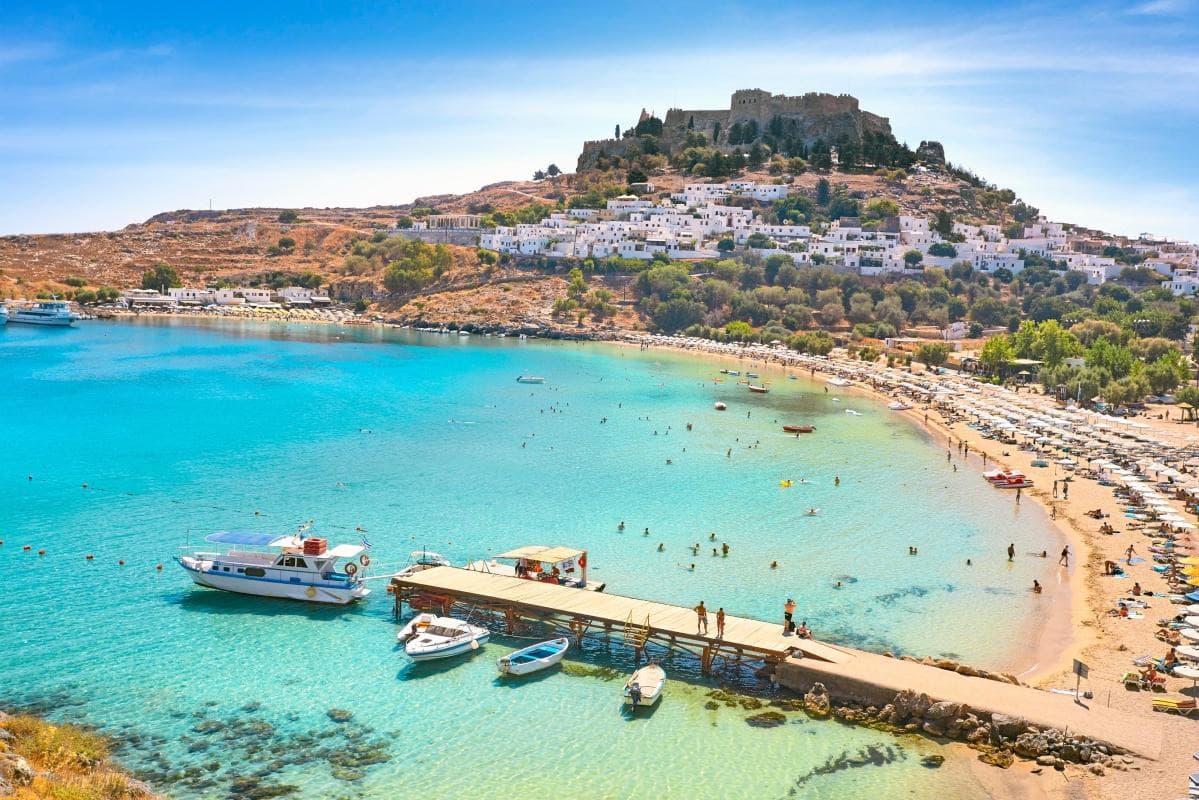
You come around the last low headland and the island seems to exhale. A bowl of water, the color of a stolen jewel, waits below: a small crescent of sand rimmed by sun-smoothed rock and a handful of whitewashed houses clinging to the slope. That’s St. Paul’s Bay—Agios Pavlos in Greek—one of Rhodes’s most photogenic coves, where the Aegean slows down long enough to let you in.
It reads like a place designed for pause. Boats from Lindos and the larger harbors don’t crowd the inlet; instead, visitors float in on an easy current, drop anchor in clear water, and drift. The bay’s shallow entrance and sheltered orientation make it a reliable spot for a calm swim or an uncomplicated snorkel. When the light slants in late afternoon, the limestone cliffs light up in soft honey tones and the ruined columns of Lindos’s Acropolis sharpen on the horizon—an amphitheater of sea and history.
History and geology are compressed here. The bay sits along Rhodes’s eastern limestone escarpment; over millennia the rock has fractured into shelves and terraces, producing the little beaches and natural steps that lead down to the water. The long human story—Phoenicians, Greeks, Romans, Knights of St. John—unfurls across the island, and local lore adds a tidy label: St. Paul’s Bay is said to be where the apostle landed during his voyage to Rome. Whether or not that exact story is true, the name has stuck, and the tiny chapel above the cove is a quiet reminder of the island’s layered past.
Culture here is small-scale and unpretentious. Nearby Lindos, 3–5 kilometers along the coast, is the social center: whitewashed streets, family-run tavernas, and potters who keep traditional Rhodian ceramics alive. Many shore excursions and private tours—operators like RHODES SHORE EXCURSIONS and RHODES PRIVATE TOURS—include St. Paul’s Bay as a scenic stop between the Acropolis of Lindos and other east-coast highlights. For cruise passengers with only a few hours ashore, it’s the perfect counterpoint to the busier sites: restorative, photogenic, and easy to fold into a half-day itinerary.
Why go? St. Paul’s Bay is for people who want the Mediterranean without pretense. The swimming is straightforward—clear water, gentle entry points, and friendly waves—and the swimming rewards are tangible: schools of small fish, fingers of posidonia (seagrass) that green the shallows, and rock outcrops that make for private snorkeling coves. The cove is also a quiet place to sit and read, spread a towel, or enjoy a simple seaside lunch. For photographers and paddlers, the bay’s compact scale is an advantage: you can capture intimate shoreline shots and easily scope out a short SUP or kayak route in calm conditions.
Practicalities are refreshingly simple. St. Paul’s Bay is accessible by road from Lindos—expect a 10–15 minute drive—or as a stop on private shore excursions that pair it with Lindos village and the island’s pottery demonstrations. There are limited facilities at the bay itself; shade comes from umbrellas or fig trees rather than beachfront hotels. Bring what you need and be prepared to carry it down a short slope and steps. If you’re arriving by organized tour (common for cruise passengers), your driver will often time the stop to maximize light and avoid the mid-afternoon crowds.
Timing matters. Visit early in the day for flat water and fewer sunbathers, or aim for late afternoon when the angle of light makes the cliffs glow and Lindos’s Acropolis become a backlit silhouette. Avoid the hottest mid-July afternoons if you plan to hike or climb around the rocks; midsummer temperatures can make even short walks uncomfortable.
Safety and etiquette are straightforward. The bay’s shallow areas conceal rocks—water shoes help—and currents can pick up outside the cove. Respect private moorings and local swimmers; if you snorkel, keep a polite distance from sea grass beds and avoid touching marine life. Locals appreciate low-impact visitors who pick up their litter and stick to marked paths.
How to make it a day: Combine St. Paul’s Bay with a half-day private tour that includes Lindos and the Acropolis, or pick a full-day “Best of Rhodes” itinerary to balance archaeological sites, coastal views, and a relaxed bay stop. Many operators offer flexible timing—ask for an early or late visit to avoid peak heat and get the best photos.
Whether you’re a traveler who times every swim for golden hour or someone seeking a single perfect plunge into Aegean clarity, St. Paul’s Bay has a clear, honest appeal. It’s small, manageable, and slightly secret: the kind of place that rewards curiosity and a ready pair of sandals.
Trail wisdom
Small choices, better day.
Arrive early or late
The cove is smallest mid-day; visit at sunrise or late afternoon for flat water and better light.
Wear water shoes
The shoreline has pebbles and submerged rocks—water shoes protect feet and make shorter swims more comfortable.
Carry cash for tavernas
Nearby eateries in Lindos may be cash-preferred during busy hours—keep small notes for quick purchases.
Respect the seagrass
Avoid stepping on posidonia beds while snorkeling—these are vital habitats and fragile.
Local knowledge
Read the place, not just the route.
Watch for native species including Mediterranean wrasse (small coastal fish), occasionally loggerhead sea turtles (Caretta caretta) in offshore waters.
Keep an eye out for wildlife during the transition between areas and habitats. Respect distance guidelines.
Rhodes protects coastal seagrass and marine life through local regulations; visitors are encouraged to use reef-safe sunscreen and avoid disturbing underwater habitats.
Follow the guide's instructions on size limits, ethical handling, and leave-no-trace practices.
Walk the coastal path toward Lindos for uncrowded lookouts. Small family-run tavernas on the road above the bay for authentic meze
Locally recommended viewpoints and quiet spots known best to local operators.
The bay’s name commemorates the apostle Paul—local tradition holds he sheltered here during his voyage; nearby Lindos has been occupied since antiquity and features a Doric acropolis.
Maritime roots and regional tradition shape the waterways and working coasts.
Seasonal guide
Four versions of the same landscape.
Spring
Best forwildflower walks · calm swims · photography
Challengescooler sea temperatures · variable winds
Spring offers comfortable hiking temperatures, quieter beaches, and early wildflowers—water is refreshingly cool for brief swims.
Summer
Best forswimming · sunbathing · boat excursions
Challengescrowds in July–August · hot midday sun
Summer is peak beach season with reliably warm water; go early or late to avoid heat and tour buses.
Fall
Best forsnorkeling · hiking · tamer crowds
Challengesshorter daylight · sporadic storms
Autumn yields warm sea temperatures and thinning crowds—ideal for longer swims and calm sea days.
Winter
Best forlandscape photography · quiet exploration · local culture
Challengeschilly sea · limited services
Winter is quiet and dramatic; expect cooler weather and fewer open facilities, but strong light for photography.
Pack with intention
What to bring.
Good to know
Common questions.
St. Paul’s Bay is a short 10–15 minute drive from Lindos; many private tours include it as a stop or you can reach it by local taxi or rented scooter.
Plan the edges
The details that make the day easier.
Local tradition holds that the apostle Paul landed here; St. Paul's Bay (Agios Pavlos) takes its name from that story, linking the cove to Rhodes’s early Christian lore.
Pair a visit with lunch in Lindos—try grilled fish, a plate of meze, and locally made rosé. Seek out potters who still fashion traditional Rhodian ceramics for a lasting souvenir.
- Closest town
- Lindos (10–15 min drive). Facilities: limited at the cove. Best access: private tour or car
Respect seagrass beds and marine life: use reef-safe sunscreen, avoid anchoring on seagrass, and carry out all waste to preserve the cove’s clarity and ecology.
Explore by topic
Follow the threads.
Keep exploring
Make the story part of the trip.
Set out from Bass Harbor for a private, customizable day on Blue Hill Bay — lighthouses, puffins, seals, and the chance to feel Acadia from the water. Small groups, local captains, unforgettable views.
In four hours you can move from shaded canyon ferns to wind-scoured coastal ridgelines, guided by someone who knows where the light—and the hidden views—live. This private half-day hike on the Monterey Peninsula or Big Sur is compact, curated, and perfect for travelers who want depth without a multiday commitment.
 Related story
Beneath a sky of shifting light, Skaftafell’s ice reads like a map of time. This three-hour guided glacier hike mixes technical instruction with geology and culture: compact, safe, and unforgettable.