
What the day feels like
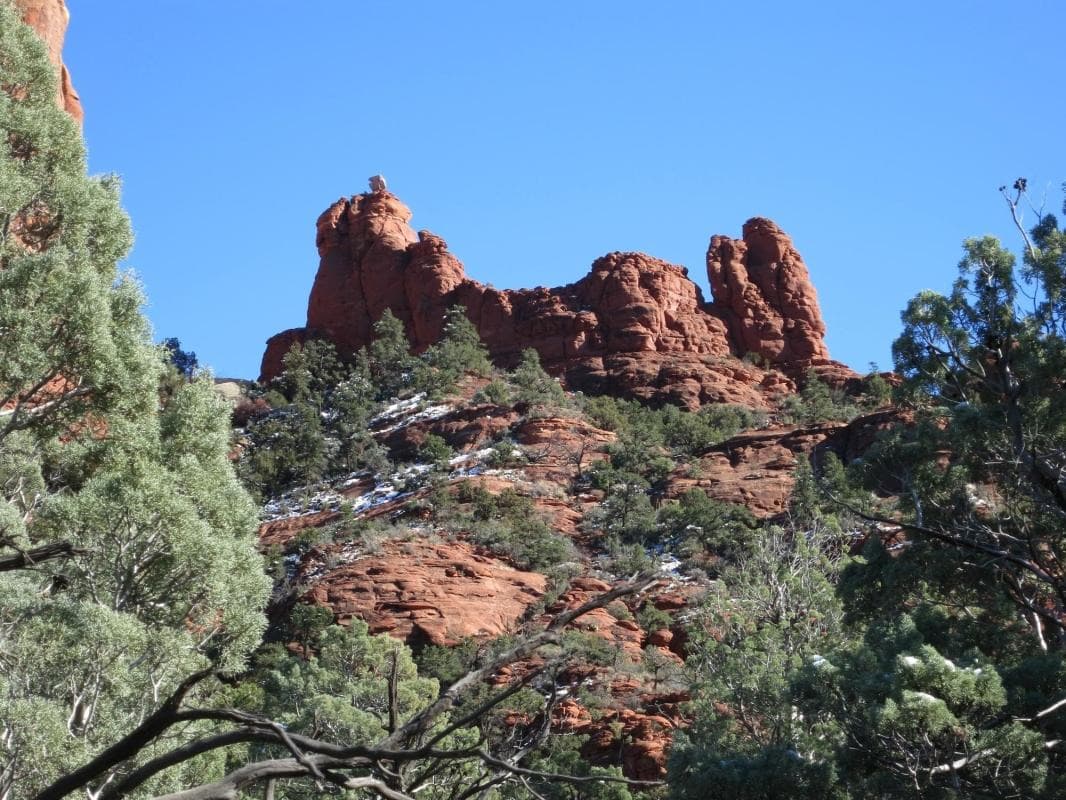
The sun has just crested the western shoulder of the Mogollon Rim and the red sandstone wakes like a slow, living ember. From the roadside pullout the outcrop known as Snoopy Rock sits against that light — a curving profile that, from one angle, seems to nap on its back like a cartoon dog whose head has been chiseled by wind and time. You can stand within arm’s reach of that silhouette in less than 30 minutes from the car, and yet the view makes you feel like you’ve walked into the heart of what people come to Sedona to see: broad desert sky, striated cliffs, and the hush that follows a good climb.
Snoopy Rock is not a long pilgrimage; it is an invitation. The trail is short but honest—slickrock ledges, a few crumbly steps, and one or two low scrambles that reward you with a sweeping bowl of valley and ridgeline. Hike it at sunrise and the formation turns the color wheel from pale rose to burnished orange. Hike it in late afternoon and the shadows carve detail into the sandstone, revealing layers that tell a story of ancient seas and wind-driven erosion.
Geologically, the red rocks of Sedona — Snoopy Rock included — belong to the Schnebly Hill Formation, a Permian-era sandstone laid down around 250–300 million years ago. Those iron-rich layers have oxidized over time, giving Sedona its signature rust tones. The shape that earned the name “Snoopy” is a consequence of differential erosion: softer layers wash away faster, leaving the more resistant rock to stand in playful relief. It’s a compact crash course in geological time, visible without a long trail or a park ranger talk.
Culturally the valley beneath Snoopy Rock has long been a crossroads. For millennia the Yavapai and Apache peoples lived, hunted, and held ceremony throughout this region; later, settlers and ranchers grazed cattle on the high grasslands and used the mesas as natural markers across the landscape. Today, Sedona is a mix of small-town hospitality, gallery culture, and outdoor tourism—local guides who know the rocks and the weather better than a map, and restaurants that serve Southwestern staples alongside trail-ready fare.
The trail to Snoopy Rock is straightforward: plan on roughly 0.6–0.8 miles round-trip with about 100–200 feet of elevation gain depending on your exact route and how far you scramble onto the formation. The path is a combination of packed dirt, sandstone slickrock, and intermittent loose gravel; several steep-but-short sections require careful footwork but no technical climbing gear. Bring footwear with good traction—the slickrock can be surprisingly slick when warmed by desert sun or damp from morning condensation.
Why go? Because Snoopy Rock condenses what draws people to Sedona into one pocket-sized experience. It’s quick enough for families, satisfying enough for photographers, and scenic enough for anyone who wants a clean, uninterrupted view of layered mesas and cottonwood-lined washes. The compact scale also makes it an excellent first stop for travelers who’ll be attempting longer hikes later in their trip; it’s a way to get a feel for the sandstone and test your balance on slickrock before committing to something longer.
Practical notes: start early in hot months to avoid peak temperatures and crowds. There’s usually no fee for the roadside access, but parking is limited—arrive early or plan to carpool. Cell service can be spotty; screenshot maps or download an offline GPS before you go. Dogs are allowed in some spots but may struggle on the slickrock; bring water and a leash. Leave no trace: stay off culturally sensitive sites, do not climb on fragile cryptobiotic soil, and carry out what you carry in.
If you want to expand the day, pair Snoopy Rock with a photography detour at Airport Mesa for broader panoramas or a late-afternoon picnic near Oak Creek Canyon for cooler shade and river sounds. For a more guided experience, local outfitters run short jeep tours and photography-focused excursions that include this viewpoint as part of a larger loop through Sedona’s vortex sites and red-rock landmarks.
Safety & timing: a quick hike like this can still be hazardous if you’re unprepared. Bring 1 liter of water per person for short outings in warm weather, sun protection, and a hat. Wear shoes with grippy soles; flip-flops and smooth-rubber sandals are not recommended. Check the weather: summer monsoon storms can bring sudden lightning and slickrock hazards, and winter nights can leave thin sheets of ice on shaded ledges.
Snoopy Rock is not a destination for solitude seekers who expect an entire day of wilderness, but it is a perfect stop for travelers who want intensity in a compact package. It’s a quick, sensory-loud stretch of time: wind, sandstone, the broad sky. It’s a place where geological patience meets human curiosity, and where a quick walk can feel like a meaningful step through desert time.
Trail wisdom
Small choices, better day.
Start at dawn or late afternoon
Temperature and crowds are kinder in the early morning and at sunset; the light also makes the red rocks glow.
Wear grippy shoes
Slickrock can be slippery—choose footwear with good traction and ankle support for short scrambles.
Carry water even for short walks
Desert air dries you faster than you think—1 liter per person is a good minimum for short outings.
Respect cultural sites and stay on rock
Avoid stepping on cryptobiotic soil and culturally sensitive areas; stay on obvious routes to protect the landscape.
Local knowledge
Read the place, not just the route.
Watch for native species including Mule deer, Red-tailed hawk.
Keep an eye out for wildlife during the transition between areas and habitats. Respect distance guidelines.
Stay on established routes to protect fragile cryptobiotic soil and respect private property and cultural sites; pack out all trash.
Follow the guide's instructions on size limits, ethical handling, and leave-no-trace practices.
Sunrise views from a nearby low bench that looks back at the city lights of Sedona.. A shaded cottonwood grove lower in the valley that’s great for a picnic after the short climb.
Locally recommended viewpoints and quiet spots known best to local operators.
The land around Snoopy Rock sits within the ancestral territories of the Yavapai and Apache peoples; later settlers and ranchers used the mesas and canyons as natural markers.
Maritime roots and regional tradition shape the waterways and working coasts.
Seasonal guide
Four versions of the same landscape.
Spring
Best forWildflower blooms · Mild hiking temperatures · Photography with soft light
ChallengesOccasional pollen · Higher weekend crowds
Spring offers pleasant temperatures and wildflowers that pop against the red rock—early weekdays are best for quieter conditions.
Summer
Best forEarly-morning hikes · Monsoon storm photography · Short, intensive visits
ChallengesHigh heat midday · Afternoon thunderstorms
Summer mornings are golden and cool; avoid midday heat and watch forecasts for monsoon storms that can arrive fast.
Fall
Best forComfortable temps · Clear skies for long vistas · Reduced crowds
ChallengesShorter daylight hours · Potential cooler nights
Fall is ideal—temperatures drop, skies clear, and the light is crisp, making for some of the best hiking conditions in Sedona.
Winter
Best forCrisp, clear views · Quiet trails · Low visitor numbers
ChallengesCold mornings · Possible ice on shaded slickrock
Winter mornings can be icy on shaded ledges; dress warmly and time hikes for mid-morning when surfaces warm up.
Pack with intention
What to bring.
Good to know
Common questions.
Plan on about 0.6–0.8 miles round-trip depending on how far you explore the formation; most visitors take 20–45 minutes.
Plan the edges
The details that make the day easier.
Sedona’s red sandstone belongs to the Schnebly Hill Formation, a Permian-age unit that gives the region its distinctive color and was formed roughly 250–300 million years ago.
Sedona blends Southwestern cuisine, local art galleries, and trail culture—try Navajo fry bread at a roadside vendor and stop into a small gallery for local stonework after your hike.
- Distance
- ~0.6–0.8 mi RT — Elevation gain: ~100–200 ft — Difficulty: Moderate short scramble — Fees: Typically none for roadside access — Parking: Limited pullouts — Dogs: Often allowed (leash)
Protect thin soils and plant life by staying on rock and durable surfaces; avoid climbing on marked cultural or archaeological sites and pack out all trash.
Explore by topic
Follow the threads.
Keep exploring
Make the story part of the trip.
Set out from Bass Harbor for a private, customizable day on Blue Hill Bay — lighthouses, puffins, seals, and the chance to feel Acadia from the water. Small groups, local captains, unforgettable views.
In four hours you can move from shaded canyon ferns to wind-scoured coastal ridgelines, guided by someone who knows where the light—and the hidden views—live. This private half-day hike on the Monterey Peninsula or Big Sur is compact, curated, and perfect for travelers who want depth without a multiday commitment.
 Related story
Beneath a sky of shifting light, Skaftafell’s ice reads like a map of time. This three-hour guided glacier hike mixes technical instruction with geology and culture: compact, safe, and unforgettable.