
What the day feels like
The morning air on Medvednica tastes of chestnut and damp earth. From Zagreb’s stone-paved streets the mountain looks like a shy neighbor—green, folded, and calmly watching the city. A single marked trail climbs through a curtain of beech and oak; each step asks you to leave the noise behind. As you gain contour, the city shrinks into a patchwork of red roofs and church spires. At the summit of Sljeme, at roughly 1,033 meters, a radio tower and a handful of mountain huts keep watch. The view is both expansive and intimate: Zagreb to the south, the rolling Zagorje hills to the north, and a slow, unpretentious sense of place you can only find where urban life meets a living forest.
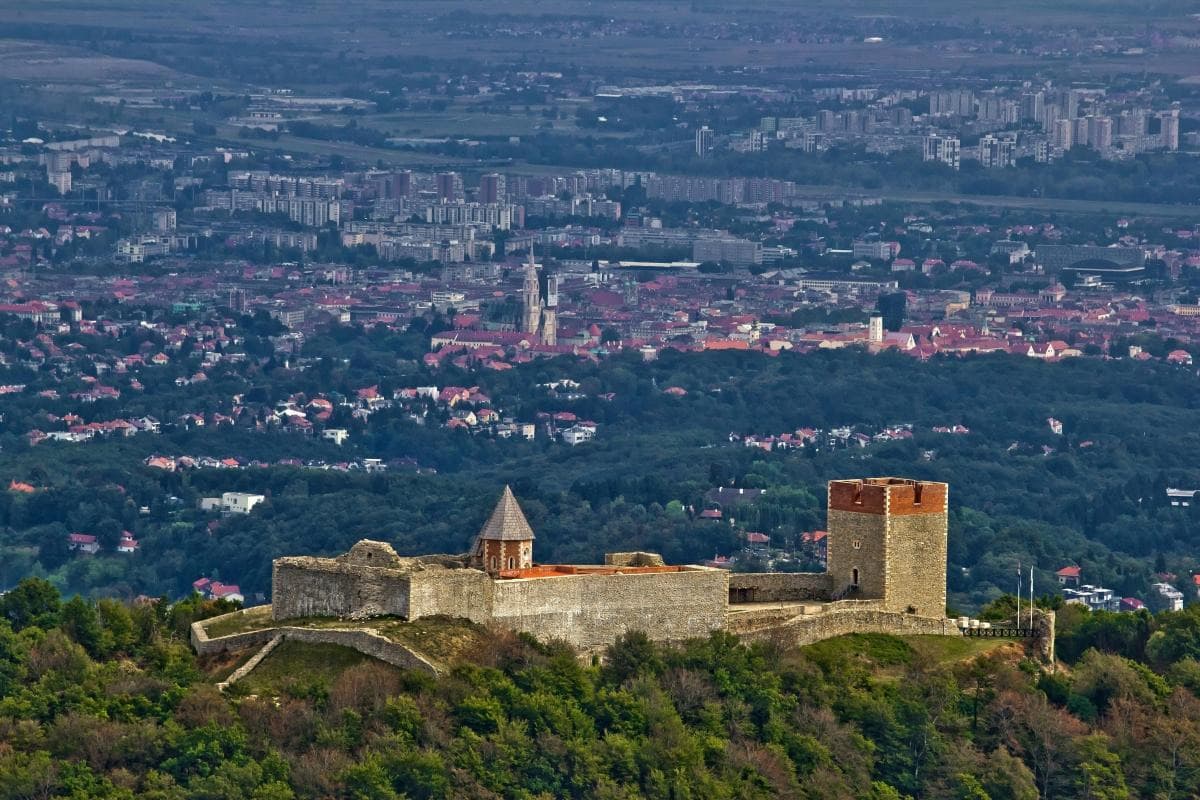
Medvednica is less a dramatic Alpine cliff than a worked, human-scale mountain: trails worn by generations of zagrepčanci who come here for exercise, for picnic soup, for the quiet that can only be found half an hour from a capital. That proximity shaped the mountain’s role. Medvedgrad—the medieval fortress perched on a rocky outcrop—was raised in the 13th century as a defensive watchpoint after the Mongol incursions, and its stone skeleton now frames views that have changed little in centuries. Geologically, Medvednica is the remnant of an ancient island-sea margin; over millions of years what was once seabed rose and folded, giving the area its mixed terrain of karst outcrops, deep soil for beech and oak, and clear springs that still feed hikers’ thirst.
The culture here is practical and welcoming. On Sundays you’ll see families, retirees, and students sharing the same ridge-top cafés; local mountain huts still serve hot bean soup with sausages—a humble, filling tradition that feels earned after a steep climb. For travelers, Medvednica offers a tidy menu of experiences: self-guided hikes that thread narrow rooty paths, guided half-day walks that bring history alive at Medvedgrad, private mountaineer tours that finish with a hut lunch, and even city tours that fold a Sljeme drive into a broader look at Zagreb—sometimes arriving in an original Yugo for the novelty alone.
If you’re planning a day here, think like a local. Most popular approaches to Sljeme begin at the northern edge of Zagreb or from accessible trailheads in the foothills. Expect 3–5 hours for a round-trip hike to the summit depending on route and pace. Typical elevation gain from the city’s edge to Sljeme is around 850–1,000 meters; trails vary from packed dirt and forest tracks to occasional rocky steps and short paved service roads. The slope eases in the beech forests, where roots knit the soil together, and tightens again on the final pitch to the TV tower. Trails are well-marked, but a map or local guide is useful if you want shortcuts or to link to Medvedgrad.
For a low-friction visit, consider booking a guided option: half-day walks to Medvedgrad give context to the stones and legends, while full “hike & taste” experiences combine trail time with a local dinner—an efficient way to experience culture and landscape in one outing. If you prefer to pair urban sightseeing with nature, private city tours often end with a drive up the mountain and a short walk or cable car ride to viewpoints.
Practical decisions that matter: start early in summer to avoid midday heat and crowds; bring at least 1.5–2 liters of water, and plan layers—weather at 1,000 meters swings faster than in the city. Footwear should be sturdy with a grippy sole; some routes include short, rocky sections that punish worn trainers. If you’re aiming for winter recreation, Sljeme is a local ski and snowshoe spot; dress for cold, expect icy patches, and check local conditions before you go.
Where to linger: Medvedgrad is a must—its renovated walls and interpretive panels explain why the fortress presided over the city for centuries. For quieter moments, follow smaller paths off the main ridge that lead to springs and solitary beech groves. Keep your ears open for woodpeckers and the sudden rustle of hare or deer: the mountain is a living mosaic of wildlife.
This is not backcountry wilderness; it’s a shared urban mountain. That means civil behavior goes far—pack out what you pack in, keep dogs on leash where posted, and buy a meal at a hut if you want the locals to keep doors open for the next generation of hikers. The reward is immediate: a few hours of elevation, an honest meal, and a view of Zagreb you can’t get from a rooftop.
Whether you’re a day-tripper with a camera, a family looking for a weekend escape, or a seasoned hiker chasing different contours, Medvednica is direct and generous. It offers the rare combination of immediate access, layered history, and forested hiking that feels at once familiar and novel, all within a short ride from Croatia’s capital. Go prepared, stay curious, and leave it as you found it—this mountain has carried the city’s weekends for generations and will do so for many more.
Trail wisdom
Small choices, better day.
Start early or late
Begin in the morning or late afternoon to avoid crowds and the midday sun; summit views are best in softer light.
Bring 1.5–2L water
There are springs along some routes but don’t rely on them—carry enough water, especially in summer.
Sturdy footwear
Trails alternate between rooty forest and rocky pitches; supportive, grippy hiking shoes will keep you comfortable.
Respect the huts
Buy a snack or drink at mountain huts if you use their facilities—local huts help maintain trails and the mountain culture.
Local knowledge
Read the place, not just the route.
Watch for native species including European hare, Roe deer.
Keep an eye out for wildlife during the transition between areas and habitats. Respect distance guidelines.
Medvednica is a designated Nature Park with protected habitats; local hiking associations maintain trails and mountain huts, and visitors are encouraged to minimize impact by staying on marked paths.
Follow the guide's instructions on size limits, ethical handling, and leave-no-trace practices.
The ruins of Medvedgrad fortress—less crowded in early morning. Small forest springs and secluded beech groves on side trails off the main ridge
Locally recommended viewpoints and quiet spots known best to local operators.
Medvedgrad fortress was built in the 13th century as a defensive stronghold; its ruins offer context to the medieval history that shaped Zagreb’s landscape.
Maritime roots and regional tradition shape the waterways and working coasts.
Seasonal guide
Four versions of the same landscape.
Spring
Best forWildflower displays · Cool, comfortable hiking · Birdwatching
ChallengesMud on lower trails · Variable weather
Spring brings fresh growth and blooming chestnut and beech understory; expect muddy sections early in the season and bring a light waterproof.
Summer
Best forLong daylight hours · Picnics and hut lunches · Family outings
ChallengesHeat in exposed sections · More visitors on weekends
Summer offers warm weather and lively hut culture—start early to avoid afternoon heat and crowds at the summit huts.
Fall
Best forAutumn color · Clear vistas · Cool hiking weather
ChallengesEarly nightfall · Wind-exposed summit
Fall is the sweet spot: crisp air, golden beech forests, and fewer crowds—ideal for photography and day hikes.
Winter
Best forSnowshoeing · Local winter sports · Atmospheric vistas
ChallengesIcy trails · Limited hut services
Winter transforms Sljeme into a snowy playground; bring traction devices and check conditions—some services close for the season.
Pack with intention
What to bring.
Good to know
Common questions.
Most routes from the city edge take 3–5 hours round-trip depending on pace and exact trail; guided half-day tours condense highlights into 2–4 hours.
Plan the edges
The details that make the day easier.
Medvedgrad fortress was constructed in the 13th century after Mongol raids in Europe and remains a prominent historical landmark overlooking Zagreb.
Weekends on Medvednica are a local ritual—mountain huts serve traditional dishes like bean soup with sausage and warm plum brandy; chestnuts and beech nuts are a seasonal treat, and many zagrepčanci combine a morning hike with an afternoon cafe.
- Nearest city
- Zagreb. Summit elevation: ~1,033 m. Typical duration: 3–5 hours round-trip. Services: mountain huts, guided tours available. Transport: short bus
Stick to marked trails, avoid picking plants, pack out trash, and support local huts—small purchases directly fund trail maintenance and conservation efforts.
Explore by topic
Follow the threads.
Keep exploring
Make the story part of the trip.
Set out from Bass Harbor for a private, customizable day on Blue Hill Bay — lighthouses, puffins, seals, and the chance to feel Acadia from the water. Small groups, local captains, unforgettable views.
In four hours you can move from shaded canyon ferns to wind-scoured coastal ridgelines, guided by someone who knows where the light—and the hidden views—live. This private half-day hike on the Monterey Peninsula or Big Sur is compact, curated, and perfect for travelers who want depth without a multiday commitment.
 Related story
Beneath a sky of shifting light, Skaftafell’s ice reads like a map of time. This three-hour guided glacier hike mixes technical instruction with geology and culture: compact, safe, and unforgettable.