
What the day feels like
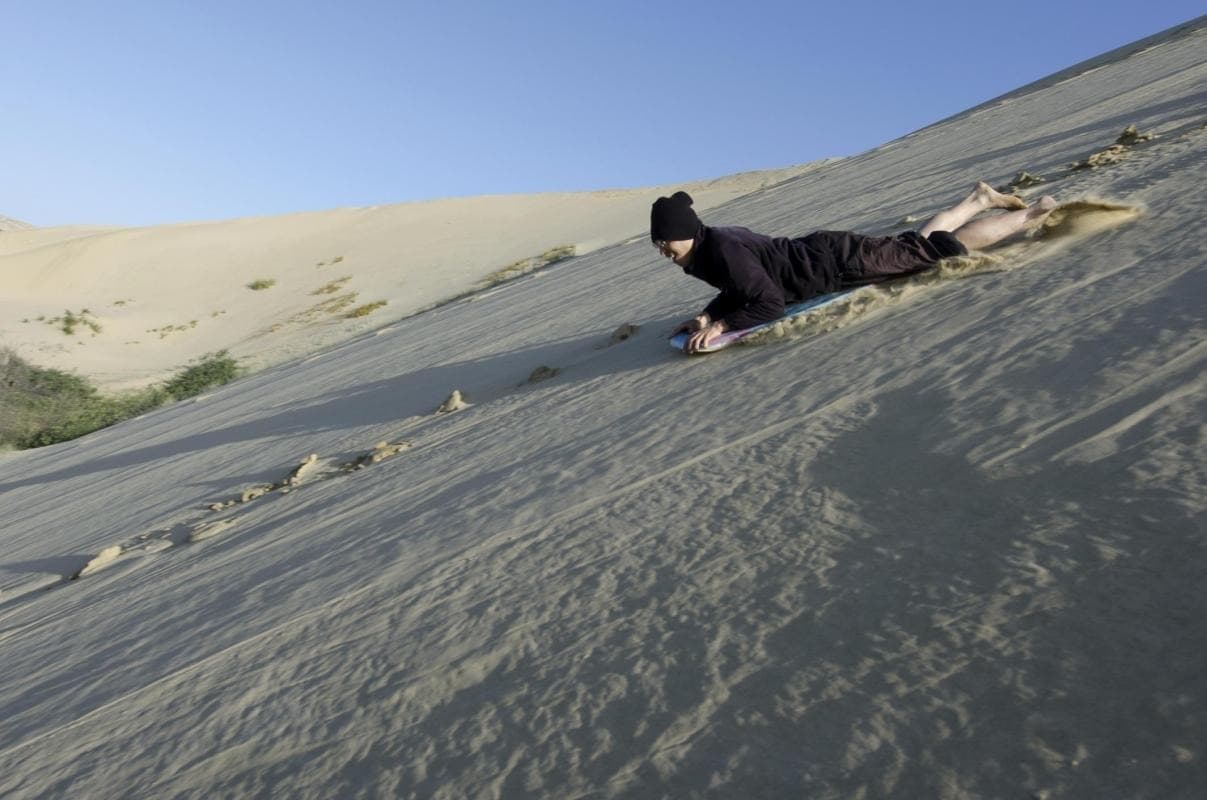
The wind takes your hat, then your breath. You plant your boots in warm, fine sand and climb—one step, two, then a dozen—until the world opens. Below, the wide ribbon of 90 Mile Beach runs like a polished blade; above, the dunes crest and fall in a sequence of ivory waves. Te Paki doesn’t so much sit on the map as it moves across it. The dunes are living landforms—shifting, swallowing, reshaping themselves under the trade winds—and when you stand at the top the restlessness is contagious. You want to run. You want to sandboard.
Te Paki is the theatrical frame to one of New Zealand’s most cinematic coastlines. Located on the far northwestern edge of the Northland region, it pairs perfectly with a pilgrimage to Cape Reinga and the long sweep of 90 Mile Beach. Day tours from Paihia or Kaitaia bundle these attractions into a single, long day: a cultural stop at the Waitangi Treaty Grounds on longer itineraries, a pause at Taipa for lunch, a walk along the southern end of 90 Mile Beach, then the sharp, wind-swept promontory of Cape Reinga itself where Māori tradition marks the place spirits begin their final journey to Hawaiki. But if you come for one thing, come for Te Paki’s dunes: a compact, elemental playground where the landscape dares you to move faster than it does.
Geology and culture meet here in blunt, honest strokes. The dunes are the result of longshore drift and strong prevailing winds that have gathered sand and sculpted enormous ramps beside Te Paki Stream. The sand arrives from the beach, is pushed inland by storms, and is slowly reworked into ridges that can be climbed in minutes and conquered in seconds on a board. Māori have long known this coastline as a place rich with spiritual significance and food resources—kai moana (seafood) that made these northern shores home to generations—and the modern visitor arrives on a path laid through both natural and cultural history.
The scene is vivid but also practical: approaching the dunes generally involves a short walk from parking near Te Paki Stream, a steep sandy climb that typically gains tens of meters of elevation over a few hundred meters of distance. Expect a 15–45 minute effort to reach the highest crests depending on pace and how much sand you sink into. The descent is the reward: a white-knuckle run on a rented sandboard, or a cautious slide on a plastic sheet. Tours—like the full-day Cape Reinga runs and multi-day Northland circuits—package this moment into a broader introduction to the region, with knowledgeable guides explaining both the science under your feet and the stories woven into the coast.
Practicalities matter here. Te Paki’s sand is unforgiving on shoes and patience—wear sturdy, closed shoes and choose a morning or late-afternoon slot to avoid the strongest midday winds and sun. A typical visit is short: allocate at least half a day if paired with 90 Mile Beach or a full day if you’re looping Cape Reinga and coastal highlights. The access tracks can be corrugated and rough; many travelers join small-group tours from Paihia that handle the driving, local commentary, and logistics. For independent travelers, 4WD isn’t required for the main dune access, but you should expect gravel roads and occasional soft sand when exploring nearby stretches of beach.
Safety is simple but strict: sand climbs tire the quads faster than you’d expect, sun reflects off the sand and demands full sun protection, and strong winds can turn a leisurely run into an abrasive tumble. Bring water, a hat you can tether, and a compact first-aid kit. When sandboarding, be deliberate about your stance and speed—boards are fun but unforgiving on hard-packed sand or where hidden stones protrude.
A trip to Te Paki is best when paired with the region’s other notes: the cultural narratives at Waitangi, the ancient kauri of Tane Mahuta if you travel deeper inland, and boat trips through the Bay of Islands’ Hole in the Rock if you’re extending your northern loop. In short, Te Paki is the visceral punctuation to a travel tale that reads like Northland itself—sweeping, wind-scrubbed, and honest.
Why go? Because it’s immediate. There’s no summit log to slog toward, no technical skills required—just a willingness to climb, slide, and be small against a landscape that keeps moving. The dunes reward speed and curiosity: sprint up, rest, then let gravity and a board do the rest. Guides give you the practical context—the why of the sand and the where of the best lines—so you can focus on the one thing this place asks: move with it.
When to go: summer brings the warmest sand and longest daylight; spring and fall offer quieter trails and more comfortable climbing; winter is sharper, windier and best if you’re prepared for dramatic skies. No matter your season, leave no trace—these dunescapes are fragile and regenerate slowly when disturbed. Stick to the paths, pack out your litter, and treat the place as both playground and archive: it tells a long, local story in grains of sand.
Te Paki is not a remote chore or a technical challenge—it’s an elemental moment. It’s a place to test your legs, your nerve, and your appetite for simple fun. Stand on a dune, look down the sweep of the beach, and you’ll understand why travelers keep returning to the top and launching themselves down the slope: the landscape is a dare, and most of us are happy to accept.
Trail wisdom
Small choices, better day.
Protect your feet
Wear sturdy, closed shoes; sand is abrasive and open footwear fills with grit that ruins straps and patience.
Hydrate and cover up
Bring at least 1–2 liters of water and a breathable, wide-brimmed hat—the reflective sand intensifies sun exposure.
Timing matters
Visit early morning or late afternoon to avoid the strongest winds and hottest sand; aim for calm days for the best sandboarding.
Respect the dunes
Stay on established tracks and avoid trampling vegetation at dune margins—the plants stabilize the dunes and recover slowly.
Local knowledge
Read the place, not just the route.
Watch for native species including gannet colonies observable along the Cape Reinga coast, occasional shorebirds like oystercatchers on the intertidal flats.
Keep an eye out for wildlife during the transition between areas and habitats. Respect distance guidelines.
Dune vegetation is fragile; stay on established paths, avoid driving on dunes, and pack out all waste to protect shifting ecosystems.
Follow the guide's instructions on size limits, ethical handling, and leave-no-trace practices.
Walk the quiet backtracks south along the edge of Te Paki Stream to find sheltered picnic spots. Stop at the Mangonui Wharf on return for the famous fish and chips and a glimpse of historic bay-side life
Locally recommended viewpoints and quiet spots known best to local operators.
Cape Reinga and the surrounding Northland coast are rich in Māori history; local iwi regard the area as a spiritual departure point for souls returning to Hawaiki.
Maritime roots and regional tradition shape the waterways and working coasts.
Seasonal guide
Four versions of the same landscape.
Spring
Best forquieter trails · floral contrasts · milder climbs
Challengesvariable winds · occasional rain · cooler mornings
Spring offers comfortable climbing temperatures and fewer crowds; expect changeable weather and breezy afternoons.
Summer
Best forlong daylight · warm sand · pairing with beach activities
Challengesstrong sun · busy tours · higher winds some days
Summer is ideal for sandboarding and combining the trip with 90 Mile Beach or Cape Reinga, but bring strong sun protection.
Fall
Best fordramatic skies · pleasant hiking conditions · fewer tourists
Challengesshorter daylight · cooler evenings · wind shifts
Autumn brings crisp air and dramatic light—great for photos and less crowded crests, but dress in layers.
Winter
Best fordynamic weather photography · solitude · strong surf views
Challengescold winds · short daylight · choppy seas
Winter delivers raw, cinematic conditions and near-solitude, but be prepared for biting winds and wet weather.
Pack with intention
What to bring.
Good to know
Common questions.
A fit visitor can reach the highest crests in 15–30 minutes depending on pace and sand conditions; allow longer if you stop for photos or multiple runs.
Plan the edges
The details that make the day easier.
Te Paki’s dunes are among the most extensive coastal dune systems in New Zealand and are continually reshaped by prevailing winds and longshore drift.
Northland is steeped in Māori heritage and kai moana culture—pair dune runs with fresh fish and chips at Mangonui, learn local legends at Cape Reinga, and support small iwi-led guides when possible.
- Access
- road to Te Paki Reserve; nearest bases Paihia (2.5–3 hr drive) or Kaitaia; best time: spring–autumn; difficulty: moderate; permits: none required for dune access; rentals: sandboards available via tours.
Avoid climbing vegetated dune faces, take all rubbish home, and opt for licensed guides who follow local iwi protocols to minimize cultural and ecological impact.
Explore by topic
Follow the threads.
Keep exploring
Make the story part of the trip.
Set out from Bass Harbor for a private, customizable day on Blue Hill Bay — lighthouses, puffins, seals, and the chance to feel Acadia from the water. Small groups, local captains, unforgettable views.
In four hours you can move from shaded canyon ferns to wind-scoured coastal ridgelines, guided by someone who knows where the light—and the hidden views—live. This private half-day hike on the Monterey Peninsula or Big Sur is compact, curated, and perfect for travelers who want depth without a multiday commitment.
 Related story
Beneath a sky of shifting light, Skaftafell’s ice reads like a map of time. This three-hour guided glacier hike mixes technical instruction with geology and culture: compact, safe, and unforgettable.