
What the day feels like
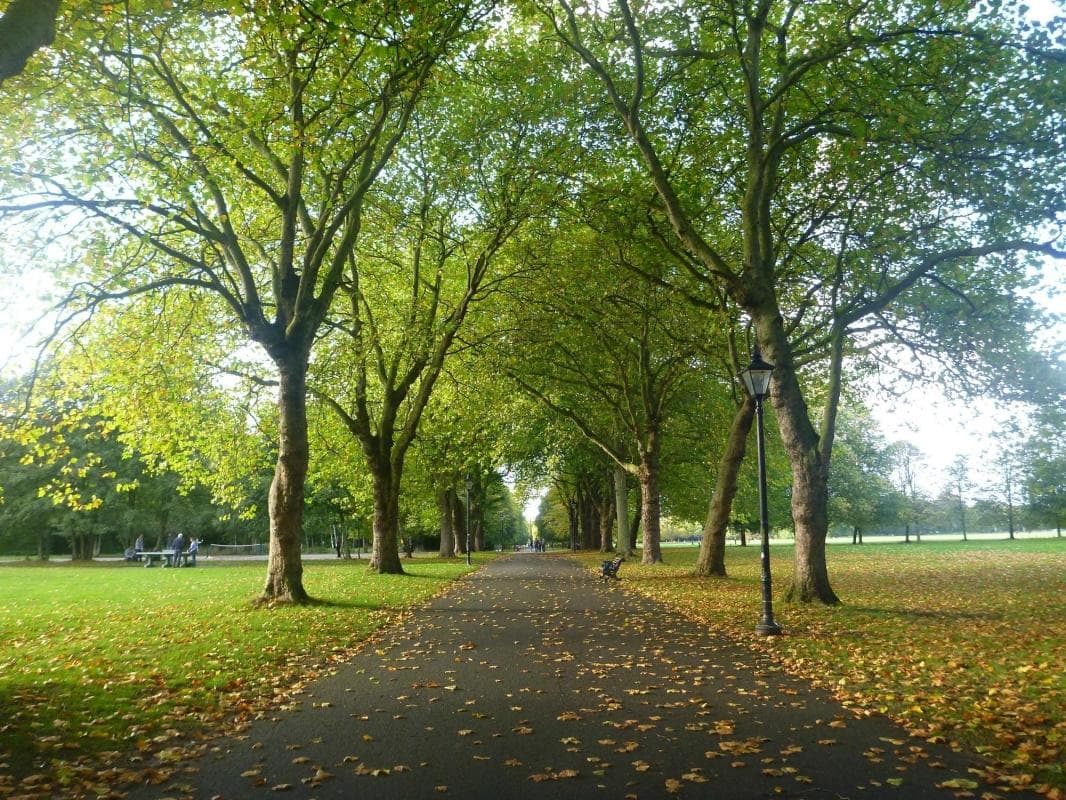
You step through the iron gates into a different Liverpool: an expanse of rolling lawns braided with tree-lined avenues, a Victorian glasshouse gleaming like a pocket of tropics, and a lake that keeps its own slow pulse. Sefton Park is the city's lungs—110 acres of reclaimed naturalism planted into the Victorian ambition to civilize the urban landscape. On an early morning walk, the park is intimate: sparrows sound off from the avenues of plane trees, a heron surveys the boating lake like a silent sentry, and the Palm House mists with condensation as gardeners tend to palms that have been growing here since the 19th century.
This is not a wilderness escape but an urban refuge that reads like a naturalized museum. The design and planting are Victorian in temperament—picturesque swathes, winding paths, and deliberately composed views—yet the park's personality is contemporary. Sefton Park stages local life: runners clock circuits on the paths, parents push prams past groups of students, dog-walkers trade neighborhood gossip, and once a year the park becomes the epicenter of Afro-Caribbean music when Africa Oyé brings thousands to the lawns. The park's scale soothes; it is generous in a way city squares can't be.
The Palm House is the park's showpiece. Built in the late Victorian era and lovingly restored at the turn of the century, it still houses exotic palms and scheduled cultural events—concerts, botanical displays, and the odd wedding. The boating lake with its little island and reedbeds turns the centre into a pocket of wetland habitat: coots and tufted ducks are common, and if you move slowly you might glimpse foxes edging through the shrubbery in the low light.
Sefton Park is a perfect urban outing for a few different kinds of travelers. For day visitors pressed for time, a private walking tour or a guided citywalk can drop you here as the green highlight of a larger Liverpool itinerary—one of the products available with local guides is a Private Walking Tour of Liverpool that routes through the park, pairing it with the Georgian Quarter and the waterfront's architecture. If you want to cover more ground with less sweat, an electric-bike Beatles tour is an elegant choice; the eco-friendly ride threads parks, promenades, and back streets, giving a fresh vantage on Sefton Park's avenues and adjoining neighborhoods. And for travelers who'd rather be chauffeured between stops, small-group car tours offer a comfortable way to combine Sefton Park with suburban monuments like Crosby Beach or Port Sunlight.
Practicalities matter here: the main circuit around Sefton Park is roughly a 2-mile (3.2 km) loop on mostly paved paths with only gentle undulation—elevation change is minimal, making it friendly to families and casual hikers. Terrain alternates between compacted gravel and tarmac, with grassy offshoots. The Palm House and café provide obvious rest points; benches are frequent. Expect variable weather—Liverpool's maritime climate means sudden showers are part of the deal—so pack layers and a light waterproof.
If you’re planning a morning run or an afternoon picnic, timing makes a difference. Early weekday mornings are serene; weekends fill with dog-walkers and families, and late-spring weekends can be busy with festivals and concerts. Photography buffs will find light on the lake particularly good in late afternoon, when the sun slants through the trees and the Palm House glass flashes warm highlights. Birders should favor quiet, still mornings when the lake edges are most active.
Local culture attaches to the park in ways that matter to visitors. Sefton Park has been a community anchor since it opened as part of Liverpool’s 19th-century public-park movement; it's also a stage for contemporary festivals and a snapshot of the city’s civic pride. Nearby Lark Lane and Aigburth Road are places to extend the visit—cafés, craft beer pubs, and independent shops that reflect the neighborhood's relaxed character.
Getting there is straightforward: Sefton Park is a short bus ride or a 20–30 minute taxi from Liverpool city centre, and many guided tours include park stops as part of half-day or private itineraries. For sustainable arrival, the city’s cycle lanes and National Cycle Network links make the park a pleasant target for pedal power; the electric-bike Beatles tour is a useful way to combine low-impact travel with sightseeing.
Sefton Park doesn't demand expert gear: comfortable walking shoes, weatherproof layers, and a camera will cover 95% of visitor needs. But it's also a place to slow down and take advantage of being outdoors—sit on a bench, read a book beneath an old oak, or linger in the Palm House to lose track of time.
For travelers who want to experience Liverpool away from the waterfront crowds, Sefton Park often becomes the highlight of a trip precisely because it’s a living, breathing public place. It’s not a peak to be bagged; it's a habit to be adopted—an urban ritual of slow movement, good light, and the small compensations that make a city feel liveable. Whether you take an e-bike tour that rolls you past its best viewpoints, meet a guide who unpacks its history, or quietly watch the waterfowl on a drizzly afternoon, Sefton Park rewards curiosity with a calm that is distinctly Liverpudlian.
Plan on a half day to enjoy the park fully—longer if you tie it into a guided tour or a picnic with local baked goods. Come with sensible shoes, a camera, and a readiness to let the city slow its pace for an hour or two. The park will meet you halfway.
Trail wisdom
Small choices, better day.
Do the full loop
Follow the main 2-mile (3.2 km) circuit to see the Palm House, boating lake, and the park’s best viewpoints without backtracking.
Bring a light rain layer
Liverpool’s weather can change quickly—pack a compact waterproof or a breathable shell, especially in spring and autumn.
Mind the wildlife
Keep dogs under control around the lake—waterfowl and nesting birds are common, especially in spring.
Use public transport or an e-bike
Parking near the park can be limited; consider Merseyrail, local buses, or the Half-Day Electric Beatles Bike Tour to arrive sustainably.
Local knowledge
Read the place, not just the route.
Watch for native species including mute swan, grey heron.
Keep an eye out for wildlife during the transition between areas and habitats. Respect distance guidelines.
Local groups like the Friends of Sefton Park help maintain planting schemes and organize conservation activities; visitors are encouraged to stick to paths and take litter home to protect habitats.
Follow the guide's instructions on size limits, ethical handling, and leave-no-trace practices.
Visit the Palm House early in the morning for quiet botanical moments and occasional small concerts.. Explore the park’s inner lanes near the boating lake to find quieter benches and waterfowl viewing spots where locals feed ducks at dawn.
Locally recommended viewpoints and quiet spots known best to local operators.
Sefton Park was laid out during Liverpool’s late-Victorian park movement and formally opened in the 19th century as a civic green space; its Palm House is a restored Victorian glasshouse that remains a focus for community events.
Maritime roots and regional tradition shape the waterways and working coasts.
Seasonal guide
Four versions of the same landscape.
Spring
Best forblossom and botanicals · birdwatching · mild walking conditions
Challengesunpredictable showers · busy weekends during festivals
Late spring brings the Palm House and woodland paths to life—ideal for flowers and birds, but pack a rain layer and expect festival crowds on weekends.
Summer
Best forpicnics and concerts · long daylight hours · family outings
Challengeshigher foot traffic · limited shade at midday in open lawns
Summer fills the lawns with picnickers and events like Africa Oyé; great for long afternoons but arrive early for quieter spots.
Fall
Best forfall color photography · cooler walks · golden-hour lake shots
Challengesmuddy side paths after rain · shorter daylight hours
Autumn gives crisp air and rich hues—perfect for photographers; wear sturdy shoes for damp undergrowth.
Winter
Best forquiet solitude · dramatic skies · brisk exercise
Challengescold wind off the lake · reduced services in Palm House and café
Winter offers peaceful, atmospheric walks—bundle up and check Palm House opening times for indoor visits.
Pack with intention
What to bring.
Good to know
Common questions.
No—Sefton Park is a public park and free to enter; some attractions inside (like events at the Palm House) may charge separately.
Plan the edges
The details that make the day easier.
Sefton Park opened during the Victorian era as part of Liverpool’s civic-park movement and features a restored Palm House, a late-19th-century glasshouse now used for cultural events.
Lark Lane and Aigburth Road flank Sefton Park with independent cafés, bakeries, and pubs—perfect for post-walk coffee or a hearty local meal. The park also hosts cultural events like Africa Oyé, bringing food stalls, music, and a neighborhood festival atmosphere.
- Open year-round; free entry; main loop ~2 miles (3.2 km); nearest city
- Liverpool (20–30 min by bus
Choose public transport or an electric-bike tour to reduce local traffic and emissions; follow park rules, avoid feeding wildlife, and carry out litter to protect habitats.
Explore by topic
Follow the threads.
Keep exploring
Make the story part of the trip.
Set out from Bass Harbor for a private, customizable day on Blue Hill Bay — lighthouses, puffins, seals, and the chance to feel Acadia from the water. Small groups, local captains, unforgettable views.
In four hours you can move from shaded canyon ferns to wind-scoured coastal ridgelines, guided by someone who knows where the light—and the hidden views—live. This private half-day hike on the Monterey Peninsula or Big Sur is compact, curated, and perfect for travelers who want depth without a multiday commitment.
 Related story
Beneath a sky of shifting light, Skaftafell’s ice reads like a map of time. This three-hour guided glacier hike mixes technical instruction with geology and culture: compact, safe, and unforgettable.