
What the day feels like
You arrive in Cádiz by a narrow, salt-licked lane, the Atlantic visible in a sudden cut between orange-tinted buildings. A breeze carries the city’s two perfumes—the citrus of street-side orange trees and the brine of the Bay of Cádiz—and then you step into Genovés Park (Parque Genovés) and the tempo changes. The traffic hushes; palm fronds tilt like old handwritings; a small waterfall chuckles as if keeping time. The park is a deliberate pause in the city’s long story, terraced and planted so the Atlantic becomes a kind of palimpsest: remembered in every path, reflected in every pond.
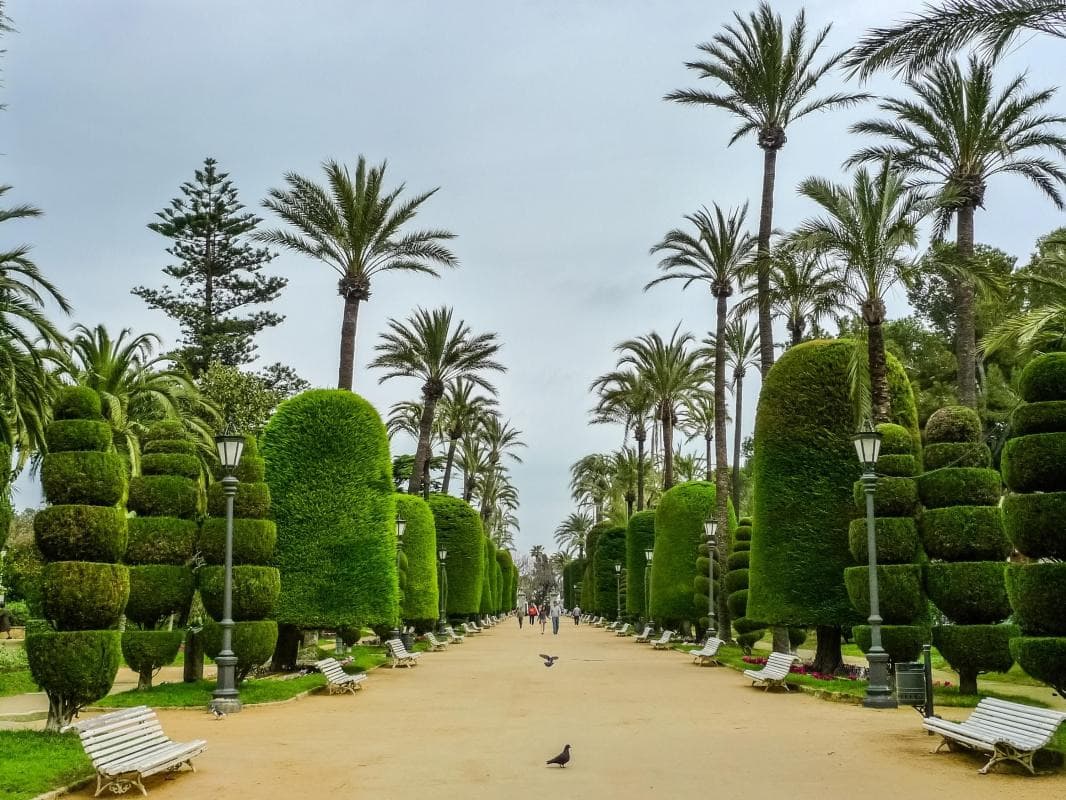
The park is compact—an urban lung rather than a wilderness—but what it gives up in scale it returns with in atmosphere. Laid out in the 19th century on the southern flank of Cádiz’s old quarter, Genovés was meant to be civic theater: promenades for the bourgeoisie, green rooms for concerts and quiet conversation. Its designers stacked layers—succulent beds, English-style lawns, and shaded alleys—so that a thirty-minute loop can feel like a full day of exploration. Ancient ficus and plane trees keep watch over manicured hedges; palms parade along the seaward edge, and a pond harbors a social politics of ducks and occasional black swans that regard visitors with an easy indifference.
Geologically the park sits atop the same limestone backbone that forms Cádiz’s peninsula: a low, calcified ridge kissed by wind and sea. The shoreline is close enough that salt spray shapes plant selection; the gardens’ subtler species—cacti, subtropical shrubs, and ornamental pines—are reminders of Cádiz’s role as a crossroads between Mediterranean and Atlantic botanicals. The park’s terraces also hint at Cádiz’s layered history: Phoenician coastline, Roman port, medieval bastion, and ultimately the modern city whose economy was long tied to shipping and trade.
Culture arrives here gently. Locals use Genovés for morning strolls, midday siestas under plane trees, and evening promenades before the tapas bars awake. Tour guides—part of the city’s living economy—often use the park as a pause point on walking routes that also hit Tavira Tower, La Caleta beach, and the old market. Bike tours thread through nearby streets and sometimes loop through or past the park; on a three-hour Cadiz Highlights Private Bike Tour, for instance, the route includes Parque Genovés as a scenic waypoint where guides explain the city’s constitutional history and point out views over La Caleta.
Why go? Because Genovés is a concentrated taste of Cádiz: small-scale botany, quiet architectural details, and an immediate sense of place. It’s a place to recalibrate after hours spent on sun-drenched beaches or among cathedral stones. For photographers, the mirrors of its ponds and the frame of palm trunks against a coastal sky are irresistible. For families, the gentle paths and shady benches make it a natural stop between museums and the seaside.
Practical edge: the park is walkable, flat, and stroller-friendly. A single circuit is roughly 20–30 minutes at a slow pace; linger, and you’ll spend an hour or more. Benches are plentiful; water fountains are occasional—bring a refillable bottle. The terrain is paved paths, small gravel sections, and gentle steps on the terraces—good hiking shoes aren’t required, but closed-toe walking shoes or supportive sandals will make the visit easier, especially if you plan to continue on to the rocky walkways of La Caleta or the surrounding historic streets.
Timing matters. Early morning and late afternoon offer the best light and fewer crowds; mid-morning is when guided groups and bike tours tend to arrive. Combine your visit with a walking tour of Cádiz to learn the park’s place in the city’s long narrative, or fold it into a bike tour that takes you along the peninsula’s low cliffs and beaches.
On etiquette and conservation: the park is urban, not wild. That means follow local signage, don’t feed the birds (it disrupts their diet and local ecology), and keep to paths—plants and small habitats are fragile in these compact gardens. Local guides and businesses rely on the park as a community resource; support them by booking small-group walking or biking tours that include the park in their route.
Genovés Park is not a summit to be conquered; it’s a room to be inhabited. It rewards slow attention: the plaster of a fountain becoming a map of gull wing marks, a guttered tile offering a perfect puddle reflection, a gray-haired Cádiz native pausing to greet a neighbor beneath a plane tree. It’s an urban green that tastes faintly of ocean and old money, of botanical curiosity and municipal care. If your trip to Cádiz is a string of monuments and beaches, let Genovés be the knot that holds them together.
Finally, practical pairings: follow the park with a walk down to La Caleta for a beachside sunset, climb Tavira Tower for a panoramic view, or book a private healthy food experience in Cádiz that includes the park as a scenic introduction to the city’s edible culture. Whether you come on foot or by bike, Genovés will not demand heroics—only curiosity and an appetite for small, luminous moments.
Trail wisdom
Small choices, better day.
Go early or late
Visit at sunrise or late afternoon for the best light and to avoid guided-tour crowds.
Bring water
Water fountains are limited—carry a refillable bottle, especially in summer.
Combine with nearby sights
Pair the park with La Caleta beach or a Tavira Tower climb to maximize the outing.
Respect wildlife
Do not feed birds or swans; human food disrupts their health and the park’s ecosystem.
Local knowledge
Read the place, not just the route.
Watch for native species including black swans (occasionally seen in the ponds), Mediterranean gulls and waders along the nearby shore.
Keep an eye out for wildlife during the transition between areas and habitats. Respect distance guidelines.
The park is small and ecologically sensitive—avoid feeding wildlife, stick to paths to protect plantings, and support local guides who promote sustainable visitation.
Follow the guide's instructions on size limits, ethical handling, and leave-no-trace practices.
The small waterfall and pond area tucked under the northern terrace. The less-trafficked seafront view beneath the palms toward La Caleta
Locally recommended viewpoints and quiet spots known best to local operators.
Genovés Park was established in the 19th century as a municipal garden and promenade, reflecting Cádiz’s prosperity as an Atlantic port and its civic desire for public green space.
Maritime roots and regional tradition shape the waterways and working coasts.
Seasonal guide
Four versions of the same landscape.
Spring
Best forflower displays · mild walking · birdwatching
Challengesunpredictable rain showers · higher pollen
Spring brings blooming subtropical and temperate plants and comfortable temperatures—ideal for long strolls and photography.
Summer
Best forearly-morning walks · combining with beaches · sunrise photography
Challengesstrong midday sun · crowds and high temperatures
Summer is bright and busy—visit early or late to avoid heat and the busiest tour windows.
Fall
Best formild weather · fewer tourists · golden-hour light
Challengesshorter days · occasional storms
Autumn cools the city and brings soft light—great for walkers wanting quieter paths and clear horizons.
Winter
Best forcalmer visits · storm-watching from the seafront · off-season prices
Challengeswindy days · chill from the Atlantic
Winters are mild but windy; layer up and enjoy nearly empty paths and dramatic skies.
Pack with intention
What to bring.
Good to know
Common questions.
No—Genovés Park is a public municipal garden and free to enter.
Plan the edges
The details that make the day easier.
Genovés Park was laid out in the 19th century as Cádiz’s principal municipal garden and is noted for its mix of subtropical and Mediterranean plants curated for seaside conditions.
Genovés sits at the heart of Cádiz’s living rhythm—follow a park visit with tapas in La Viña, a café near Plaza San Juan de Dios, or a seafood lunch by La Caleta to experience the city’s cuisine and community.
- Nearest city
- Cádiz. Entry: free. Best times: sunrise or late afternoon. Mobility: mostly stroller-friendly; some terraced steps. Facilities: benches, limited water fountains. Combine with: Tavira Tower, La Caleta, guided bike
Help protect the park by staying on paths, not feeding birds, choosing local guides, and avoiding single-use plastics—small actions keep this compact ecosystem healthy.
Explore by topic
Follow the threads.
Keep exploring
Make the story part of the trip.
Set out from Bass Harbor for a private, customizable day on Blue Hill Bay — lighthouses, puffins, seals, and the chance to feel Acadia from the water. Small groups, local captains, unforgettable views.
In four hours you can move from shaded canyon ferns to wind-scoured coastal ridgelines, guided by someone who knows where the light—and the hidden views—live. This private half-day hike on the Monterey Peninsula or Big Sur is compact, curated, and perfect for travelers who want depth without a multiday commitment.
 Related story
Beneath a sky of shifting light, Skaftafell’s ice reads like a map of time. This three-hour guided glacier hike mixes technical instruction with geology and culture: compact, safe, and unforgettable.