
What the day feels like
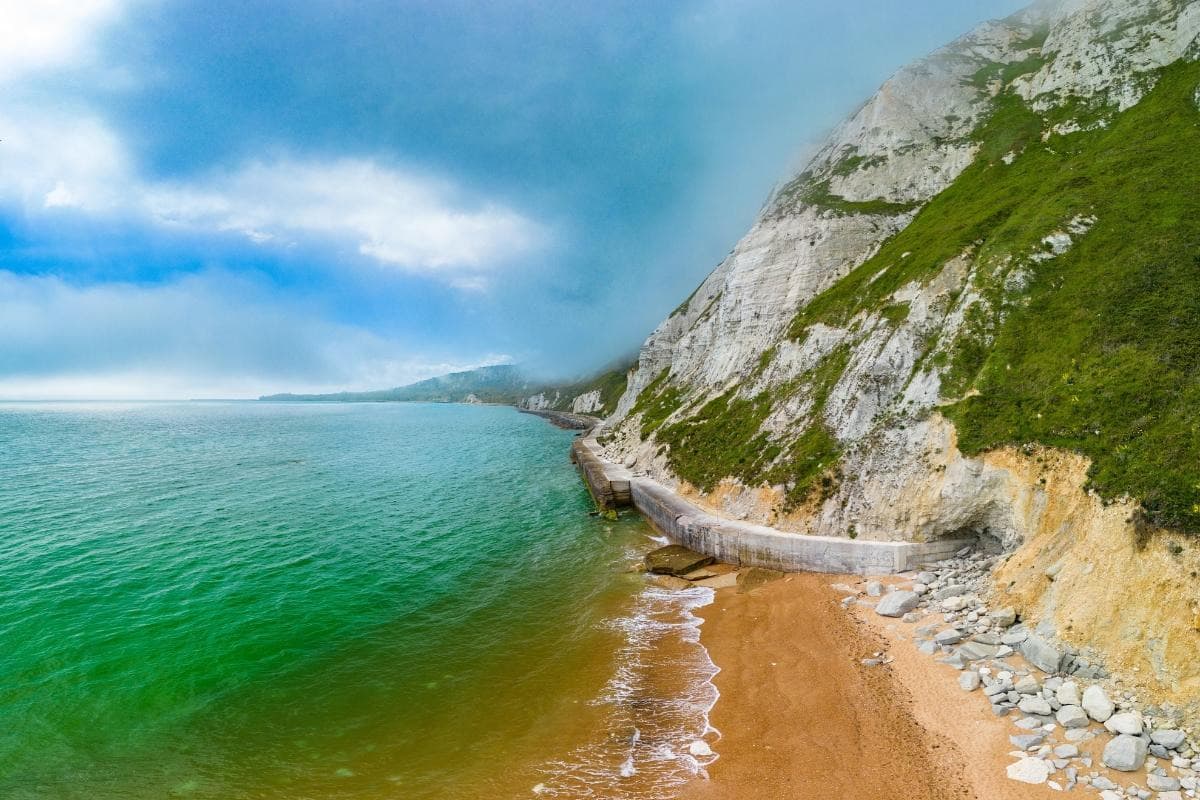
You descend toward the coastline and the land opens differently here — not carved by centuries of waves but built by human industry and left to the sea. At Samphire Hoe, the wind moves with intent, pushing the scent of salt and crushed chalk across a low, planted plain that sits tucked beneath the White Cliffs of Dover. On a clear day the French shoreline hangs faintly on the horizon like a suggestion; on an overcast one, the cliffs are a hush of white and green. The path is simple — compacted gravel, a steady gradient from the car park down to a network of tracks — but the feeling is unfamiliar: you are walking on earth that was moved to make a tunnel.
Samphire Hoe is an unusual coastal reserve. Created in the 1990s from the 4.9 million cubic metres of chalk marl excavated during the construction of the Channel Tunnel, the site spans roughly 30 hectares of reclaimed land. What might have been spoil heaps elsewhere here became a flat, sheltered haven of maritime grassland, scrub, and shingle, offering both unusual geology and an unexpectedly rich ecology. The name nods to the sea: samphire, the salty succulent that clings to cliff ledges, is one of the region’s edible coastal plants and a reminder of the place’s intersection of geology, food, and history.
The first steps into the reserve are pragmatic: route signage, a compact car park, a visitor entrance, and accessible paths that encourage both short visits and longer wandering. Walkers tend to split into two rhythms: the brisk loopers who aim for a tidy circuit measured in single-digit kilometers, and the browsers who pause at a geology sign, inspect a flowering orchid, or crouch to peer into a puddled rock pool. The land is low; elevation gain is minimal. That allows your senses to sharpen. You notice the chalky dust baked into the path, the way dingy gulls wheel over offshore rocks, the pale streaks of chalk where erosion reveals the material that built the space beneath your feet.
Geology and human engineering are inseparable here. The deposited chalk formed an artificial promontory at the foot of the cliffs and a buffer between the cliffs and the channel. Over two decades, natural processes and careful planting have coaxed habitat from what was once a purely industrial byproduct. The reserve’s plant list reads like an argument for resilience: thrift, sea campion, kidney vetch, and patches of orchids that turn the plain into a pointillist painting in late spring and early summer. Birdlife is lively. Skylarks sing from low perches, occasional fulmars linger over the cliff edge, and migrants use the reserve as a resting point on cooler days.
There’s a human story too. The Channel Tunnel project reshaped the English Channel’s subterranean landscape and left a surface gift that’s been reimagined for public use and wildlife. The site is managed as a nature reserve and has become a teaching ground for how industrial byproducts can be reclaimed and nurtured to benefit biodiversity and public access simultaneously. Local conservation groups and volunteer programs often run habitat management and guided walks — a practical reminder that this place is as much a community project as a geological curiosity.
For travelers, Samphire Hoe is both an easy coastal escape and a tactile lesson in coastal processes. It’s ideal for short hikes, family outings, birdwatching, and geology-minded wandering. Popular choices include a gentle 2–4 km loop hugging the shoreline and longer explorations that connect to regional trails along the cliffs. If you’re into fishing or sea watching, the promontory offers clear sightlines and quiet observation points to scan the horizon for passing marine life.
Practical details are straightforward but worth noting. The reserve is wheelchair and stroller-friendly along the main access route, but some of the side tracks are narrower and rougher underfoot. Footwear can be informal — trail shoes or sturdy trainers are usually enough — but on wetter days the chalk can turn slick and a small spike in grip is useful. There’s a small car park; check local transit options if you’re relying on public transport from Dover. The site is free to enter and best enjoyed in the shoulder seasons when wildflowers or migrating birds are at their peak and the visitor numbers are lower.
One travel tip: time a visit for early morning or late afternoon. The light is softer, the wind easier to read, and the seabird activity tends to pick up. Bring binoculars and a compact telephoto lens if you’re photographing birds or distant coastlines. Respect the reserve — stay on paths during nesting season, keep dogs under control, and carry out any rubbish. This is a refurbished landscape, and its conservation value depends on low-impact visitation.
Samphire Hoe is not about conquering a peak; it’s about reconciling human industry with nature’s patience. You’ll leave with pockets of chalk dust on your shoes and a clearer picture of how landscapes can be remade with intention. For a day that combines coastal walking, unexpected wildflowers, birdlife, and a tangible piece of engineering history, it’s a compact yet surprising stop on the Kent coast — quiet in its design, bold in its backstory.
Trail wisdom
Small choices, better day.
Stay on marked paths
Paths protect fragile chalk grassland and nesting birds — keep to routes to avoid trampling rare plants.
Bring binoculars
A small pair of binoculars is invaluable for spotting seabirds and offshore seals without disturbing wildlife.
Wear grip-friendly shoes
Trails are mostly compacted gravel and chalk; on damp days the surface can be slippery, so choose footwear with decent tread.
Time your visit for low tides or golden hour
Low tide reveals rock pools and late afternoon light is best for shoreline views and photography.
Local knowledge
Read the place, not just the route.
Watch for native species including Seals (offshore), Skylarks and coastal seabirds.
Keep an eye out for wildlife during the transition between areas and habitats. Respect distance guidelines.
The reserve is managed for biodiversity and public access; staying on paths and following seasonal restrictions helps protect nesting birds and rare plants.
Follow the guide's instructions on size limits, ethical handling, and leave-no-trace practices.
Low rock pools at the base of the promontory reveal small marine life at low tide. Clear vantage points for an unobstructed view of the White Cliffs and, on very clear days, the French coast
Locally recommended viewpoints and quiet spots known best to local operators.
Samphire Hoe was formed from material removed during Channel Tunnel construction and has since been converted into a public nature reserve combining industrial history with coastal habitat.
Maritime roots and regional tradition shape the waterways and working coasts.
Seasonal guide
Four versions of the same landscape.
Spring
Best forWildflowers · Migratory birds · Mild walking conditions
ChallengesUnpredictable showers · Narrow breeding-season restrictions
Spring brings a surge of orchids and migrants; paths are firm but carry rain layers.
Summer
Best forButterflies and insects · Long daylight hours · Coastal views
ChallengesHigher visitor numbers · Strong sun and heat on exposed sections
Summer offers peak flora and warm weather—avoid mid-day sun and bring sun protection.
Fall
Best forMigratory seabirds · Crisp air for walking · Lower crowds
ChallengesWindier conditions · Chillier temperatures late in the day
Autumn is quieter and excellent for birdwatching, but bring windproof layers.
Winter
Best forDramatic seascapes · Solitude and clear visibility · Off-season photography
ChallengesCold, blustery conditions · Short daylight hours
Winter is raw and atmospheric; plan short walks and dress warmly for exposed coastal winds.
Pack with intention
What to bring.
Good to know
Common questions.
Samphire Hoe covers roughly 30 hectares and was created from chalk marl excavated during construction of the Channel Tunnel in the 1990s.
Plan the edges
The details that make the day easier.
Samphire Hoe was constructed from material excavated during Channel Tunnel construction (approximately 4.9 million cubic metres) and covers about 30 hectares; it opened to the public in the late 1990s.
Nearby Dover offers fresh seafood and local Kentish produce; try locally foraged samphire where available, and pair coastal walks with tea rooms and fish-and-chip shops in the town.
Stick to marked paths, carry out all litter, keep dogs controlled, and avoid disturbing nesting birds — your low-impact visit helps protect this reclaimed habitat.
Explore by topic
Follow the threads.
Keep exploring
Make the story part of the trip.
Set out from Bass Harbor for a private, customizable day on Blue Hill Bay — lighthouses, puffins, seals, and the chance to feel Acadia from the water. Small groups, local captains, unforgettable views.
In four hours you can move from shaded canyon ferns to wind-scoured coastal ridgelines, guided by someone who knows where the light—and the hidden views—live. This private half-day hike on the Monterey Peninsula or Big Sur is compact, curated, and perfect for travelers who want depth without a multiday commitment.
 Related story
Beneath a sky of shifting light, Skaftafell’s ice reads like a map of time. This three-hour guided glacier hike mixes technical instruction with geology and culture: compact, safe, and unforgettable.