
What the day feels like
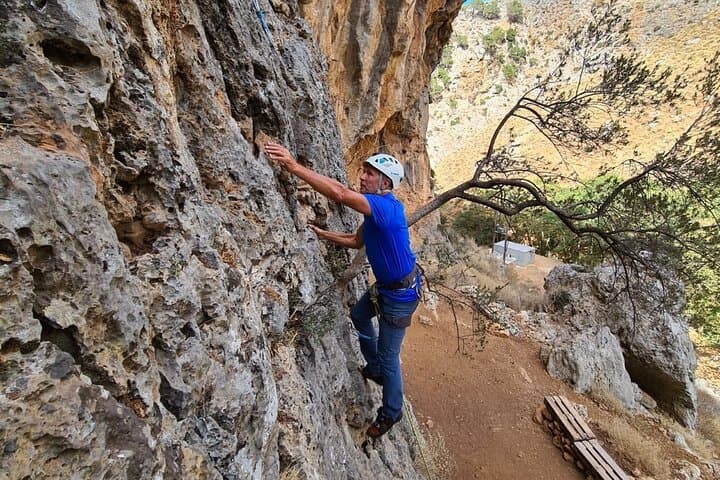
By midmorning the gorge is already awake: limestone walls hum with the scrape of climbing shoes, a guide calls a hold, and the Mediterranean light filters through tamarisk and wild olive. Therisos Gorge, a short drive from Chania on Crete's north coast, feels like a private theater of rock—narrow at times, wide at others, with faces that stare straight down and ledges that open to sea views. You clip in, your guide checks your harness with a practiced eye, and the rope hums as you step off into vertical limestone. That first pull on an unfamiliar hold is part calculation, part trust, and it’s the same moment that hooks most people; suddenly the map of the island below acquires a new axis: up.
Therisos has lived many lives. Its name is tied to the 1905 Theriso Revolt, when Eleftherios Venizelos used the village as a base to advocate for administrative reform in Crete—history that still sits quietly in the stone and terraces above the gorge. Geologically, the chasm is a lesson in karst limestone: compact, coarse rock riddled with pockets and tufas, formed over millennia by water carving its way from the White Mountains toward the northern shore. Climbers prize this rock because it ranges from positive, chicken-head features that beginners can grip to jagged verticals that reward precise footwork for more advanced climbers.
Culture threads through the day: the guides are often local climbers who read the rock like the fields and olive groves around them. On the drive in, you’ll pass villages with low stone houses and faded icons above doorways, and afterwards the reward is a taverna meal—grilled fresh fish, dakos salad and a shot of raki with the kind of warmth only Crete can offer. That link between mountain and table is part of the appeal; a climbing day here is also a day of place.
What the trip is: a private, guided climbing day that works for beginners through experts. The operator follows UIAA-approved equipment and safety standards, and the trip is designed to deliver instruction, belays and route finding in a single six-hour day. Typical climbs are single-pitch sport routes on bolted limestone—think 15–30 meters per pitch—so you get repeated practice on lead or top-rope, depending on your comfort and wants. The guide will set routes based on ability: you might start on gently angled, positive holds before moving to more technical vertical sections with small crimps and underclings.
Practicalities matter here. The listed tour length is roughly six hours including transfers from Chania, approach, multiple climbs and a short debrief. Price starts from about USD 143 per person for a private experience, which includes guide services, ropes, harnesses, helmets and hardware; confirm what is included when you book. Expect the approach to be short but sometimes steep—most sectors require a 10–25 minute walk to the base, so wear approach shoes or light hikers. Cell service is patchy inside the gorge; your guide is your communication line and will carry rescue gear and a kit for minor injuries.
Timing and seasons shape the experience. Spring and fall are prime: temperatures are mild, the rock is not baking hot, and the light is crisp. Summer brings heat and bright sun—start early to avoid midday exposure. Winter can be rainy and cool; routes get slick when wet, and some sections may be unsafe. Bring a water reservoir, sun protection and layers; winds funneling through the gorge can feel colder than the forecast suggests.
For photographers the place is generous: low-angle light through the gorge creates strong textures on the limestone, and the contrast of pale rock and Mediterranean green makes for striking compositions. Your guide can recommend belay stances with the best backdrop—often the village-backed ridgeline or a slice of the sea.
Why go with a guide? The gorge has many sectors and local anchors; a guide will know which routes match your level, how to read the rock safely, and where the day’s best photos and least crowded routes are. If you’re new to single-pitch sport climbing, on-site instruction accelerates learning and confidence in a way a topo map cannot.
If you’re planning the trip: aim for a private booking so the itinerary is flexible—switch a route, practice leads, or spend more time on technique. Shoes with a snug fit, a lightweight harness, sun hat and sunscreen, and 2–3 liters of water will cover most needs. Your guide will supply ropes and a helmet but double-check inclusion before you arrive.
Therisos is approachable: a 20–40 minute drive from Chania depending on the route and traffic. That makes it an ideal half-day or full-day outing from the city, pairing easily with beach time or an afternoon exploring Chania’s Venetian harbor. For climbers who want to push harder, the area’s bolted lines offer enough variation to keep coming back, sector by sector.
A climbing day in Therisos feels immediate and honest: rock beneath your palms, a guide’s steady voice, the slow reveal of the view as you top out. It doesn’t promise solitude—this is a popular spot for a reason—but it does promise clarity. When the rope runs through your hands at the end of the pitch and you look back across the gorge, the island reads differently: less of a postcard and more of a place you have moved through, with chalked holds and new friends to prove it.
To book and learn more about routes and availability, check the guided climbs in Therisos Gorge; for private bookings and local expertise you can book a private climb and get exact logistical details and inclusions.
Trail wisdom
Small choices, better day.
Start Early
Begin climbs before 9am in summer to avoid sun and heat; spring and fall mornings offer the best conditions.
Bring 2–3L Water
There is no reliable water at the crag—hydrate on approach and bring electrolytes for a six-hour day.
Wear Approach Shoes
Approaches are short but often rocky; sticky shoes are fine for climbing, but durable approach footwear helps on ridgelines.
Confirm Gear List
Guides supply ropes, helmets and hardware, but verify whether personal harness and shoes are provided or recommended.
Local knowledge
Read the place, not just the route.
Watch for native species including Cretan wall lizard, Various raptors such as kestrels.
Keep an eye out for wildlife during the transition between areas and habitats. Respect distance guidelines.
Keep to established approaches and avoid trampling fragile terraces; local guides work with landowners to protect access and maintain bolted anchors responsibly.
Follow the guide's instructions on size limits, ethical handling, and leave-no-trace practices.
Morning coffee and pastries in Therisos village square. A short terrace trail above the gorge with panoramic views toward the White Mountains
Locally recommended viewpoints and quiet spots known best to local operators.
Therisos village is associated with the 1905 Theriso Revolt led by Eleftherios Venizelos, an important moment in modern Cretan history.
Maritime roots and regional tradition shape the waterways and working coasts.
Seasonal guide
Four versions of the same landscape.
Spring
Best forMild temperatures · Wildflower views · Skill-focused learning
ChallengesUnpredictable rain · Cool mornings
Spring offers some of the best climbing conditions with cool rock and blooming terraces; be prepared for occasional rain showers.
Summer
Best forLong daylight · Combining beach and climbing · Early-morning sessions
ChallengesHigh midday heat · Strong sun exposure
Summer is hot—start very early and expect to rest during the hottest hours; shady sectors are limited.
Fall
Best forStable weather · Comfortable temperatures · Less crowded crags
ChallengesShortening days · Cooler evenings
Fall is often ideal for climbing with steady conditions and warm afternoons; layers are useful for mornings and evenings.
Winter
Best forTraining for cooler-weather techniques · Quiet crags
ChallengesWet, slippery rock · Chilly winds
Winter brings rain and slick routes; check forecasts and avoid climbs after heavy rain when the limestone is wet.
Operator details
What the booking data adds.
Included
- ✓Bottled water
- ✓Snacks
- ✓All Fees and Taxes
- ✓Climbing Equipment
Not included
- —Lunch
- —Dinner
Good to know
- ✓Not recommended for travelers with spinal injuries
- ✓Not recommended for pregnant travelers
- ✓Not recommended for travelers with poor cardiovascular health
- ✓Travelers should have at least a moderate level of physical fitness
Pack with intention
What to bring.
Good to know
Common questions.
No—this is suitable for beginners; guides will teach belaying, knots and basic techniques, and tailor routes to your level.
Plan the edges
The details that make the day easier.
Therisos was the site of the 1905 Theriso Revolt led by Eleftherios Venizelos, a key episode in the island's move toward union with Greece.
After a day on the rock head to Chania’s old harbor for seafood and a beer, or stop in the village of Therisos for traditional Cretan dishes like lamb with rosemary and a shot of raki to toast the climb.
- Closest airport
- Chania International Airport (CHQ); Driving distance: ~20–40 minutes from Chania center depending on sector; Cell service: patchy in the gorge; Permits: none typically required—book through a licensed guide for best access and safety.
Respect private terraces and slow down on approach paths to prevent erosion; use local guides who collaborate with landowners so climbing access remains sustainable.
Explore by topic
Follow the threads.
Keep exploring
Make the story part of the trip.
Set out from Bass Harbor for a private, customizable day on Blue Hill Bay — lighthouses, puffins, seals, and the chance to feel Acadia from the water. Small groups, local captains, unforgettable views.
In four hours you can move from shaded canyon ferns to wind-scoured coastal ridgelines, guided by someone who knows where the light—and the hidden views—live. This private half-day hike on the Monterey Peninsula or Big Sur is compact, curated, and perfect for travelers who want depth without a multiday commitment.
 Related story
Beneath a sky of shifting light, Skaftafell’s ice reads like a map of time. This three-hour guided glacier hike mixes technical instruction with geology and culture: compact, safe, and unforgettable.