
What the day feels like
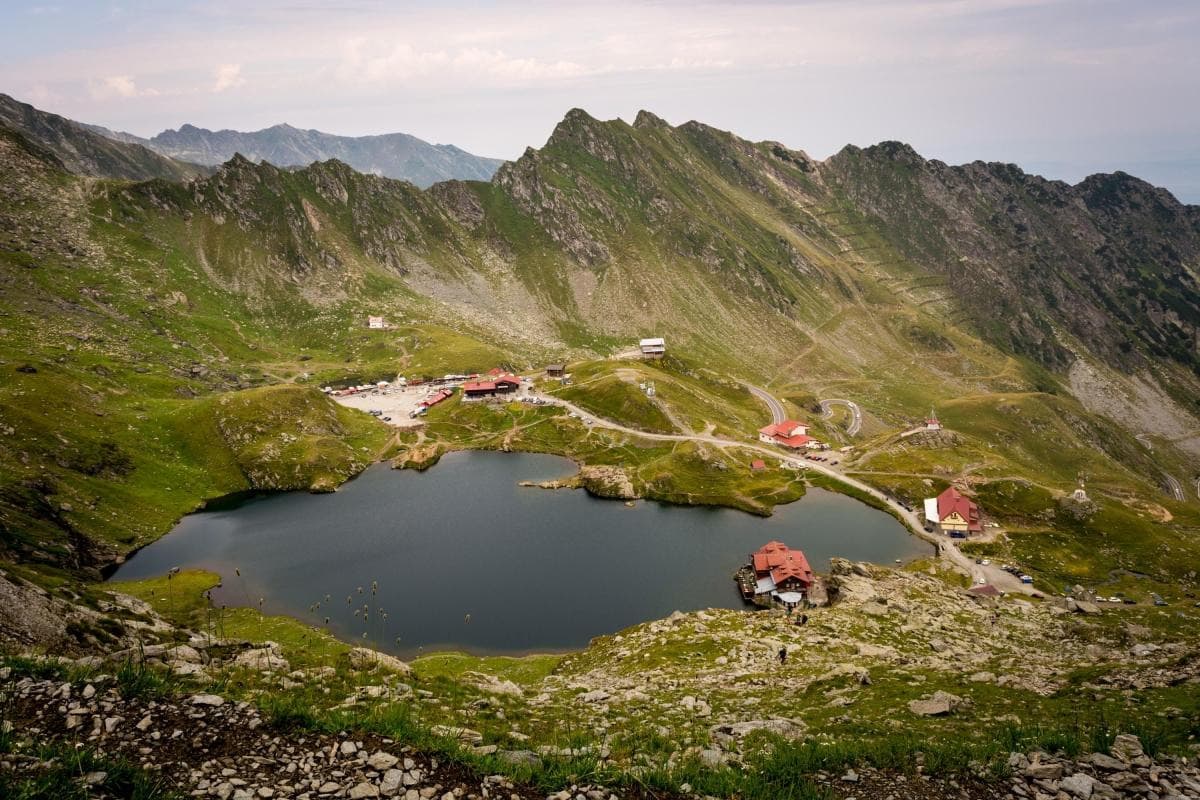
By the time you crest the final hairpin and the road exhales, the mountains will have rearranged themselves into a bowl: a hard, cirque-shaped hollow cradling a dark, glassy lake at just over 2,000 meters. Mist clings to serrated ridgelines, and the Transfăgărășan—Romania’s answer to an alpine ribbon—drops away behind you. That green, cracked asphalt and the rumor of engines are part of the approach, but once you stand on the stony shore of Bâlea Lake (Lacul Bâlea) the place feels older than any road. The lake was carved by ice; the mountains still feel patient and inevitable.
Bâlea Lake sits at roughly 2,034 meters above sea level, a glacial lake formed in a high cirque on the southern slopes of the Făgăraș Mountains. At about 360 meters long and roughly 11 meters deep, it is compact but dramatic—the kind of alpine tarn that forces slow walking and longer looks. Around it, trails fidget through scree, stunted alpine meadow and compact conifers. Above, the Făgăraș ridgeline keeps its shoulders broad; below, the Transfăgărășan snakes toward the valley, monuments of engineering hugging cliff faces as if to prove the mountain’s endurance.
The road itself is half the story. Built in the 1970s under the Ceaușescu regime as a strategic military route, the Transfăgărășan is now a pilgrimage for drivers and motorcyclists chasing the best turns in Europe. It’s also the practical artery to Bâlea Lake in summer (the paved pass reaches around 2,042 meters). Outside of the warm months the pass often closes under snow, and the cable car from Bâlea Cascadă provides the only regular access to the lake—an atmospheric ride that feels like crossing into another climate.
History and local color are layered here. The Făgăraș massif guarded Transylvania for centuries; within driving distance are Curtea de Argeș Monastery and the crumbling ruins of Poenari Fortress, linked to the story of Vlad Țepeș. Shepherding and small-scale pastoral life still mark the foothills—seasonal sheep folds, salt-cured cheeses and the restrained hospitality of mountain guesthouses.
Geology is visibly legible. Bâlea sits in a classic glacial cirque, shelled by rock walls. In summer, meadow wildflowers—edelweiss’s humbler neighbors—hold almost comic resistance against the wind. In winter, these same slopes feed avalanches, and the lake often freezes to an even, dark skin under snow-laden pines.
Why visit? In summer you’ll get the best combination of access and hiking: short circuits around the lake, waterfall walks toward Bâlea Cascadă, and steeper alpine ascents into the Făgăraș if you’re set for multi-day ridge travel. From a practical standpoint, it’s a compact alpine experience: high-mountain air without the three-day approach. You can pair the visit with a Top Gear–famous drive, historical sites below the pass, or wildlife watching—bears and chamois are part of the region’s fabric if you know how to read tracks and avoid startling encounters.
The experience demands some planning. If you drive, keep weather and road-opening dates in mind: the Transfăgărășan is generally open in the summer months and can close under snow earlier and later in the year. The cable car from Bâlea Cascadă is the reliable winter access—bring layers; temperatures can plummet quickly above 2,000 meters. Trails vary: the lake circuit is short (30–60 minutes at an easy pace), while ridge routes into the Făgăraș peaks are technical and require full alpine planning—expect hours to days and big elevation changes. For day hikers, a marked route to Bâlea Waterfall and the nearby Capra valley rewards with water, shade and less wind.
Wildlife requires respect. Brown bears roam these mountains; sightings are possible along the drive and on trails. Don’t feed wildlife, make noise on approach, and keep a safe distance. Local guides and bear-safari tours can increase your chance of a responsible sighting while ensuring minimal disturbance to animals.
Practical tips for a good visit: start early to avoid crowds and afternoon storms, bring waterproof layers even on sunny mornings, and pack a headlamp and extra snacks if you will stray from the immediate lakeshore. Footwear with good grip is essential for mixed rock and scree. If you’re planning a drive along the Transfăgărășan, allow extra time for lookout stops—the road invites lingering.
Bâlea Lake is an invitation to a layered approach: a short, striking day trip for those based in Sibiu or Brașov; a segment in a longer Transfăgărășan road pilgrimage; or a launching point for serious Făgăraș mountaineering. Whatever your pace, the lake delivers alpine economy: a condensed taste of high mountain weather, geology and history with enough drama to leave you planning a return.
If you go, do it with curiosity and respect—check the seasonal access, consider a guide for long hikes, and treat the lake’s quiet as something you are borrowing. The mountain will not be impressed; it will wait for you, the road curling again to the valley below.
Trail wisdom
Small choices, better day.
Start before the crowds
Begin at first light to avoid tourist buses and to catch the clearest morning light for photography and calmer winds.
Layer for sudden weather shifts
Temperatures can drop rapidly above 2,000 m—pack a windproof and waterproof midlayer even on warm days.
Give wildlife space
If you spot brown bear signs, retreat calmly and report the sighting to local rangers; do not approach or feed animals.
Plan transport around road openings
Check Transfăgărășan pass status; if closed, use the cable car from Bâlea Cascadă to reach the lake.
Local knowledge
Read the place, not just the route.
Watch for native species including brown bear, chamois.
Keep an eye out for wildlife during the transition between areas and habitats. Respect distance guidelines.
Stick to marked trails, pack out waste and use local guides to minimize disturbance; bear-safe practices are essential to reduce human-wildlife conflicts.
Follow the guide's instructions on size limits, ethical handling, and leave-no-trace practices.
Take the cable car at dusk for quieter light and fewer people. Hike a short path toward Capra valley to find riverside shade and fewer crowds
Locally recommended viewpoints and quiet spots known best to local operators.
The Transfăgărășan was constructed in the 1970s as a strategic military route; nearby Poenari Fortress links to medieval Wallachian history and Vlad Țepeș.
Maritime roots and regional tradition shape the waterways and working coasts.
Seasonal guide
Four versions of the same landscape.
Spring
Best forwildflowers at lower elevations · off-season solitude
Challengessnowpack on trails · unreliable road access
Late spring sees snow lingering; lower valley trails bloom while the pass may still be closed—expect mixed trail conditions.
Summer
Best forfull road access · short hikes and alpine views
Challengesafternoon storms · more visitors
Summer offers the best access via Transfăgărășan—ideal for driving, lake walks and day hikes, but start early to avoid storms and crowds.
Fall
Best forautumn color in the valleys · crisp high-mountain air
Challengesrapid temperature drops · possible early snow
Fall brings clear skies and mellow light; be prepared for cold mornings and early-season snow at altitude.
Winter
Best forsnow-sculpted landscapes · cable-car access and ice-hotel photography
Challengesroad closures · avalanche danger and deep snow
When the pass closes, the cable car provides access to a still, snowy lake—travel with winter gear and local guidance.
Pack with intention
What to bring.
Good to know
Common questions.
In summer you can drive the Transfăgărășan to the lake; when the road is closed, take the cable car from Bâlea Cascadă or join an organized tour from Sibiu or Brașov.
Plan the edges
The details that make the day easier.
Bâlea Lake is a glacial lake situated at about 2,034 m altitude, roughly 360 meters long and about 11 meters deep—formed by ice that carved the cirque it sits in.
Mountain guesthouses serve smoked pork, polenta (mămăligă) and local cheese; pair a day on the pass with a stay in Sibiu for Transylvanian folk markets and fortified Saxon villages.
- Altitude ~2,034 m; road access in summer; cable car available when road closed; nearest city
- Sibiu; basic services seasonal.
Use established trails, avoid single-use plastics at the lake, hire local guides and respect seasonal closures to protect alpine habitats and wildlife.
Explore by topic
Follow the threads.
Keep exploring
Make the story part of the trip.
Set out from Bass Harbor for a private, customizable day on Blue Hill Bay — lighthouses, puffins, seals, and the chance to feel Acadia from the water. Small groups, local captains, unforgettable views.
In four hours you can move from shaded canyon ferns to wind-scoured coastal ridgelines, guided by someone who knows where the light—and the hidden views—live. This private half-day hike on the Monterey Peninsula or Big Sur is compact, curated, and perfect for travelers who want depth without a multiday commitment.
 Related story
Beneath a sky of shifting light, Skaftafell’s ice reads like a map of time. This three-hour guided glacier hike mixes technical instruction with geology and culture: compact, safe, and unforgettable.